

How a lethal fungus is shrinking living space for our frogs
- Written by Geoffrey Heard, Research fellow, Australian National University and, The University of Queensland
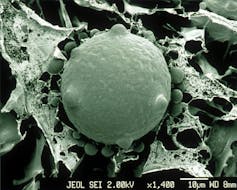
In 1993, frogs were found dying en masse in Far North Queensland. When scientists analysed their bodies, they found something weird. Their small bodies were covered in spores.
It was an epidemic. An aquatic fungus had eaten the keratin in their skin, compromising its function and leading to cardiac arrest. And worse, the amphibian chytrid fungus (Batrachochytrium dendrobatidis) had been quietly spreading around the world, from South America to Europe, killing frogs wherever it went.
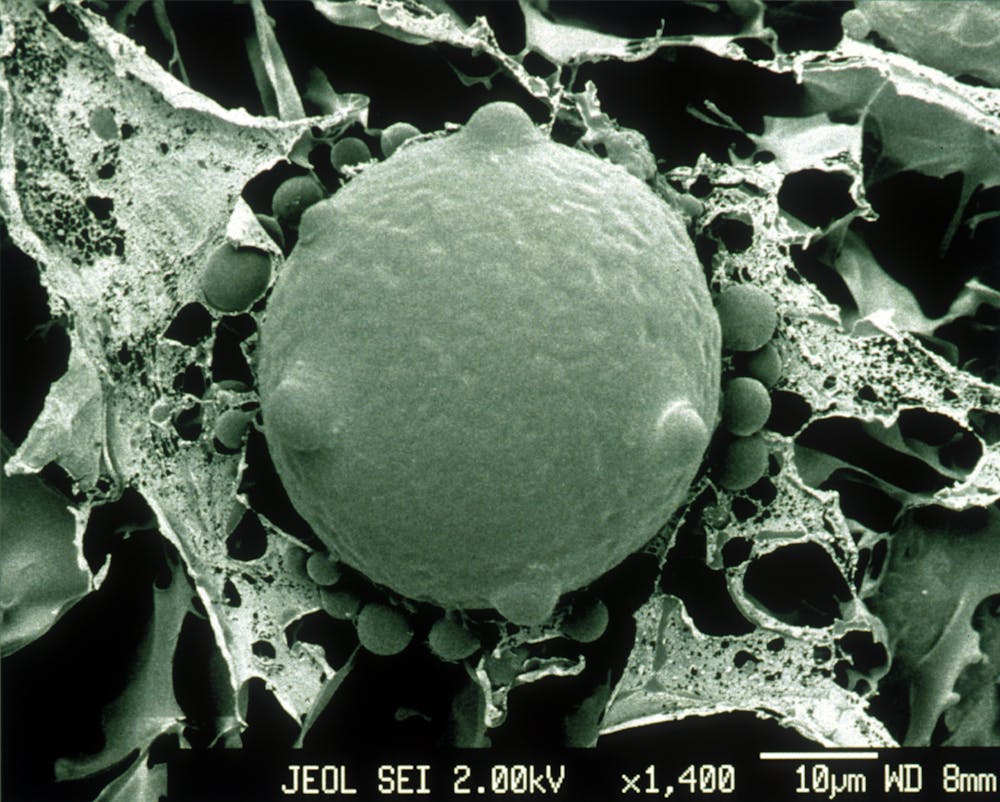
Likely native to the Korean Peninsula, it was first detected in Australia in the late 1970s. As it spread, it caused the extinction of at least four Australian frog species and probably three others.
This lethal pathogen is a selective killer. As our new research shows, it effectively makes some areas a no-go zone for susceptible frog species. The fungus doesn’t like hot conditions. But in cooler environments – such as in southern Australia and higher up in mountain ranges – it flourishes. Mortality rates in these environments can approach 100% for some frog species.
Pushed from the highlands
Australia is rich in frogs, with 247 surviving species at last count. Most are endemic to the continent – and many are spectacularly beautiful or, like the turtle frog, bizarre.
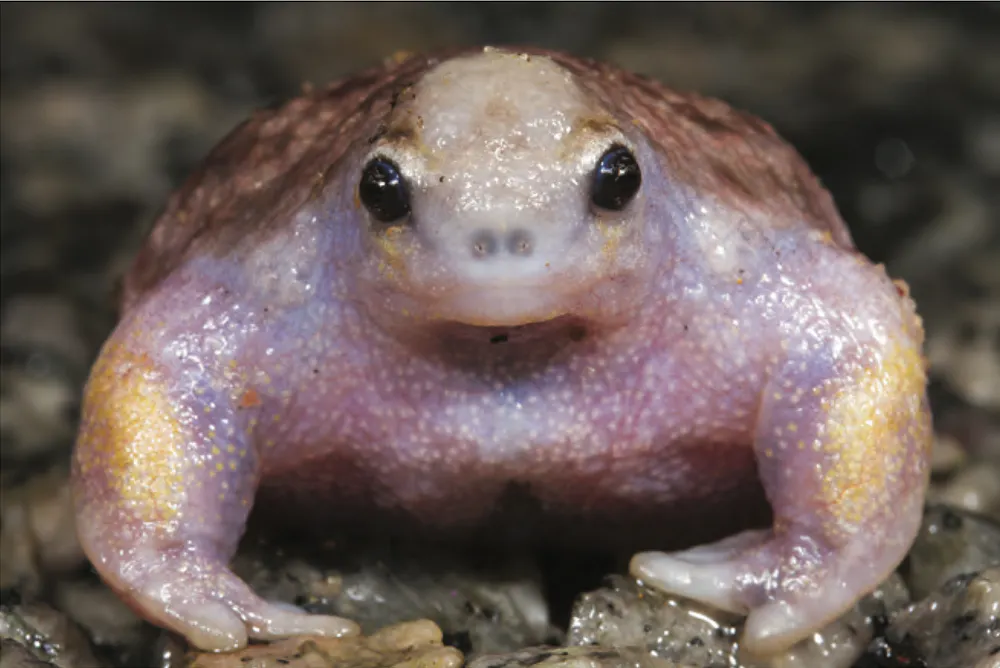 The turtle frog (Myobatrachus gouldii) is one of Australia’s strangest.
Stephen Zozaya/Wikimedia, CC BY-ND
The turtle frog (Myobatrachus gouldii) is one of Australia’s strangest.
Stephen Zozaya/Wikimedia, CC BY-ND
The gorgeous Australian lace-lid treefrog was once widespread across the rainforests of Queensland’s Wet Tropics, which run from Townsville to Cooktown, stretching from sea level up to Queensland’s highest mountain, the 1,622 metre Mt Bartle Frere.
Lace-lid treefrogs once lived throughout these forests, whether on mountains or down near sea level. But they have been driven from rainforests above 400 metres. Down lower, the heat makes it harder for chytrid to kill, and the frog’s higher breeding rate can outpace deaths from the disease.
No-go zones
Australians know full well about the damage introduced species can do. Cane toads kill native predators like quolls who aren’t used to their toxin. Cats and foxes have driven many small mammals to extinction.
But even when a species survives contact with an introduced species, it can be forever changed.
That’s because of less visible effects introduced species like chytrid fungus can have, such as shrinking the areas where native species can survive. When this happens, our species can be pushed into smaller parts of their original range, known as environmental refuges.
As our research shows, it’s not just geographic range that changes. It also changes their niche – the set of environmental conditions where species can survive. Introduced species can actually force much larger contractions to a native species’ niche than to its geographic range.
You might wonder how that can be. It’s because the damage done by introduced species can vary a lot depending on the environment. Introduced species have their own niche – climates and environments where they thrive, and areas where they don’t.
 Australia’s critically endangered southern corroborree frog likes cool, mountainous conditions – but so does the fungus.
Mark Baker/AP
Australia’s critically endangered southern corroborree frog likes cool, mountainous conditions – but so does the fungus.
Mark Baker/AP
Frog species that survived the initial epidemics don’t just persist in random parts of their old range. Hotter, wetter areas or those with less temperature variability become refuges. Chytrid is still widespread here, but it’s less lethal.
Part of the puzzle is also the fact these refuge areas are naturally easier places for frogs to survive and reproduce. Where populations thrive, they have greater resilience and stand a better chance of surviving the fungus.
 Chytrid is lethal to many species of frog. This green eyed treefrog was killed by the fungus.
Robert Puschendorf, Author provided (no reuse)
Chytrid is lethal to many species of frog. This green eyed treefrog was killed by the fungus.
Robert Puschendorf, Author provided (no reuse)
Pushed into refuges
The pattern we document isn’t just seen in frogs. Researchers suspect similar changes have been forced on many native species impacted by introduced species.
Consider the bush-stone curlew – a long-legged, endearing bird with eerie night cries. Many of us will have seen them haunting parks and beer gardens across northern Australia. But the same bird is now extinct or critically endangered in southern Australia, where it used to roam. Why?
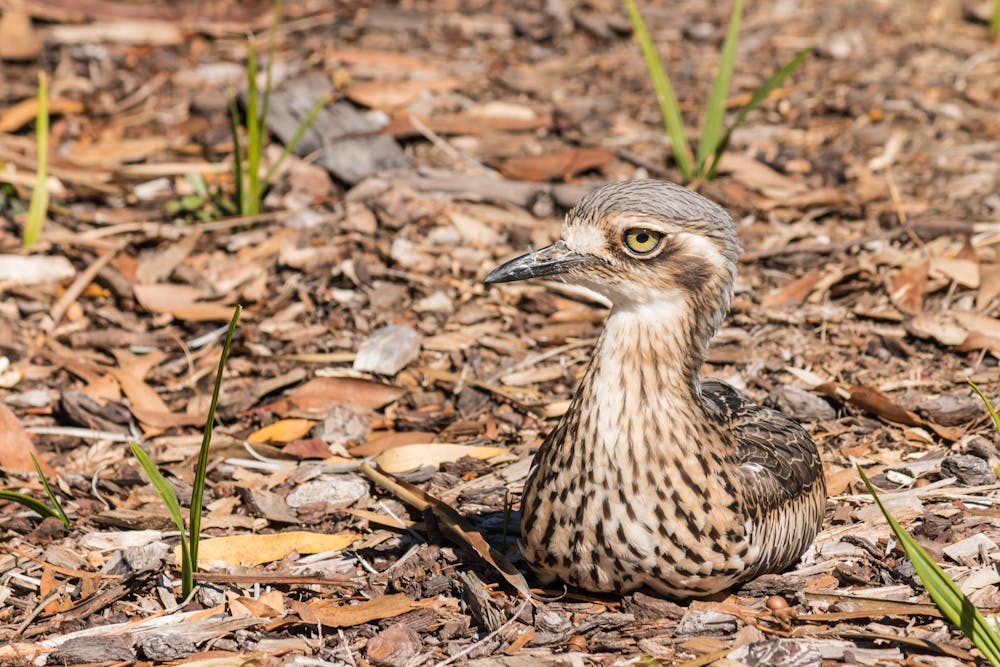 Bush-stone curlews are lanky, unusual birds with a distinctive call.
Shutterstock
Bush-stone curlews are lanky, unusual birds with a distinctive call.
Shutterstock
Habitat loss has played a role, but this species is highly susceptible to foxes. Foxes don’t much like the humidity of tropical and subtropical Australia. As a result, the curlew has been pushed out of the drier parts of its niche.
Niche contractions due to introduced species are likely to be widespread but little-studied.
If a species has a shrinking niche, it may change where conservationists direct their efforts. To give threatened species the best chance of survival, we might have to direct our energies to safeguarding them in their environmental refuges, safe from introduced predators or diseases.
When scientists assess how a species is going, we often look at changes in geographic range to gauge the level of risk to the species, from vulnerable through to extinct in the wild.
But this can have limitations. What our work has shown is that the survivable niche for species can shrink much more than its geographic range, reducing resilience to new environmental challenges. If frog species are forced out of upland areas, they may be at more risk from climate change, given higher elevations are likely to be most resilient to climate change.
There’s a silver lining here, though. Species can be more resilient than we assume in the face of new threats. Some populations may be hard hit, while others escape. Understanding why that is will be key to give our native species the best chance of surviving an uncertain future.
Authors: Geoffrey Heard, Research fellow, Australian National University and, The University of Queensland
Read more https://theconversation.com/how-a-lethal-fungus-is-shrinking-living-space-for-our-frogs-212108


















