

Modern Australian
Times Advertising

How do the 'yes' and 'no' cases stack up? Constitutional law experts take a look

  • Written by Gabrielle Appleby, Professor, UNSW Law School, UNSW Sydney
How do the 'yes' and 'no' cases stack up? Constitutional law experts take a look

In the coming weeks, Australians will be asked to vote “yes” or “no” to the constitutional amendment to recognise Aboriginal and Torres Strait Islander people through establishing a body known as the Voice.

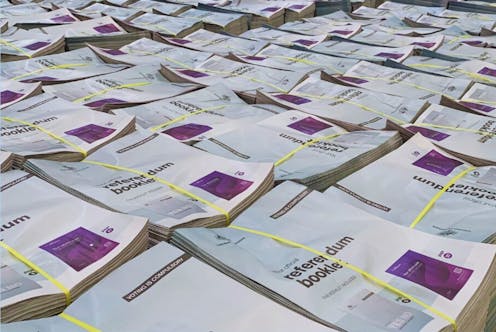
Anticipating the referendum, the Australian Electoral Commission has started to post to every voter the official “yes” and “no” cases. These cases were approved by the politicians who voted in favour of, or against, the amendment in parliament. They have not been subject to an independent fact check or analysis before publication. The Australian Electoral Commission has not reviewed or endorsed them.

As members of the Gilbert + Tobin Centre of Public Law and the Indigenous Law Centre, we have spent the past few weeks carefully reviewing the substantive claims made in the official “yes” and “no” cases. We wanted to identify where the claims are based on history, facts and research, where the claims need further explanation, and where the claim is misleading or simply unsupported.

Read more: 10 questions about the Voice to Parliament - answered by the experts

Our analysis reveals the claims made to support the “yes” case are accurate. They are based in the historical development of the Voice proposal by Aboriginal and Torres Strait Islander people, and the ongoing support within their communities for the reform. They are supported by significant Australian and international research that practical progress will be made in areas such as health, housing and education when governments listen to Aboriginal and Torres Strait Islander people. This in turn results in better value for money in the long term.

The “yes” claims are informed by the vast weight of opinion from legal experts who have considered the wording of the draft amendment that the Australian people will be voting on. They reflect the government’s publicly agreed commitments for the future design of the Voice.

In contrast, the claims made to support the “no” case are largely misleading. Many of the claims simply ignore the existence of contrary facts and history.

The “no” case ignores, for instance, the views of the vast majority of legal experts that the amendment is not risky, or that significant details have been provided to the Australian people about the constitutional amendment and the future design of the Voice.

It also misrepresents the current position of Aboriginal and Torres Strait Islander people under the Constitution. It implies the Voice will bring discrimination and unequal treatment, whereas human rights experts agree the Voice proposal is consistent with the right to equality and provides recognition for the First Nations’ unique history, culture and connection to land.

The claims misrepresent the Voice as a bureaucracy and ignore the existence of significant research that demonstrates that structural changes such as the Voice will result in better practical outcomes. The “no” case misrepresents the scope and powers of the Voice, inaccurately explaining the constitutional limits on these while ignoring the practical and political limits.

Our analysis reveals that Australian voters need to be wary when reading the official pamphlet and making up their minds on the Voice. They will need to separate out the factual, supported claims from those that are misleading, unsupported or just plain wrong. Our report is designed to help voters with that process.

In our view, the “no” case has failed voters. It does not cater to the millions of Australians who want to hear fair-minded arguments in relation to the constitutional amendment before they make up their minds.

Authors: Gabrielle Appleby, Professor, UNSW Law School, UNSW Sydney

Read more https://theconversation.com/how-do-the-yes-and-no-cases-stack-up-constitutional-law-experts-take-a-look-212364

Interstate Car Transporter Urges Buyers to Book Early

As the conflict in the Middle East continues to put increasing pressure on local fuel supply, Australian transport companies are experiencing increasi...

Digital Minimalism for Business Owners: Fewer Tools, Better Systems

Be honest. How many apps are open right now? One for scheduling, another for invoices, a third for customer notes, plus a spreadsheet someone email...

The Importance Of Proactive NDIS Renewal Preparation For Sustaining Your Provider Business

Your NDIS renewal notice is not a signal to start preparing. By the time it arrives, preparation should already be well underway. For new providers, s...

Why Fire Extinguisher Testing in Sydney Is Becoming a Records Game, Not Only a Maintenance Job

A fire extinguisher used to feel like one of the simpler parts of building safety. It hung on the wall, wore a service tag, and sat there quietly unle...

The Switchboard Upgrade Question Every Melbourne Renovator Should Ask Before the Walls Close Up

Renovations have a funny way of making people think on surfaces first. Splashback, stone, joinery, tapware, paint. Fair enough too. That is the exciti...

Winter Sanitation Gaps in Parramatta Kitchens: A Hidden Pest Risk

Winter brings a host of changes to our homes, from the chill in the air to the cozy warmth indoors. However, this season also introduces sanitation ch...

When to Seek Advice from Employment Lawyers in Melbourne

Australian employment law is detailed and, at times, complex, with rights and obligations that aren't always obvious to employees or employers witho...

7 Benefits of Professional Gutter Cleaning for Australian Homeowners

Gutters aren't exactly glamorous. They sit up there on the edge of your roof, doing their job quietly - until they stop working. Clogged, overflowing ...

Pipe Floats Strengthening Pipeline Performance In Demanding Environments

Pipelines often travel through environments that are anything but predictable, water currents shift, terrain changes, and materials keep moving unde...

Why Ceiling Fans Are Essential For Comfort, Efficiency, And Modern Living

Creating a comfortable indoor environment is not just about temperature; it is about how air moves, how a room feels, and how efficiently energy is ...

Why Duct Cleaning In Melbourne Is A Smart Investment For Healthier Living Spaces

Behind your walls, ceilings, and vents lies a network quietly working every day to keep your home comfortable. Yet over time, this system can become...

Disability Service Providers Supporting Inclusive And Independent Living

Finding the right support system can feel like assembling a puzzle where every piece must fit just right. For individuals and families navigating di...

A Beginner's Guide to Owning a Caravan in Australia

Owning a caravan opens up a style of travel that's hard to match for freedom and flexibility. However, for those just starting out, the process of c...

Preparing Your Air Conditioner for Summer: What Most Homeowners Overlook

As temperatures rise, many homeowners switch on their air conditioning for the first time in months — only to find it’s not performing the way i...

What Actually Adds Value to Properties in Newcastle

Newcastle has seen steady growth over the past few years, with more buyers looking beyond Sydney for lifestyle, space, and long-term value. As dema...

What is Design and Build in Construction?

Imagine you’re about to start a new construction project, maybe it’s a custom home or a commercial building. You’ve got the idea, the land, an...

Commercial roof leak detection: why early action protects your building

Water ingress is one of the most disruptive and costly issues facing commercial properties. For property managers and facilities teams, even a minor...

Custom Photo Frames: Turning Everyday Moments into Lasting Displays

Photos capture moments, but how you display them determines how they’re experienced every day. A meaningful photograph deserves more than a generi...















