

What would an ancient Egyptian corpse have smelled like? Pine, balsam and bitumen – if you were nobility
- Written by Nicole Boivin, Professor, Max Planck Institute of Geoanthropology
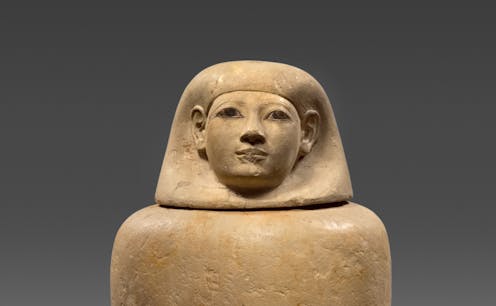
In 1900 – some 22 years before he discovered the tomb of Tutankhamen – British archaeologist Howard Carter opened another tomb in the Valley of the Kings. In tomb KV42, Carter found the remains of a noblewoman called Senetnay, who died around 1450 BCE.
More than a century later, a French perfumer has recreated one of the scents used in Senetnay’s mummification. And the link between these two events is our research, published today in Scientific Reports, which delves into the ingredients of this ancient Egyptian balm recipe.
Recreating the smells of a disappeared world
Our team drew upon cutting-edge technologies in chemistry to reconstruct ancient scents from jars of Senetnay found in the tomb.
We used three variations of chromatographic and mass spectrometric techniques, which work by breaking samples down into individual molecules. Specific substances have different assemblages of molecules. Based on these characteristic compounds and through comparison to known reference materials, we identified the different ingredients.
After the excavation by Carter, two of Senetnay’s jars recovered from the tomb made their way to Germany. So, in 2020, we approached the Museum August Kestner in Hannover about the possibility of analysing the jars with these new methods.
These jars are known as canopic jars. They are made of limestone and were used to store the mummified organs of the ancient Egyptian elite. Somewhere along the way, however, Senetnay’s jars lost their contents. All that remained of the mummified organs were faint residues on the bottom of the jars.
Remarkably, chemical analyses allow scientists to take such trace remains and reconstruct the original contents.
Read more: Curious Kids: who was the first ancient mummy?
An ancient ingredients list
Our analysis revealed the balms used to coat and preserve Senetnay’s organs contained a blend of beeswax, plant oil, fats, bitumen, an unidentified balsamic substance, and resins from trees of the pine family (most likely larch).
One other substance was narrowed down to either a resin called dammar – found in coniferous and hardwood trees in South-East and East Asia – or Pistacia tree resin.
The results were exciting; these were the richest and most complex balms ever identified for this early time period. It was clear a lot of effort had gone into making the balms. This suggests Senetnay, who was the wet nurse of the future Pharaoh Amenhotep II, had been an important figure in her day.
The findings also contribute to growing chemical evidence that the ancient Egyptians went far and wide to source ingredients for mummification balms, drawing on extensive trade networks that stretched into areas beyond their realm.
Since trees of the pine family are not endemic to Egypt, the possible larch resin must have come from somewhere further afield, most likely Central Europe.
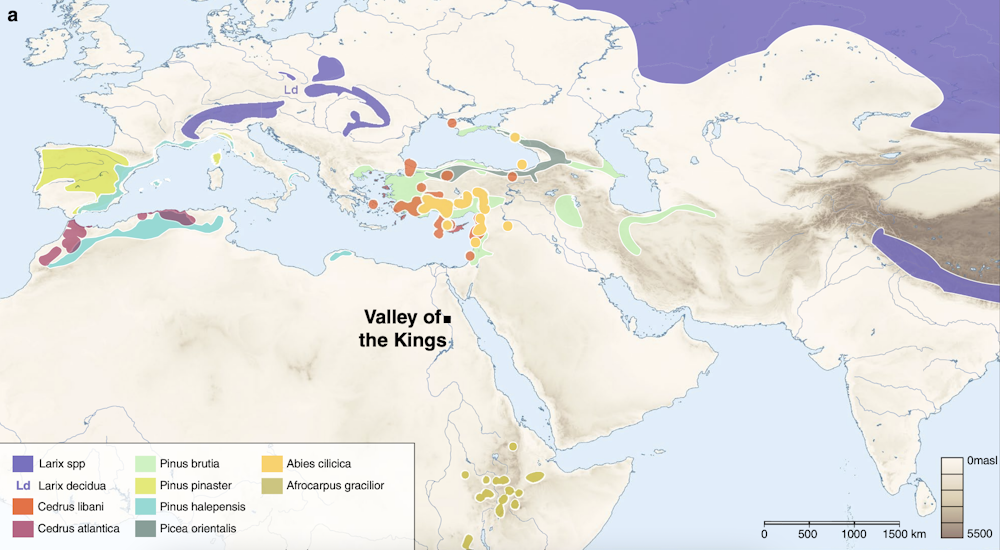
The most puzzling ingredient was the one identified as either Pistacia or dammar resin. If the ingredient was Pistacia – which is derived from the resin of pistachio trees – it likely came from some coastal region of the Mediterranean. But if it was dammar, it would have derived from much farther away in South-East Asia.
Recent analysis of balms from the site of Saqqara identified dammar in a later balm dating to the first millennium BCE. If the presence of dammar resin is confirmed in Senetnay’s case, this would suggest ancient Egyptians had access to this South-East Asian resin via long-distance trade, almost a millennium earlier than previously thought.
A perfume for the ages
Senetnay’s balm would not only have scented her remains, but also the workshop in which it was made and the proceedings of her burial rites – perfuming the air with pine, balsam, vanilla and other exotic notes. The vanilla scent comes from a compound called coumarin, and from vanillic acid, and in this case likely reflects the degradation of woody tissue.
Due to the volatile nature of scents, however, Senetnay’s unique scents gradually vanished once her remains were deposited in the Valley of the Kings.
Earlier this year, we began a collaboration with perfumer Carole Calvez and sensory museologist Sofia Collette Ehrich to bring Senetnay’s lost scent back to life.
The results of this effort will go on display at the Moesgaard Museum in Denmark in October, as part of its new exhibition: Egypt – Obsessed with Life.
The new olfactory display will be like a time machine for the nose. It will provide a unique and unparalleled window into the smells of ancient Egypt and the scents used to perfume and preserve elite individuals such as Senetnay.
Such immersive experiences provide new ways of engaging with the past and help broaden participation, particularly for visually impaired people.
Read more: Holy bin chickens: ancient Egyptians tamed wild ibis for sacrifice
Authors: Nicole Boivin, Professor, Max Planck Institute of Geoanthropology

















