

The humble spotted gum is a world class urban tree. Here's why
- Written by Gregory Moore, Senior Research Associate, School of Ecosystem and Forest Sciences, The University of Melbourne
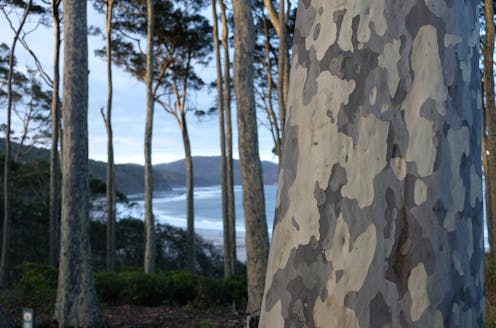
Most of us find it very difficult to identify different species of eucalypt. You often hear people say they all look the same.
Of course, they don’t. There are over 700 species of the iconic tree genus, and they can be very different in form, height, flowers and colours.
With all this variety, it’s nice to have a few species we can identify from metres away, just from looking at the colours and patterns of the bark on the trunk. The spotted gum is one of these instantly recognisable eucalypts.
You may well have seen a spotted gum growing happily on an urban street. These smooth-barked eucalypts have been planted up and down many suburban streets.
In fact, if the spotted gum has a secret superpower, it would be the ability to fit into our cities with a minimum of fuss. They’re big trees, and produce vast quantities of blossoms, attracting nectar-eaters like rainbow lorikeets in droves. They grow easily, grow straight and grow tall.

Why are spotted gums special?
Spotted gum used to be called Eucalyptus maculata. Now it’s officially Corymbia maculata after a name change about 25 years ago. Some people still debate this.
It was probably the trunk and bark of these trees which first caught your eye. These trees replace their bark seasonally, but not all at once. Instead, bits of the bark are shed and new bark grows at different rates. That leaves the famous spots on their trunks (maculatus is Latin for spotted).
Early in the growing season some of these spots can be a bright green before fading to tans and greys over the coming months. Many patterns can be stunningly beautiful.
These trees are loved by many. But there are sceptics. Some feel the trees can be a nuisance, and even dangerous because of the bark and branches they shed. There is some truth to it, as they can drop branches during droughts. Interestingly, these hardwood trees are actually considered fire resistant.
But there are very good reasons our city planners and councils turn to the spotted gum. Their wonderfully straight, light coloured and spotted trunks are impressive whether trees are planted singly, in avenues (meaning two rows of trees) or in boulevards (four rows of trees).
They often get to an impressive 30–45 metres in height. Old trees can get over 60m.
During profuse flowering, anthers (the pollen-bearing part of the stamen) shed from a single tree can cover the ground, paths, homes, roads and vehicles in a white snow-like frosting.
In nature, the spotted gum and close relatives, the lemon scented gum (C. citriodora) and large leafed spotted gum (C. henryii) grow along the east coast of Australia, from far eastern Victoria to southern Queensland. In New South Wales forests, you might be lucky enough to spot the pairing of spotted gums and native cycads (Macrozamia), ancient plants resembling palms.
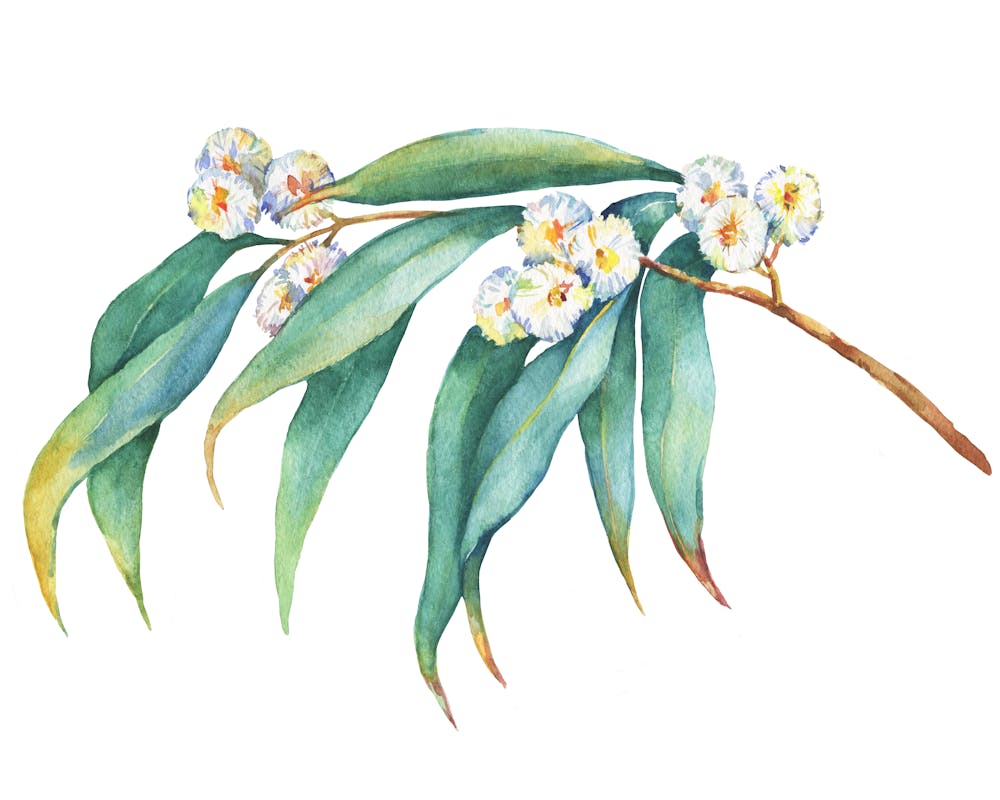 Every few years, spotted gums flower profusely.
Shutterstock
Every few years, spotted gums flower profusely.
Shutterstock
Spotted gums are quick growing and hardy, if a little frost-sensitive when young. They can tolerate periods of waterlogged soil. These traits make the species well suited to urban use, where disturbed and low-oxygen soils are common due to paving, compaction and waterlogging.
Urban trees have to be able to establish quickly and with relatively little care. They need to cope with environmental stresses and very poor quality urban soils. They need tall straight trunks so people and vehicles can pass under them, and so our cities keep their clear sight lines.
But we also want street trees to have broad, spreading canopies with a dense green foliage, to give shade, privacy and beauty.
As you can see, it’s a tough set of requirements. The spotted gum meets all of these. In fact, it has the potential to be one of the great urban tree species, not just in Australia but internationally.
Read more: Climate change threatens up to 100% of trees in Australian cities, and most urban species worldwide
Resilient trees for the future climate
Spotted gums are tough. On urban streets in many parts of Australia, they will endure as the climate changes – possibly for decades or even centuries. They possess both lignotubers, the protective swelling at the base of the trunk, and epicormic buds, which lie dormant under the bark in readiness for fire and other stresses. These let the trees cope well with the abuses urban life can throw at them.
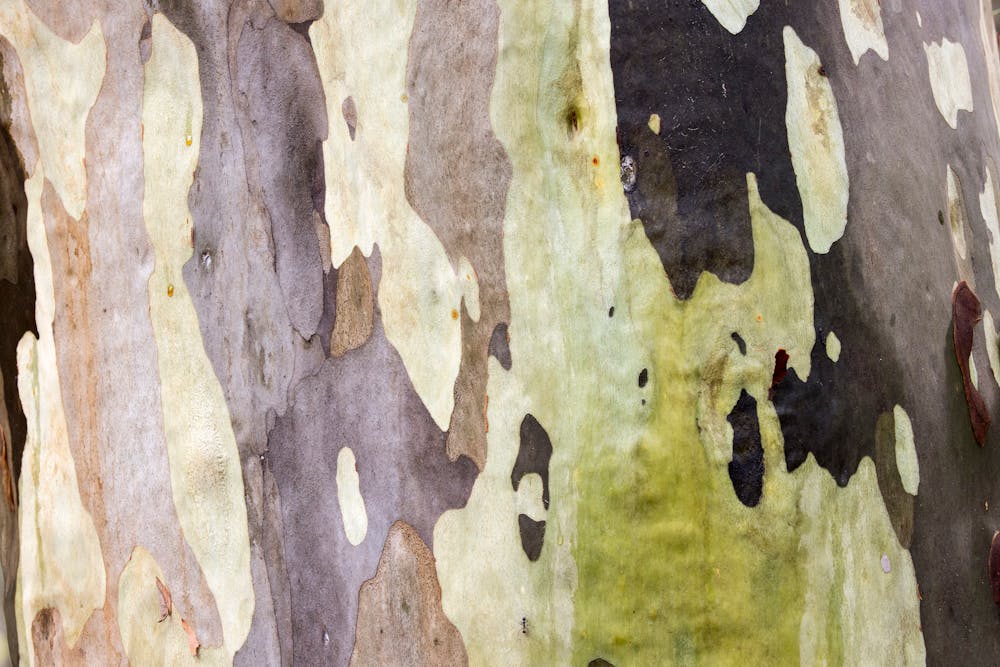 You might notice the mottled bark first.
Shutterstock
You might notice the mottled bark first.
Shutterstock
Horticulturalists have been working to make the tree even better suited to urban use. Careful selection has created spotted gum varieties geared towards dense, spreading canopies and with reduced risk of dropping branches.
But not all spotted gums you see are like this. These varieties were uncommon or didn’t exist 50 years ago, which means old urban trees might be more likely to shed limbs or have less attractive forms.
These trees are survivors. Near Batemans Bay in New South Wales lives Old Blotchy, the oldest known spotted gum. It’s estimated to be 500 years old.
Some urban trees are already 150 years old and in fine condition. Planting good quality spotted gums in a good position is a way to leave a lasting legacy.
As climate change intensifies, city planners are looking for resilient street trees able to provide cooling shade in a hotter climate. They could do a lot worse than choosing C. maculata.
Read more: Without urgent action, these are the street trees unlikely to survive climate change
Authors: Gregory Moore, Senior Research Associate, School of Ecosystem and Forest Sciences, The University of Melbourne
Read more https://theconversation.com/the-humble-spotted-gum-is-a-world-class-urban-tree-heres-why-212540

















