

the fearless work of Australian Iranian artist Hoda Afshar
- Written by Tom Williams, Lecturer - Visual Arts, University of Wollongong
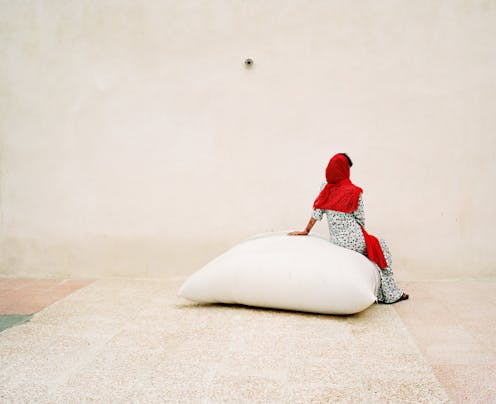
Through her poetically constructed images, Hoda Afshar illuminates a world overshadowed by history and atrocity. Yet we never see despair: we see defiance, comradeship, reinvention and a search for how photography can activate new ways of thinking.
Afshar was born in Iran and migrated to Australia in 2007. She began her practice as a documentary photographer in Tehran, having originally been attracted to acting.
Staging and creative intervention would become significant features of her work.
Even in her early, nominally “documentary” series, you can sense an embracing of the ambiguity of the still image, and an interest in composing a reality more vivid (and perhaps genuine) than dispassionate reportage might be capable of.
Afshar is now one of Australia’s most significant photo media artists, so it’s a surprise that Hoda Afshar: A Curve is a Broken Line at the Art Gallery of New South Wales is her first major survey exhibition.
What unites her materially diverse work is a concern with visibility: who is denied it, what is made visible by media, and how photography can reveal, overlook and manipulate truth.
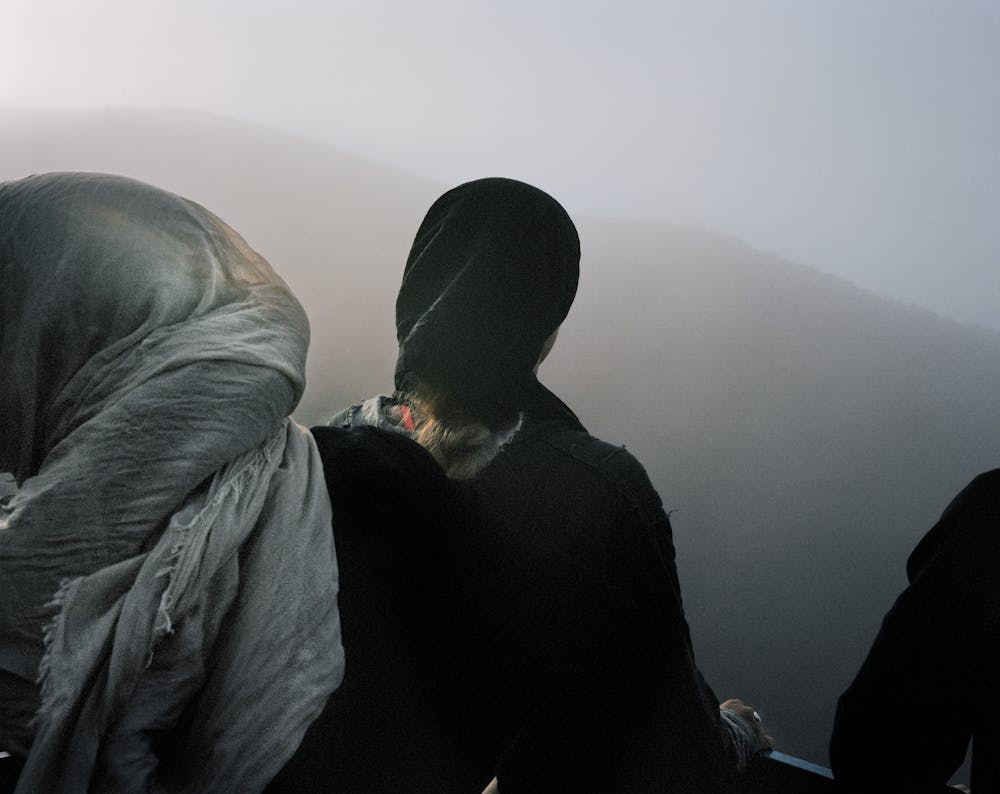
Much of her work addresses critical humanitarian issues of our time: war, statelessness, diaspora, oppression, corruption. She challenges stereotypes. We don’t see passive victims or closed narratives: we are introduced to new perspectives that might lead us to reappraise the world we inhabit.
Read more: Waqt al-tagheer: Time of change explores the diversity of Muslim Australian identities
Familiarity and distance
The exhibition is made up of six bodies of work, the first of which began with the passing away of her father in Iran.
In the exodus, I love you more (2014–) is a portrait of her home country formed by experiences of familiarity and distance. The artist is both at home and searching, like an outsider. Images suggest at times an intimate proximity, and at others a separation akin to the one made by raising a camera to your eye.
 Hoda Afshar ‘Grace’ 2014, from the series ‘In the exodus, I love you more’ 2014–ongoing, pigment photographic print, 47 x 59 cm © Hoda Afshar, image courtesy the artist.
Afshar examines her experience of migration and, she tells me, seeks to “dismantle the idea of there being one way of seeing Iran”.
The final image in this series shows the erasure of a woman’s face in a painted Persian miniature.
In the adjoining room, the new series In turn (2023) is a suite of large, framed photographs of Iranian women based in Australia. Many images show them as they tenderly braid one another’s hair. These women are unidentifiable, apart from artist and activist Mahla Karimian, who appears airborne with a pair of flying doves.
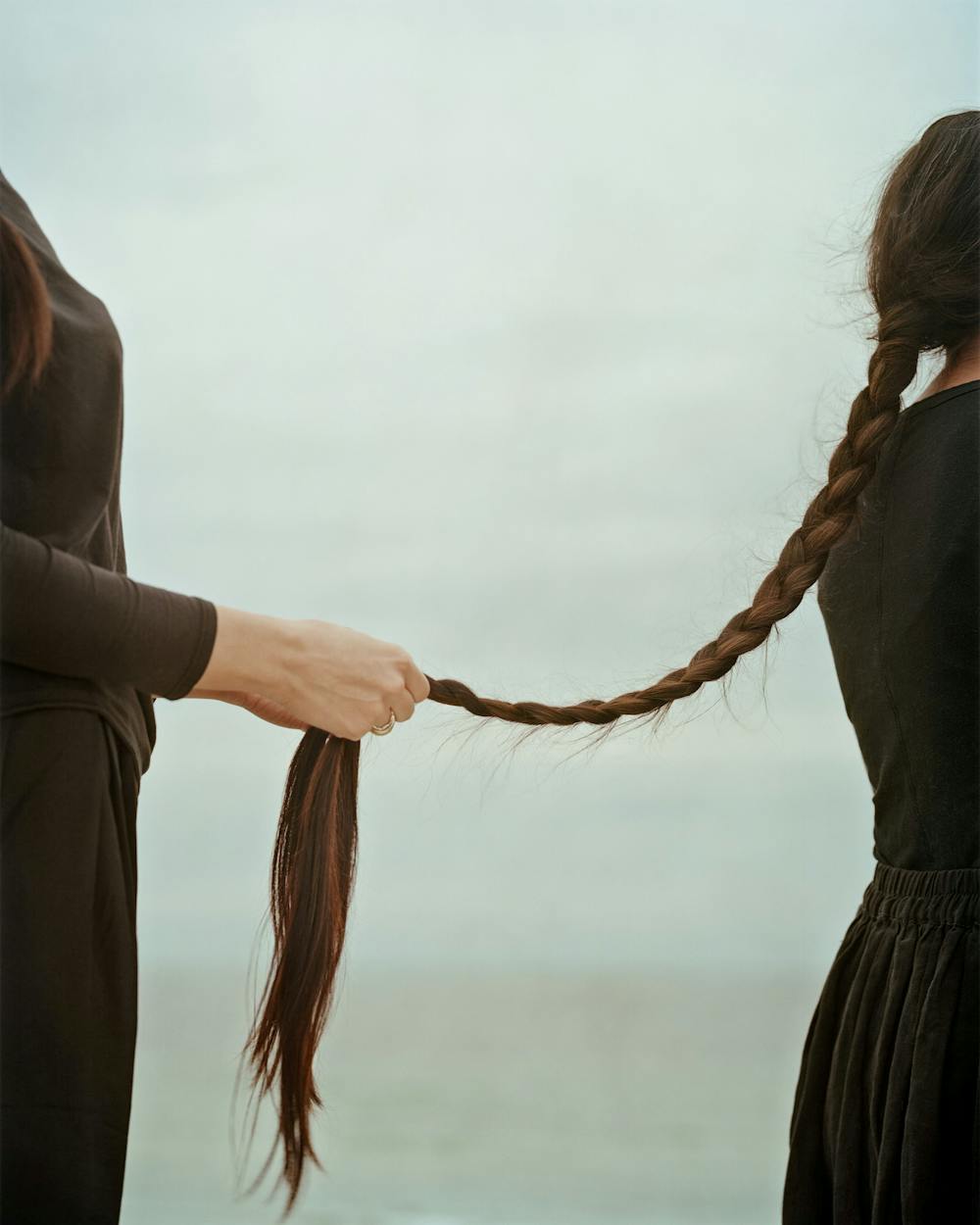 Hoda Afshar ‘Untitled #4’, from the series ‘In turn’ 2023, pigment photographic print, 169 x 128 cm © Hoda Afshar, image courtesy the artist.
This work was catalysed by the women-led protest movement sparked by the death of Mahsa Jina Amini, an Iranian Kurdish woman arrested in September 2022 for not following Iran’s strict female dress codes. The uprising filled the streets with women chanting “Women, Life, Freedom!” and “Say her name!” in fearless defiance of authorities, who responded with murderous retaliation.
Afshar was observing her homeland from afar. She says she wanted to “share voices the media was ignoring”. She was inspired by social media images of women plaiting each other’s hair in public: a rebellious act that echoes a practice of female Kurdish fighters preparing for battle.
But the images aren’t violent. They’re quietly peaceful, showing solidarity in grief, hope and determination. In making this “visual letter” to her Iranian sisters, Afshar has risked long-term exile from her country of birth.
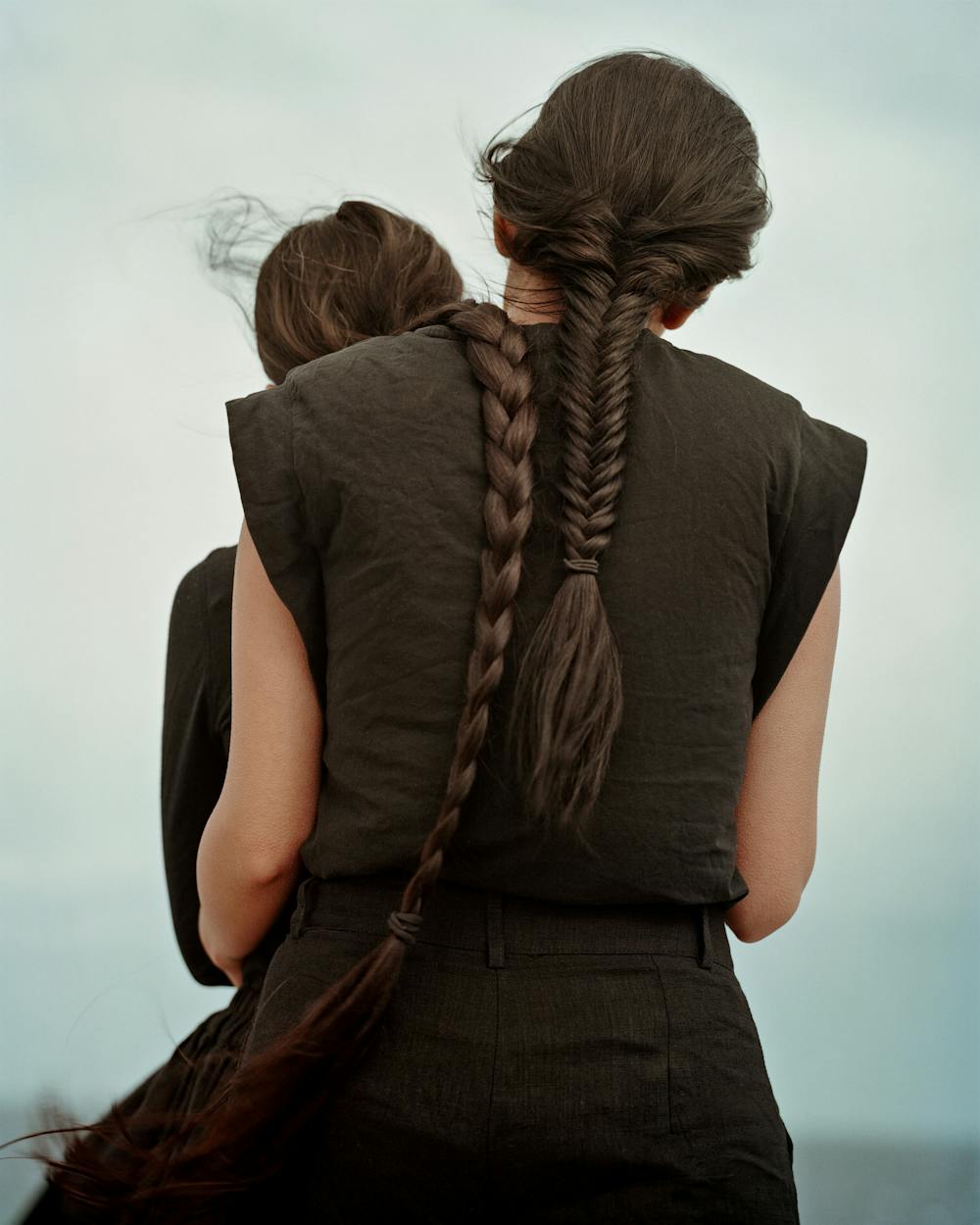 Hoda Afshar ‘Untitled #2’, from the series ‘In turn’ 2023, pigment photographic print, 169 x 128 cm © Hoda Afshar, image courtesy the artist.
Resolute defiance
Much of Afshar’s work fearlessly tells stories that have been hidden or misrepresented.
Remain (2018) was made in collaboration with asylum seekers detained on Manus Island.
This work is made up of a series of austere, absorbing portraits and a large-scale two-channel video installation.
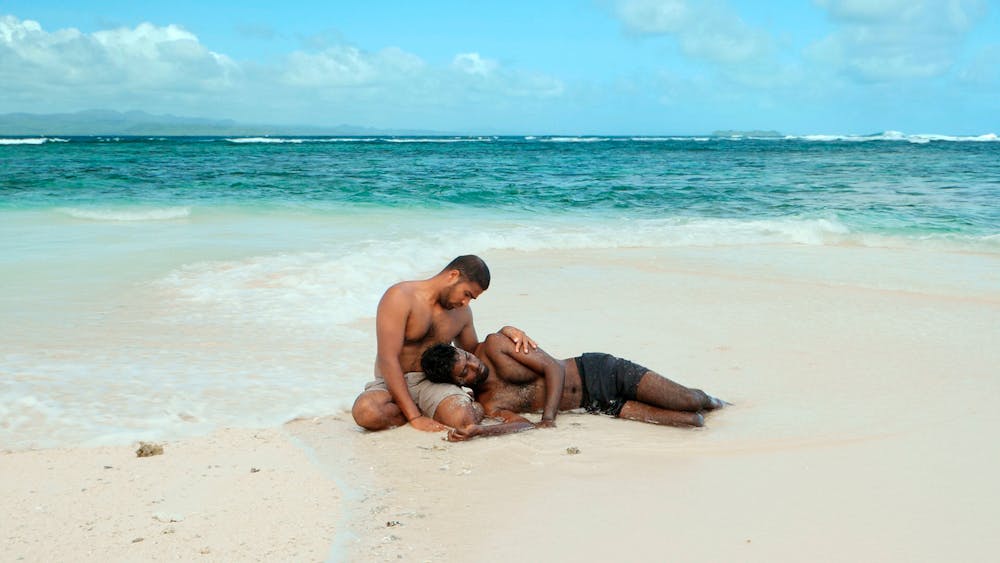 Hoda Afshar ‘Remain’ 2018 (video still), from the series ‘Remain’ 2018, two-channel digital video, colour, sound, duration 23:33 min, aspect ratio 16:9, installation dimensions variable, Art Gallery of New South Wales, purchased with funds provided by the Contemporary Collection Benefactors 2020 © Hoda Afshar, image © Art Gallery of New South Wales.
We see men imprisoned in a place that would otherwise resemble paradise. We hear their voices recounting experiences of trauma and displacement. But, with Afshar, they co-create performative, narrative-evoking works that avoid degrading cliches of victimhood.
The most widely recognised image in this series is a portrait of Kurdish Iranian writer and filmmaker Behrouz Boochani, who chose to be pictured alongside fire. Smoke and flames echo the ardent strength of his gaze. This strength allowed him to emerge a free man after six years of incarceration.
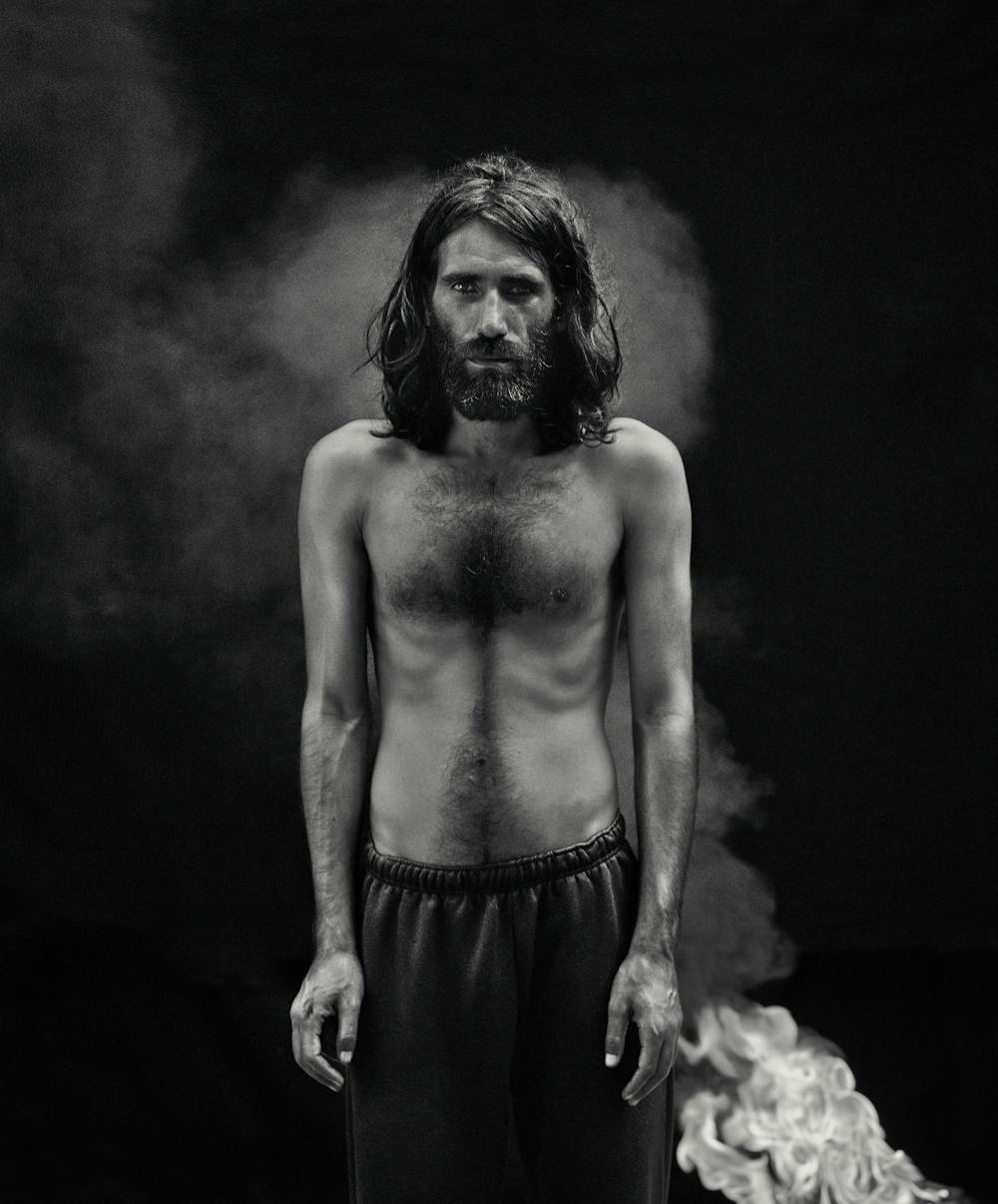 Hoda Afshar ‘Behrouz Boochani – Manus Island’, from the series ‘Remain’ 2018, pigment photographic print, 130 x 104 cm, Art Gallery of New South Wales, purchased with funds provided by the Contemporary Collection Benefactors 2020 © Hoda Afshar, image © Art Gallery of New South Wales.
In Behold (2016), once more we see acts of resolute defiance by people performing for the camera. Afshar was invited by a group of gay men to observe re-enacted gestures of protection and intimacy outlawed in most of the Middle East.
Unable to freely express their love in society, they disclose and affirm it for Afshar and her lens.
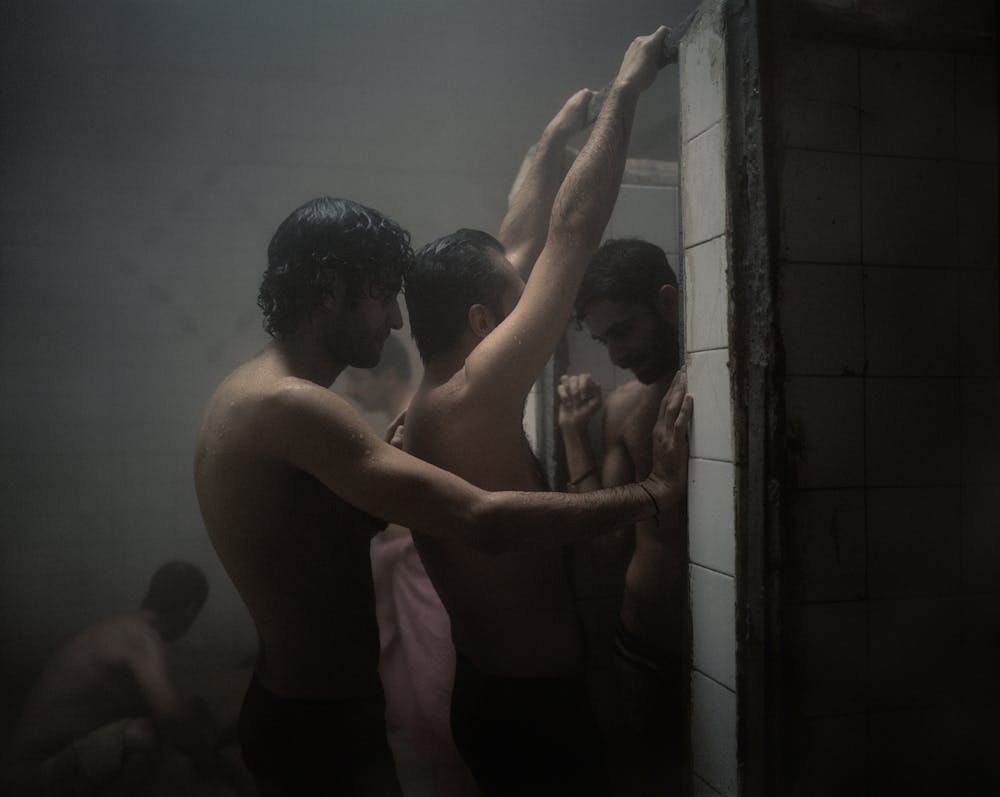 Hoda Afshar ‘Untitled #7’, from the series ‘Behold’ 2016, pigment photographic print, 95 x 120 cm © Hoda Afshar, image courtesy the artist.
Agonistes (2020) pays homage to a group of Australian whistleblowers who appear as a Greek chorus of heroic truth tellers.
Created through a complex process of photographic recording and 3D printing that conjures lifelike detail, the portraits look like sculpted marble busts. But this rendering leaves the eyes blank, and captions describing the corruption revealed by each figure don’t divulge their names.
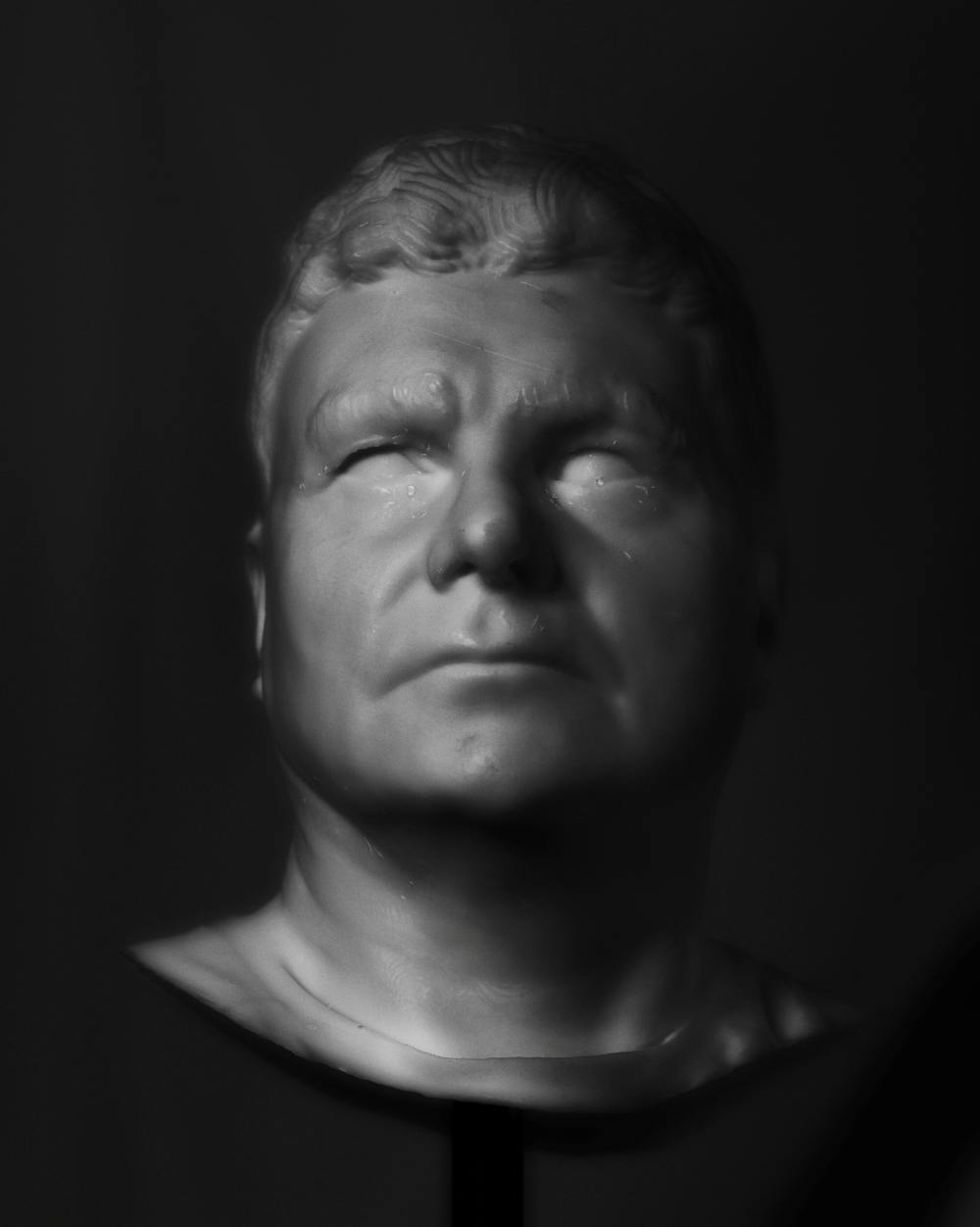 Hoda Afshar ‘Portrait #3’, from the series ‘Agonistes’ 2020, pigment photographic print, text, 69 x 55 cm © Hoda Afshar, image courtesy the artist.
Afshar maintains her practice of disclosing truth while protecting those who have the courage to tell it.
Being alive is breaking
Speak the wind (2015–22) returns us to Iran, to the Strait of Hormuz, where “ill winds” are said to blow. African slaves were brought here over centuries, a trade only stopped in the 1920s.
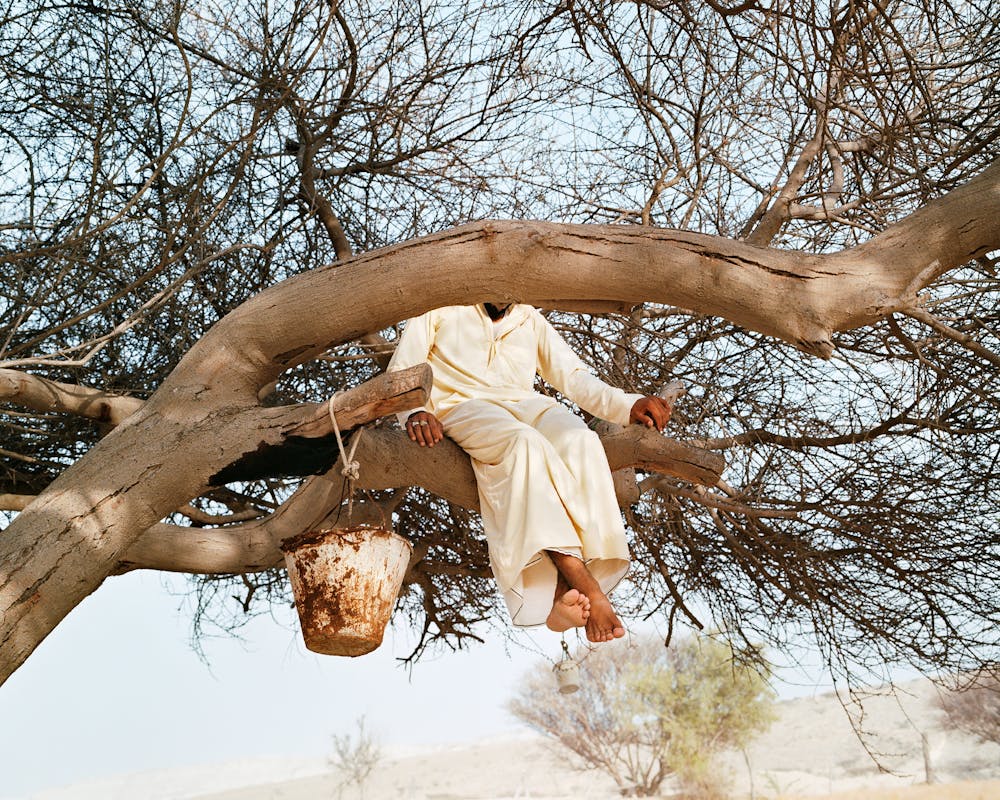 Hoda Afshar ‘Untitled #18’, from the series ‘Speak the wind’ 2015–22, pigment photographic print, 80 x 100 cm © Hoda Afshar, image courtesy the artist.
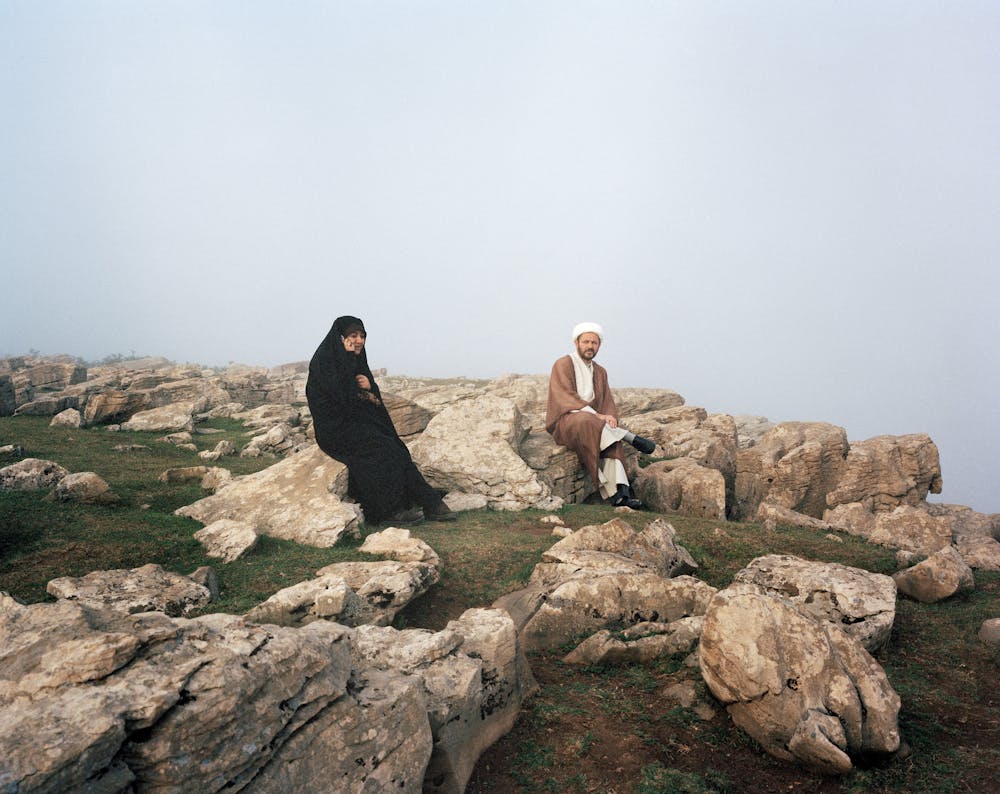
Afshar’s photographs and video imagery explore a place haunted by history. We see the outward manifestations of an invisible wind (dramatically carved rock formations, ripples in water, flowing fabric). Shrouded figures bow on the dry earth, seeking cure from possession by malicious spirits.
Afshar investigates to what extent we are captives of history (in Australia we must grapple with the legacy of colonisation). In making this lyrical work, Afshar again collaborated with local people, some who made drawings of “wind spirits” they said they had encountered.
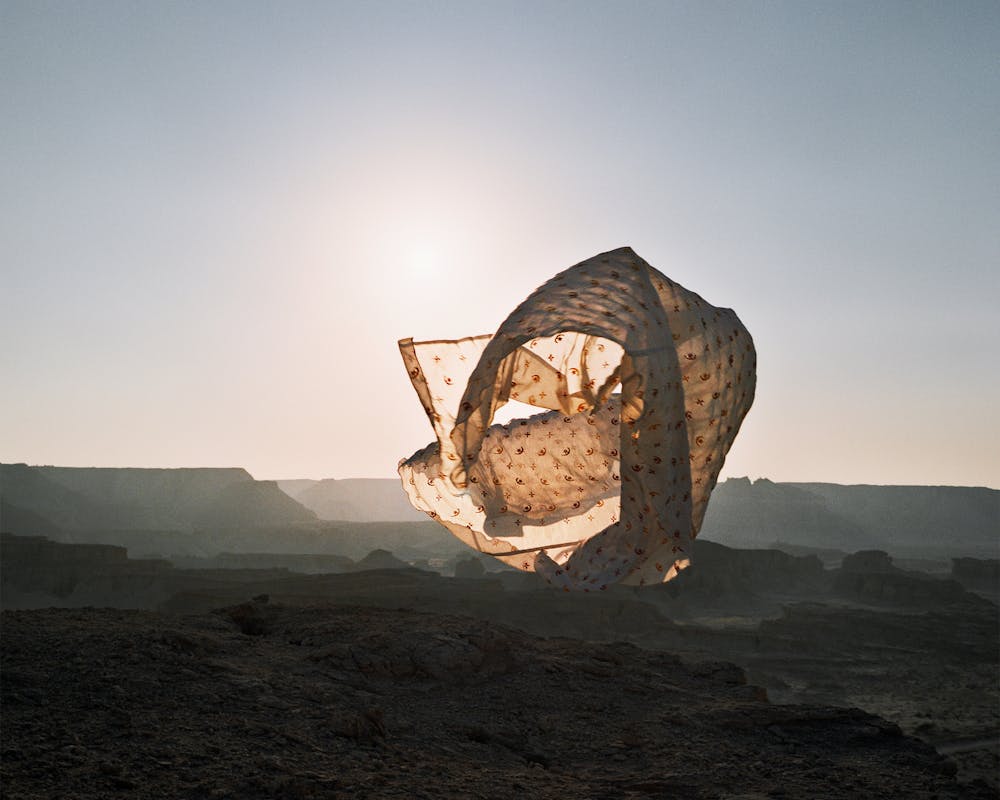 Hoda Afshar ‘Untitled #11’, from the series ‘Speak the wind’ 2015–22, pigment photographic print, 80 x 100 cm © Hoda Afshar, image courtesy the artist.
The title of the exhibition was inspired by lines in a poem by Kaveh Akbar:
a curve is a straight line broken at all its points so much of being alive is breaking.
Hoda Afshar’s work addresses conflict, injustice, mobility and the often fragile state of being alive. It reminds us that dominant powers can be challenged by exposing truth and envisioning something new.
Read more: Friday essay: 10 photography exhibitions that defined Australia
Hoda Afshar: A Curve is a Broken Line is at the Art Gallery of New South Wales until January 21 2024.
Authors: Tom Williams, Lecturer - Visual Arts, University of Wollongong

















