

Girlhood misery, bullying and beauty combine for Laura Elizabeth Woollett's 'unlikeable' west-coast girls
- Written by Liz Evans, Writer, Author, Journalist, Associate Lecturer in English & Writing:, University of Tasmania
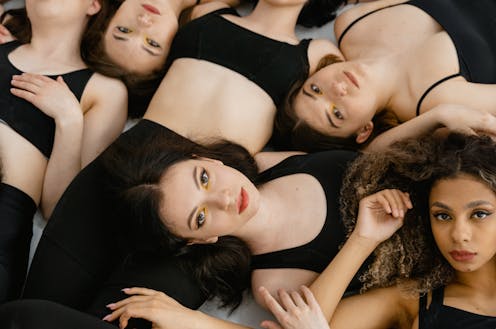
With the post-menopausal generation reappraising what it means to be an older woman, the sheen of youth has become exposed. Women are told to fear the ageing process, but the truth is, I would not return to my teenage years, nor would any of the women I know. The worst part of growing older is watching the next generation go through it all again.
Female bullying is central to Laura Elizabeth Woollett’s fourth book, West Girls, which aligns the misery of girlhood with the tyranny of conventional beauty. Weaving interconnected stories around a revolving cast of characters growing up in Western Australia, the novel cracks open the toxic power dynamics between a privileged huddle of “Blondes” and the culturally diverse girls they seek to marginalise.
Divided by wealth and ethnic discrimination, the two socially disparate groups are united in one respect: their alignment of prettiness with success.
Review: West Girls – Laura Elizabeth Woollett (Scribe)
Not all the Blondes are pretty, “but there are a lot of them, and the prettiest ones have a way of boosting the average, like shiny tens added to a sequence of sixes”. Luna Lewis is in their thrall, but her Maltese heritage and Indonesian stepmother mean she blends in with the Asian girls instead.
As she grows up and sheds her childhood weight, she begins to realise the potential of her racially ambiguous looks after new student Makoto, an American who has appeared in Teen Vogue, mistakes her as “Eurasian” and advises her to audition for a modelling agency; Luna doesn’t correct the mistake.

Harmful ideals of high school
The vicious judgements and harmful ideals of high school feed into the adult world. Luna exploits the orientalism of the fashion industry and establishes a modelling career as Luna Lu. Chief Blonde, Caitlyn, represses her sexual desire for women to stay in a socially advantageous relationship with a controlling footballer prone to angry outbursts. Geli’s mental health declines as she struggles to work within the depersonalising environment of the cosmetic beauty industry.
Shifting between first- and third-person perspectives, these intersecting vignettes situate notions of femininity within equally precarious ideas about race and sexuality.
Woollett’s storytelling is stylish and sophisticated, and enquires into a range of urgent social and cultural issues. But the novel’s unerring insistence on a universal enslavement to beauty restricts the narrative scope and limits the depth of its characters.
When Luna flunks school after neglecting her studies to spend time with Blonde Caitlyn, she proclaims: “I chose the jagged rocks, the broken bones, the spattered brains. I chose beauty. I’d choose it again.”
The poetic drama of her statement is bold and impressive, though the sentiment rings hollow. In many ways, that’s the point of this clever, elegantly composed novel. But as a woman who actively resented “prettiness” when I was younger, I’m not buying it.
Read more: Friday essay: how 19th century ideas influenced today's attitudes to women’s beauty
Too pretty for words
During my twenties, I was a music journalist in London who fought hard to be taken seriously. Despite publishing two books, I was deemed too “pretty” for words.
Musicians expressed surprise at my intelligence, one male journalist offered to enhance a piece I did on Riot Grrl and a senior editor butchered my exclusive interview with a vulnerable singer. The biggest shock came when a leading frontwoman, renowned for her baby-doll frocks, rock-star husband, and feminist lyrics, told me she’d assumed I wouldn’t be able to “give good interview”, because I was “pretty”.
 An American who made headlines in the 1990s, my interviewee would make a perfect fit for Woollett’s book. Obsessed with her appearance, desperate for celebrity status, she was intelligent, charismatic and fascinating. She was also unstable and full of scorn for other women. Beneath the dazzle and shine, the outrageous lyrics and the sexy stage antics, there wasn’t a whole lot of intrigue. And that’s the trouble with West Girls.
The cleverest section of the book follows mining heiress Rikki, as she navigates relative poverty. Kicked out of her palatial family home for falling in love with an Indigenous boy who barely registers her existence, she ends up working in the print factory alongside the mothers of some of the Asian girls who make appearances elsewhere in the novel. “If you want your dad’s money, date someone white. It’s not hard,” says Caitlyn, or “the Goddess” as Rikki calls her.
Read more:
Friday essay: beyond 'girl gone mad melodrama' — reframing female anger in psychological thrillers
Unlikeable girls
The novel’s only resistance to the towering myth of beauty comes from Katie. Blowing in from Europe on the run from personal trauma, she stumbles across the underbelly of Australia’s richest state in a remote mining town that simmers with violence. Her character offers a break from the ruthless, glamour-hungry west-coast girls, but it’s not enough to form a counterpoint.
An American who made headlines in the 1990s, my interviewee would make a perfect fit for Woollett’s book. Obsessed with her appearance, desperate for celebrity status, she was intelligent, charismatic and fascinating. She was also unstable and full of scorn for other women. Beneath the dazzle and shine, the outrageous lyrics and the sexy stage antics, there wasn’t a whole lot of intrigue. And that’s the trouble with West Girls.
The cleverest section of the book follows mining heiress Rikki, as she navigates relative poverty. Kicked out of her palatial family home for falling in love with an Indigenous boy who barely registers her existence, she ends up working in the print factory alongside the mothers of some of the Asian girls who make appearances elsewhere in the novel. “If you want your dad’s money, date someone white. It’s not hard,” says Caitlyn, or “the Goddess” as Rikki calls her.
Read more:
Friday essay: beyond 'girl gone mad melodrama' — reframing female anger in psychological thrillers
Unlikeable girls
The novel’s only resistance to the towering myth of beauty comes from Katie. Blowing in from Europe on the run from personal trauma, she stumbles across the underbelly of Australia’s richest state in a remote mining town that simmers with violence. Her character offers a break from the ruthless, glamour-hungry west-coast girls, but it’s not enough to form a counterpoint.
 Almost all the West Girls are unlikeable, which adds to the frustration. Unlikeable female characters offer some of the best potential for explorations of complex psychology, as shown by Nina in Harriet Lane’s Her, Laura in Paula Hawkins’ A Slow Fire Burning, and Jasmine in R.F. Kuang’s Yellowface. Gleefully unfettered by what Irish academic Eva Burke calls “the social obligation of female likeability”, these are compelling women who refuse the complicity of niceness.
What sets these women apart from Woollett’s is a level of complication that makes the reader care: not necessarily about them, but about what they do. It’s not enough to feel invested in a character’s circumstances or situation, no matter how fascinating or significant. For a novel to have impact, ambitious themes need to be balanced by psychological and emotional depth. And in West Girls, that’s simply not the case.
Woollett is a self-assured and supremely talented writer, and the social and cultural subject matter of her novel sets it apart. But the beauty theme is too insistent, and the characters’ lack of interior complexity means they’re not as interesting as they could be.
Authors: Liz Evans, Writer, Author, Journalist, Associate Lecturer in English & Writing:, University of Tasmania
Almost all the West Girls are unlikeable, which adds to the frustration. Unlikeable female characters offer some of the best potential for explorations of complex psychology, as shown by Nina in Harriet Lane’s Her, Laura in Paula Hawkins’ A Slow Fire Burning, and Jasmine in R.F. Kuang’s Yellowface. Gleefully unfettered by what Irish academic Eva Burke calls “the social obligation of female likeability”, these are compelling women who refuse the complicity of niceness.
What sets these women apart from Woollett’s is a level of complication that makes the reader care: not necessarily about them, but about what they do. It’s not enough to feel invested in a character’s circumstances or situation, no matter how fascinating or significant. For a novel to have impact, ambitious themes need to be balanced by psychological and emotional depth. And in West Girls, that’s simply not the case.
Woollett is a self-assured and supremely talented writer, and the social and cultural subject matter of her novel sets it apart. But the beauty theme is too insistent, and the characters’ lack of interior complexity means they’re not as interesting as they could be.
Authors: Liz Evans, Writer, Author, Journalist, Associate Lecturer in English & Writing:, University of Tasmania 
















