

How we brought mistletoes back to the trees of Melbourne – while warding off hungry possums
- Written by David M Watson, Professor in Ecology, Charles Sturt University
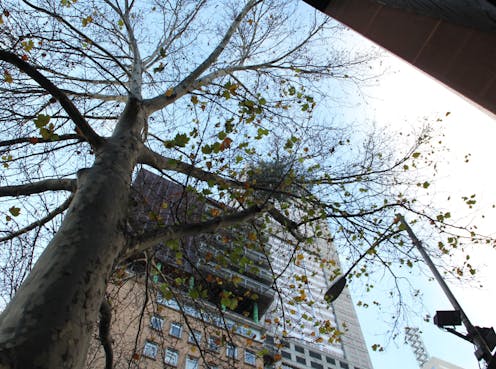
Until recently, mistletoes were regarded as problematic pests across Australia. They were seen as having been introduced from elsewhere, exploiting helpless trees and driving their premature demise.
Around the world, arborists and plantation managers used to be trained to remove mistletoes as part of routine maintenance. They went to extraordinary lengths to rid trees of these dense parasitic clumps, using flamethrowers, high-powered rifles, even herbicide-spritzing drones.
But just as we now know that hollows are essential for wildlife, including many threatened species, awareness of the positive side of parasitic plants is growing. Mistletoes have been shown to boost biodiversity and increase resilience of wildlife populations to drought, habitat loss and predators.
However, unlike other plants that can be grown as seedlings and planted out, mistletoes rely on animals to plant their seeds on the branches of host trees. This means they aren’t included in revegetation efforts, and it was unclear whether it would even be possible.
We set out on a world-first trial to attempt to reintroduce mistletoe to the trees of Melbourne. As our recently published research shows, we succeeded. Some of the mistletoes are now even bearing fruit.
The only factor that stood in the way of success was the bane of many gardeners’ lives – hungry brushtail possums.
Productive parasites
Mistletoes provide many benefits for local biodiversity. Their flowers provide reliable nectar that encourages pollinators to linger longer. They then boost the populations of other plant species they visit.
The nutrients in mistletoe leaves boost soil health and dramatically increase insect numbers when they fall to the forest floor.
The ripples of these interactions spread right through woodland food webs. One study demonstrated the most significant impacts on ground-feeding insect-eating birds, whose numbers have declined across eastern Australia.
Many birds nest in mistletoes. Their dense evergreen foliage provides cover from predators.
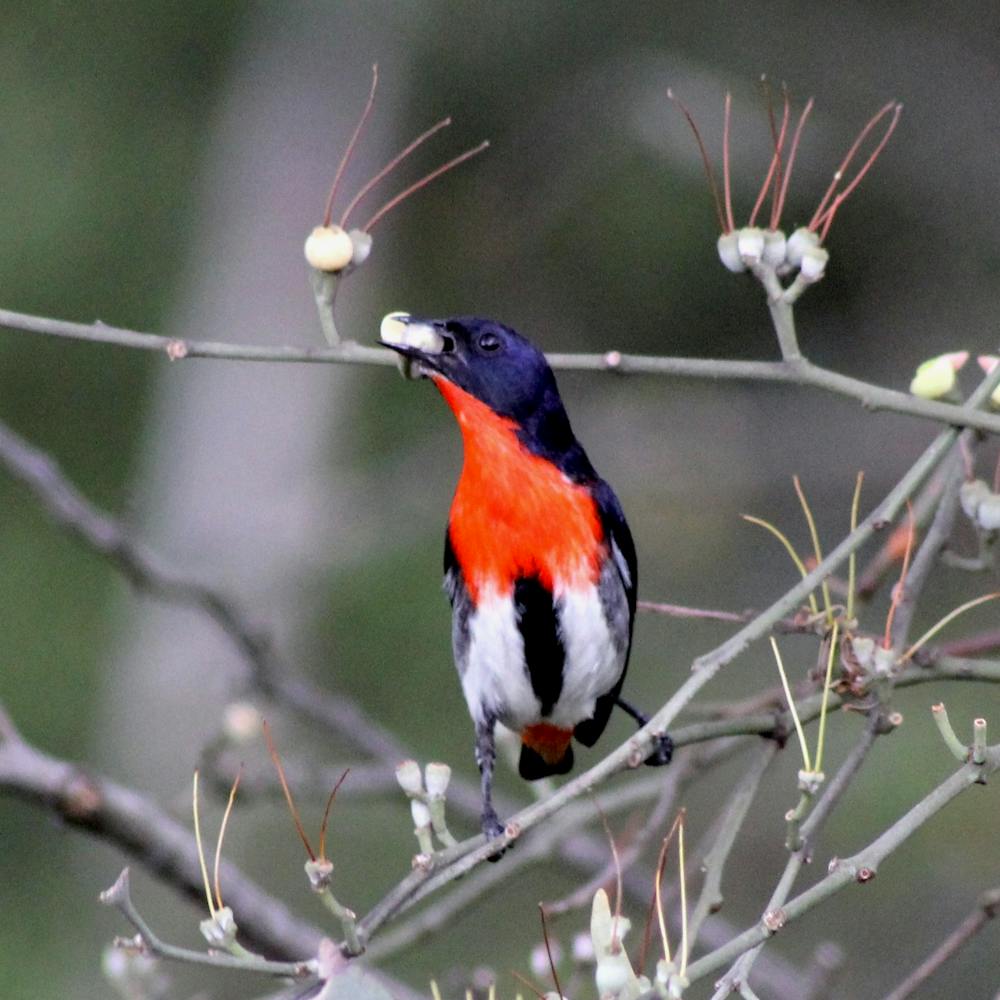
All of Australia’s mistletoes are native species. Most hail from ancient lineages dating all the way back to Gondwanaland.
The knowledge we have gained about mistletoes has led to an about-face in natural resource management. Managers are rethinking mistletoe removal and embracing these native plants as ecological keystones.
In some areas where mistletoes no longer occur, restoration practitioners have suggested reintroducing them. It had been unclear if this was feasible.
Read more: Mistletoe: the kiss of life for healthy forests
Making Melbourne even more marvellous
Working closely with City of Melbourne staff, research scientists from the Gulbali Institute undertook a world-first trial of the reintroduction of a native mistletoe to street trees. Rather than eucalypts or other native trees, we decided to use plane trees, a European species that is a feature of city streets the world over. In Australia, very few things interact with plane trees — nothing eats them, which is one reason they’re popular street trees.
Rather than replace these established trees with more fitting local species and waiting a few decades for them to grow, we tried something a little different. We added a native mistletoe to their canopies to boost the resources available to urban wildlife.
We chose creeping mistletoe (Muellerina eucalyptoides), which is now scarce in Melbourne, but is just as happy growing on exotic deciduous trees as the evergreen eucalypts this species depends on as hosts in the bush.
Our research paper summarises the outcomes of the trial. Almost 900 seeds were carefully wiped on the branches of 28 plane trees. We were replicating the efforts of mistletoebirds, which usually spread these sticky seeds.
Five years after inoculation, we found mistletoes had established on five trees. Even better, two of these plants were full of fruit. There is now a ready-made seed source in the heart of Melbourne for further expansion of these beneficial native plants.
Read more: Australia’s unusual species
The problems with possums
Rather than establishment depending on the size of the branch, the age of the tree or which direction it faced, the only factor that emerged as a significant determinant of success was whether or not the tree was fitted with a possum collar. These acrylic or metal sheets wrapped around the trunk are too slippery for possums to climb. The city’s tree management team routinely uses these collars to grant a reprieve to trees whose canopies have been badly damaged by these marsupials.
Previous work has found possums love to eat mistletoe foliage. This is likely due to their high concentration of nutrients and lack of chemical defences that eucalypts have.
Our study is the first to provide direct evidence of the effect of common brushtail possums on mistletoe recruitment. Its findings reinforce reports from New Zealand, where introduced brushtail possums have devastated three mistletoe species and been implicated in the extinction of a fourth, the only mistletoe known to have gone extinct worldwide.
Read more: Why sweet-toothed possums graze on stressed, sickly-looking trees
Beautiful butterflies are returning
Time will tell how the addition of these plants to the urban forest will affect Melbourne wildlife. Already, gorgeous imperial jezebel butterflies have been spotted emerging from creeping mistletoes in Princes Park.
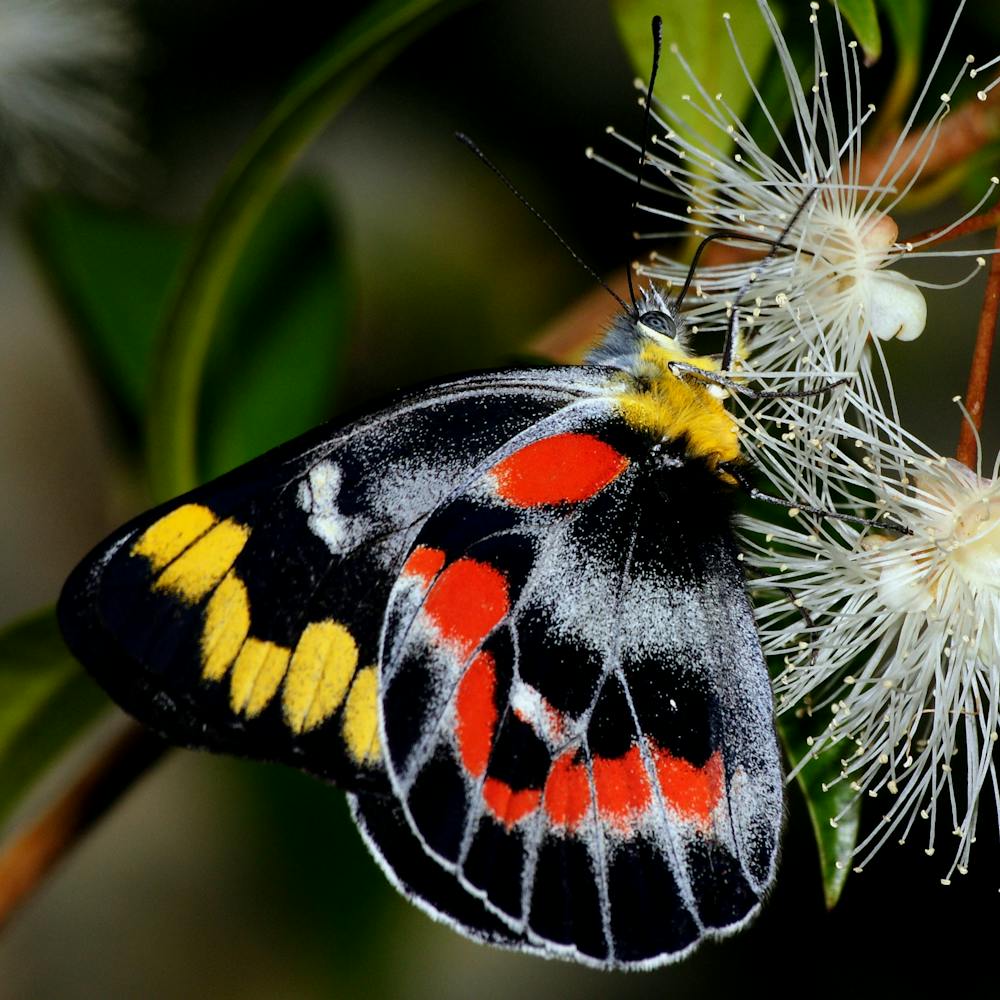 The imperial jezebel lays its eggs only on mistletoes.
David Cook/Flickr, CC BY-NC
The imperial jezebel lays its eggs only on mistletoes.
David Cook/Flickr, CC BY-NC
Even better, our work has inspired three other urban mistletoe reintroductions elsewhere in Melbourne. In New South Wales, Birdlife Australia and Mindaribba Local Aboriginal Land Council are working together to restore mistletoe to woodlands on Wonnarua Country. The mistletoe will supply missing nectar resources for the critically endangered regent honeyeater.
Collectively, this work is helping to shift the public perception of these native plants – from pernicious parasites to ecological keystones.
Authors: David M Watson, Professor in Ecology, Charles Sturt University

















