

conspiracy theorists 'get the facts wrong but often get the feelings right'
- Written by Nick Haslam, Professor of Psychology, The University of Melbourne
Idly googling myself some years ago, I came upon an unusually glowing reference to one of my academic papers. “Masterpiece is an overused word,” the reviewer wrote, “but this Proustian evocation is indeed a masterpiece.”
Something was amiss. My paper was good, but not that good. And there was nothing particularly Proustian about it either. Whatever exquisite sensibility I might possess was well hidden beneath a scholarly armour of logic, evidence and jargon.
Reading further resolved the puzzle. “Nicky Haslam has known everyone from Greta Garbo to Cole Porter to the Royal Family.” Curses! I had been confused with my namesake, the famous British interior designer and scourge of vulgarity, and my paper with one of his books.
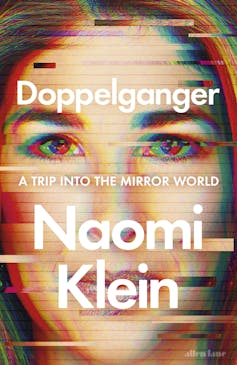
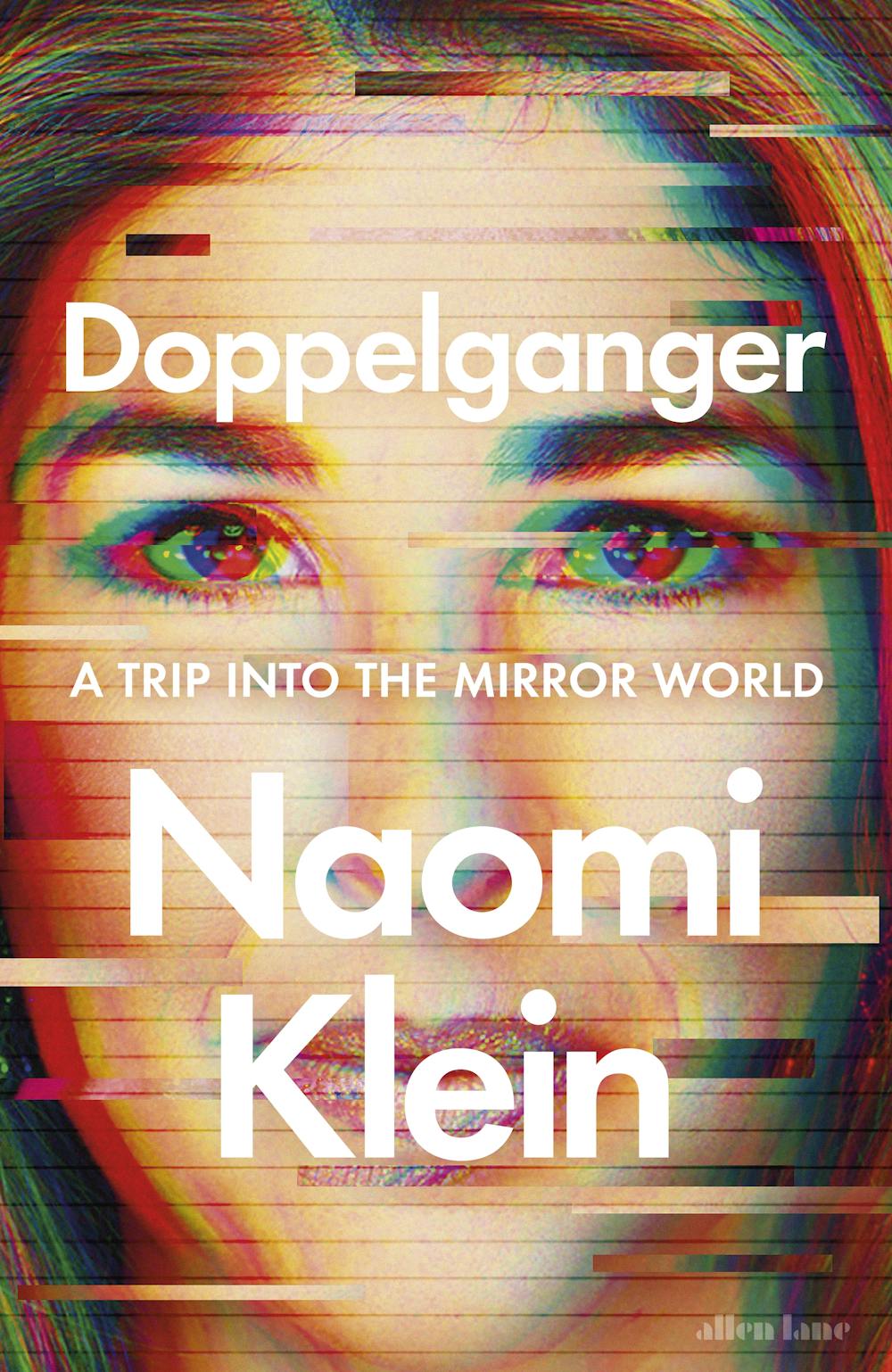
Review: Doppelganger: A Trip into the Mirror World – Naomi Klein (Allen Lane)
The experience of being confused with someone else is probably universal. Names and appearances are fallible markers of personal identity, especially as populations grow and we become exposed to a dizzying multitude of other people.
These confusions are usually trivial and droll, but sometimes they become sinister and destabilising. The idea that we have a double, someone who treads on the toes of our uniqueness, perhaps deliberately, can create deep anxieties and resentments.
The two Naomis
Such is the experience of Naomi Klein, Canadian author of a string of anti-capitalist blockbusters. No Logo (1999) attacked corporate malfeasance, The Shock Doctrine (2007) catalogued the exploitation of disasters to roll out neoliberal policies, and 2019’s On Fire marked her increasing focus on the climate crisis.
In her new book, Doppelganger, Klein makes her experience of being confused with another high-profile author, Naomi Wolf, the stimulus for an extended meditation on the nature of doubles, mirror-worlds, and the political and personal challenges of threatened identities.
Along the way, Klein returns to several of the animating themes of her previous books. Capitalism is the ultimate cause of the dire societal challenges we face, she argues, and people on both sides of the political mirror – right-wing conspiracists and liberal critics alike – fail to recognise it because they are mired in individualist ways of thinking.
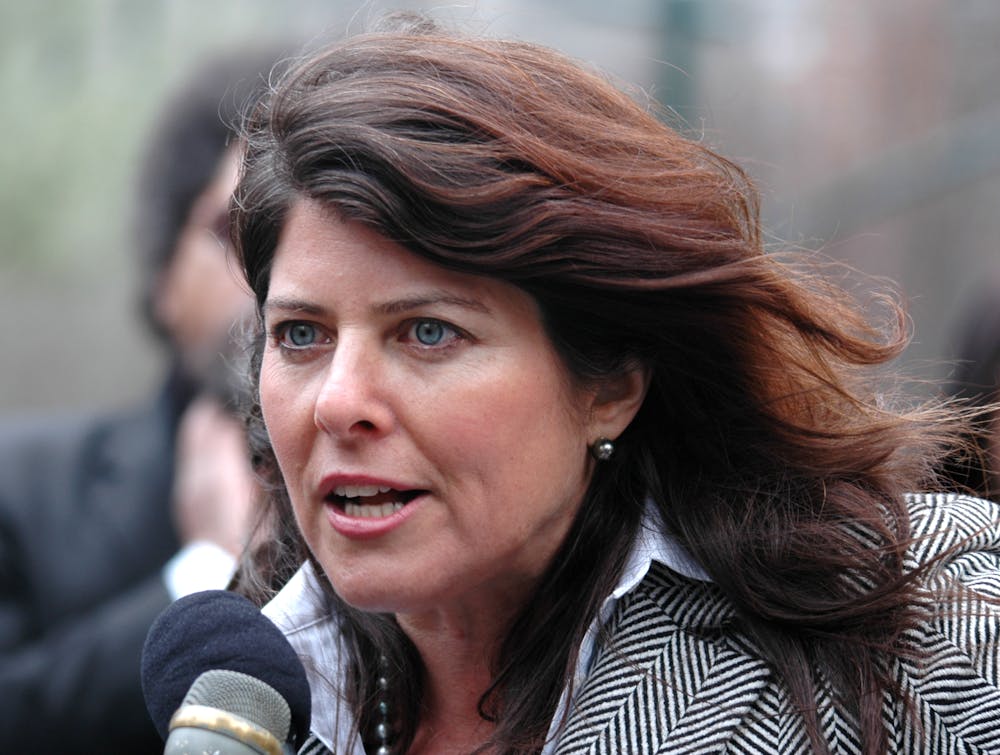
The backbone of Klein’s personal story is simple enough. “Other Naomi”, her “big-haired doppelganger”, is the American author of feminist bestseller The Beauty Myth and was once a celebrated and very public figure on the broad left. Because Wolf was older and more established than Klein, being mistaken for her initially brought a frisson of celebrity.
That all changed when Wolf’s writing veered away from sexual liberation and female empowerment into conspiracies about Ebola, ISIS and (most recently) the COVID pandemic, complete with fear mongering about vaccines, mask mandates and impending tyranny.
Her transformation – or derailment, as Klein would have it – has seen her teaming up with far-right media personalities like Steve Bannon and issuing torrents of misinformation and paranoia.
Appalled at being confused with Wolf, Klein developed a dogged obsession. She followed Wolf’s social media, watched in horror her televised appearances, and pursued her down the rabbit hole – or through the looking glass – of conspiracist thinking. The intensity of Klein’s anti-crush and the tenacity of her pursuit seem to have surprised her, but it delivered insights into the nature of doubles and evil twins.
Read more: Seeing double: the origins of the 'evil twin' in Gothic horror and Hollywood
Doppelganger as ‘shadow self’
Translated from the German, a doppelganger is literally a “double-goer” or “double-walker”: someone who eerily accompanies us as a kind of shadow-self. Literary doppelgangers tend to be uncanny presences, violent alter egos, wicked impersonators or tormentors who sometimes turn out to be figments of their victim’s madness.
To philosophers and psychoanalysts, doppelgangers illuminate the existential wobbliness that goes with having our sense of unique selfhood undermined. As Golyadkin tells his replica in Dostoevsky’s The Double, “Either you or I, but both together we cannot be!”, not long before he is carted off to an asylum while his double blows mocking farewell kisses.
Klein’s response to other Naomi is similarly unsettled and goes beyond merely wishing to correct the record whenever she is misidentified. Klein feels her personal brand has been diluted, while acknowledging the irony of caring about her brand, given her fierce critique of corporate branding in No Logo (1999).
Naomi Klein fiercely critiqued corporate branding in No Logo, which spawned a documentary.Nearly a quarter of a century later, she argues that personal branding, amplified by the growing desire to curate a unique digital self, entrenches fixed and phony selves and stands in the way of forming alliances with others.
Despite admitting she cares too much about her own brand, Klein deals with Wolf’s encroachment head-on by attacking her new politics. She takes aim at the “Mirror World” that congealed around resistance to vaccine and mask mandates, a new coalition of far-right MAGA folk and far-out health and wellness influencers and new-agers, united by a concern with body purity and a fondness for overheated rhetoric.
Calling out conspiracists
Klein bristles at anti-vaxxers’ claims of a genocidal “hygiene dictatorship” and their appropriation of Holocaust imagery, “as if the Nazi atrocity of treating human beings as germs and treating germs as germs was in any way the same thing”.
She also calls out bad-faith appropriation of civil rights discourse by white conspiracists, as when Wolf refers to one of her anti-mask protests as a lunch-counter sit-in, or when vaccination requirements are described as “medical apartheid”.
Klein also hears less-than-faint echoes of fascism and colonial callousness in arguments the pandemic was nature doing its work of thinning out the weak and infirm – and in the blind eye turned to disproportionate death rates among people of colour.
Mistaken beliefs linking vaccines and autism were a prequel to this dynamic, Klein suggests. In both cases, a health initiative takes the blame for troubling events: a diagnosis commonly taken as a tragedy in a society “that is very generous with diagnoses and awfully stingy with actual help” and a major economic and social disruption. A righteous hunt for villains ensues, heightened by the primal fear of shadowy, malevolent forces.
 Naomi Klein believes Andrew Wakefield’s debunked study linking vaccines to autism was a ‘prequel’ to the COVID-19 anti-vaxxers.
Sang Tan/AP
Naomi Klein believes Andrew Wakefield’s debunked study linking vaccines to autism was a ‘prequel’ to the COVID-19 anti-vaxxers.
Sang Tan/AP
What might have driven Wolf into this parallel universe where Twitter, YouTube and Instagram are replaced by the far-right social media alternatives of Gettr, Rumble and Parler? Klein offers an equation: “Narcissism (Grandiosity) + Social media addiction + Midlife crisis ÷ Public shaming = Right-wing meltdown”. (Though surely the ÷ should be an ×: shaming exacerbates rather than dampens meltdowns.)
Klein argues Wolf is simply chasing clout and “digital dopamine”, a chase hardly confined to one side of politics.
Read more: White supremacist and far right ideology underpin anti-vax movements
Blame on both sides
Klein’s denunciations of Wolf and her allies are full-throated, but she doesn’t see her own side as blameless. Progressives have abandoned some issues to conservatives and have been overly reactive rather than setting their own agenda. Centrists have failed to deliver action to match their fine words.
Citizens of developed societies have quietly denied the magnitude of our dependence on – and complicity with – global injustice.
What needs to happen, according to Klein, is for people to realise the true source of their problems. Conspiracy theorists are half right: they “get the facts wrong but often get the feelings right”. The feeling others are profiting from human misery and withholding the truth is justified, but the cause is not evil individuals – it’s capitalism itself.
Doppelganger argues that capitalist “hyper-individualism” is the root of many of our troubles, and a value held by conspiratorial rightists and liberals alike. It breeds a culture that sees all failings as personal and stands in the way of us uniting to act for the greater good.
The solution, Klein maintains, in a tone that becomes increasingly prophetic as the book progresses, is to think systemically about oppression and inequality, and to decentre ourselves. “There is an intimate relationship between our overinflated selves and our under-cared-for planet,” she writes.
Later chapters take up this challenge, in discussions of settler colonialism, antisemitism and the climate emergency.
Read more: We live in a time of 'late capitalism'. But what does that mean? And what's so late about it?
Doubling down too much
Klein’s book is a compelling critique of polarising trends in American and global politics, constructed around a relatable personal narrative. Its anti-capitalist message and sometimes utopian faith in socialist solutions will not be universally embraced, of course. But Klein delivers it with a powerful and passionate voice.
 If Doppelganger has a weak point, it is in its organising idea, which strains under the load it is made to bear. The range of meanings “doppelganger” carries is extravagant, extending far beyond the realm of troublesome namesakes and lookalikes.
Our self-branding online selves are “an internal sort of doppelganger”. The ideal body we aspire to is a doppelganger, and so is the data footprint our online presence leaves behind, our “digital golems”. Thinking is a form of doubling, a “dialogue between me and myself”.
Stereotypes create doppelgangers by projecting images onto individuals:
race, ethnicity, and gender create dangerous doubles that hover over whole categories of people – Savage. Terrorist. Thief. Whore. Property.
Children are doppelgangers of parents who fail to see them as autonomous beings. We have a second, doppelganger body that represents all the harms we cause others and our planet.
It’s not just individuals that have doppelgangers, but also societies, religions, nations and places. Pluralist society has a fascist doppelganger. Jews and Christians are each other’s doppelgangers. Israel is a doppelganger of antisemitic European nationalisms. New South Wales is the doppelganger of South Wales. Indeed, we all live in a “doppelganger culture. A culture crowded with various forms of doubling.”
Strangely, in all this multiplication of doubling, Klein has little to say about other pressing forms of duplication, such as artificial intelligences, deepfakes and identity theft.
Her use of the doppelganger concept is so fruitful, so capable of capturing any kind of similarity and difference, that it becomes almost empty. Doppelganger succeeds despite the occasionally laboured use of this metaphor, rather than because of it.
In the end, Klein finds some almost grudging sympathy for her doppelganger, acknowledging an act of political bravery (a 2014 stand against Palestinian civilian casualties) and recalling an early starstruck meeting. Wolf is not a double of the haunting variety – she has apparently rebuffed Klein’s invitations for a public interview – but she has left her psychic mark and the reader is the better for it.
Ironically, being paired in this engrossing book leaves the two Naomis more conjoined than ever, like two magnets flipped from repulsion to a strange attraction.
Authors: Nick Haslam, Professor of Psychology, The University of Melbourne
If Doppelganger has a weak point, it is in its organising idea, which strains under the load it is made to bear. The range of meanings “doppelganger” carries is extravagant, extending far beyond the realm of troublesome namesakes and lookalikes.
Our self-branding online selves are “an internal sort of doppelganger”. The ideal body we aspire to is a doppelganger, and so is the data footprint our online presence leaves behind, our “digital golems”. Thinking is a form of doubling, a “dialogue between me and myself”.
Stereotypes create doppelgangers by projecting images onto individuals:
race, ethnicity, and gender create dangerous doubles that hover over whole categories of people – Savage. Terrorist. Thief. Whore. Property.
Children are doppelgangers of parents who fail to see them as autonomous beings. We have a second, doppelganger body that represents all the harms we cause others and our planet.
It’s not just individuals that have doppelgangers, but also societies, religions, nations and places. Pluralist society has a fascist doppelganger. Jews and Christians are each other’s doppelgangers. Israel is a doppelganger of antisemitic European nationalisms. New South Wales is the doppelganger of South Wales. Indeed, we all live in a “doppelganger culture. A culture crowded with various forms of doubling.”
Strangely, in all this multiplication of doubling, Klein has little to say about other pressing forms of duplication, such as artificial intelligences, deepfakes and identity theft.
Her use of the doppelganger concept is so fruitful, so capable of capturing any kind of similarity and difference, that it becomes almost empty. Doppelganger succeeds despite the occasionally laboured use of this metaphor, rather than because of it.
In the end, Klein finds some almost grudging sympathy for her doppelganger, acknowledging an act of political bravery (a 2014 stand against Palestinian civilian casualties) and recalling an early starstruck meeting. Wolf is not a double of the haunting variety – she has apparently rebuffed Klein’s invitations for a public interview – but she has left her psychic mark and the reader is the better for it.
Ironically, being paired in this engrossing book leaves the two Naomis more conjoined than ever, like two magnets flipped from repulsion to a strange attraction.
Authors: Nick Haslam, Professor of Psychology, The University of Melbourne 
















