

We just blew past 1.5 degrees. Game over on climate? Not yet
- Written by Ailie Gallant, Senior Lecturer, School of Earth, Atmosphere and Environment, Monash University
July 2023 was the hottest month ever recorded. And now we know something even more alarming. This week, the European Space Agency announced the July heat pushed the global average temperatures 1.5℃ above the pre-industrial average.
The ominous headlines seemed to suggest we’d blown past the 2015 Paris Agreement goal of holding warming to 1.5℃ – and around a decade earlier than expected.
Is that it? Game over, we lost?
Well, like all things to do with climate change, it’s not quite that simple. The threshold was breached for a month before average temperatures dropped back. And July 2023 isn’t actually the first time this has happened either – the dubious honour goes to February 2016, where we broke the threshold for a few days.
Remind me – why is 1.5℃ so important?
In 2015, the world looked like it was finally getting somewhere with action to combat climate change. After decades of arduous debate, 195 nations adopted the Paris Agreement, a formal but non-binding agreement with a clear goal: limit global warming to 1.5℃ above pre-industrial levels to avoid the worst effects of climate change.
But there’s nothing magic about this number. Every increase worsens the impacts. So why is 1.5℃ so important?
Essentially, it was thrashed out by experts as a threshold representing heightened danger. The Paris Agreement states avoiding dangerous climate change means keeping global temperatures “well below 2℃” of warming, and so the 1.5℃ threshold was born.
Read more: The 1.5℃ global warming limit is not impossible – but without political action it soon will be
What’s a dangerous level of climate change? Basically, levels of warming where the damage becomes so widespread or severe as to threaten economies, ecosystems, agriculture, and risk irreversible tipping points such as the collapse of ice sheets or ocean circulations. More importantly, this level of warming risks pushing us beyond the limits of being able to adapt.
Put simply, the 1.5℃ threshold is the best estimate of the point where we are likely to find ourselves well up the proverbial creek, without a paddle.
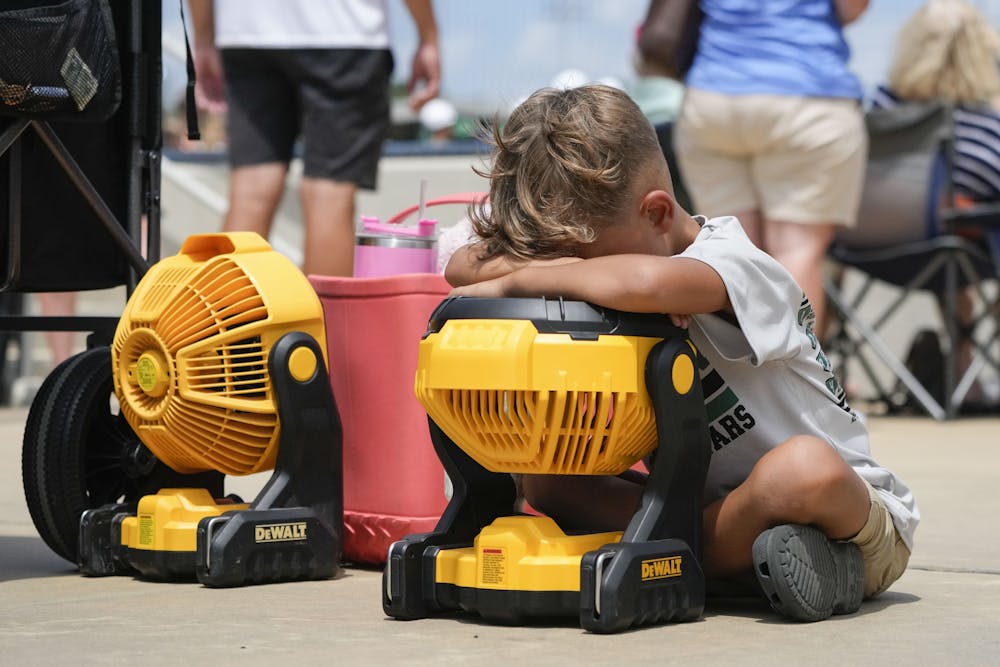
 A hotter world makes it harder to farm. This year, India banned most rice exports due to impacts from extreme weather.
AP
A hotter world makes it harder to farm. This year, India banned most rice exports due to impacts from extreme weather.
AP
Is it too late to act on climate change?
So, should we all just give up?
Not yet.
The global authority on climate change, the Intergovernmental Panel on Climate Change, defines 1.5℃ as a departure from global average temperatures above the 1850 to 1900 (pre-industrial) average.
It’s true that this threshold was exceeded for the month of July 2023. But the climate is more than a single month.
Global average temperatures go up and down every year on top of the global warming trend, because climates naturally vary year-to-year.
The most recent few years have been much warmer than average, but cooler than they could have been because of consecutive La Niña events.
This year, there’s been a significant acceleration in warming, largely due to the brewing El Niño event in the Pacific. El Niño years tend to be hotter.
To iron out year-to-year differences, we typically average data over several decades. As a result, a 2021 IPCC report defines the 1.5℃ threshold as the first 20-year period when we reach 1.5℃ of global warming (based on surface air temperatures).
Recent research shows the best estimate to pass this threshold is in the early 2030s. That means, by IPCC definitions, the average global temperature between the early 2020s and early 2040s is estimated to be 1.5C.
Dangerously close to the red line
All of this means we haven’t yet failed to meet our Paris targets. But the July record shows us we are dangerously close to the line.
As the world keeps heating up, we’ll see more and more months like this July, and move closer and closer to the threshold of 1.5℃, beyond which global warming will become more and more dangerous.
Is it still possible to stay below 1.5℃? Maybe. We would need extremely aggressive cuts to emissions to have a chance. Failing that, we will likely exceed the Paris target within the next decade or so.
Let’s say that happens. Would that mean we just give up on climate action?
Hardly. 1.5℃ is bad. 1.6℃ would be worse. 2℃ would be worse still. 3℃ would be unthinkable. Every extra increment matters.
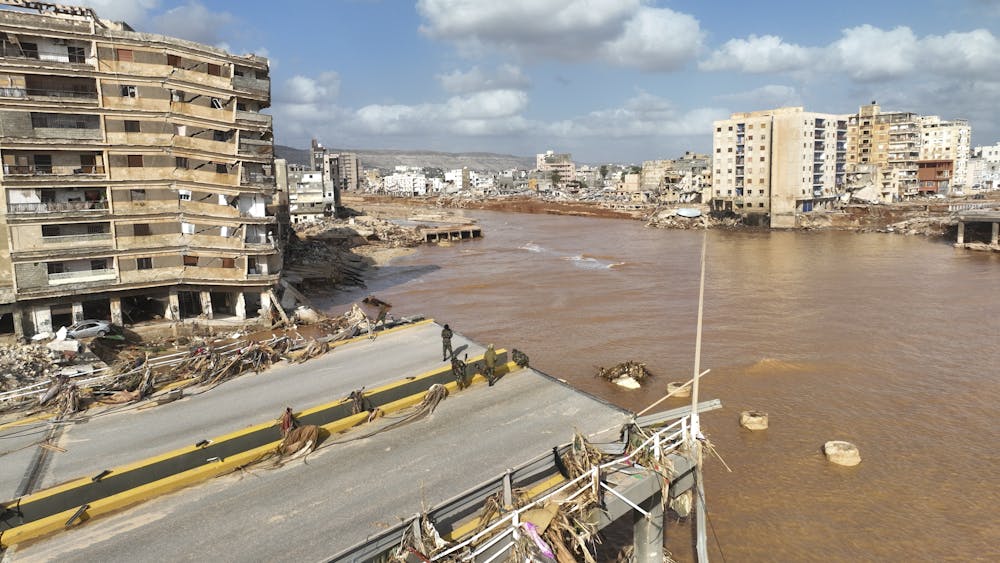 Storm Daniel – a rare Mediterranean hurricane – struck Greece and then Libya, where it killed thousands.
Jamal Alkomaty/AP
Storm Daniel – a rare Mediterranean hurricane – struck Greece and then Libya, where it killed thousands.
Jamal Alkomaty/AP
The closer we stay to the line – even if we cross it – the better.
And there’s now good evidence that even if we overshoot 1.5℃, we could still reverse it by ending emissions and soaking up excess greenhouse gas emissions. It’s like turning around an enormous container ship – it takes time to overcome the inertia. But the sooner we turn around, the better.
Authors: Ailie Gallant, Senior Lecturer, School of Earth, Atmosphere and Environment, Monash University
Read more https://theconversation.com/we-just-blew-past-1-5-degrees-game-over-on-climate-not-yet-213364

















