

rise up and become a climate leader – be the change we need so desperately
- Written by Tim Flannery, Honorary fellow, The University of Melbourne
As humanity hurtles towards a climate catastrophe, the debate has shifted – from the science to solutions. We know we need to reduce our greenhouse gas emissions. But progress has been painfully slow.
It’s clear the world is lacking climate leadership. So what makes a great climate leader and why are we not seeing more of them?
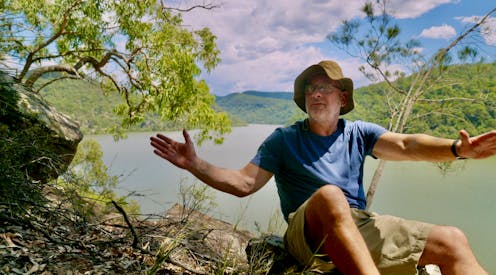
For two years now I’ve been on a journey, a quest if you like, to find good climate leaders. This is the subject of my new documentary, Climate Changers with director Johan Gabrielsson.
Missed opportunities and wasted time
Saul Griffith is an engineer who wants to “electrify everything”. The co-founder of non-profit group Rewiring Australia decried the “dearth of political leadership” when he told us:
We haven’t had any head of state, of any major nation, positively and proactively engage on climate as an emergency, as an opportunity […] we haven’t had a Churchill or Roosevelt or John F Kennedy ‘let’s go to the moon’ that says: ‘here’s a threat, here’s an opportunity, here’s a vision for how we collectively get there’.
If we’d been on the right emissions reduction trajectory a decade ago, we’d have more time to deal with the problem. But we’ve wasted ten years.
Over that period, probably 20% of all of the carbon pollution we’ve ever put into the atmosphere has been emitted.
A lot of money was made creating those emissions, and that has only benefited a few. But of course the consequences of the emissions will stay with humanity for many, many, many generations.
Introducing Climate Changers.Read more: Group therapy helps scientists cope with challenging 'climate emotions'
A different style of leadership
Unfortunately, modern Western politics doesn’t select for great leaders. But there are a few scattered about.
One such example is Matt Kean in New South Wales. In 2020, as state energy minister and treasurer during the Liberal Berejiklian government, he managed to get the Nationals, the Liberals, Labor and the Greens all supporting the same bill, on addressing climate change through clean energy. In my opinion, that is true leadership.
As Kean told us:
What you’ve got to do if you’re going to try and solve the challenge is find those areas of common ground. […] it was about finding the big things that everyone could agree on and designing policy that brought everyone together. And I think that was the key to our success.
Climate leadership requires humility. It requires listening to your political antagonists as well as your allies.
That sort of leadership is rare in our political system. And yet you see it in Indigenous communities and in the Pacific nations where I’ve done a lot of work over the years, that sort of leadership is much more common. Because people understand they need to be consultative. And transparent.
West Papuan activist and human rights lawyer, Frederika Korain, and Solomon Island Kwaio community leader and conservationist, Chief Esau Kekeubata, are shining examples. They show individual bravery and diligence, but they’re also humble and listening.
On the subject of leadership, they share similar sentiments with Australia’s Dharawal and Yuin custodian and community leader Paul Knight.
It’s about bringing other people along with you. It’s not some strong-arm thing, like you often see at our federal level, in our politics. It’s about listening, developing a consensus. It takes time, a lot of effort, and you’ll probably never get full consensus, but we’ll get most of the way there, convincing people.
I’ve seen Chief Esau work. He says very little in the most important meetings, but when someone says something he thinks is on the right track, he’ll say, “Oh, that’s really interesting. Can you can you tell us a bit more”. He directs the conversation.
So in a species like ours, that’s what true leadership consists of. Intelligence, persistence, bravery bordering on heroism sometimes, because climate change is the enemy of everyone.
What’s holding us back?
There’s a very strong relationship in Australia between political power and fossil fuels. The links are interwoven, with people moving from the fossil fuel industry to politics and back.
And we still allow people to become extremely rich at the expense of all of us. I think that’s what’s holding us back.
I expect those who are very wealthy, who have made their money in fossil fuels, imagine they’ll be able to retire to some gated community and live their life in luxury.
But we all depend on a strong global economy and trade, which is under threat as the climate breaks down.
The idea that you can somehow isolate yourself from the environment and the rest of society is one of the great failings of human imagination that has brought us so close to catastrophe.
Rise up
I do see individual people rising to the occasion. And the story is usually somewhat similar: people realise they could lose something very precious. We heard it time and time again in the making of this documentary.
For community campaigner Jo Dodds the trigger was the Black Summer bushfires, the near-loss of her house and the loss of her neighbours’ houses. For former US Vice President Al Gore it was having his son in critical care for 30 days, having to put aside his politics and think about what his life was really about. Those sort of moments do bring out great climate leaders. Even Kean talked about bringing his newborn son home from hospital, shrouded in bushfire smoke.
The level of public awareness is far greater now than when I came to this issue in the early 2000s.
The most important thing I can do now is inspire and enable others to be climate leaders. Because we need a diversity of voices out there. We need women. We need younger people. We need people from the Pacific Islands, and First Nations people.
This documentary is about trying to inspire and encourage emerging leaders to give us the diversity of voices we need to make a difference. It’s never too late – we can always prevent something worse from happening.
Climate Changers launches nationally with a livestreamed Q&A on September 17 and will screen in cinemas and at community events.
Read more: We urgently need $100bn for renewable energy. But call it statecraft, not 'industry policy'
Authors: Tim Flannery, Honorary fellow, The University of Melbourne

















