
how unidentified aerial phenomena left their mark in ancient cultures
- Written by: Michael B. Charles, Associate Professor, Management Discipline, Faculty of Business, Arts and Law, Southern Cross University
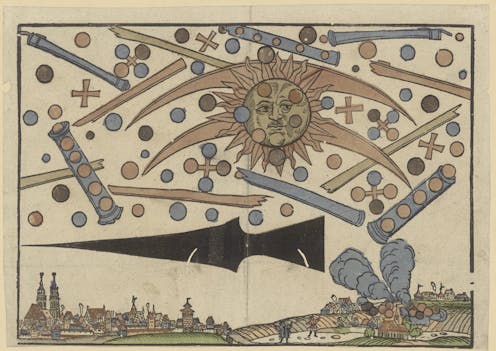
For thousands of years, people have been describing unexplainable gleaming objects in the sky.
Some aerial phenomena like comets, meteor showers, bolides, auroras or even earthquake lightning – all easily explained by today’s knowledge – were widely reported in the ancient world.
The US Congress is currently investigating unidentified aerial phenomena (UAPs – what you might think of as UFOs), in the wake of previously classified footage of UAPs being leaked and a former intelligence official alleging the US government possesses “off world” technologies.
Meanwhile, a recent NASA report concluded there is no evidence suggesting UAPs are of extraterrestrial origin.
Ancient writers saw these phenomena as signs of social unease and impending disaster. In this way, modern reactions to UAPs are similar to those of thousands of years ago. There is a long history of strange objects in the sky associated with political and military crises.
Read more: NASA report finds no evidence that UFOs are extraterrestrial
Ancient signs of trouble
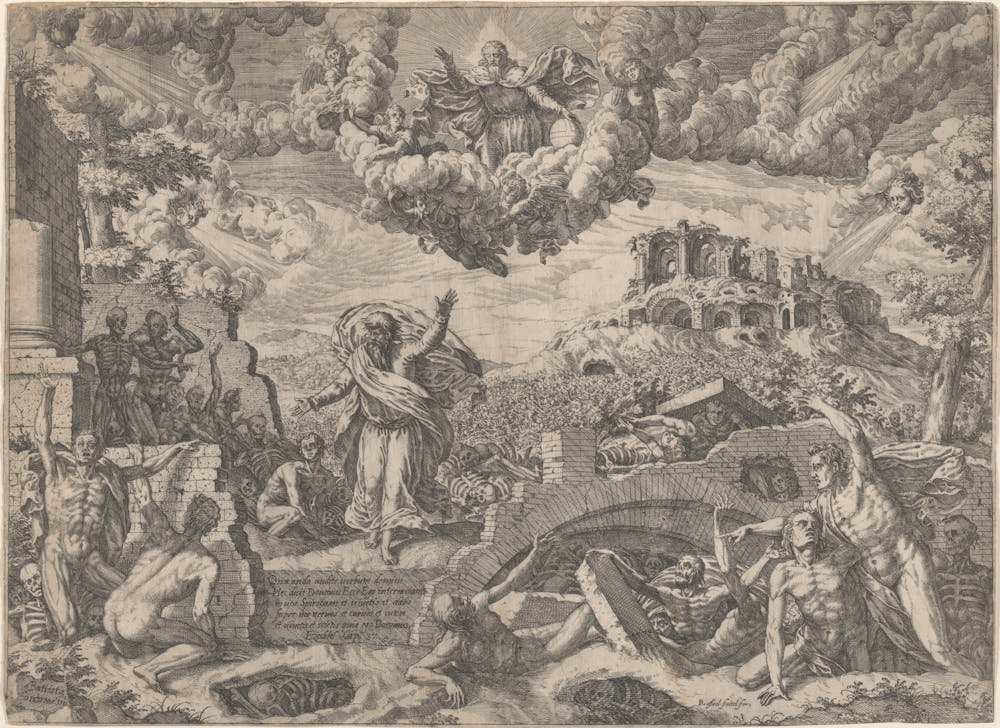
In the Bible, the prophet Ezekiel mentioned a divine chariot: it glowed like hot metal in a fire and Ezekiel could see four living beings in it. They looked human-like, though they had four faces and four wings.
The vimāna – the flying chariots of the gods – also appear in ancient Indian epics, including the Mahābhārata and the Rāmāyana.
In Hindu myths, the gods were portrayed as riding these chariots to every corner of the universe.
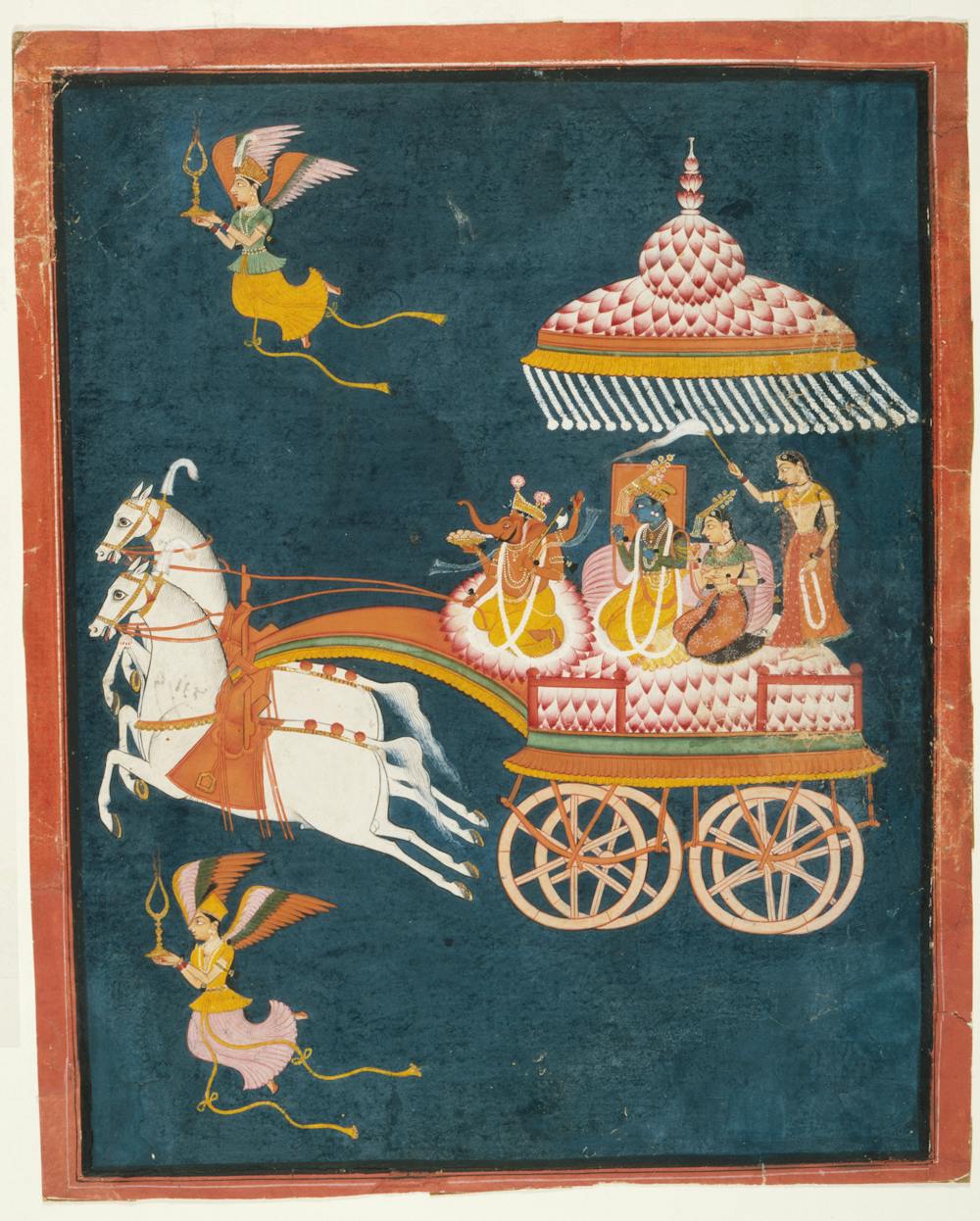 Krishna and Rukmini as Groom and Bride in a Celestial Chariot Driven by Ganesha, India, Rajasthan, Bundi, 1675-1700.
Los Angeles County Museum of Art
Krishna and Rukmini as Groom and Bride in a Celestial Chariot Driven by Ganesha, India, Rajasthan, Bundi, 1675-1700.
Los Angeles County Museum of Art
Describing portents of the winter of 218 BC, the Roman historian Livy said a “spectacle of ships gleamed in the sky”. The Second Punic War had begun, and the enemy general Hannibal was on the verge of a series of victories.
Maybe these “ships” in the sky were odd cloud formations, but Livy’s choice of words suggests something “shining” or “gleaming” – qualities even today associated with UAPs.
Livy reports another appearance of ships in the sky in 173 BC, when a “great fleet” allegedly appeared. In the spring of 217 BC, with Hannibal still threatening Rome, Livy says “round shields were seen in the sky” over central Italy.
Livy doesn’t say if these objects gleamed like the “ships” seen the previous year, but the “shields” recall the appearance of “flying saucers”, the type of UAP that came to prominence at the height of the Cold War.
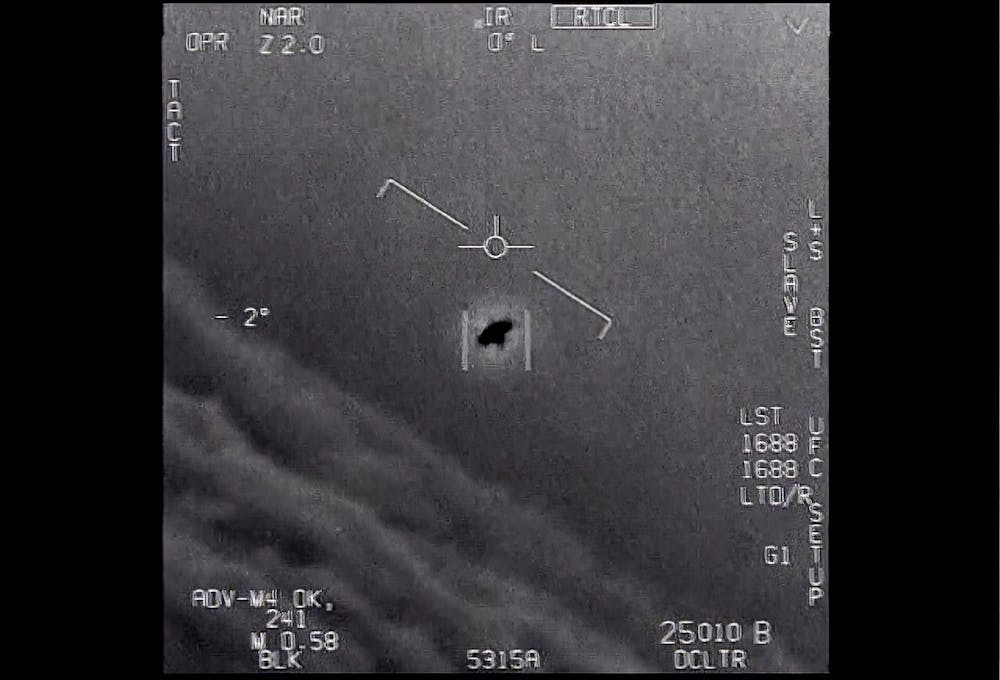 An unexplained object in a video still provided by the Department of Defense labelled Gimbal, from 2015.
Department of Defense via AP
An unexplained object in a video still provided by the Department of Defense labelled Gimbal, from 2015.
Department of Defense via AP
Another curious classical UAP is recorded by the Greek writer Plutarch in his Life of Lucullus, a Roman general. Lucullus’ forces were about to fight King Mithridates VI of Pontus when a strange object appeared between the two armies:
suddenly, the sky burst asunder, and a huge, flame-like body was seen to fall between the two armies. In shape, it was most like a wine-jar (pithos), and in colour, like molten silver. Both sides were astonished at the sight, and separated.
That the object was described as a pithos, a vessel which has a specific shape, suggests something more than a flashing light. Some have interpreted this as a meteor, but Plutarch’s focus on its shiny metallic nature does not match this possibility.
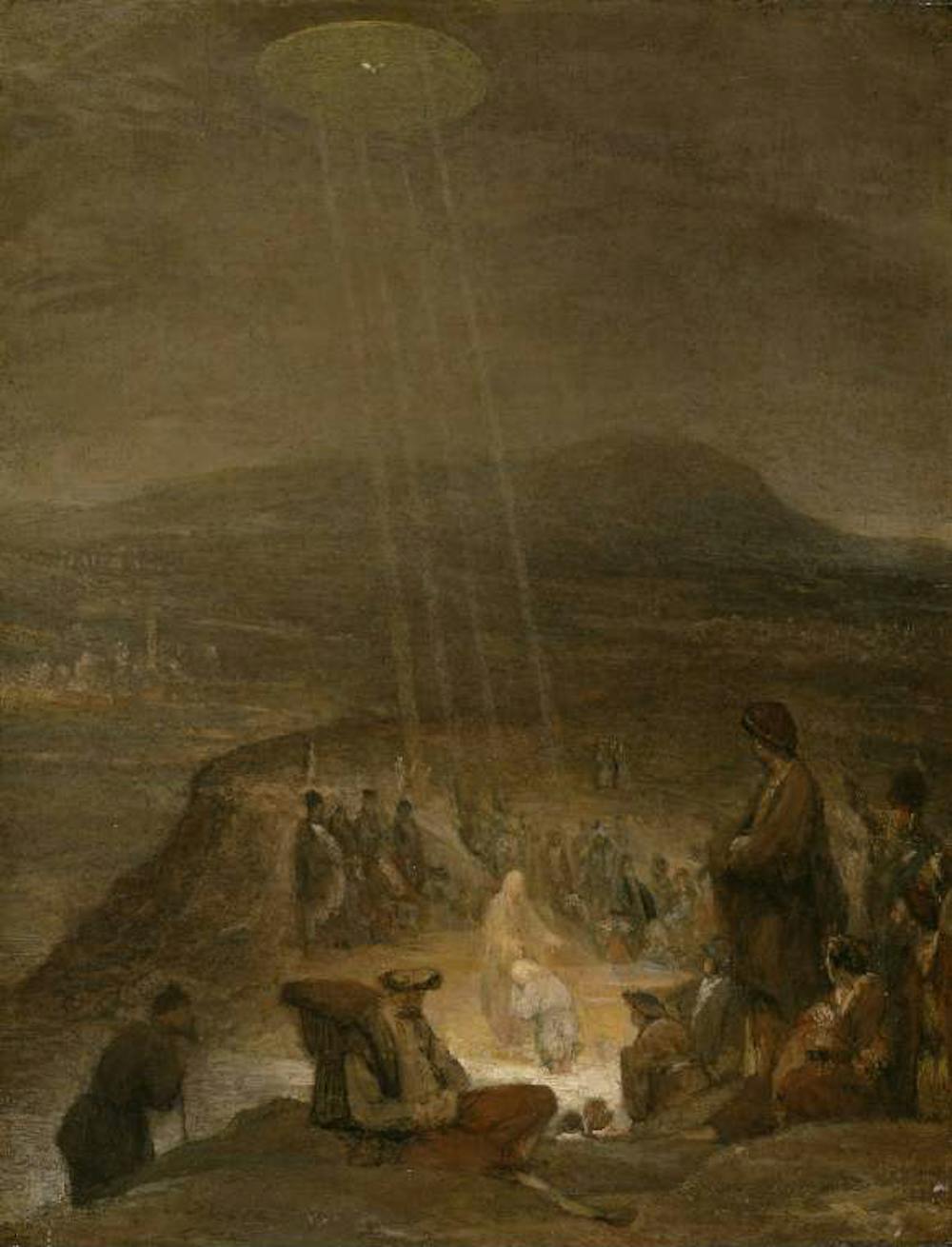 Arent de Gelder (1645–1727), The Baptism of Christ.
The Fitzwilliam Museum, CC BY-NC-ND
Arent de Gelder (1645–1727), The Baptism of Christ.
The Fitzwilliam Museum, CC BY-NC-ND
Whatever it was, both armies thought it was a bad omen and withdrew.
Roman-Jewish historian Josephus, writing about war between Roman and Jewish forces, records an aerial battle between UAPs in AD 65. Before sunset, “chariots” were seen in the sky, accompanied by “armed battalions hurtling through the clouds”.
Josephus says numerous eyewitnesses saw it and believed it foretold the Roman victory that followed.
From ancient to modern doomsdays
Saint Paul referred to God’s “shield of faith” in his Letter to the Ephesians, while “ships voyaging in the sky” were a common theme in medieval Ireland, symbolising the safety the “ship” of the Church afforded believers.
Reports of unusual phenomena increased at the turn of every millennium, when Christian people feared or hoped for the Judgement Day predicted in the Book of Revelation in the Bible.
 A King and His Retinue Confronting Ladies under a Celestial Battle, French, c. 1600.
The National Gallery of Art
A King and His Retinue Confronting Ladies under a Celestial Battle, French, c. 1600.
The National Gallery of Art
Millennial ufology is a fascinating development of recent Christian predictions of the end of the world, where the Messiah poses as a space traveller who returns to save us from Satanic aliens.
Millions of adults every year report experiences with UAPs: when interviewed about their experiences, some admit they are religious; others insist they are not. Importantly, ufology may well be a way of reconciling religion with science, an approach many find appealing.
 An unclassified sketch of a UAP from the CIA.
National Archives/Wikimedia Commons
An unclassified sketch of a UAP from the CIA.
National Archives/Wikimedia Commons
We will never know what the objects and lights described by ancient texts were, and whether they were real or the result of psychological stress. At the very least, significant ancient sightings of UAPs almost always speak to conditions of anxiety and imminent change.
UAPs – ancient and modern – confirm our need to project our crises to objects in the skies.
Ancient people did not have the Doomsday Clock to warn them how close the end was, but they watched the skies carefully and found plenty of warning up there.
Authors: Michael B. Charles, Associate Professor, Management Discipline, Faculty of Business, Arts and Law, Southern Cross University



















