

Modern Australian
Times Advertising

Container deposit schemes reduce rubbish on our beaches. Here’s how we proved it

  • Written by Kay Critchell, Lecturer in Oceanography, Deakin University
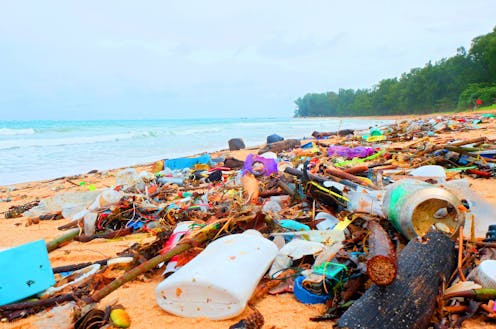
Container deposit schemes reduce rubbish on our beaches. Here’s how we proved it

Our beaches are in trouble. Limited recycling programs and a society that throws away so much have resulted in more than 3 million tonnes of plastic polluting the oceans. An estimated 1.5–1.9% of this rubbish ends up on beaches.

So can waste-management strategies such as container deposit schemes make a difference to this 50,000–60,000 tonnes of beach rubbish?

The Queensland government started a container deposit scheme in 2019. We wanted to know if it reduced the rubbish that washed up on beaches in a tourist hotspot, the Whitsundays region.

To find out, our study, the first of its kind, used data from a community volunteer group through the Australian Marine Debris Initiative Database.

It turned out that for the types of rubbish included in the scheme – plastic bottles and aluminium cans – the answer was an emphatic yes.

Black and white photograph of a man walking along a beach covered in discarded drink cans and other rubbish
A rubbish-strewn Henley Beach in Adelaide, where public outrage led to Australia’s first container deposit scheme in April 1971. EPA/AAP

Read more: Spotting plastic waste from space and counting the fish in the seas: here's how AI can help protect the oceans

Container deposit schemes work

After the scheme began, there were fewer plastic bottles and aluminium cans on Whitsundays beaches. Volunteer clean-up workers collected an average of about 120 containers per beach visit before the scheme began in 2019. This number fell to 77 in 2020.

Not only that, but those numbers stayed down year after year. This means people continued to take part in the scheme for years.

Rubbish that wasn’t part of the scheme still found its way to the beaches.

However, more types of rubbish such as larger glass bottles are being added to the four-year-old Queensland scheme. Other states and territories have had schemes like this for many years, the oldest in South Australia since 1971.

But we didn’t have access to beach data from before and after those schemes started. So our findings are great news, especially as some of these other schemes are set to expand too. The evidence also supports the creation of new schemes in Victoria this November and Tasmania next year.

These developments give reason to hope we will see further reductions in beach litter.

Read more: Spin the bottle: the fraught politics of container deposit schemes

The data came from the community

To find out whether the scheme has reduced specific sorts of rubbish on beaches we needed a large amount of data from before and after it began.

The unsung heroes of this study are the diligent volunteers who provided us with these data. They have been recording the types and amounts of rubbish found during their cleanups at Whitsundays beaches for years.

Eco Barge Clean Seas Inc has been doing this work since 2009. In taking that extra step of counting and sorting the rubbish, they may not have known it at the time, but they were creating a data gold mine. We would eventually use their data to prove the container deposit scheme works.

Beached litter on a Whitsunday island where Eco Barge Clean Seas’ team has been cleaning up beaches since 2009. Eco Barge Clean Seas Inc. Used with permission, Author provided (no reuse)

The rubbish clean-ups are continuing. This means we’ll be able to see how adding more rubbish types to the scheme will further reduce rubbish on beaches.

The long-term perspective we can gain from such data is testament to this sustained community effort.

Read more: Local efforts have cut plastic waste on Australia's beaches by almost 30% in 6 years

There’s still more work to do

So if we recycle our plastics, why do we still get beaches covered in rubbish? The reality is that most plastics aren’t recycled. This is mainly due to two problems:

  • technological limitations on the sorting needed to avoid contamination of waste streams
  • inadequate incentives for people to reduce contamination by properly sorting their waste, and ultimately to use products made from recycled waste.

Our findings show we can create more sustainable practices and a cleaner environment when individuals are given incentives to recycle.

However, container deposit schemes don’t just provide a financial reward. Getting people directly involved in recycling fosters a sense of responsibility for the environment. This connection between people’s actions and outcomes is a key to such schemes’ success.

Two volunteers pick up rubbish on a beach
Community volunteers not only help clean up beaches, they also can provide valuable data for researchers and policymakers. Jono Searle/AAP

Read more: The new 100% recyclable packaging target is no use if our waste isn't actually recycled

Our study also shows how invaluable community-driven clean-up projects are. Not only do they reduce environmental harm and improve our experiences on beaches, but they can also provide scientists like us with the data we need to show how waste-management policies affect the environment.

Waste management is a concern for communities, policymakers and environmentalists around the world. The lessons from our study apply not only in Australia but anywhere that communities can work with scientists and governments to solve environmental problems.

Authors: Kay Critchell, Lecturer in Oceanography, Deakin University

Read more https://theconversation.com/container-deposit-schemes-reduce-rubbish-on-our-beaches-heres-how-we-proved-it-213562

What People Mean by “Alternative Doctor” And Why Expectations Around Care Are Changing

When people search for an “alternative doctor,” they’re usually looking for something specific, even if they haven’t fully defined it yet. I...

Why Does My Power Keep Tripping? Common Causes Explained by Electricians Sydney

The electrical system is the lifeblood of your home, powering everything from your phones to cooking utensils and more. But from time to time, your po...

Interstate Car Transporter Urges Buyers to Book Early

As the conflict in the Middle East continues to put increasing pressure on local fuel supply, Australian transport companies are experiencing increasi...

Digital Minimalism for Business Owners: Fewer Tools, Better Systems

Be honest. How many apps are open right now? One for scheduling, another for invoices, a third for customer notes, plus a spreadsheet someone email...

The Importance Of Proactive NDIS Renewal Preparation For Sustaining Your Provider Business

Your NDIS renewal notice is not a signal to start preparing. By the time it arrives, preparation should already be well underway. For new providers, s...

Why Fire Extinguisher Testing in Sydney Is Becoming a Records Game, Not Only a Maintenance Job

A fire extinguisher used to feel like one of the simpler parts of building safety. It hung on the wall, wore a service tag, and sat there quietly unle...

The Switchboard Upgrade Question Every Melbourne Renovator Should Ask Before the Walls Close Up

Renovations have a funny way of making people think on surfaces first. Splashback, stone, joinery, tapware, paint. Fair enough too. That is the exciti...

Winter Sanitation Gaps in Parramatta Kitchens: A Hidden Pest Risk

Winter brings a host of changes to our homes, from the chill in the air to the cozy warmth indoors. However, this season also introduces sanitation ch...

When to Seek Advice from Employment Lawyers in Melbourne

Australian employment law is detailed and, at times, complex, with rights and obligations that aren't always obvious to employees or employers witho...

7 Benefits of Professional Gutter Cleaning for Australian Homeowners

Gutters aren't exactly glamorous. They sit up there on the edge of your roof, doing their job quietly - until they stop working. Clogged, overflowing ...

Pipe Floats Strengthening Pipeline Performance In Demanding Environments

Pipelines often travel through environments that are anything but predictable, water currents shift, terrain changes, and materials keep moving unde...

Why Ceiling Fans Are Essential For Comfort, Efficiency, And Modern Living

Creating a comfortable indoor environment is not just about temperature; it is about how air moves, how a room feels, and how efficiently energy is ...

Why Duct Cleaning In Melbourne Is A Smart Investment For Healthier Living Spaces

Behind your walls, ceilings, and vents lies a network quietly working every day to keep your home comfortable. Yet over time, this system can become...

Disability Service Providers Supporting Inclusive And Independent Living

Finding the right support system can feel like assembling a puzzle where every piece must fit just right. For individuals and families navigating di...

A Beginner's Guide to Owning a Caravan in Australia

Owning a caravan opens up a style of travel that's hard to match for freedom and flexibility. However, for those just starting out, the process of c...

Preparing Your Air Conditioner for Summer: What Most Homeowners Overlook

As temperatures rise, many homeowners switch on their air conditioning for the first time in months — only to find it’s not performing the way i...

What Actually Adds Value to Properties in Newcastle

Newcastle has seen steady growth over the past few years, with more buyers looking beyond Sydney for lifestyle, space, and long-term value. As dema...

What is Design and Build in Construction?

Imagine you’re about to start a new construction project, maybe it’s a custom home or a commercial building. You’ve got the idea, the land, an...
















