

what earlier energy transitions tell us about renewables
- Written by: Liz Conor, ARC Future Fellow, La Trobe University
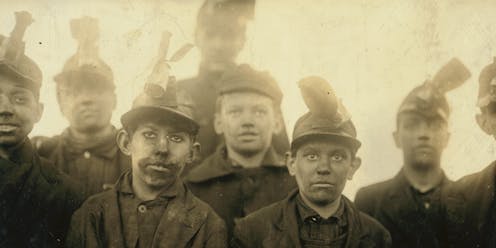
In 2022, the burning of fossil fuels provided 82% of the world’s energy. In 2000, it was 87%. Even as renewables have undergone tremendous growth, they’ve been offset by increased demand for energy.
That’s why the United Nations earlier this month released a global stocktake – an assessment on how the world is going in weaning itself off these energy-dense but dangerously polluting fuels. Short answer: progress, but nowhere near enough, soon enough.
If we consult history, we find that energy transitions are not new. To farm fields and build cities, we’ve gone from relying on human or animal muscle to wind and water to power sailboats and mill grain. Then we began switching to the energy dense hydrocarbons, coal, gas and oil. But this can’t last. We were first warned in 1859 that when burned, these fuels add to the Earth’s warming blanket of greenhouse gases and threatening our liveable climate.
It’s time for another energy transition. We’ve done it before. The problem is time – and resistance from the old energy regime, fossil fuel companies. Energy historian Vaclav Smil calculates past energy transitions have taken 50–75 years to ripple through societies. And we no longer have that kind of time, as climate change accelerates. This year is likely the hottest in 120,000 years.
So can we learn anything from past energy transitions? As it happens, we can.

Energy shifts happen in fits and starts
Until around 1880, the world ran on wood, charcoal, crop residue, manure, water and wind. In fact, some countries relied on wood and charcoal throughout the 20th century – even as others were shifting from coal to oil.
The English had used coal for domestic heating from the time of the Romans because it burned longer and had nearly double the energy intensity of wood.
So what drove the shift? Deforestation was a part. The reliance on wood worked while there were trees. In the pre-industrial era, cities of 500,000 or more needed huge areas of forests around them.
In some locales wood seemed boundless, free and expendable. The costs to biodiversity would become apparent only later.
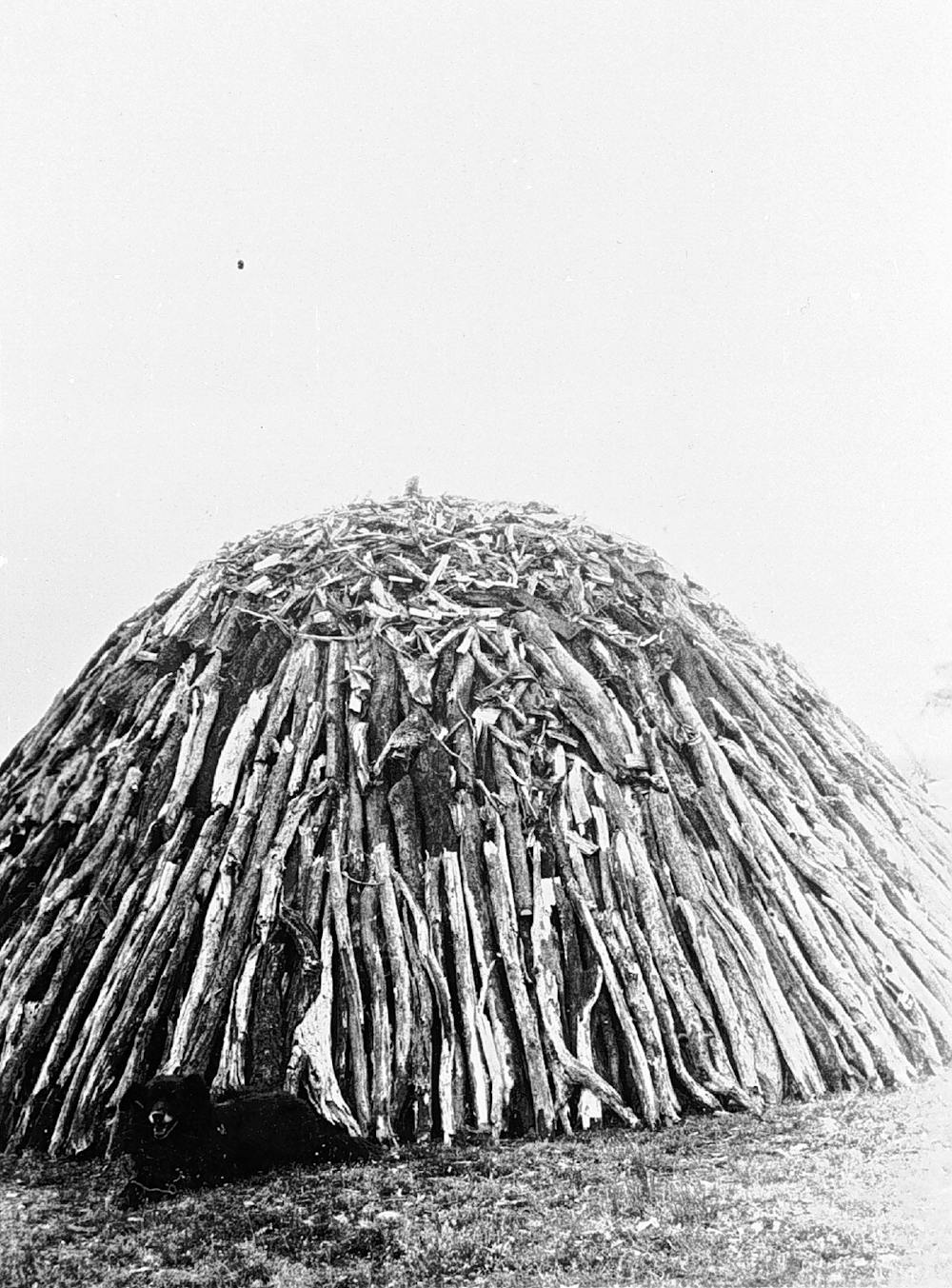 Wood has been an essential source of energy. This 1925 photo shows a woodpile in Victoria ready to be burned for charcoal.
Charlie Gillett/Museums Victoria, CC BY-NC-ND
Wood has been an essential source of energy. This 1925 photo shows a woodpile in Victoria ready to be burned for charcoal.
Charlie Gillett/Museums Victoria, CC BY-NC-ND
Britain was once carpeted in forest. Endemic deforestation drove the change to coal in the 16th and 17th centuries. Most English coal pits opened between 1540 and 1640.
When the English figured out how to use coal to make steam and push a piston, it made even more possible – pumping water from deepening mining pits, the invention of locomotives, and transporting produce, including the feed needed by working animals.
Yet for all this, coal had only reached 5% of the global market by 1840.
In North America, coal didn’t overtake wood until as late as 1884 – even as crude oil became more important.
Why did America first start exploiting oil reserves? In part to replace expensive oil from the heads of sperm whales. Before hydrocarbon oil was widely available, whaling was depended upon for lubricants and some lighting. In 1846, the US had 700 whaling vessels scouring the oceans for this source of oil.
Crude oil was struck first in Pennsylvania in 1859. To extract it required drilling down 21 metres. The drill was powered by a steam engine – which may have been fired by wood.
 Before fossil oil, whale oil was critical. This 1690 painting is ‘Dutch whalers near Spitsbergen’.
Abraham Storck/Wikimedia
Before fossil oil, whale oil was critical. This 1690 painting is ‘Dutch whalers near Spitsbergen’.
Abraham Storck/Wikimedia
Steam and muscle
The 19th century energy transition took decades. It wasn’t a revolution so much as a steady shift. By the end of that century, global energy supply had doubled and half of it was from coal.
When they were first invented in 1712, steam engines converted just 2% of coal into useful energy. Almost 150 years later they were still highly inefficient at just 15%. (Petrol-powered cars still waste about 66% of the energy in their fuel).
Even so, steam sped up early proto-industries such as textiles, print production and traditional manufacturing.
But the engines did not free us from the yoke. In fact, early coal mining actually increased demand for human labour. Boys as young as six worked at lighter tasks. Conditions were generally horrific. Alongside human muscle was animal strength. Coal was often raised from pits by draft horses.
Read more: A globalised solar-powered future is wholly unrealistic – and our economy is the reason why
In 1850s New England, steam was three times more expensive than water flows powering textile mills. Vaclav Smil has shown industrial waterwheels and turbines “competed successfully with steam engines for decades”. The energy of flowing water was free. Digging up coal was labor-intensive.
Why did steam win? Human ecologist Andreas Malm argues what really drove the shift to steam-powered mills was capital. Locating steam engines in urban centres made it easier to concentrate and control workers, as well as overcoming worker walk-outs and machine breaking.
The question of who does the work is often overlooked. When energy historians refer vaguely to human muscle, we should ask: whose muscles? Was the work done by slaves or forced labourers?
Even in the current energy transition there can be gross disparities between employer and worker. As heat intensifies, some employers are giving ice vests to their migrant workers so they can keep working. That’s reminiscent of coal shovelers in the furnace-like stokeholes of steam ships being immersed in ice-baths on collapse, as historian On Barak has shown.
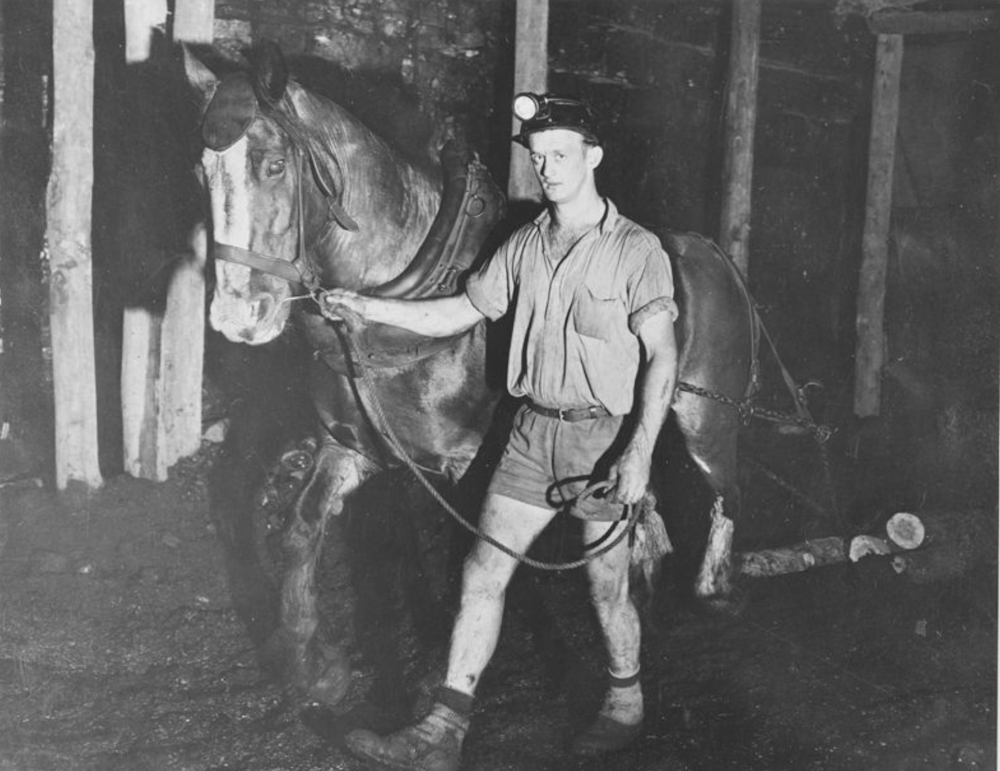 Pit ponies were widely used in coal mines.
Author provided, CC BY-NC-ND
Pit ponies were widely used in coal mines.
Author provided, CC BY-NC-ND
What does this mean for us?
As Vaclav Smil points out, “every transition to a new energy supply has to be powered by the intensive deployment of existing energies and prime movers”. In fact, Smil argues the idea of the “industrial revolution” is misleading. It was not sudden. Rather, it was “gradual, often uneven”.
History may seem like it unfolds neatly. But it doesn’t at all. In earlier transitions, we see overlaps. Hesitation. Sometimes, more intense use of earlier energy sources. They start as highly localised shifts, depending on available resources, before new technologies spreads along trade routes. Ultimately market forces have driven – or hindered – adoption.
Time is short. But on the plus side, there are market forces now driving the shift to clean energy. Once solar panels and wind turbines are built, sunlight and wind are free. It is the resistance of the old guard – fossil fuel corporations – that is holding us back.
Authors: Liz Conor, ARC Future Fellow, La Trobe University



















