

Did Australia's First Peoples domesticate dingoes? They certainly buried them with great care
- Written by: Loukas Koungoulos, Postdoctoral research fellow, Australian National University
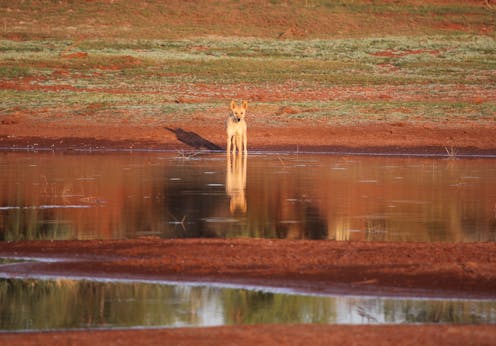
Dingoes are an iconic Australian wild animal, with close links to Australia’s First Peoples throughout the mainland. Yet the origins and history of these animals are shrouded in obscurity.
The question of whether dingoes are a truly wild or formerly domestic animal that has become feral has eluded a clear answer or consensus amongst scientists for well over a century.
Published in PLOS One today, our new study of dingoes buried alongside First Nations people in ancient times has provided crucial clues to this mystery. Our findings may help change the way we think about the connections between dingoes and people.
Living alongside people
When outsiders observed traditional First Peoples’ societies in the 19th and 20th centuries throughout mainland Australia, they noticed many took dingo pups from wild dens and raised them to keep as companions and for a variety of other purposes including as guards, hunting aids and living “blankets”.
However, these dingoes always returned to the bush to find a mate after reaching about a year of age, seemingly never to return. This is quite unlike our domestic dogs – they may wander, but ultimately tend to stay with their human families in the long term.
The fact most dingoes live without any reliance on people is one of the main reasons scientific opinion differs over whether dingoes should be thought of as domestic animals or not.
Read more: New DNA testing shatters 'wild dog' myth: most dingoes are pure
But is it possible different arrangements between dingoes and Australia’s First Peoples existed before traditional ways of life were disrupted by colonial violence, displacement and disease? Answers might be found in the bones of dingoes that lived with people and were buried after death.
There are historical accounts of funerary and burial rituals of deceased tamed dingoes. Skeletons of dingoes or dogs have been found alongside First Peoples’ burials in many areas of Australia from Arnhem Land to the Murray-Darling basin, but to date there’s been no comprehensive study of this important cultural practice.
In a search of historical records and findings of dingo burials, we found they were concentrated in the Murray-Darling Basin and on the southern coastlines of New South Wales and Victoria. A secondary, more recent cluster was located in north-western Australia.
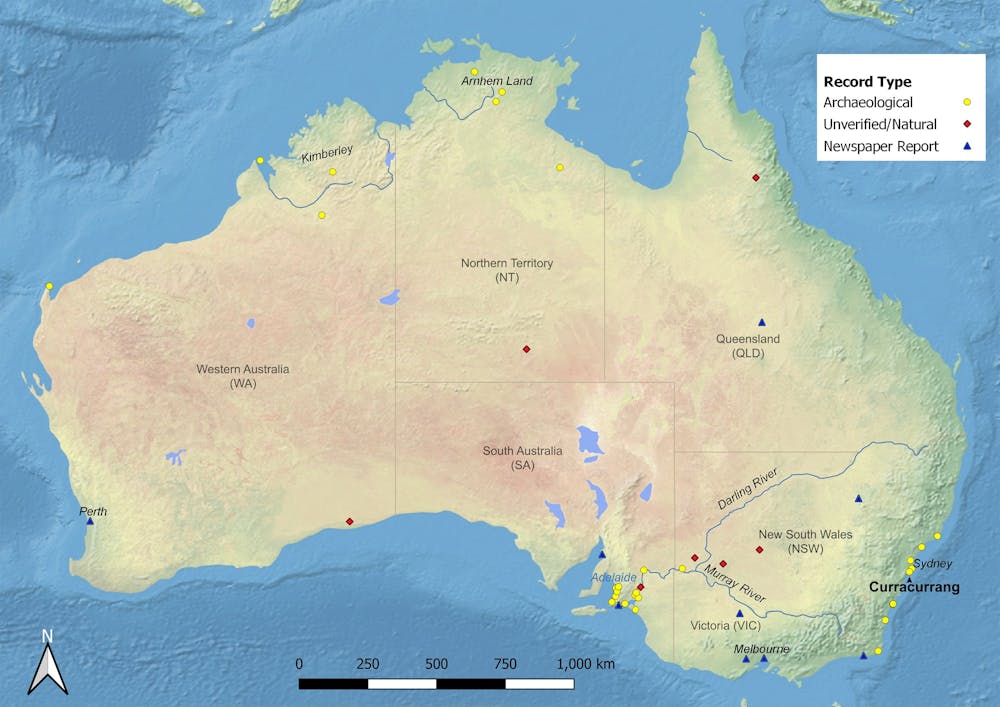 Map of Australia illustrating the distribution of dingo burials reported in archaeological, historical and news literature.
Loukas Koungoulos, CC BY-SA
Map of Australia illustrating the distribution of dingo burials reported in archaeological, historical and news literature.
Loukas Koungoulos, CC BY-SA
Buried alongside people
Historical records and archaeological evidence both show that when dingoes were buried, it was invariably in the manner in which people were buried in the same region. Often, dingoes were buried alongside people.
The act of burial implies a degree of care and belonging to a community. Some archaeologists argue animal burial is a fundamental sign of domestication. But by examining the skeletons of buried dingoes we can further investigate the life histories of these important animals.
The archaeological site of Curracurrang, a rock shelter in the Royal National Park just south of Sydney, was excavated in the 1960s. The excavations found First People were buried there over many centuries.
But our new primary investigations of previously unstudied animal bones reveal the site also contained the skeletons of several dingoes. Radiocarbon dates taken from their bones found the earliest of these were buried around 2,300–2,000 years ago. Dingo burials continued here until the colonial era.
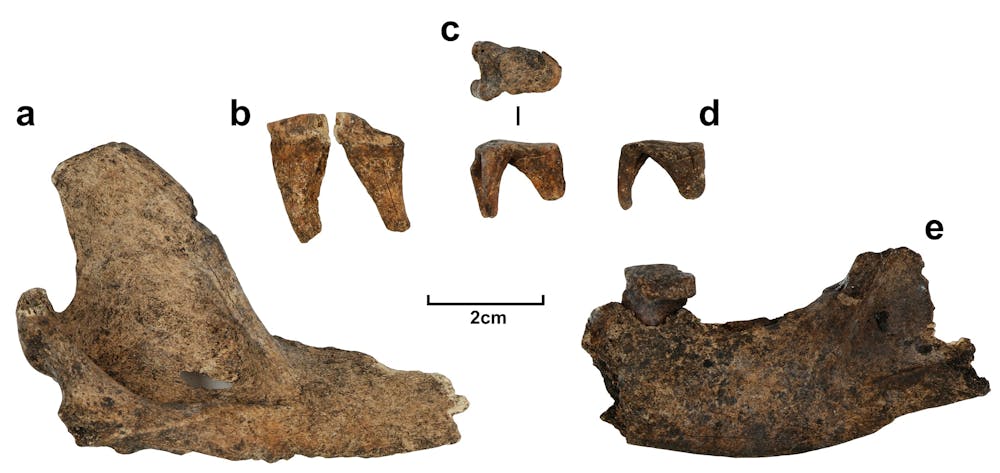 Mandibular and dental fragments of one of the dingo burials from Curracurrang; this was an elderly individual with highly worn teeth, suggesting a lifetime of crunching bones discarded by people.
Loukas Koungoulos, CC BY-SA
Mandibular and dental fragments of one of the dingo burials from Curracurrang; this was an elderly individual with highly worn teeth, suggesting a lifetime of crunching bones discarded by people.
Loukas Koungoulos, CC BY-SA
Some of the dingoes were adults, at least six to eight years old – well past the age at which they’d be expected to return to the wild to breed. They had severely worn teeth, indicating a diet heavy in large bones, likely from the scraps of human meals.
In addition, one dingo showed signs of suffering from an aggressive, mobility-restricting form of cancer in the last weeks of its life. It was likely looked after by people during its decline.
Several other burials were pups, less than a month or two in age. Since dingoes of breeding age were also found at Curracurrang, it is entirely probable some of these pups were born there but did not survive long, and were buried soon after. These individuals are the first known evidence of dingo pup burial in Australia.
A previously obscured relationship
Dingo burials reveal aspects of the relationship between Australia’s First Peoples and their dingo companions which had been, until now, obscured.
At Curracurrang, tame dingoes lived to advanced ages alongside people. They ate the same foods and possibly even bore litters of pups within human camps. While traditional views of domestication involve dramatic transformations in appearance and human control over animal reproduction, newer perspectives focus on long-lasting relationships between people and animals.
The evidence from Curracurrang suggests some dingoes, at least in certain settings, were domesticated in ancient times. This doesn’t mean all dingoes were domesticated, nor does it conclusively indicate they originate from domestic dogs.
Most dingoes were, and still are, wild animals with various adaptations to life independent of people in Australian environments.
However, the new findings do mark an important development in our understanding of the deep antiquity and closeness of the connection between Australia’s First Peoples and their native dogs. It attests to long-lasting relationships beyond the transient, temporary associations recorded during the colonial era.
Acknowledgments: we are grateful to the La Perouse Local Aboriginal Land Council and community for their permission to undertake research on the Curracurrang dingo remains. We also give thanks to the Australian Museum for facilitating access to these materials.
Authors: Loukas Koungoulos, Postdoctoral research fellow, Australian National University


















