

The High Court decision on electric vehicles will make charging for road use very difficult
- Written by: Jago Dodson, Professor of Urban Policy and Director, Centre for Urban Research, RMIT University
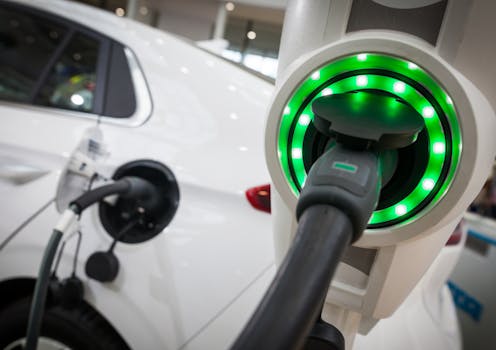
The High Court of Australia’s decision to invalidate Victoria’s electric vehicle tax has been widely noted as a major judgement in the history of federal-state taxation powers.
In 2021, Victoria introduced a 2.5 cents per kilometre charge for electric vehicles using public roads. Ostensibly this was to compensate for the likely loss of Commonwealth fuel excise revenue from the shift to electric vehicles.
The court’s decision, released last week, effectively expanded the definition of an excise to include any tax that has “a reasonably anticipated economic effect on the pattern of demand”. By imposing a cost on the use of vehicles, and thereby potentially reducing demand for them, the road user charge is an excise.
At the time of federation in 1901, automobile technology had advanced to the level of a “motorised dog cart powered by kerosene”. There is no constitutional right to operate a motor vehicle on public roads, yet the High Court has given the Commonwealth the right to charge for motor vehicle use on roads.
In making this decision, the court has gravely weakened the capability of the states to set, regulate and fund metropolitan transport planning objectives.
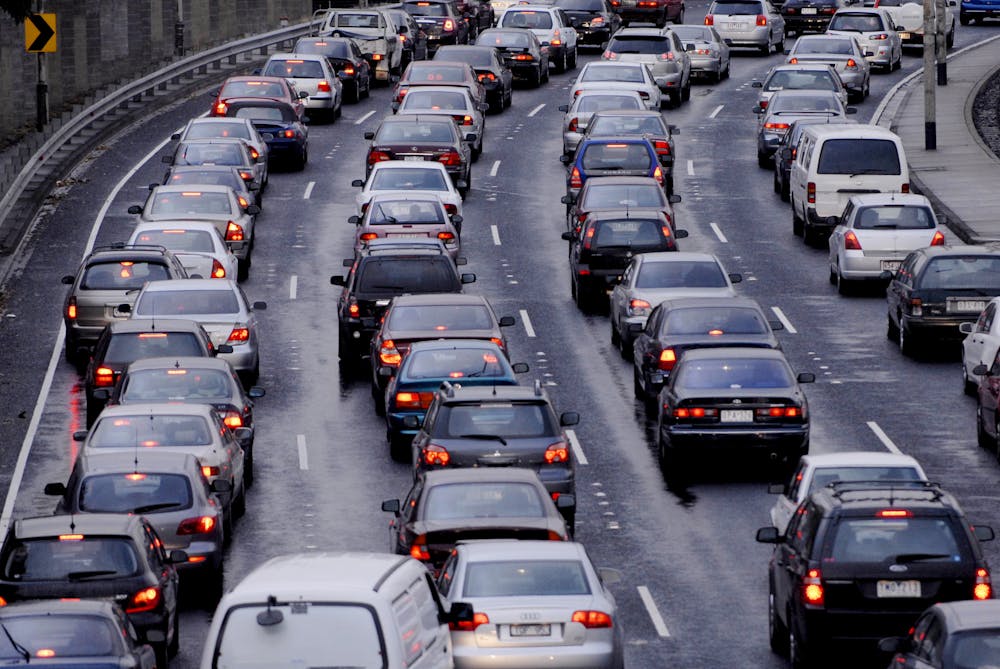
Australians rely heavily on private vehicles
Between 68 per cent (Sydney) and 75 per cent (Brisbane) of travel in Australia’s major cities is by private motor vehicle, making them the most unsustainable national grouping within a developed country outside the United States. Car dependence causes various problems that are not adequately accounted for in current pricing regimes.
These include carbon emissions, productivity costs of congestion, traffic deaths and injuries to people and animals, respiratory and systemic diseases from exhaust and tyre particles, and cardiovascular disease from sedentary behaviour.
Because they generate many of the negative impacts of conventional vehicles, electric vehicles are not a sustainable mode of urban transport. And there is increasing recognition that moving from internal combustion engine vehicles to electric vehicles won’t reduce the impact of climate change within emergency timeframes.
The best way to reduce damage from car use in cities is to reduce usage overall. Along with regulatory measures that impede, exclude, ban or ration use of cars, taxes, levies, charges and prices are important mechanisms.
Since the 1980s, various agencies have argued the societal costs of motor vehicle use are under-estimated. The Henry Tax Review (2010), the last major comprehensive review of national taxation argued a combination of road specific congestion charges, network access charges and a variable charge such as fuel tax, should be applied to vehicle use costs.
This approach has been echoed in further advice from the Productivity Commission, Infrastructure Australia and Infrastructure Victoria, as well as by motorist groups such as the RACV.
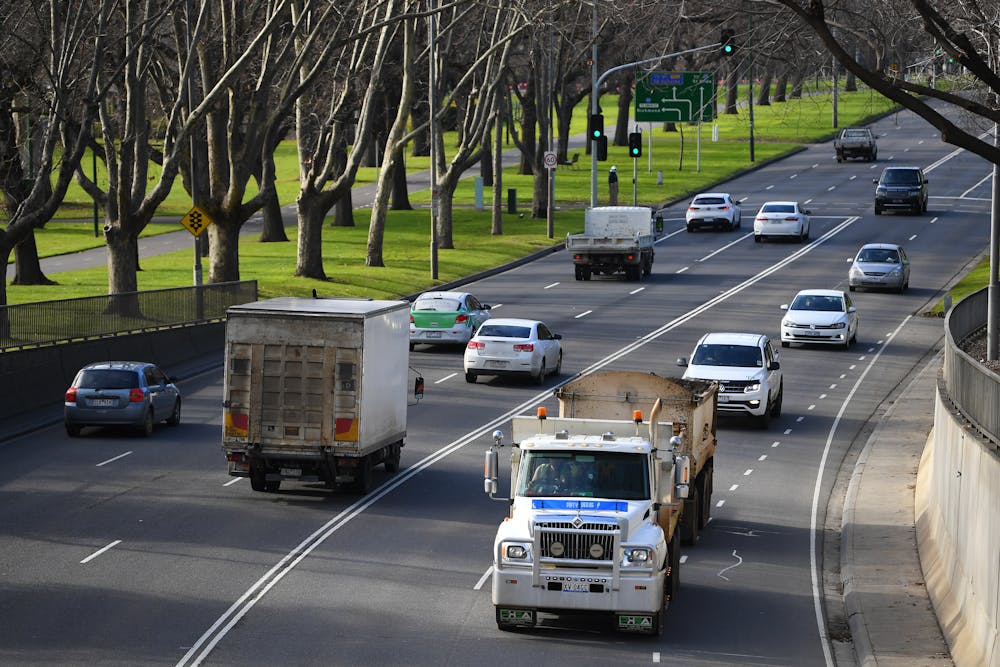 More than 70 per cent of travel in Australia is by private vehicles, one of the highest rates in the developed world.
AAP
More than 70 per cent of travel in Australia is by private vehicles, one of the highest rates in the developed world.
AAP
The states are losing control of managing their roads
The High Court decision to reserve congestion and generalised road use charging to the Commonwealth severely limits states capacity to manage the costs of urban car use by way of taxes, charges, levies or fees, such as under section 1(d) of the Victorian Road Safety Act 1986. The section seeks to ensure “the equitable distribution within the community of the costs of road use”.
But, if Victorians now voted for road user charging to shift the 71% of travel currently undertaken by car in Melbourne to sustainable modes, they would be refused by the Constitution.
Read more: Made in Australia? The electric vehicle revolution gives us a chance to revive an industry
Any future desire to achieve more sustainable levels of car use of 30-40% of travel, as found in cities like Seoul, London or Paris - or 12% in Tokyo - would be impossible to achieve using road pricing, without Commonwealth involvement.
Meanwhile, the Commonwealth lacks a mechanism to collect road user charges. It would need to duplicate the states motor vehicle registration systems, roll out an equivalent system via the ATO, or rely on state cooperation.
A new tussle between the Commonwealth and states is foreseeable over the level of charge, the costs of collection and distribution formula, as well as any differential calibrations. It could be the Commonwealth sets a uniform national road users charge but allows states to add their own loadings to meet their transport objectives.
There may however be workarounds for states to impose per kilometre road user charges on electric vehicles. Victoria could impose an extra levy per kilowatt hour of electricity charged to an EV, for example, given there the close relationship between distance driven and kilowatt-hours consumed. It would be an adventurous High Court that decided the Commonwealth was responsible for setting electricity tariffs.
Read more: The human factor: why Australia's net zero transition risks failing unless it is fair
Another workaround could be to vest Victoria’s roads within a commercially mandated state-owned corporation responsible for full cost recovery for road use. Road user charges would not comprise excise but rather a commercial transaction between the corporation providing the road service and the motorist paying to use the service.
Australian cities need to move quickly and decisively away from the car as a means of urban transport. Given its opposition to the Victorian road user charge and its newly confirmed powers over urban transport pricing, it is incumbent on the Commonwealth to present a coherent plan to reduce car use in cities.
Although the Commonwealth is currently developing a net zero transport and infrastructure roadmap, this needs to be urgently broadened to a national strategy for sustainable urban transport, coordinated with the states, and including clear, effective and accelerated ways of reducing car use in cities.
Authors: Jago Dodson, Professor of Urban Policy and Director, Centre for Urban Research, RMIT University


















