

Could gut fungi be linked to severe COVID? What to make of new research findings
- Written by: Paul Griffin, Associate Professor, Infectious Diseases and Microbiology, The University of Queensland
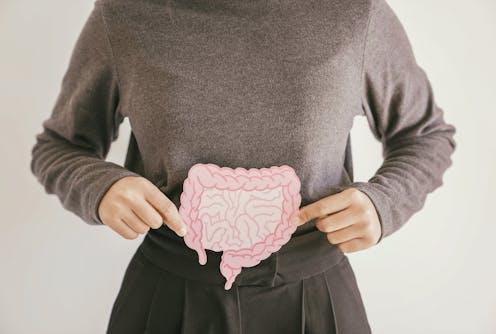
Many tiny organisms including bacteria, fungi and viruses normally live on our bodies, and even inside us. These are called the microbiome. The large number of these organisms living in the gastrointestinal tract are collectively known as the gut microbiome.
Increasingly the gut microbiome is recognised as playing a large part in health and disease, particularly relating to human physiology, metabolism and immune function.
There are now more than 700 published papers looking at the interaction between COVID and the gut microbiome. Many of these studies demonstrate the possible contribution of gut bacteria to COVID infection and severity, as well as the effect COVID (and its treatment) potentially has on our gut bacteria.
Now, a new study has found severe COVID may be related to fungal bugs in our gut microbiome. This could be through a variety of changes to the immune system in response to specific fungal species.
What the study did
Fungal organisms in the microbiome are referred to as the fungal microbiota, or mycobiota. While it’s normal to have a range of fungal organisms in the gut, changes in the types or amount can be linked to disease, just like with variations in gut bacteria.
In the study published in Nature Immunology, the researchers investigated the possible relationship between mycobiota and COVID in a few different ways.
First, they compared patients with and without COVID, looking at the levels of certain fungal organisms in samples from their gastrointestinal tracts. This included 66 people with severe COVID, 25 with moderate COVID and 36 without COVID.
The researchers also measured antibodies in the participants’ blood against these same organisms, which lets us know that they triggered an immune response.
Read more: COVID and your gut: how a healthy microbiome can reduce the severity of infection – and vice versa
To investigate further, the researchers conducted experiments in mice. They gave the mice some of the fungal organisms taken from COVID patients and measured some of the same outcomes, including antibodies in the blood. They also looked to see if certain treatments, such as antifungals, would make a difference.
While this isn’t the first study looking at gut mycobiota and COVID, it’s very comprehensive and reports some interesting findings.
What the study found
The researchers detected a greater amount of fungal organisms in patients who had COVID compared with controls who did not.
Antibodies to certain fungi were also heightened in the blood of COVID patients. In other words, the presence of these fungal organisms and an associated immune response seems to be linked to a more severe COVID infection. In particular, two Candida species and S. cerevisiae were linked to disease severity.
When the researchers isolated live fungi from fecal samples of COVID patients, Candida albicans was common in the gut of patients with COVID, and its growth correlated with more severe disease.
To look at the impact of these fungal species on immune responses, mice were colonised with Candida strains isolated from the COVID patients.
The researchers found older mice who were colonised with C. albicans and then infected with COVID showed a very different immune response compared to mice that weren’t given the Candida fungus. This included having more immune cells called neutrophils in the blood and increases in other markers of inflammation including in the lungs.
Some of these changes were partially resolved with anti-fungal treatment or other specific anti-inflammatory medications that have shown benefit in COVID patients.
Read more: COVID is a 'smart virus' that can affect DNA – but that doesn't mean you can pass it on to your kids
Some limitations
All of this suggests variations in the mycobiota may contribute to the excessive inflammatory immune response seen in severe cases of COVID. A link between the fungal microbiome and inflammation isn’t completely new – other studies have shown an impact on inflammatory conditions linked to similar changes in the mycobiota.
As with all studies, there are some limitations to consider here. First, the number of human participants was relatively low, with only 91 patients with COVID included, and 36 in the control group. Many parts of the study analysed even smaller groups of patients or patient samples.
Second, the study was conducted in 2020 during the first wave of COVID infections. A lot has changed since then including the virus itself. And most people have now not only been vaccinated but also previously exposed to the virus.
Nonetheless, this study raises many possibilities including perhaps being able to look at who might be a greater risk of more severe COVID based on their mycobiota. There may even be a possibility of trying to change the mycobiota to reduce the risks from COVID infection. But to get to these points we need a lot more research.
There are multiple factors that determine the make-up of our microbiome, including mycobiota. These are likely to include diet and lifestyle factors alongside other factors like medical conditions and treatments, such as antibiotics.
At this stage there are fewer proposed interventions for influencing mycobiota than for gut bacteria. But studies such as this one demonstrating the importance of the fungal bugs in our gut will hopefully lead to more research in the area.
Authors: Paul Griffin, Associate Professor, Infectious Diseases and Microbiology, The University of Queensland


















