

How apps and influencers are changing the way we sleep, for better or for worse
- Written by: Deborah Lupton, SHARP Professor, Vitalities Lab, Centre for Social Research in Health and Social Policy Centre, and the ARC Centre of Excellence for Automated Decision-Making and Society, UNSW Sydney
This is the final article in The Conversation’s six-part series on insomnia, which charts the rise of insomnia during industrialisation to sleep apps today. Read other articles in the series here.
Insomnia is not just a personal issue that affects an individual’s health and wellbeing. It’s a public health issue, affecting public safety. It’s a socioeconomic issue, as poorer sleep is linked to a lower education and income. And, increasingly, it’s a commercial issue.
The global insomnia market is expected to reach US$6.3 billion by 2030, driven by increased diagnoses and therapy, as well as sleep aids, including sleep apps.
Read more: A short history of insomnia and how we became obsessed with sleep
There’s an app for that
There are numerous digital devices and apps to help people sleep better. You can buy wearable devices, such as smartwatches and smart rings or wristbands, to digitally monitor your sleep. You can download apps that record how long you sleep and where you can log your tiredness and concentration levels.
Some devices are designed to promote sleep, by generating white or brown noise or other peaceful sounds. You can also buy “smart” pillows, mattresses and a range of smart light-fittings and lightbulbs to help track and improve sleep.
Such technologies operate to “digitise” sleep as part of “the quantified self”. They render sleep practices and bodily responses into data you can review. So these devices are promoted as offering scientific insights into how to control the disruption to people’s lives caused by poor sleep.
You can listen to “sleep stories” – bedtime stories, music or guided meditations meant to help you sleep. Then there are the sleep blogs, podcasts and social media content on TikTok, YouTube and Instagram.
Where there is social media content, there are social media “influencers” sharing their take on sleep and how to get more of it. These “sleep influencers” have accumulated large numbers of followers. Some have profited, including those who live-stream themselves sleeping or invite audiences to try to wake them up – for a price.
Sharing and connecting can help
There may be benefits to joining online communities of people who can’t sleep, whether that’s in an online forum such as Reddit or a specially designed sleep improvement program.
Sharing and connection can ease the loneliness we know can impact sleep. And technology can facilitate this connection when no-one else is around.
We know social media communities provide much-needed support for health problems more generally. They allow people to share personal experiences with others who understand, and to swap tips for the best health practitioners and therapies.
So online sharing, support and feelings of belonging can alleviate the stresses and unhappiness that may prevent people from finding a good night’s sleep.
Read more: Social media, activism, trucker caps: the fascinating story behind long COVID
What is this fixation costing us?
But there are some problems with digitising sleep. A focus on sleep can create a vicious cycle in which worrying about a lack of sleep can itself worsen sleep.
Using sleep-tracking apps and wearable devices can encourage people to become overly fixated on the metrics these technologies gather.
The data generated by digital devices are not necessarily accurate or useful, particularly for groups such as older people. Some young people say they feel worse after using a sleep app.
There are also data privacy issues. Some digital developers do not adequately protect the very personal information smart sleep devices or apps generate.
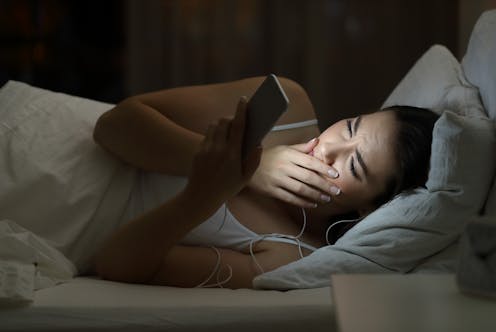
Then, there’s the fact using digital devices before bedtime is itself linked to sleep problems.
Read more: Are sleep trackers accurate? Here's what researchers currently know
Are we missing the bigger issue?
Other critics argue this intense focus on sleep ignores that sleeping well is impossible for some people, however hard they try or whatever expensive devices they buy.
People living in poor housing or in noisy environments have little choice over the conditions in which they seek good sleep.
Factors such as people’s income and education levels affect their sleep, just as they do for other health issues. And multiple socioeconomic factors (for instance, gender, ethnicity and economic hardship) can combine, making it even more likely to have poor sleep.

Sleep quality is therefore just as much as a socioeconomic as a biological issue. Yet, much of the advice offered to people about how to improve their sleep focuses on individual responsibility to make changes. It assumes everyone can buy the latest technologies or can change their environment or lifestyle to find better “sleep health”.
Until “sleep health inequalities” are improved, it is unlikely digital devices or apps can fix sleep difficulties at the population level. A good night’s sleep should not be the preserve of the privileged.
Authors: Deborah Lupton, SHARP Professor, Vitalities Lab, Centre for Social Research in Health and Social Policy Centre, and the ARC Centre of Excellence for Automated Decision-Making and Society, UNSW Sydney


















