

We must assess 'cumulative impacts' to protect nature from death by a thousand cuts
- Written by: Rebecca Louise Nelson, Associate Professor in Law, The University of Melbourne
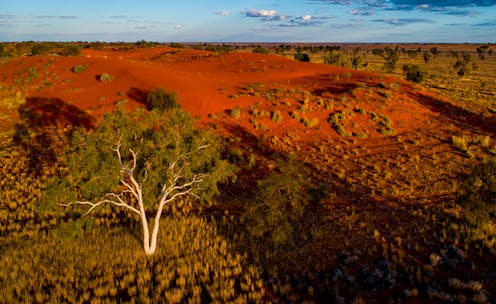
Australia’s national environment protection law ignores the big picture. Like a racehorse wearing blinkers, decision-makers focus on a single project in isolation. If they dropped the blinkers and considered the combined effects of multiple projects, they might shy away from allowing so many harmful impacts.
Urgent reform is needed because nature is suffering death by a thousand cuts. We have more than 2,000 threatened species and ecological communities – groups of plants and animals that live together and interact, such as Western Australia’s iconic Banksia woodlands. That number is likely to grow, as hundreds more await assessment for listing.
Today, the Wentworth Group of Concerned Scientists, which includes one of the authors of this article, is releasing a report outlining the practical steps needed to fix the law. It draws on both international and Australian experience to recommend pragmatic solutions that also minimise the administrative burden for landholders.
The report finds regional planning can help. But rolling out regional planning won’t happen fast, nor will it alone fix this problem. Addressing cumulative impacts on already threatened biodiversity means every impact must be counted, and countered.
Our national environmental laws are lagging
“Cumulative impacts” arise when multiple actions or environmental conditions together cause greater overall impact than threats considered in isolation.
When it comes to regulating the cumulative environmental impacts of new developments, our national environmental law is lagging.
Around the world, almost two-thirds of national environmental laws require a decision-maker to consider cumulative impacts. This includes laws in high-income economies in Europe and North America, as well as our Asia-Pacific neighbours such as Papua New Guinea, Fiji, Indonesia and the Solomon Islands. First Nations peoples often lead the charge for more focus on cumulative impacts.
Recent legal reforms in some Australian states, such as Western Australia, Victoria and the Northern Territory, and policy advances in New South Wales, do the same. But they are not set up to protect matters of national environmental significance. That’s a job for national law.
Tasmanian environmentalists sought to fix this major flaw in a legal challenge that ended in the Full Federal Court in 2015. They argued that, in approving a haematite mine that would harm the habitat of vulnerable Tasmanian devils, the federal environment minister had unlawfully failed to consider cumulative impacts.
But the challenge failed. The court decided there was no requirement to consider cumulative impacts. The then environment minister Tony Burke could continue to ignore how serious the mine’s impacts really were for the devils when combined with other major projects such as logging and neighbouring mines.

Both big and small cuts matter
Cumulative impacts are not just about major projects (such as mines) that already reach decision-makers’ desks, but also small projects that are rarely scrutinised.
Notably, very few agricultural developments seek approval. Yet for koalas, which are endangered, the cumulative effects of many land–clearing operations – mostly for grazing – is a major ongoing threat, compounded further by disease and climate change.
The federal environment department’s own advice is “even small areas of habitat loss (as little as 1 hectare) can have a significant impact” on koalas. But more than a million hectares of potential koala habitat have disappeared since the law came into force in 2000 - most with no consideration under environment law. Most land clearing continues unscrutinised.
Without attention to cumulative impacts, policy commitments to “repair nature” or be “nature positive” can’t work. It’s like trying to fill a bucket while gaping holes at the bottom are draining it.
 Koalas are threatened by agricultural land clearing, disease and the effects of climate change.
Jackson Stock Photography/Shutterstock
Koalas are threatened by agricultural land clearing, disease and the effects of climate change.
Jackson Stock Photography/Shutterstock
In a crisis, change is possible
In some cases, public pressure and ecological catastrophe have forced national action on cumulative impacts.
In response to international concern for the Great Barrier Reef, a cumulative impact policy was introduced - but it only relates to the reef.
Public protests and inquiries drove Commonwealth regulation of the impact of coal seam gas and coal mining projects on water. This is currently the only “matter of national environmental significance” that requires cumulative impact assessment.
And the Commonwealth capped cumulative withdrawals of water in the Murray-Darling Basin during the Millennium Drought. For the first time across the basin, total withdrawals could not exceed an “environmentally sustainable level”. Implementation is not easy, but at least there’s now a crucial legal safeguard in place.
Overall, though, our current law is failing. The 2020 statutory review of the Environment Protection and Biodiversity Act confirmed “cumulative impacts on the environment are not systematically considered” and that this contributes to environmental decline.
Read more: Get the basics right for National Environmental Standards to ensure truly sustainable development
What’s holding us back?
Assessing cumulative impacts can be complex, so some developers and politicians will resist. But other developers will welcome better environmental performance. They know cumulative impacts can threaten an industry’s social licence to operate.
Globally, diverse industry sectors support considering cumulative impacts, from offshore wind farms in the United Kingdom, to the transport sector in the United States and the mining industry in Australia.
Dealing with cumulative impacts will also mean scrutinising types and sizes of impacts that currently fly under the national radar, but seriously impact nationally important environments.
That means cooperating with states and territories to avoid duplication of assessment and creating innovative approaches – beyond simple regulatory “sticks” – for small but cumulatively significant impacts.
Now is the time
Once-in-a-decade reforms to our national environmental law present an opportunity to protect nationally important species and places from cumulative impacts.
We know the Commonwealth can regulate cumulative impacts when the pressure is on. Now is the time for the Commonwealth to step up and join Australia’s states – and most of the world’s nations – in taking the legal blinkers off decision-makers assessing developments under our national law. Nature depends on it.
The authors acknowledge the contributions of Debbie Medaris, Wentworth Group of Concerned Scientists, and expert attendees of a workshop on cumulative impacts held by the Wentworth group, which have informed this article.
Authors: Rebecca Louise Nelson, Associate Professor in Law, The University of Melbourne


















