

humans have been fascinated with the afterlife since ancient Mesopotamia
- Written by: Louise Pryke, Honorary Research Associate, University of Sydney
As Halloween approaches, we start to think about ghosts, monsters, and demons.
But a fascination with the afterlife and other worlds is not new: ghost stories from all over the world prove it’s been part of the human experience from prehistoric times.
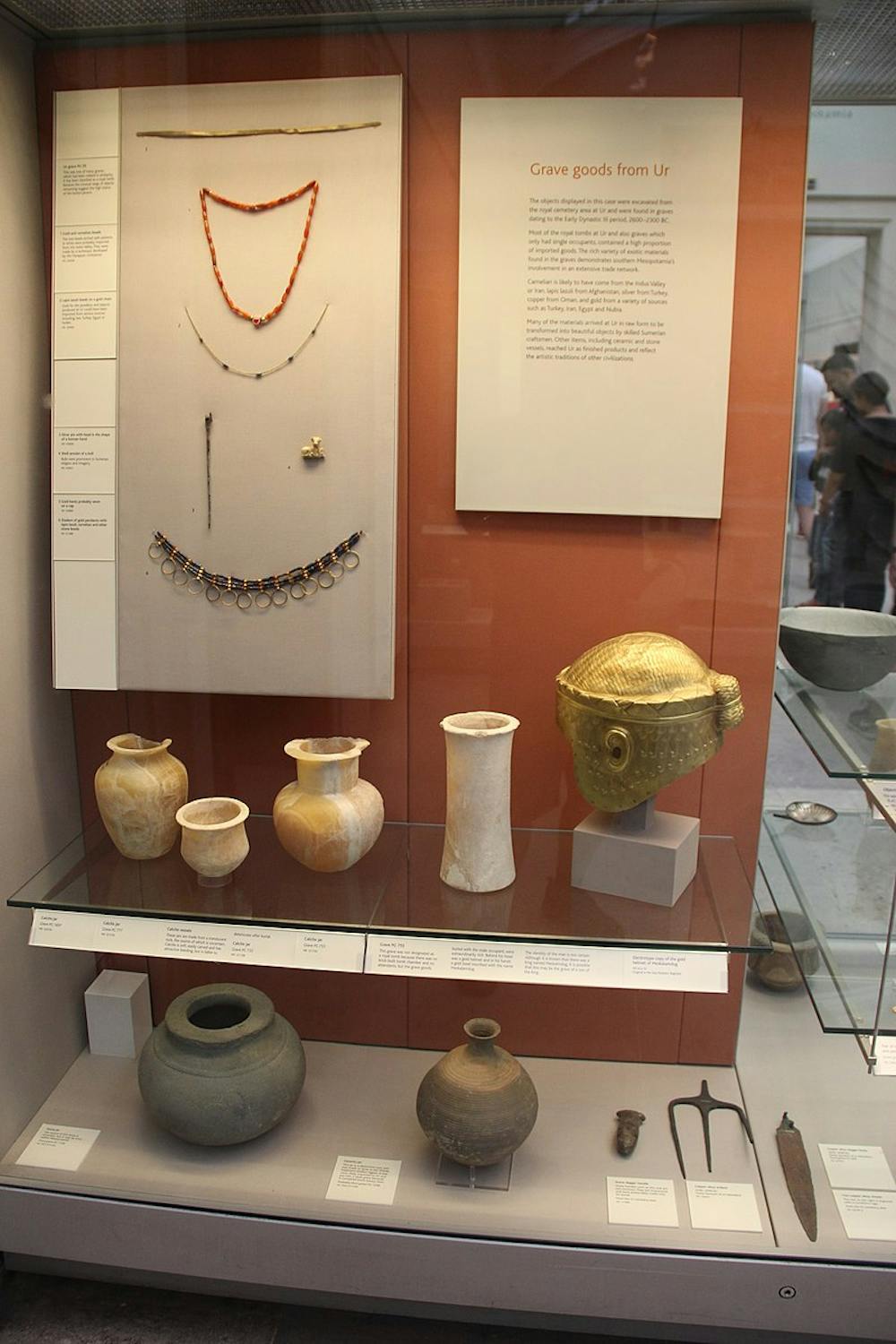
Even before the invention of writing over 5,000 years ago, humans were being buried alongside goods that could be useful in their afterlife, such as drinking vessels or weapons.
Though there is some debate about the meaning of prehistoric grave goods, Mesopotamian ghost expert Irving Finkel persuasively argues they reflect a belief something of the dead person would persevere into an afterlife. There, the grave goods could be put to use.
Read more: Caveman instincts may explain our belief in gods and ghosts
Mesopotamian demons in popular culture
Mesopotamia, an historical area located roughly in the region of modern-day Iraq, was home to some of the world’s great empires.
Ancient Mesopotamian ghosts and demons are perhaps best known today from their presence in horror films. In Ghostbusters (1984), Sigourney Weaver’s Dana is possessed by Zuul, a minion of the fictional god Gozer, who was worshipped as a demigod by the Sumerians in the film’s backstory.
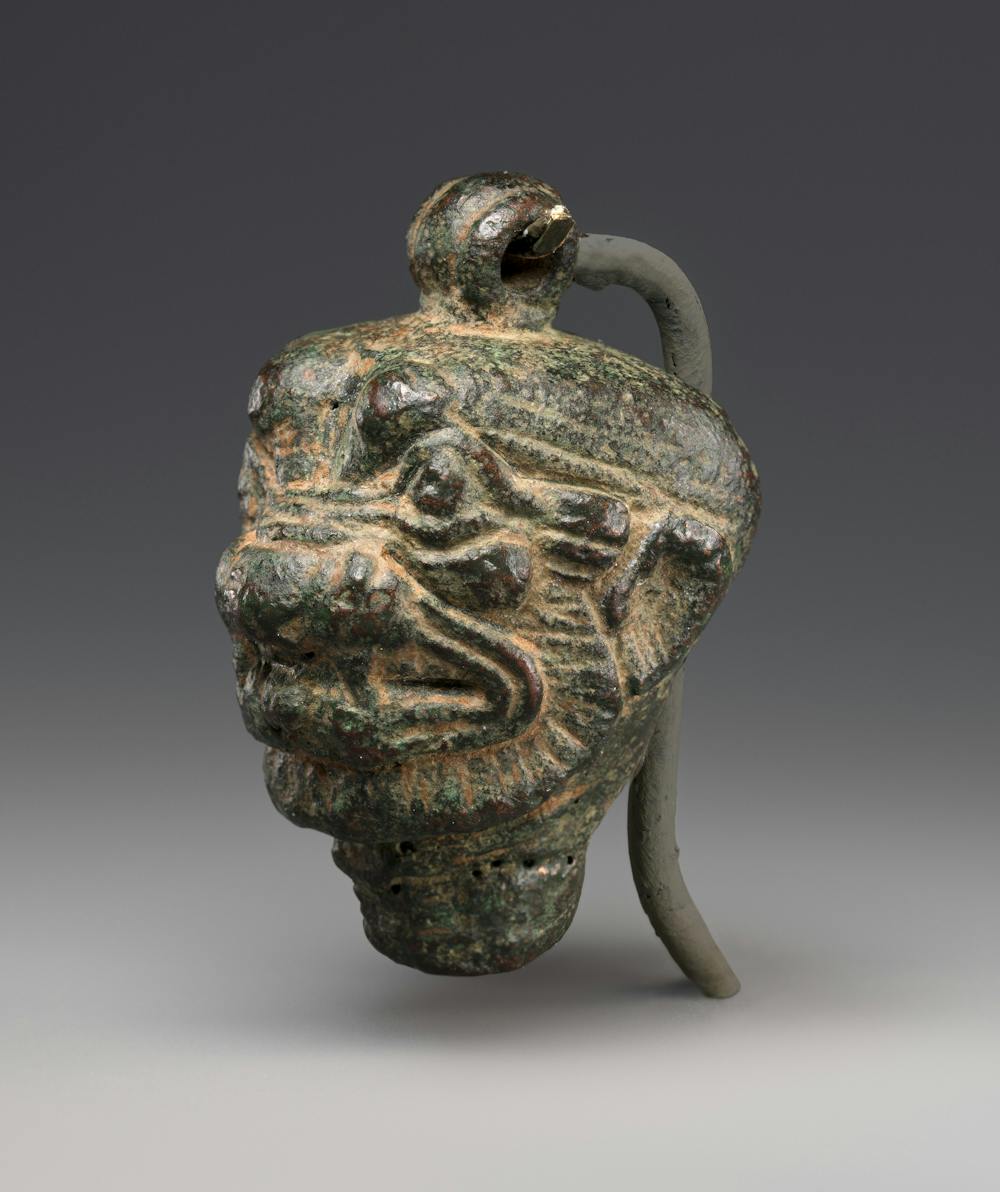 The head of Pazuzu, the ancient demon represented in The Exorcist.
The Met
The head of Pazuzu, the ancient demon represented in The Exorcist.
The Met
In the novel and film, The Exorcist (1973), 12-year-old Regan is possessed by Pazuzu, a fictional demon based on Assyrian and Babylonian mythology.
The mythic Pazuzu appears in visual sources from around the 8th century BCE and was considered king of the wind demons.
In contrast to the plot of The Exorcist, Pazuzu’s terrifying visage was used in white magic to protect children from the lion-headed demonness Lamashtu.
And in Evil Dead (1981), the evil comes from an ancient Sumerian book, the Necronomicon Ex-Mortis, bound in human flesh and inked in blood, which can release evil into the world when certain passages are read aloud. (The book is actually the fictional invention of writer H.P. Lovecraft.)
The influence of supernatural beings in these works is largely malevolent. But the connection between the living and the dead in ancient Mesopotamia was complex – and sometimes, it was mutually beneficial.
 In The Exorcist, 12-year-old Regan is possessed by Pazuzu, a fictional demon based on Assyrian and Babylonian mythology.
AAP
In The Exorcist, 12-year-old Regan is possessed by Pazuzu, a fictional demon based on Assyrian and Babylonian mythology.
AAP
Ghosts were an accepted part of life in ancient Mesopotamia. Death was thought to gradually weaken the connections that bound the deceased person to the land of the living, rather than bring an abrupt, complete exit.
In some areas, this concept has endured. Modern-day science fiction writer Philip K. Dick, best known for his novel Do Androids Dream of Electric Sheep? (filmed as Bladerunner) presents death in similarly incomplete terms in writings such as What the Dead Men Say (1964) and Ubik (1969). In these stories, the recently deceased maintain some capacity to interact with the living shortly after death.
The first ghost
In Mesopotamian myth, humanity was created – along with the first ghost – through the death of a rebellious god.
 This fragment tells the Babylonian flood story, Epic of Atrahasis.
Wikimedia Commons
This fragment tells the Babylonian flood story, Epic of Atrahasis.
Wikimedia Commons
The origin of ghosts is explained in the Mesopotamian myth of Atrahasis, a Babylonian flood narrative often paralleled with the story of Noah’s ark.
In this myth, humans are created by senior gods, to perform the menial work of the lesser gods, who have gone on strike. The leader of the rebellion is killed, and his body and blood are mixed with clay to create humans. The spirit of the dead god is also mixed into the new creation, meaning his rebellious etemmu (“spirit”) becomes part of humanity.
The combination of god and earth gives the humans a mortal body and an immortal soul. As long as each human lives, the ghost of the dead god within them is signalled through the steady “drumbeat” of the pulse.
Friendly ghosts?
Written sources reflect many types of Mesopotamian ghosts, and many different ways to manage them. The nature of a ghost, either friendly or malevolent, could be influenced by several factors.
Dying in tragic circumstances could create an unhappy ghost, while some ghosts were just innately difficult to get along with – as can sometimes be the case with the living. Magic spells were used to free a person of a ghost’s presence, and rituals were used to send the ghost safely on its way to the afterlife.
While ghosts, like demons, were viewed as capable of causing harm to the living, they could also be helpful. Family ghosts could protect their relatives from evil and intercede on their behalf with the gods. Families had responsibilities to care for their deceased loved ones by providing them with appropriate grave goods and funerary rituals.
The ability of dead ancestors to help the living with their problems is also reflected in ancient Egyptian sources. The Egyptian dead were thought capable of helping the living with everything from earthly problems, such as illness, to supernatural issues, such as a safe transition to the afterlife.
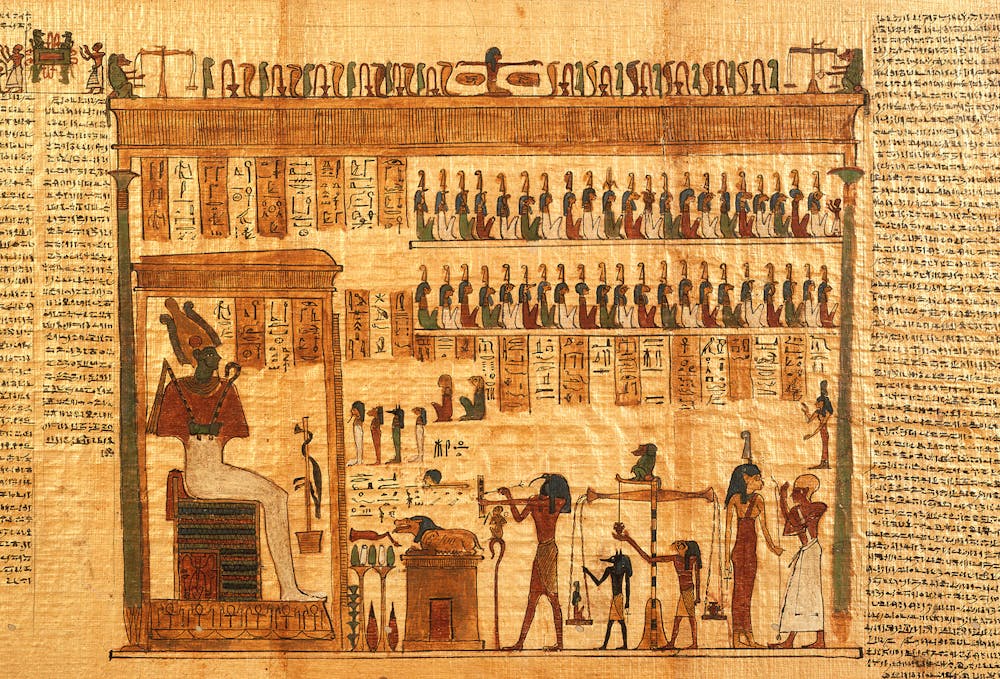 The Egyption dead were thought capable of helping the living with everything from earthly problems to supernatural issues. (Image: The Egyptian Book of the Dead.)
Wikimedia Commons
The Egyption dead were thought capable of helping the living with everything from earthly problems to supernatural issues. (Image: The Egyptian Book of the Dead.)
Wikimedia Commons
Returning from the dead
Once they were in the afterlife, the dead would journey to the underworld – but this was not necessarily a one-way trip. Behaviours in the upper world, such as mourning rites, had significant consequences for those below. Ghosts and demons were thought capable of periodically rising – and haunting or otherwise interfering with living mortals.
The most famous return from the underworld in Mesopotamian literature occurs in the myth, Ishtar’s Descent to the Underworld. In this myth, the powerful Mesopotamian goddess of love and war, Ishtar, journeys to the underworld and attempts to overthrow its ruler, Ereshkigal.
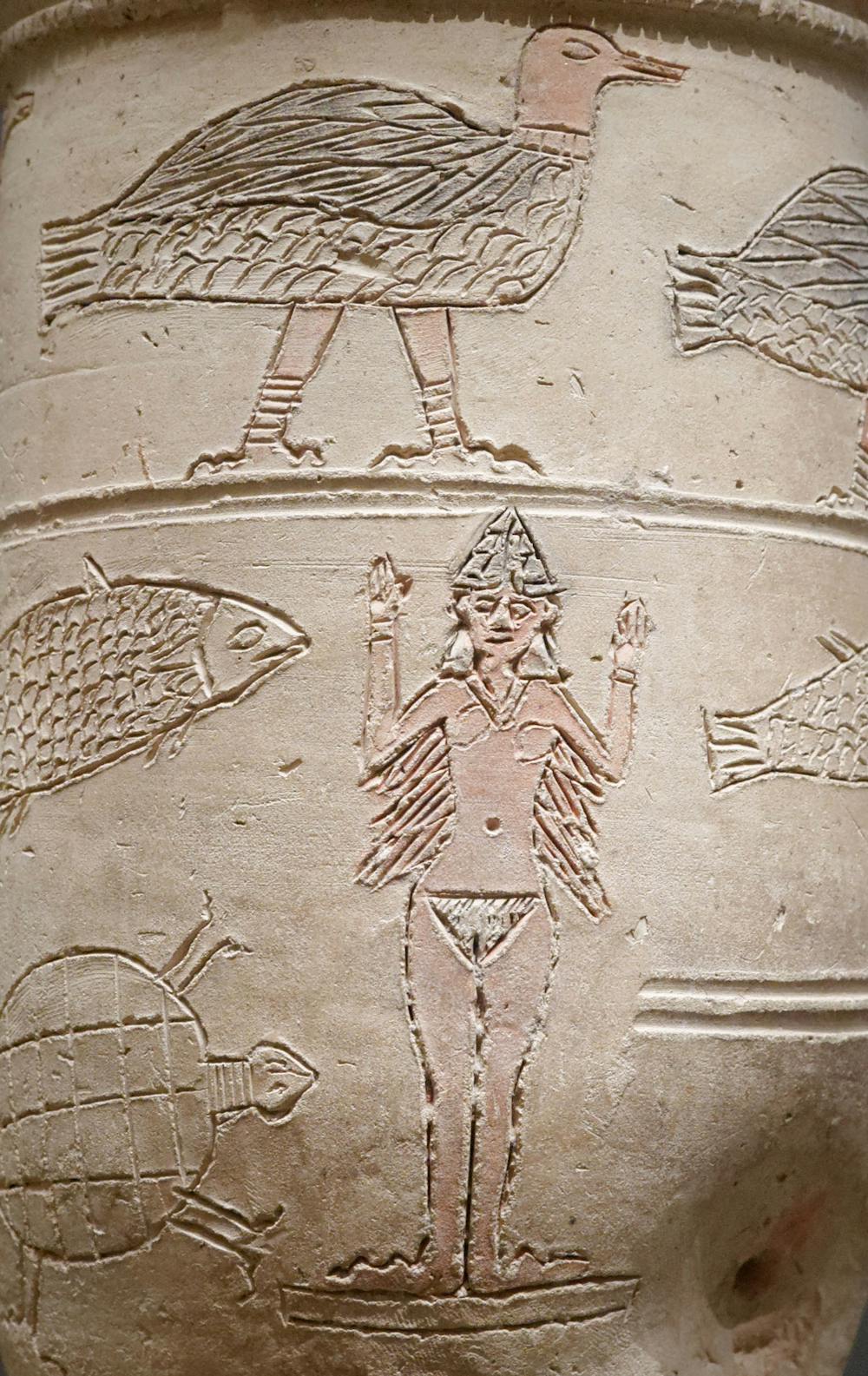 Ishtar on a vase held at Louvre.
Marie-Lan Nguyen/Wikimedia Commons, CC BY
Ishtar on a vase held at Louvre.
Marie-Lan Nguyen/Wikimedia Commons, CC BY
Ishtar is killed by Ereshkigal, but revived through the help of the god of wisdom. She returns to the upper world, and sends her husband, Tammuz, down to the underworld in her place. Myth scholar Annette Zgoll has argued that the story shows Ishtar bringing the powers of the underworld back with her, making a return from the afterlife possible.
Ishtar is not the only figure from Mesopotamian myth who is connected to the journey between our world and the underworld. The world’s first epic hero, Gilgamesh, becomes a funerary god after his death.
As a judge of the underworld, Gilgamesh played a critical role in maintaining positive relationships between the living and the dead.
In ritual poetry directed towards family ghosts, Gilgamesh is asked to intervene between a living person and their deceased ancestor. Gilgamesh’s authority over the dead meant his permission allowed deceased ancestors to receive offerings made to them.
Read more: Guide to the classics: the Epic of Gilgamesh
Who ya gonna call?
The activities of ghosts in Mesopotamia could also be influenced by human religious specialists. Necromancers could summon ghosts and speak to them – as in Evil Dead’s Necronomicon Ex-Mortis.
Professional necromancers could perform a range of ghost-related functions, such as answering questions from the living, assisting with purification, or performing black magic.
The close bonds between loved ones in ancient Mesopotamia continued after death. Maintaining these ties was thought to enable mutually beneficial relationships between the living and the dead. But neglected spirits were thought to haunt the living and create mischief.
Indeed, there was an element of danger to neglecting the dead: ghosts could possibly turn into demons, which might return to terrify the living if they were disturbed or improperly buried.
At Halloween, it’s natural to be afraid of apparitions and otherworldly creatures. But exploring their origins in the ancient world may make them seem less haunting – and perhaps, more human.
Authors: Louise Pryke, Honorary Research Associate, University of Sydney




















