

Taming wild northern rivers could harm marine fisheries and threaten endangered sawfish
- Written by: Éva Plagányi, Senior Principal Research Scientist, CSIRO
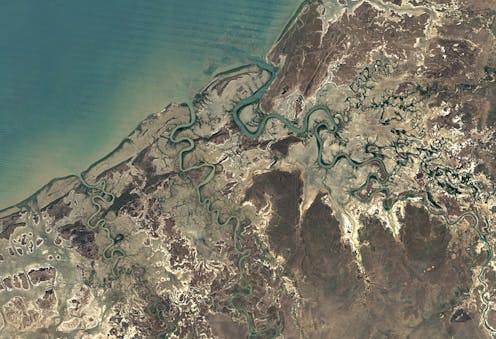
Australia’s tropical northern rivers still run wild and free. These relatively pristine areas have so far avoided extensive development. But this might not last. There are ongoing scoping studies exploring irrigating agricultural land using water from these rivers.
Our new research in the journal Nature Sustainability shows disturbing the delicate water balance upstream can have major consequences downstream, even hundreds of kilometres away.
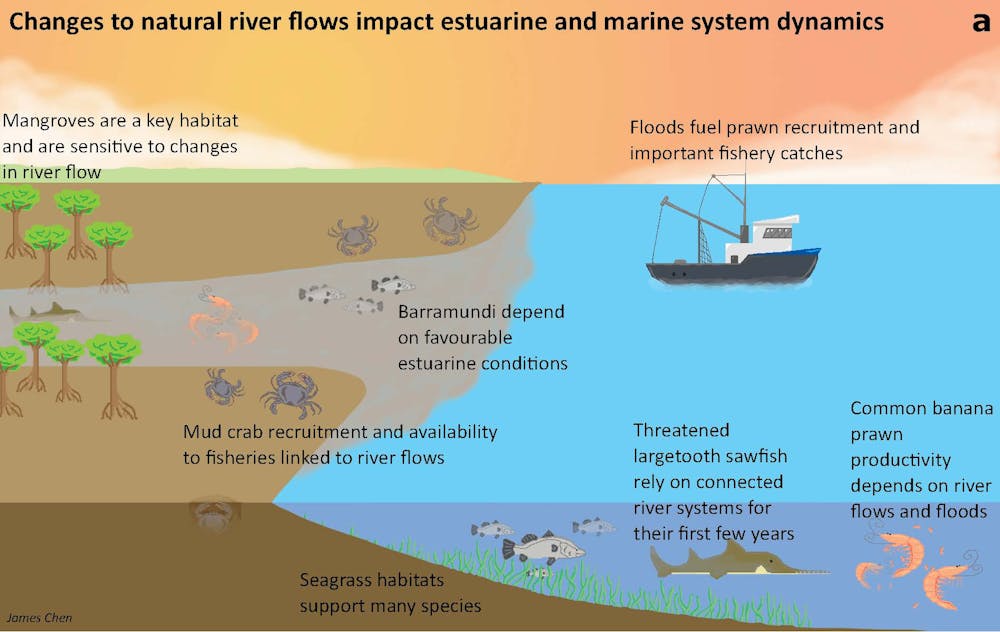
Using our latest computer modelling, we found northern water resource development would have substantial effects on prawn, mud crab and barramundi fisheries in the Gulf of Carpentaria. These are valuable Australian marine fisheries which depend on healthy estuaries. Reducing river flows would also disturb mangrove and seagrass habitats and threaten the iconic endangered largetooth sawfish.
Freshwater flows to the sea play a crucial role, boosting the productivity of marine, estuarine and freshwater systems. These complex interactions must be carefully considered in the assessment of future development plans.
Read more: If we protect mangroves, we protect our fisheries, our towns and ourselves
Rivers are our lifeblood
Worldwide, few wild running rivers remain. Their future is uncertain given growing demand for water.
Climate change is putting extra pressure on rivers as temperatures rise, rainfall patterns shift and extreme events become more frequent.
Rivers are the lifeblood of ecosystems and communities. They connect land, estuaries and the sea. But assessments of river developments often focus narrowly on local effects. They ignore the fact downstream estuaries and marine systems depend on freshwater flows. Few studies have calculated the costs of upstream catchment developments to downstream estuarine and marine ecosystems and fisheries.
We must avoid the mistakes made in southern Australia where too much water has been taken out of the system for growing crops. That means carefully evaluating the design of dams or irrigation schemes, considering when, where and how much water should be taken – and the likely trade-offs.
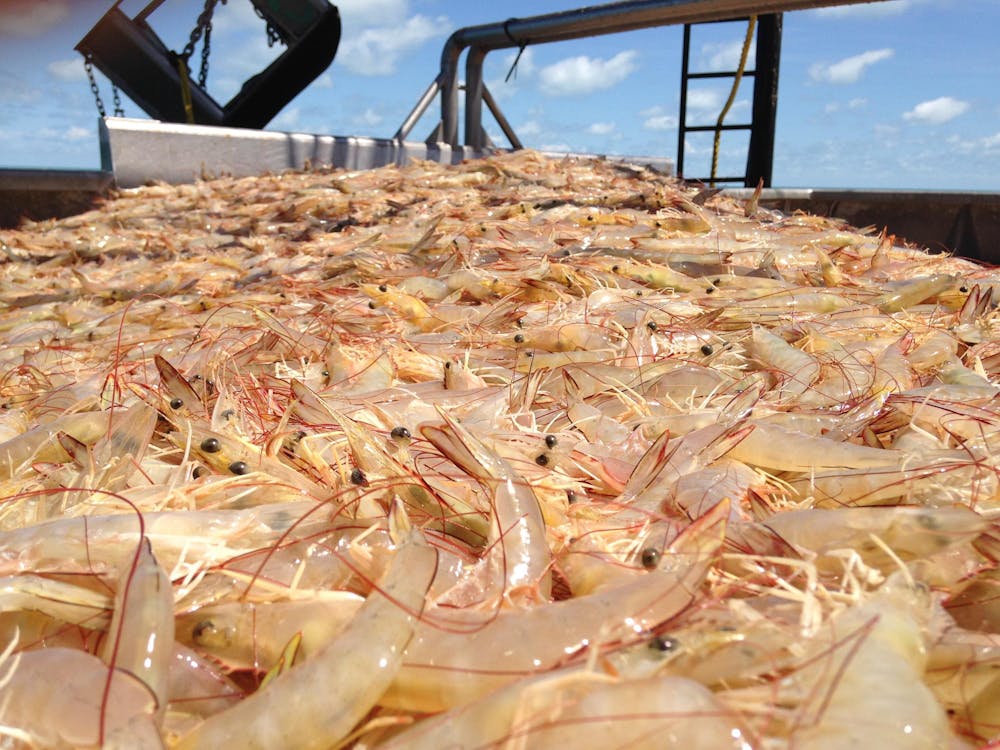 Yields of common banana prawn vary depending on river flows from multiple catchments.
NPF Industry Pty Ltd, Australian Council of Prawn Fisheries Ltd, Austral Fisheries and Raptis Seafoods
Yields of common banana prawn vary depending on river flows from multiple catchments.
NPF Industry Pty Ltd, Australian Council of Prawn Fisheries Ltd, Austral Fisheries and Raptis Seafoods
Why should we care about northern rivers?
Australia’s remote northern rivers are one of the last strongholds for endangered species such as the largetooth sawfish. These iconic species are born in estuaries before spending their first few years of life upstream in freshwater rivers.
Flows from these rivers also sustain extensive mangrove forests and seagrass beds. Periodic floods boost the food supply for many prized marine fisheries such as prawns, barramundi and mud crabs.
The rivers also have cultural significance for Aboriginal people and represent a valuable resource, providing food and supporting livelihoods.
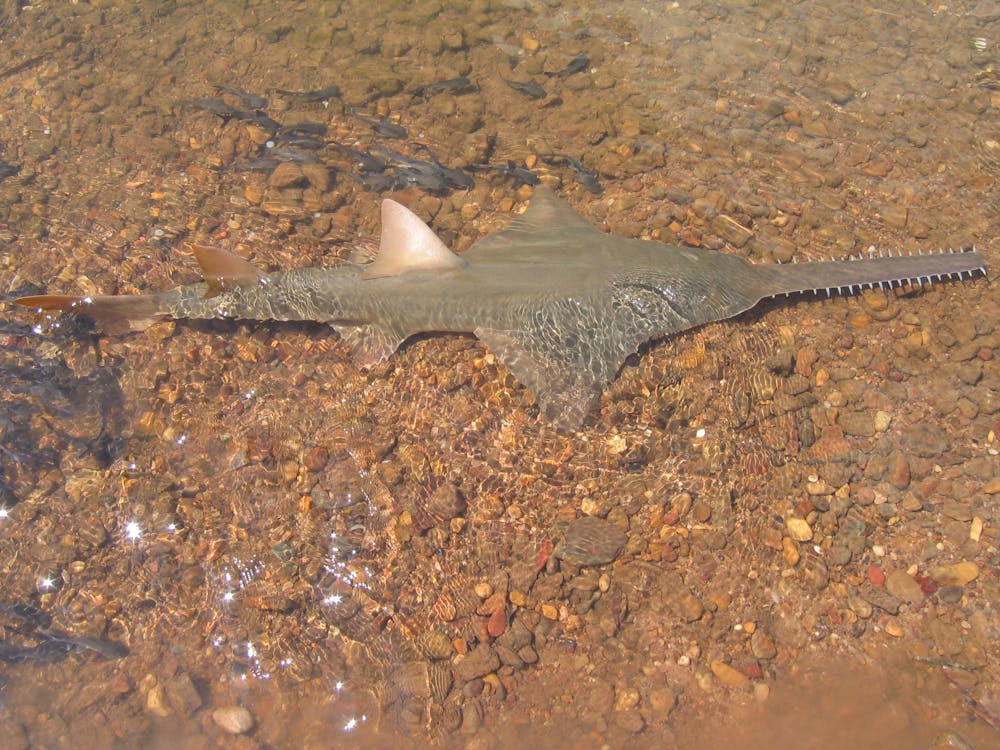 Endangered largetooth sawfish are sensitive to changes in river flows.
Rich Pillans/CSIRO
Endangered largetooth sawfish are sensitive to changes in river flows.
Rich Pillans/CSIRO
Read more: An El Niño hit this banana prawn fishery hard. Here’s what we can learn from their experience
Using modelling to connect rivers, estuaries and oceans
We coupled CSIRO’s sophisticated river models with our specially tailored ecosystem models to represent how altering river flows may influence the downstream ecology and fishery yields.
We used catch data from fisheries to analyse how past natural changes in flow influenced catch rates. This was combined with extensive previous research on the biology and ecology of each species to model the dynamics of catchment-to-coast systems. We were particularly interested in the natural life cycles of fish and crustaceans in our unique northern wet-dry tropical rivers and estuaries. We then simulated multiple water resource development scenarios to assess and compare various impacts and ways to reduce them.
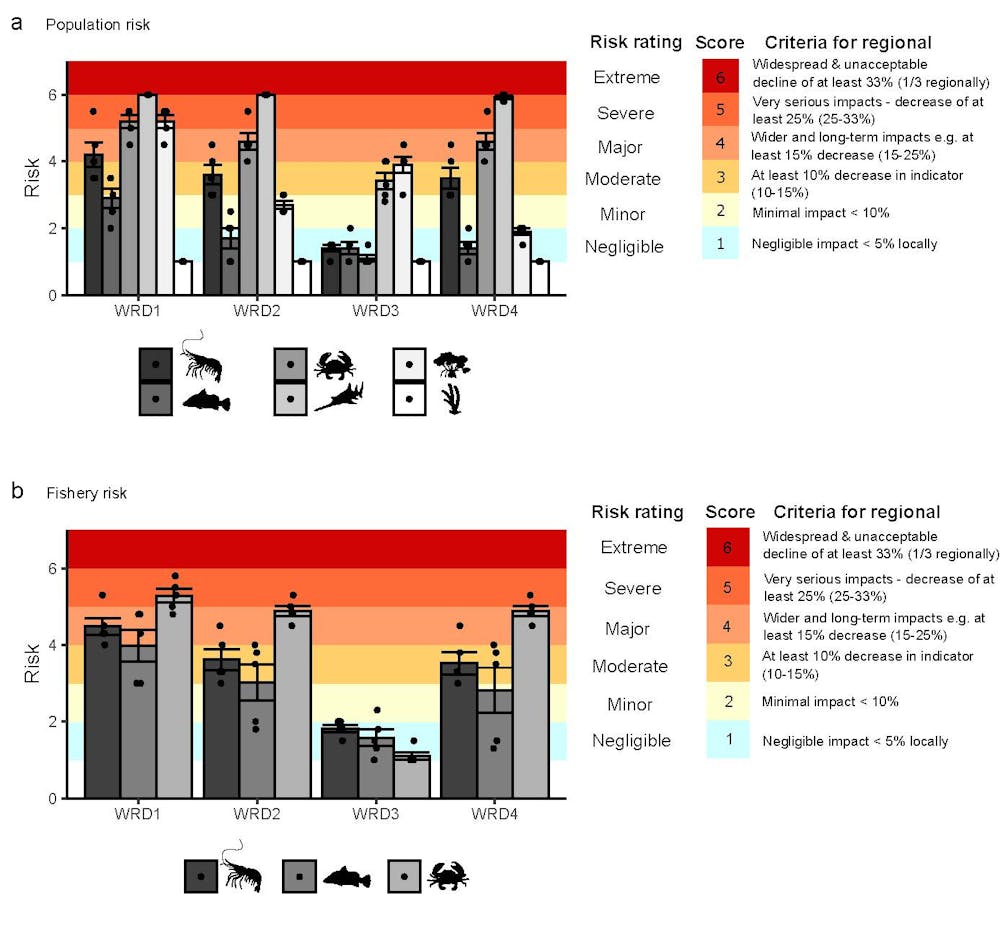 We quantified risk to key populations and fisheries in the Gulf of Carpentaria from changes in freshwater flows due to various hypothetical water resource developments (WRD).
Plagányi et al. (2023) Nature Sustainability, CC BY-ND
We quantified risk to key populations and fisheries in the Gulf of Carpentaria from changes in freshwater flows due to various hypothetical water resource developments (WRD).
Plagányi et al. (2023) Nature Sustainability, CC BY-ND
For mud crabs, we linked river flow and other climate drivers to their life cycle and were able to show how past changes in flow could explain the past variation in crab catch, particularly for rivers in which flow was seasonally variable. We could then use this model to predict how crab catch and abundance might change in the future, depending on how much water is removed from rivers and the method of removal.
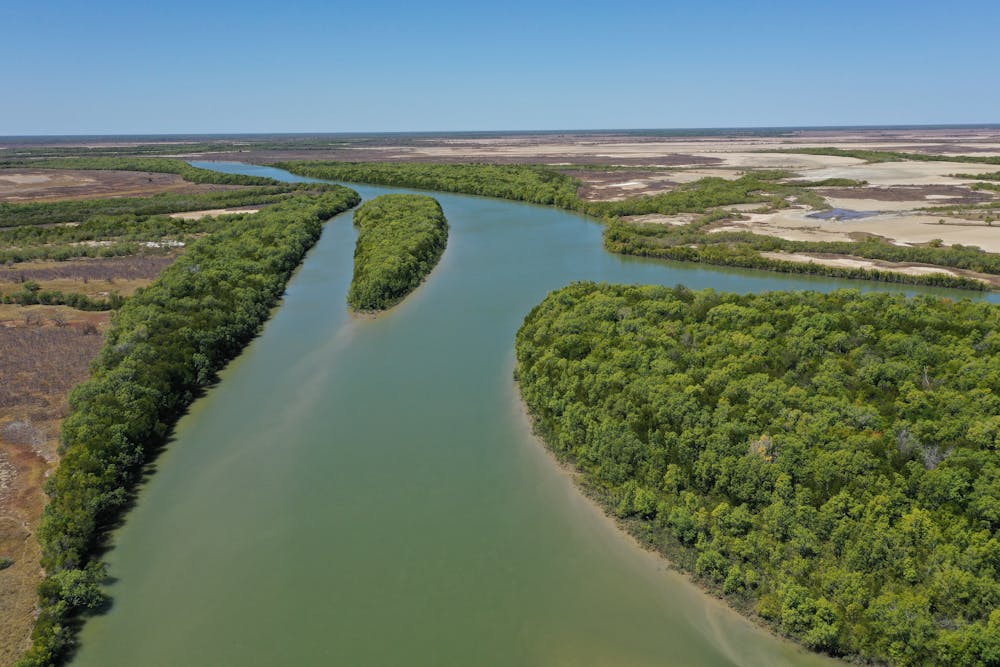 Rivers connect land, estuaries and the sea. Large estuaries feed into the Gulf of Carpentaria.
Queensland Department of Agriculture and Fisheries
Rivers connect land, estuaries and the sea. Large estuaries feed into the Gulf of Carpentaria.
Queensland Department of Agriculture and Fisheries
Integrated management from catchment to coast
Our research shows freshwater flows to the sea are crucial for environmentally and economically important species. Any plan to dam or extract freshwater from Australia’s last wild rivers should account for these effects.
Coupling scientific knowledge about marine and freshwater ecosystems with catchment development will improve infrastructure planning and flow management.
This is vital on a dry continent already challenged by climate change. Every drop counts.
The authors wish to acknowledge Annie Jarrett, Chief Executive Officer of NPF Industry Pty Ltd, which represents Northern Prawn Fishery operators, for her contribution to the research.
Authors: Éva Plagányi, Senior Principal Research Scientist, CSIRO


















