

Farmers or foragers? Pre-colonial Aboriginal food production was hardly that simple
- Written by: Michael Westaway, Australian Research Council Future Fellow, Archaeology, School of Social Science, The University of Queensland
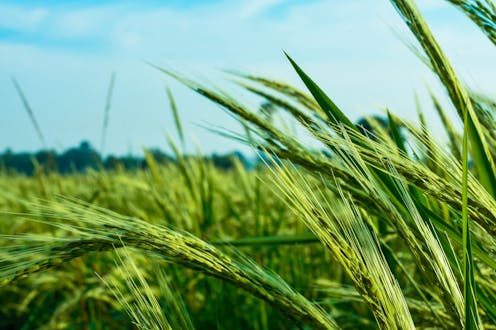
For almost ten years, debate has raged over the book Dark Emu by Aboriginal historian Bruce Pascoe. In it, Pascoe argues many pre-colonial Aboriginal groups were farmers, pointing to examples like eel aquaculture in Victoria, and grain planting and threshing of native millet in the arid centre.
The debate has drawn in everyone from academics to Aboriginal communities invested in food futures to shock jocks claiming it is a warping of history.
For our group of archaeologists and First Nations people, the fact this debate has raged so long suggests there are shortcomings in how we think of food production and how we investigate it in Australian archaeology.
Farmers versus foragers is a huge oversimplification of what was a mosaic of food production. After all, Australian landscapes differ markedly, from tropical rainforest to snowy mountains to arid spinifex country. For many Aboriginal people, the terms “farming” and “hunter-gatherer” do not capture the realities of 60 millennia of food production.
In our new research published in the Archaeology of Food and Foodways, we argue that to better understand millennia-old systems, archaeologists must engage deeply with fields such as plant genetics, ethnobotany, archaeobotany and bioarchaeology as well as listening more carefully to the views of Aboriginal people. Here’s how.
We need to use better methods
For decades, archaeologists have grappled with the task of understanding ancient food production. We are by no means the first to point to the lack of appropriate methods as a reason why this has proved hard.
Archaeobotanists Anna Florin and Xavier Carah have observed that food production systems in northern Australia are very similar to those in Papua New Guinea. While we accept Papuan food gardens, Australian archaeologists have been less eager to embrace this idea for Australia.
In part, this is a failure of terminology. Aboriginal food production was enormously varied.

The solution lies in better methods. For instance, many Aboriginal groups lived semi-permanently in gunyah (bark hut) villages, as Dark Emu demonstrates by quoting colonial observers.
These settlement sites are vital to gaining a better understanding of how people lived. By excavating gunyah sites and fireplaces where food was prepared, we can recover seeds by sieving dirt and ash to find out which plants people used. The problem? Many of the sieves used were not fine enough to capture the tiny seeds of vital plants such as native millet. Most seeds used by Aboriginal groups were less than 1mm in radius.
This can be fixed. In south-west Asia, archeobotanists have long used fine mesh sieves to recover ancient seeds. You also need reference collections of seeds to be able to identify them from fireplaces.
Genetics – and archaeology?
It might not sound like a natural fit. But around the world, combining plant genetics with archaeology has dramatically changed our understanding of how people used plants, how they moved them about the landscape and how they changed these plants into forms better suiting our use. The wild precursor of corn, for instance, looks almost nothing like what we moulded it into through selection.
Combining these approaches is only in its infancy in Australia. But early applications together with Aboriginal knowledge of plant use has revealed dramatic new insights into how Aboriginal people moved important species such as black bean Castanospermum australe around the landscape and cultivated them.
The legacy of these food production techniques may still be visible today. For instance, when we look at the four species of native rice, we would not expect them to have large seeds. But all four species do. For millennia, Aboriginal groups in Australia’s wet north farmed these floodplain grasses. They may well have provided some selective pressure that resulted in larger grains, as early farmers did elsewhere.
To date, we don’t know this for sure. But we can find out. Careful genetic analysis of remaining wild populations should tell us if these large grains came from human rather than natural selection. We can also analyse genetic diversity between wild rice populations, to see if Aboriginal groups were involved in spreading these useful plants further.
Reading the story of bones
Every bone tells a story. In your bones lie traces of how fast you grew, what you ate and how hard your life was.
Studying ancestral remains is a very sensitive issue due to the colonial practice of collecting Aboriginal remains for research. But when done sensitively and respectfully, it yields fresh insights.
Bones and teeth can tell us many things about life in Aboriginal Australia. Tracking changes in isotope ratios in teeth can tell us if people were shifting to a more sedentary way of living. Stress in bones can tell us about difficult food production techniques such as labour-intensive seed grinding.
The past can shape the future
Aboriginal culture is 60 millennia old, during which time the climate shifted several times. Sea levels rose, flooding the Bass Strait and the coastal plains connecting Cape York to Papua New Guinea.
For a culture to survive that long means it had to rely on sustainable food production. Finding out how exactly this was done could yield lost knowledge and make it possible for current-day Aboriginal groups to recapture these methods and crops.
To date, renewed interest in bushfoods has not spread far beyond boutique food industries such as gourmet breads and specialised plant foods like Kakadu plum and quandongs.
Learning more about drought-resilient crops such as native rice and native millet (Panicum decompositum) could help farmers adapt to climate change and diversify food production. In central Victoria, the Dja Dja Wurung group is exploring the potential for kangaroo grass (Themeda triandra) for use as a food and as drought-resistant cattle fodder.
The better we understand ancient food production, the more likely we are to be able to bring this knowledge to bear on today’s challenges – and give a fuller answer to the questions raised by Dark Emu.
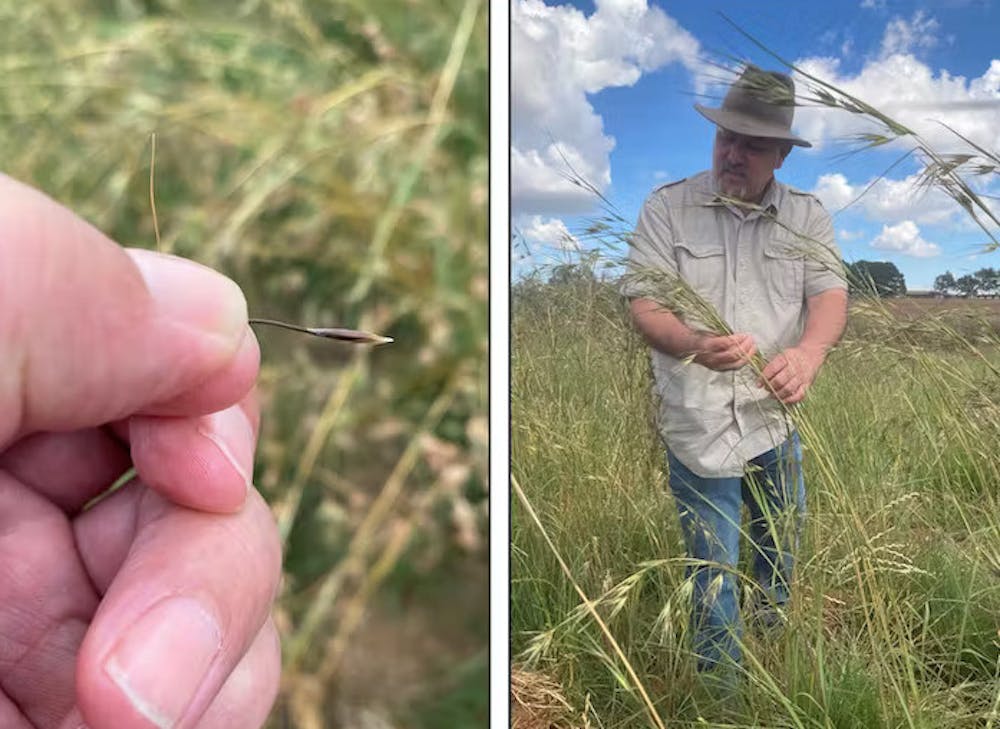 Dja Dja Wurung man Rodney Carter inspects kangaroo grass.
Author provided, CC BY-ND
Dja Dja Wurung man Rodney Carter inspects kangaroo grass.
Author provided, CC BY-ND
Authors: Michael Westaway, Australian Research Council Future Fellow, Archaeology, School of Social Science, The University of Queensland


















