

Australia has more native bird species than almost anywhere else. What led to this explosion of diversity?
- Written by: Stephen Garnett, Professor of Conservation and Sustainable Livelihoods, Charles Darwin University
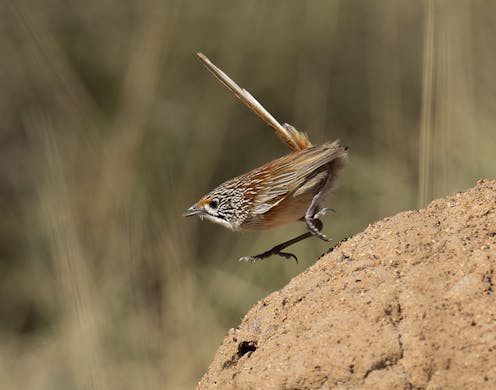
When you went out today, did you see any birds? A galah perhaps, or a crow?
If you did, there’s a decent chance the bird you saw lives nowhere but Australia. Out of about 850 species found in Australia, 45% are “endemic”, which means they’re unique to Australia. The only other country with more endemic species is Indonesia.
Thanks to their wings, birds are the world’s greatest travellers. So why is it that such a high proportion of Australian birds aren’t found anywhere else?
Climate rules
The story starts more than 45 million years ago, when Australia first split from Antarctica and started to head north. It was the events that occurred during this trip – particularly in relation to our climate – that led to the diversity in Australia’s birds today.
When it first set out, Australia was covered in lush rainforest. As it drifted, however, the climate became much drier. Our distinctive flora of grasslands and eucalypt woodlands started to spread across the continent.
But this drying trend wasn’t consistent. Particularly in the last million years, dry periods associated with the ice ages alternated with wetter times, such as the Holocene epoch – which is what we’ve had for the past 10,000 or so years.
But the climate didn’t just vary over thousands of years. It also varied, as we know too well, from year to year. Australia has long been the land of long droughts, sometimes lasting decades, interspersed with flooding rains.
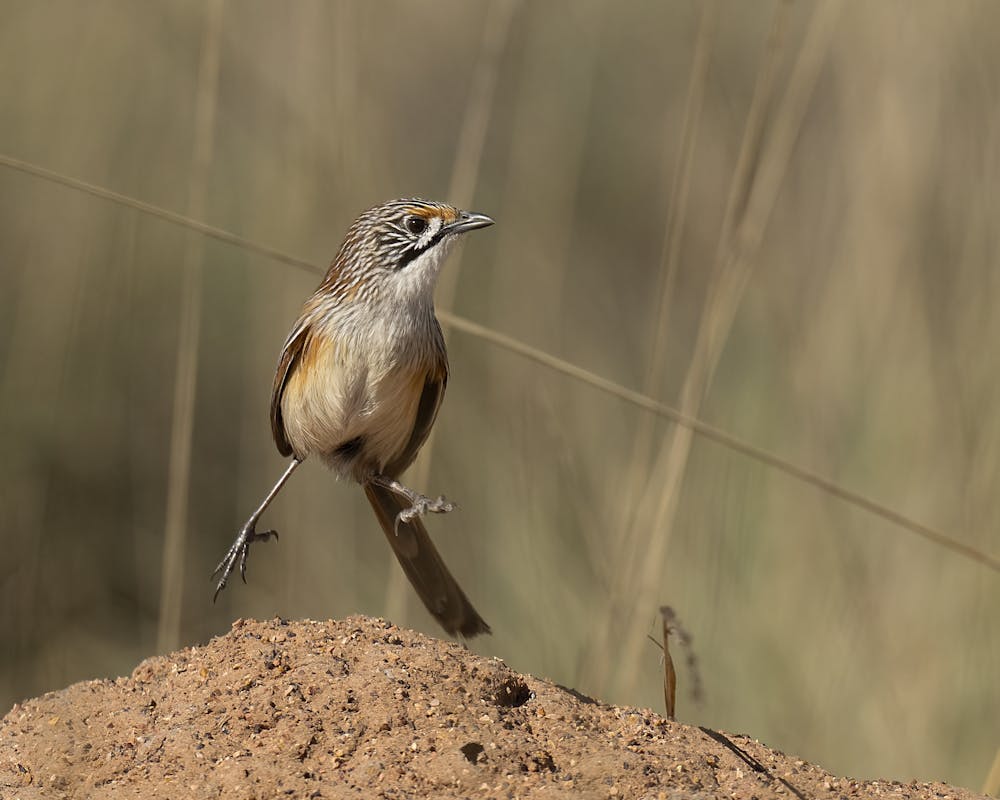 Opalton grasswrens (Amytornis rowleyi) can be found in the Forsyth Range in Queensland.
Barry Baker
Opalton grasswrens (Amytornis rowleyi) can be found in the Forsyth Range in Queensland.
Barry Baker
What’s climate got to do with birds?
The diversity in Australia’s birds arose partly because of the list of passengers aboard the good ship of Australia. This included ancient parrots and the ancestors of what were to become the world’s first songbirds: the lyrebirds and scrub-birds. Both groups are highly adaptable and have bigger brains than other birds relative to their size.
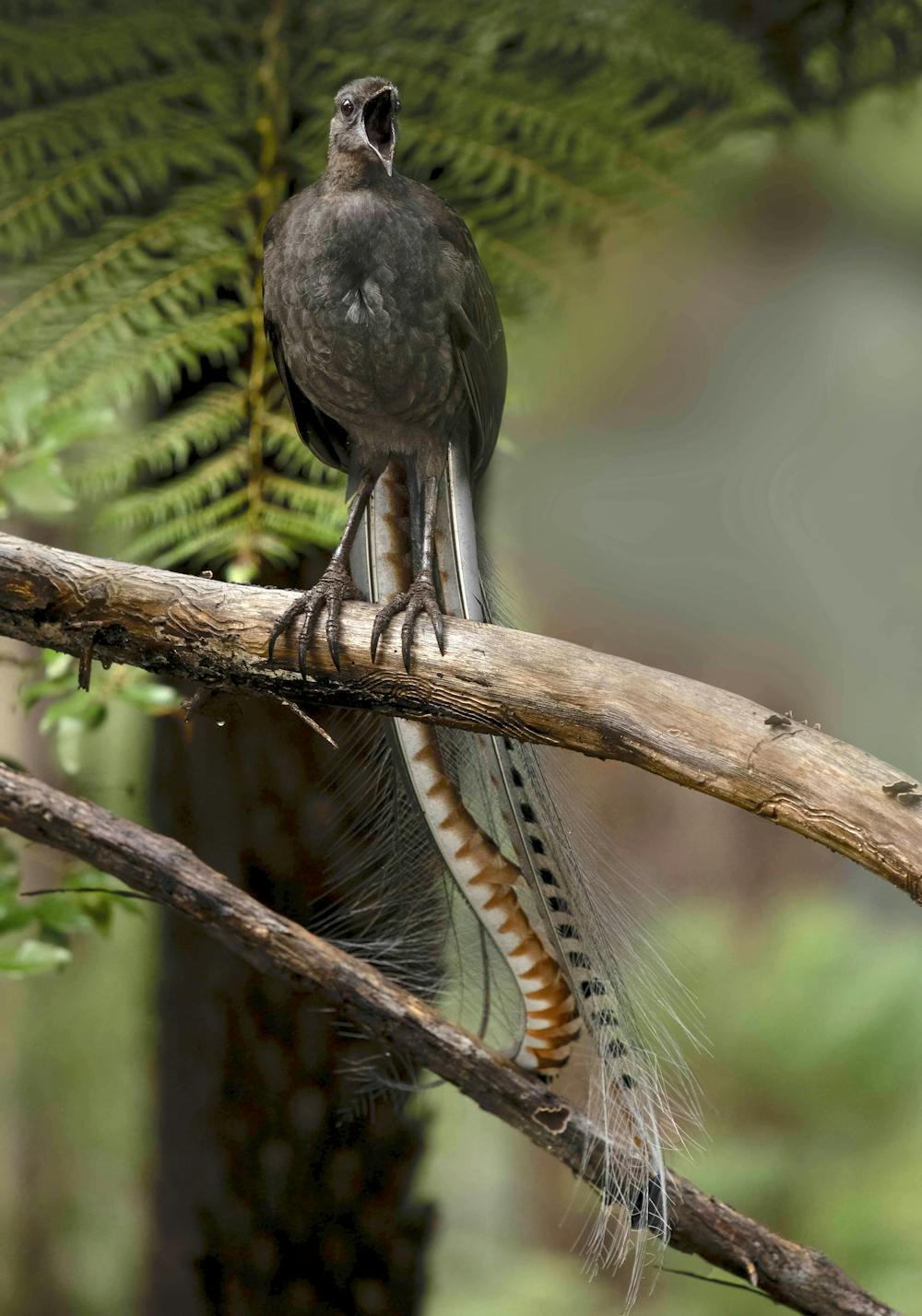 Lyrebirds are known for their incredible mimicry.
Barry Baker
Lyrebirds are known for their incredible mimicry.
Barry Baker
However, it was ultimately the climate that gave us so many endemic species. Every time the climate dried, birds that preferred forests were pushed to the damper margins of the continent, where they evolved into separate species. In wetter times, some forests spread and reconnected – but now there were two or more species, not just one.
The same was true for the arid land birds, which got divided when it became extra dry. One ancient group called grasswrens has different species in almost all the isolated blocks of arid habitat across the country.
The parrots and cockatoos also diversified into a huge range of species, from tiny budgerigars to huge black cockatoos.
One-way traffic
But that’s only part of the story. You might have heard of the original supercontinent, Pangaea, which split into Gondwana and Laurasia about 200 million years ago. When Gondwana eventually split, some of the continents moved north and shared their faunas with the regions they ran into in the Northern Hemisphere.
As Africa and India collided with Asia and Europe, the species from the old supercontinents of Gondwana and Laurasia mixed. North and South America also exchanged plants and animals when their land masses joined. Australia was different. And once again, it came down to the climate.
As Australia pushed north, the shifting tectonic plates threw up islands that acted as stepping stones to Asia. These allowed Australian songbirds to head out into the wider world, where they did exceptionally well. In fact, researchers think all the world’s 5,000 or songbird species came from Australia.
This animation shows the continent of Pangaea breaking into the land masses we have today.The question is, why was this traffic one way? Why didn’t Asian and American birds such as woodpeckers hop on over to Australia? One reason could be that by that time Australia was already full of tough birds that had evolved to cope with a pretty mean climate.
In contrast, the birds from Asia had evolved in fertile rainforests. Any that did disperse south along the chain of islands leading to Australia would have been ill-equipped to cope with its aridity. They would also have had to compete with parrots and songbirds that already knew how to take full advantage of the resources available.
A few did make it, including a lovely set of finches, but they are an exception proving the rule.
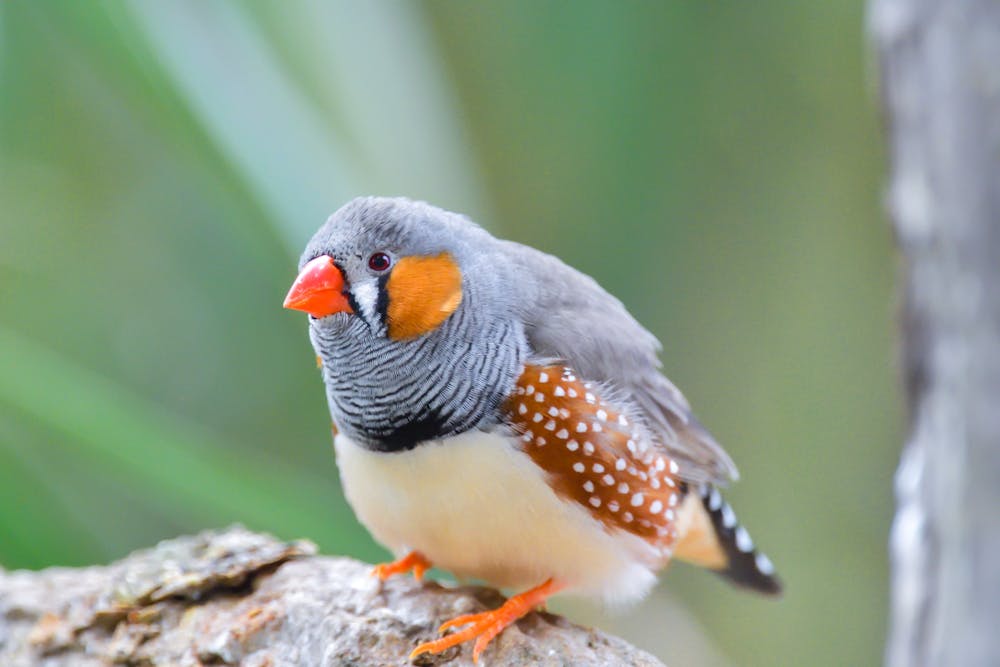 Zebra finches (Taeniopygia castanotis) are the most common of Australia’s grassfinches, found across most of the mainland.
Shutterstock
Zebra finches (Taeniopygia castanotis) are the most common of Australia’s grassfinches, found across most of the mainland.
Shutterstock
Budgies are the best
It’s probably no coincidence the world’s most popular cage birds come from Australia. Cage living isn’t for every bird; most birds are delicate creatures that need constant care if bred in captivity.
In contrast, budgerigars, cockatiels and zebra finches from Australia’s fickle arid zone know they must do what it takes while the going’s good, because the next El Niño may start next week. And it helps if you can cope with temperatures that vary from -10°C to more than 40°C.
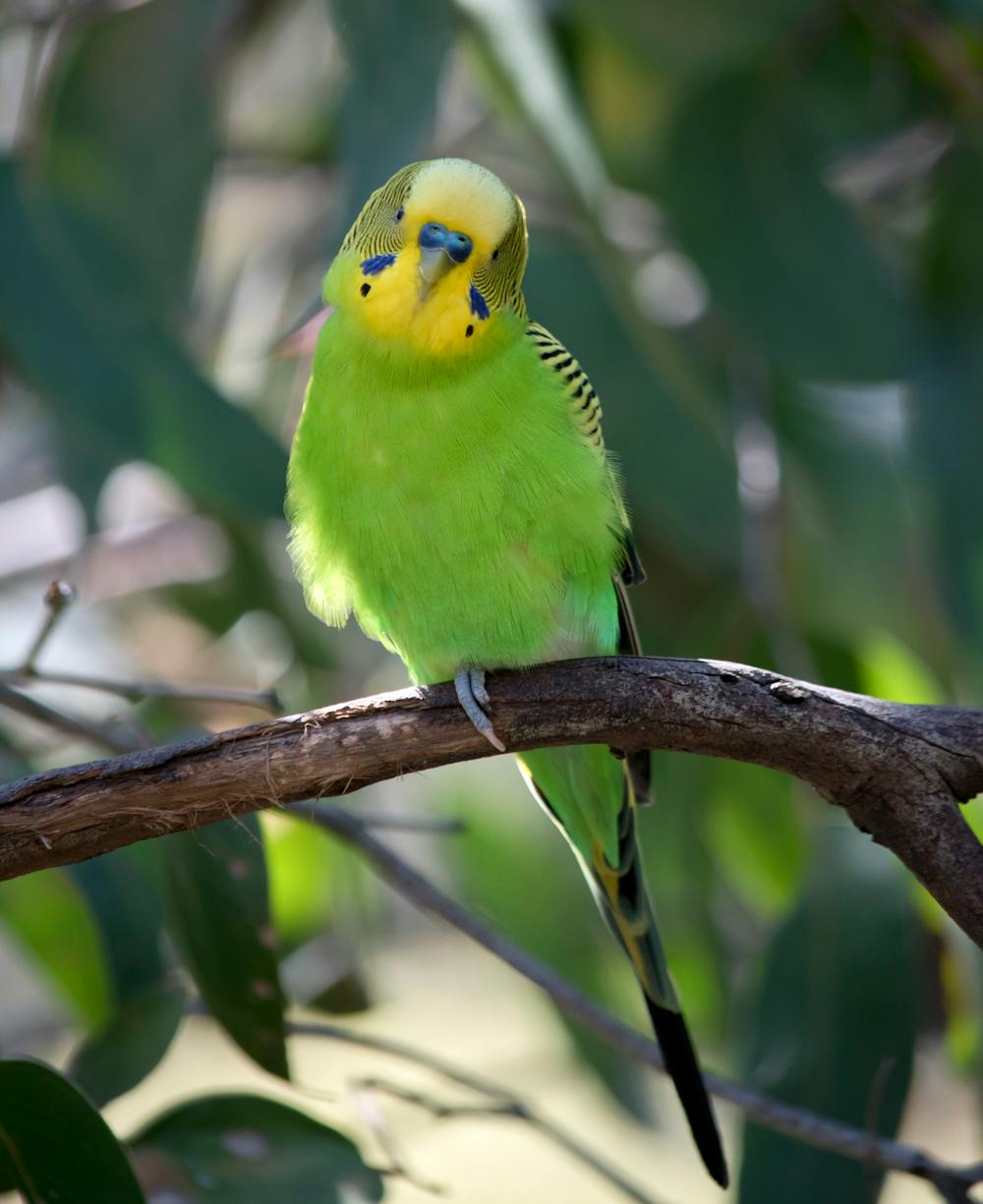 The budgerigar (Melopsittacus undulatus) is a colourful native parrot.
Shutterstock
The budgerigar (Melopsittacus undulatus) is a colourful native parrot.
Shutterstock
Australia also shares many bird species with New Guinea. This isn’t surprising, given we’re on the same continental plate.
The Torres Strait is so shallow that drops in sea levels during an ice age would form a land bridge that even a cassowary could walk across (which is why cassowaries are shared with New Guinea).
For most other Australian birds found elsewhere, such as shorebirds and seabirds, water is no barrier.
But most of our birds are ours alone. Ours to enjoy and ours to care for – because they have no other home.
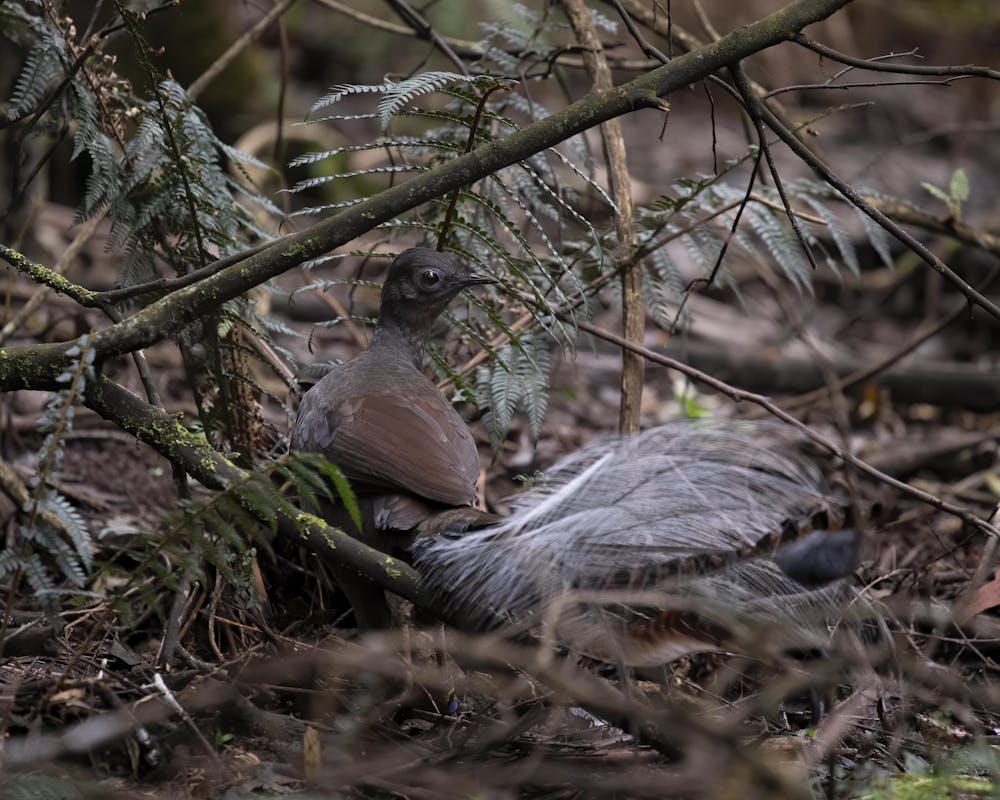 A superb lyrebird (Menura novaehollandiae) in the Dandenong Ranges.
Barry Baker
A superb lyrebird (Menura novaehollandiae) in the Dandenong Ranges.
Barry Baker
Read more: Listen to the Albert’s lyrebird: the best performer you’ve never heard of
Authors: Stephen Garnett, Professor of Conservation and Sustainable Livelihoods, Charles Darwin University


















