

Waking a sleeping language – our plan to revive the speaking of ta rē Moriori
- Written by: John Middleton, Doctoral Candidate in Cultures, Languages and Linguistics, University of Auckland
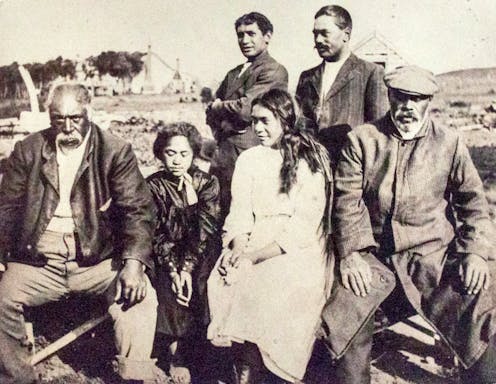
When is a language extinct and when is it merely dormant? There are certainly languages that have passed over that line, and many remain threatened today. But what of those in the twilight zone – can we revive them, and what would that look like?
Languages that no longer have native speakers – that is, no one who learned it as a child – are often considered “dead”. And yet it’s not quite as clear cut as that.
Take the Moriori language from the Chatham Islands, for example. Ta rē Moriori has no native speakers, with the last having died in the early 20th century. But it also has a relatively rich historical record, and is similar in many ways to te reo Māori.
This has inspired a project at the University of Auckland, in collaboration with the Hokotehi Moriori Trust, which looks after the interests of Moriori people in New Zealand and around the world.
Our work will involve transcribing, translating and trying to fully understand all the existing texts. This will give us insights into the grammatical properties of the language, with the end goal being to produce a language grammar.
The project is still in its infancy, but it raises the intriguing possibility that in the future we might hear small children speaking ta rē Moriori as their first language.
Learning from old texts
The Moriori inhabit Rēkohu, or the Chatham Islands, some 800 kilometres off the east coast of New Zealand. They’ve been there for at least 600 years, and have a unique culture and language.
Europeans arrived in the 1800s, followed by two Māori tribes from Aotearoa New Zealand. Disease carried by the former, and enslavement and murder practised by the latter saw a rapid decline of the Moriori population – and their language.
By 1862, there were only 101 Moriori alive, from a high of around 2,000 before colonisation. The last native speaker died only 40 years later.
Read more: Research on 2,400 languages shows nearly half the world's language diversity is at risk
Given how relatively recent this was, Moriori is an ideal testing ground for the possibility of reviving a language. Unlike many Australian Aboriginal languages which no longer have native speakers, ta rē Moriori has been preserved in various forms.
This includes a small dictionary written by a resident magistrate in 1889; a set of short stories compiled by the magistrate’s clerk Alexander Shand, with the help of his primary Moriori consultant Hirawanu Tapu; and an 1862 petition from the Moriori to the New Zealand governor, requesting support for Moriori land claims.
Moriori’s closest linguistic relative is te reo Māori, with many grammatical and lexical similarities. But there are also significant differences. For example, Moriori has 15 ways of saying “the”, a pattern not seen in any other Polynesian language.
So translating and analysing the existing texts should give us a fairly detailed understanding of how the language was spoken, including a sizeable lexicon and a grammar.
Other languages have been revived
It may seem ambitious to revive a language, but it has been done before. The Wampanoag language from Massachusetts in the United States lost its last speaker in the 1890s, around the same time Moriori did.
But there was a significant archive of written literature built up prior to that, including government records and religious texts.
In the 1990s, Jessie Little Doe Baird, a member of the Wampanoag community, started analysing Wampanoag texts written before the 1890s, including a bible from 1663. She was then able to construct a dictionary and grammar.
From these, members of the community started relearning the language – and teaching it. By 2014, there were 50 children taking classes, many of them now considered to be fluent native speakers.
Read more: Reviving Indigenous languages – not as easy as it seems
Filling in the gaps
Sometimes, the term “sleeping language” is a better way to describe one that is not currently being passed from generation to generation. The revived language will inevitably be slightly different from the original one. Every speaker of a language makes “native speaker judgements” which aren’t taught, but are inherently known.
A simple example from English would be the relative order in which we use adjectives: size comes before colour (little brown dog), whereas the opposite sounds a bit weird (brown little dog).
Unless our Moriori texts have specific examples of “stacked” adjectives, we have no way of finding out the correct ordering. So this piece of knowledge would be lost.
Read more: We are on the brink of losing Indigenous languages in Australia – could schools save them?
There are thousands of these little rules that our brains unconsciously absorb when learning a language as a child. And there is no way any analysis of old texts could figure them all out.
But new speakers would fill in the gaps. If adults were to learn the Moriori language from the texts, they could acquire a large number of words and grammatical structures, although the gaps would still exist. A child learning “new” Moriori from the adults would then fill in the gaps instinctively – most likely from other languages they hear, such as Māori or English.
So, ta rē Moriori cannot be said to be dead or extinct, because there is a real possibility it can be heard again. Even now, Moriori words, phrases and songs are used around the Chatham Islands by Moriori themselves. Better to call it sleeping – and hope we can wake it one day.
Authors: John Middleton, Doctoral Candidate in Cultures, Languages and Linguistics, University of Auckland


















