

Why a wetland might not be wet
- Written by: Deborah Bower, Lecturer in Ecosystem Rehabilitation, University of New England
Lake Eyre is one of Australia’s most iconic wetlands, home to thousands of waterbirds that migrate from all over Australia and the world. But it is often dry for decades between floods.
Many people think wetlands are swamps or ponds that die when dry. But unlike many places worldwide, most Australian wetlands have natural wet-dry cycles, with dry spells that can last for decades. Dry phases are necessary for the life cycle of the wetland itself, as well as for many of the plants and animals that live there.
Read more: Without wetlands, what will protect the Great Barrier Reef?
So, if wetlands are still wetlands when they’re dry, how do you spot one? And what do we need to know about these unique places to protect their wonderful and unique biodiversity?
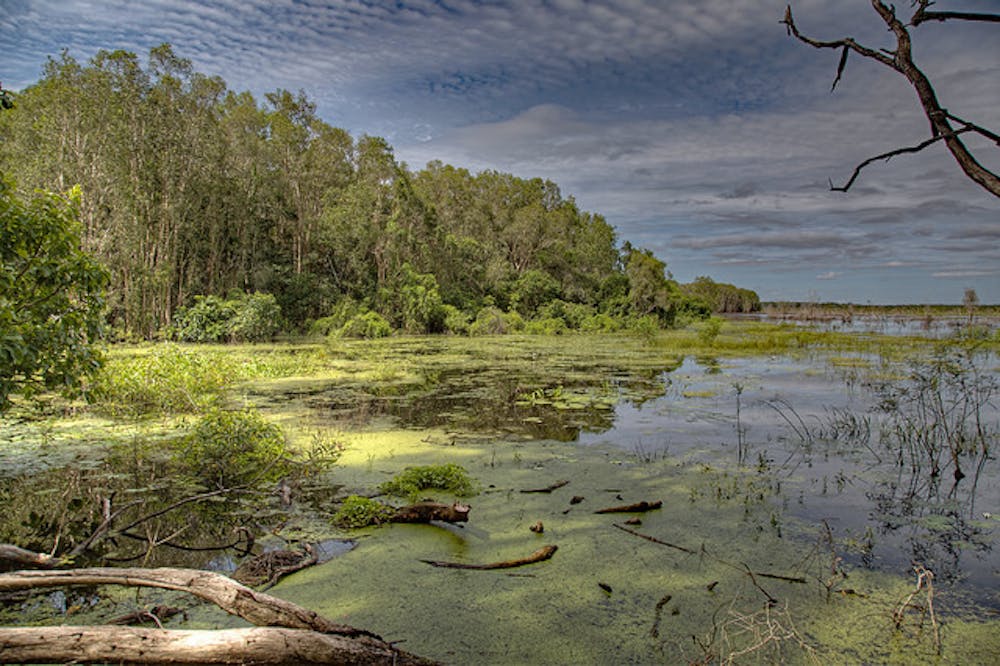 Fogg Dam wetlands in the Northern Territory are a riot of colour during monsoon season.
Geoff Whalan/Flickr, CC BY-NC
Fogg Dam wetlands in the Northern Territory are a riot of colour during monsoon season.
Geoff Whalan/Flickr, CC BY-NC
Floods are vital for a wetland. As one fills, water depth can increase rapidly, the temperature falls, and dissolved oxygen is high as turbulent raindrops or floodwaters fill the basin. Within a few hours of wetting, animals and plants that can tolerate the dry periods will hatch, sprout or resume life, and a new aquatic food web begins.
Algae begin blooming, the soil releases nutrients, and tiny aquatic animals like rotifers hatch from dried eggs. Within a week, copepods and other small crustaceans hatch and adult insects like dragonflies arrive to lay their eggs. Huge numbers of waterbirds may flock to the wetland to enjoy the abundant algae and crustaceans. Other critters emerge from hideouts in crayfish burrows, beneath leaf litter or buried in shallow sediment.
 When wetlands flood they fill rapidly with life.
Felicity Burke/The Conversation, CC BY
When wetlands flood they fill rapidly with life.
Felicity Burke/The Conversation, CC BY
After filling, new plants emerge in distinct zones depending on water depth and how often and long they are wet. Wetland plants produce oxygen and store carbon, two services essential for life on earth. They have evolved many ways to survive through dry times and thrive during the wet.
Some plants, like pondweed, are so adapted to aquatic life that a single stem can grow thin branching leaves underwater and thicker broader leaves above water. This helps the plant to access oxygen underwater while simultaneously maximising the sunlight it receives above water. Both are necessary for growth and survival.
As the wetland dries, water temperatures increase, dissolved oxygen drops and aquatic animals either leave or prepare to survive the dry times.
Some, like mosquito larvae, have adapted to stagnant water. They breath through siphons on their tail to survive this final drying stage. Once the wetland is completely dry, microbes take over to start breaking down any remaining organic matter and the cycle starts again.
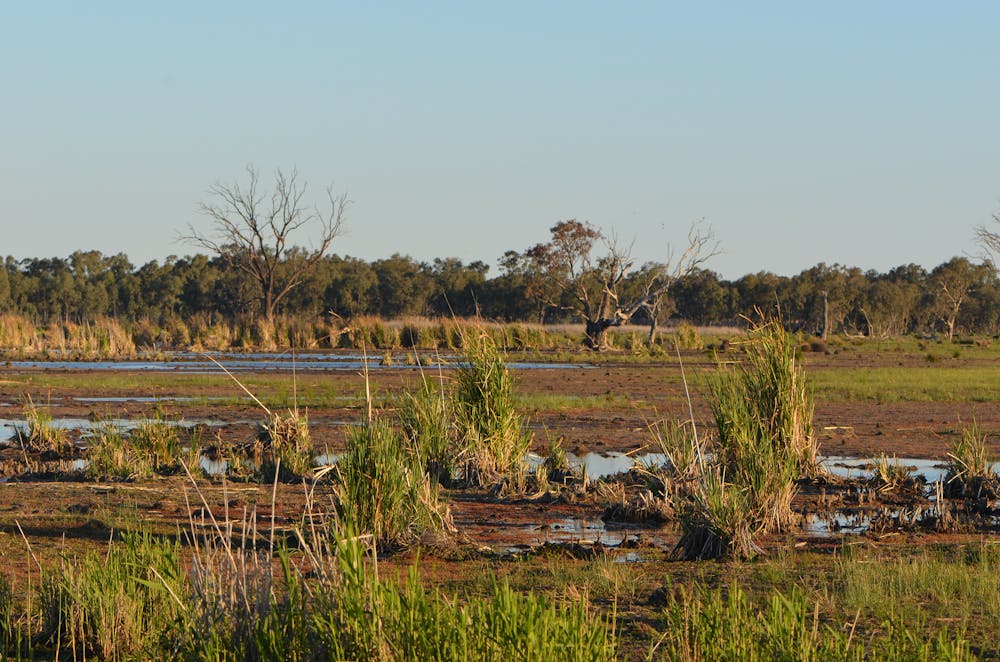 Macquarie Marshes in NSW moves between wet and dry.
Margaret Donald/Flickr, CC BY-ND
Macquarie Marshes in NSW moves between wet and dry.
Margaret Donald/Flickr, CC BY-ND
Many plants and animals in the wetland die and decompose, enriching the earth. These very fertile soils are the reason why wetlands are so often drained for cropping and grazing. If undisturbed, these nutrients are stored in the soil until the next flood. When completely dry, the wetland may only be evident as a depression of fine soil with a perimeter of sedges or reeds.
Wetlands may stay dry for many decades, while eggs and seeds wait and rest until the next flood. Some eggs (such as shield shrimp) are small enough to be dispersed by the wind, or hitch a ride on waterbirds leaving the area.
The plants, animals and microbes occupying wetlands improve the surrounding landscape, providing pollination, pest control, carbon and nutrient storage, and waste removal. Wetlands store 35% of carbon in only 9% of the earth’s surface, reducing floods and recharging groundwater. Understanding how plants and animals will adapt to the extended dry periods predicted with climate change is increasingly important.
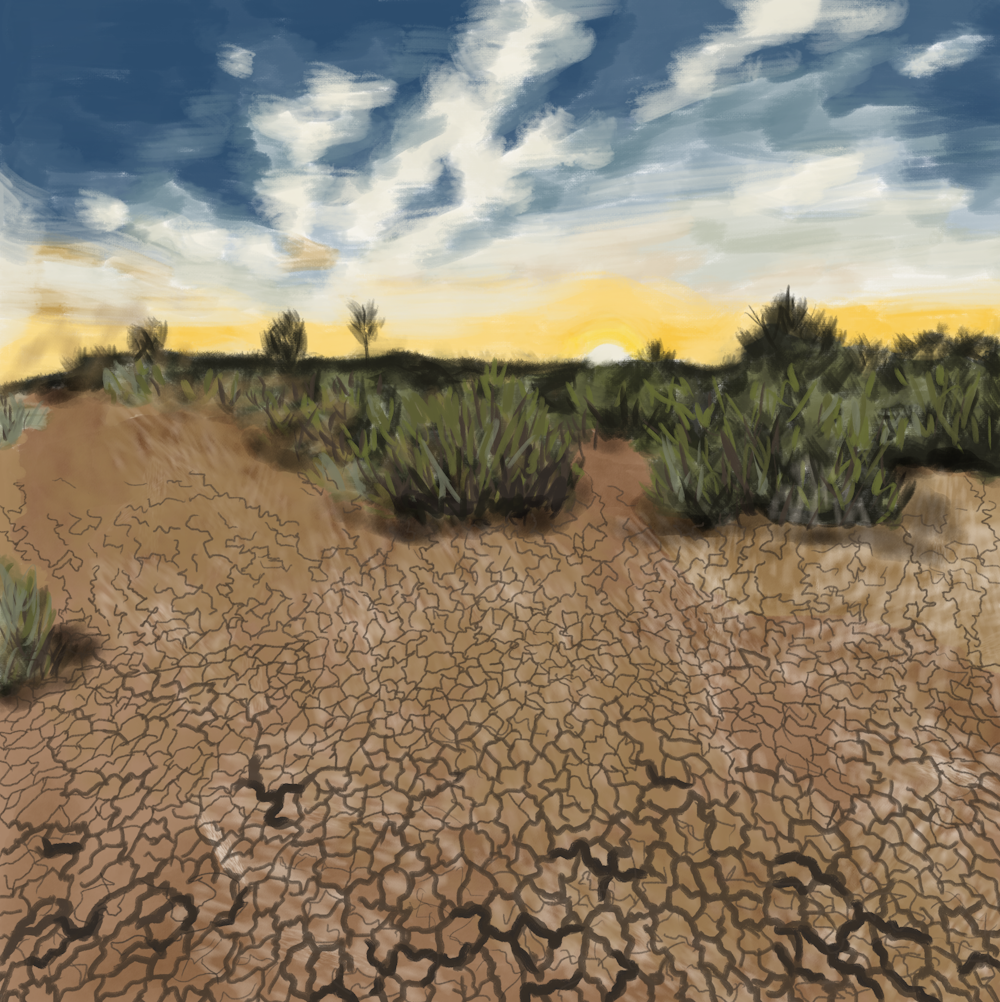 Under dry earth, many plants and creatures wait for the rains to come again.
Felicity Burke/The Conversation, CC BY
Under dry earth, many plants and creatures wait for the rains to come again.
Felicity Burke/The Conversation, CC BY
A drying climate is particularly concerning for high altitude wetlands that are very restricted in the Australian landscape. They occur on the New England Tablelands and Monaro Plateau and can be rapidly degraded by grazing, cropping, diverting or storing water, or fires that can each destroy thousands of years of peat growth in a few days. Losing these wetlands brings us a step closer to losing threatened species such as the Giant dragonfly and Latham’s snipe that rely on these unique upland wetlands.
Read more: How wetlands can help us adapt to rising seas
Wetlands are largely threatened by lack of understanding that the quiet dry periods fuel the booming wet periods. It is critical that we know where wetlands are in the landscape, so we can protect them during wet and dry phases. Protecting wetlands even when they’re not wet sustains vital seed and egg banks that kickstart complex food webs linking land and water across Australia’s iconic wetland ecosystems.
Authors: Deborah Bower, Lecturer in Ecosystem Rehabilitation, University of New England
Read more http://theconversation.com/why-a-wetland-might-not-be-wet-103687

















