

Who wrote the Bible?
- Written by: Philip C. Almond, Emeritus Professor in the History of Religious Thought, The University of Queensland
The Bible tells an overall story about the history of the world: creation, fall, redemption and God’s Last Judgement of the living and the dead.
The Old Testament (which dates to 300 BCE) begins with the creation of the world and of Adam and Eve, their disobedience to God and their expulsion from the garden of Eden.
The New Testament recounts the redemption of humanity brought about by the life, death and resurrection of Jesus. It finishes in the book of Revelation, with the end of history and God’s Last Judgement.
During the first 400 years of Christianity, the church took its time deciding on the New Testament. Finally, in 367 CE, authorities confirmed the 27 books that make it up.
But who wrote the Bible?
Broadly, there are four different theories.
1. God wrote the Bible
All Christians agree the Bible is authoritative. Many see it as the divinely revealed word of God. But there are significant disagreements about what this means.
At its most extreme, this is taken to mean the words themselves are divinely inspired – God dictated the Bible to its writers, who were merely God’s musicians playing a divine composition.
As early as the second century, the Christian philosopher Justin Martyr saw it as only necessary for holy men
to submit their purified persons to the direction of the Holy Spirit, so that this divine plectrum from Heaven, as it were, by using them as a harp or lyre, might reveal to us divine and celestial truths.
In other words, God dictated the words to the Biblical secretaries, who wrote everything down exactly.
This view continued with the medieval Catholic church. Catholic theologian Thomas Aquinas put it simply in the 13th century: “the author of Holy Writ is God”. He qualified this by saying each word in Holy Writ could have several senses – in other words, it could be variously interpreted.
The religious reform movement known as Protestantism swept through Europe in the 1500s. A new group of churches formed alongside the existing Catholic and Eastern Orthodox traditions of Christianity.
Protestants emphasised the authority of “scripture alone” (“sola scriptura”), meaning the text of the Bible was the supreme authority over the church. This gave greater emphasis to the scriptures and the idea of “divine dictation” got more support.
So, for example, Protestant reformer John Calvin declared:
[we] are fully convinced that the prophets did not speak at their own suggestion, but that, being organs of the Holy Spirit, they only uttered what they had been commissioned from heaven to declare.
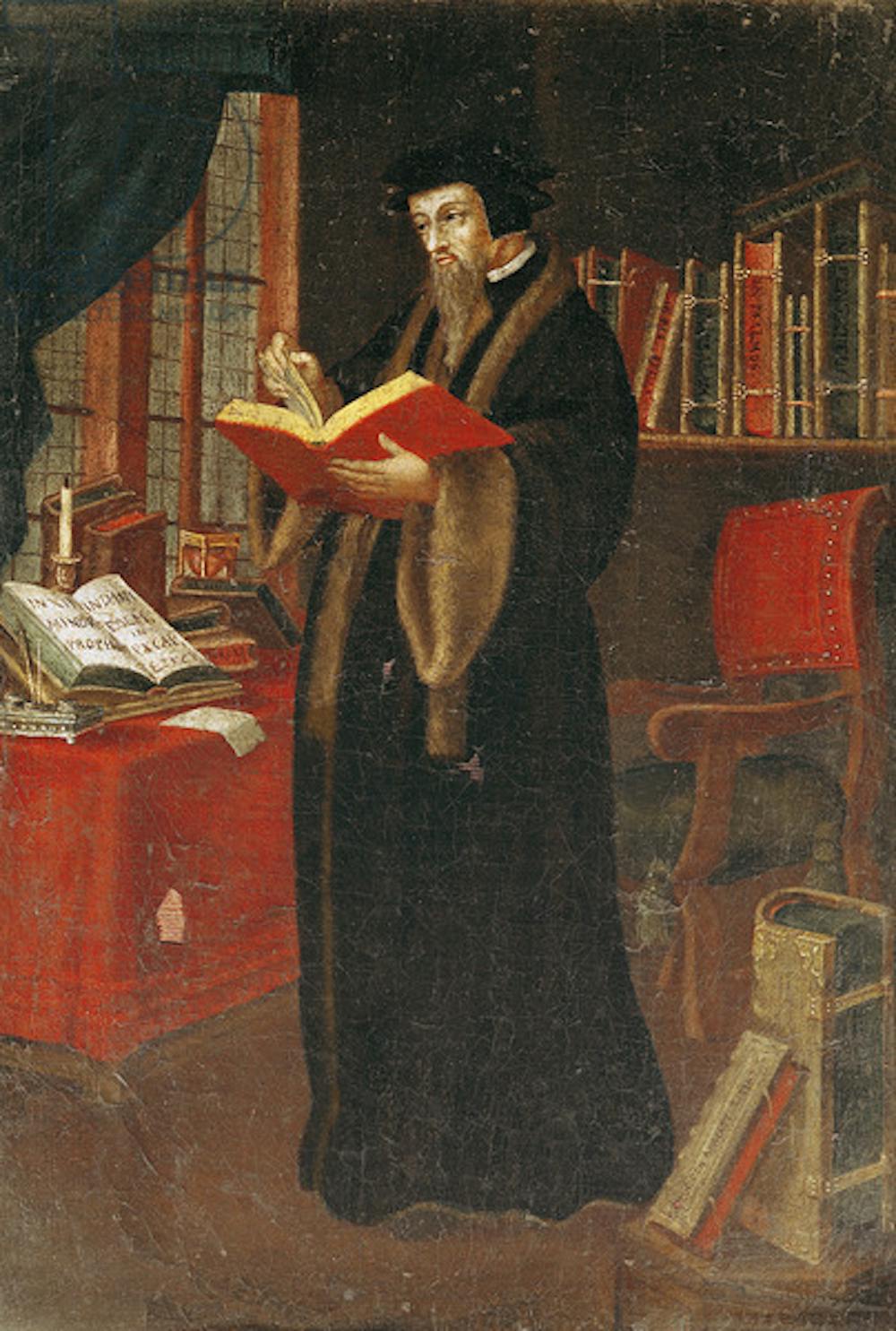 Protestant reformer John Calvin believed in ‘divine dictation’.
“Divine dictation” was linked to the idea that the Bible was without error (inerrant) – because the words were dictated by God.
Generally, over the first 1,700 years of Christian history, this was assumed, if not argued for. But from the 18th century on, both history and science began to cast doubts on the truth of the Bible. And what had once been taken as fact came to be treated as myth and legend.
The impossibility of any sort of error in the scriptures became a doctrine at the forefront of the 20th-century movement known as fundamentalism. The Chicago Statement on Biblical Inerrancy in 1978 declared:
Being wholly and verbally God-given, Scripture is without error or fault in all its teaching, no less in what it states about God’s acts in creation, about the events of world history, and about its own literary origins under God, than in its witness to God’s saving grace in individual lives.
Read more: How the Bible helped shape Australian culture
2. God inspired the writers: conservative
An alternative to the theory of divine dictation is the divine inspiration of the writers. Here, both God and humans collaborated in the writing of the Bible. So, not the words, but the authors were inspired by God.
There are two versions of this theory, dating from the Reformation. The conservative version, favoured by Protestantism, was: though the Bible was written by humans, God was a dominant force in the partnership.
Protestants believed the sovereignty of God overruled human freedom. But even the Reformers, Martin Luther and John Calvin, recognised variation within the Biblical stories could be put down to human agency.
Catholics were more inclined to recognise human freedom above divine sovereignty. Some flirted with the idea human authorship was at play, with God only intervening to prevent mistakes.
For example, in 1625, Jacques Bonfrère said the Holy Spirit acts: “not by dictating or inbreathing, but as one keeps an eye on another while he is writing, to keep him from slipping into errors”.
 Catholics were more inclined than Protestants to recognise human freedom above divine sovereignty.
Pixabay/Pexels
Catholics were more inclined than Protestants to recognise human freedom above divine sovereignty.
Pixabay/Pexels
In the early 1620s, the Archbishop of Split, Marcantonio de Dominis, went a little further. He distinguished between those parts of the Bible revealed to the writers by God and those that weren’t. In the latter, he believed, errors could occur.
His view was supported some 200 years later by John Henry Newman, who led the Oxford movement in the Church of England and later became a cardinal (and then a saint) in the Roman Catholic Church.
Newman argued the divinely inspired books of the Bible were interspersed with human additions. In other words, the Bible was inspired in matters of faith and morals – but not, say, in matters of science and history. It was hard, at times, to distinguish this conservative view from “divine dictation”.
Read more: Friday essay: The Qur’an, the Bible and homosexuality in Islam
3. God inspired the writers: liberal
During the 19th century, in both Protestant and Catholic circles, the conservative theory was being overtaken by a more liberal view. The writers of the Bible were inspired by God, but they were “children of their time”, their writings determined by the cultural contexts in which they wrote.
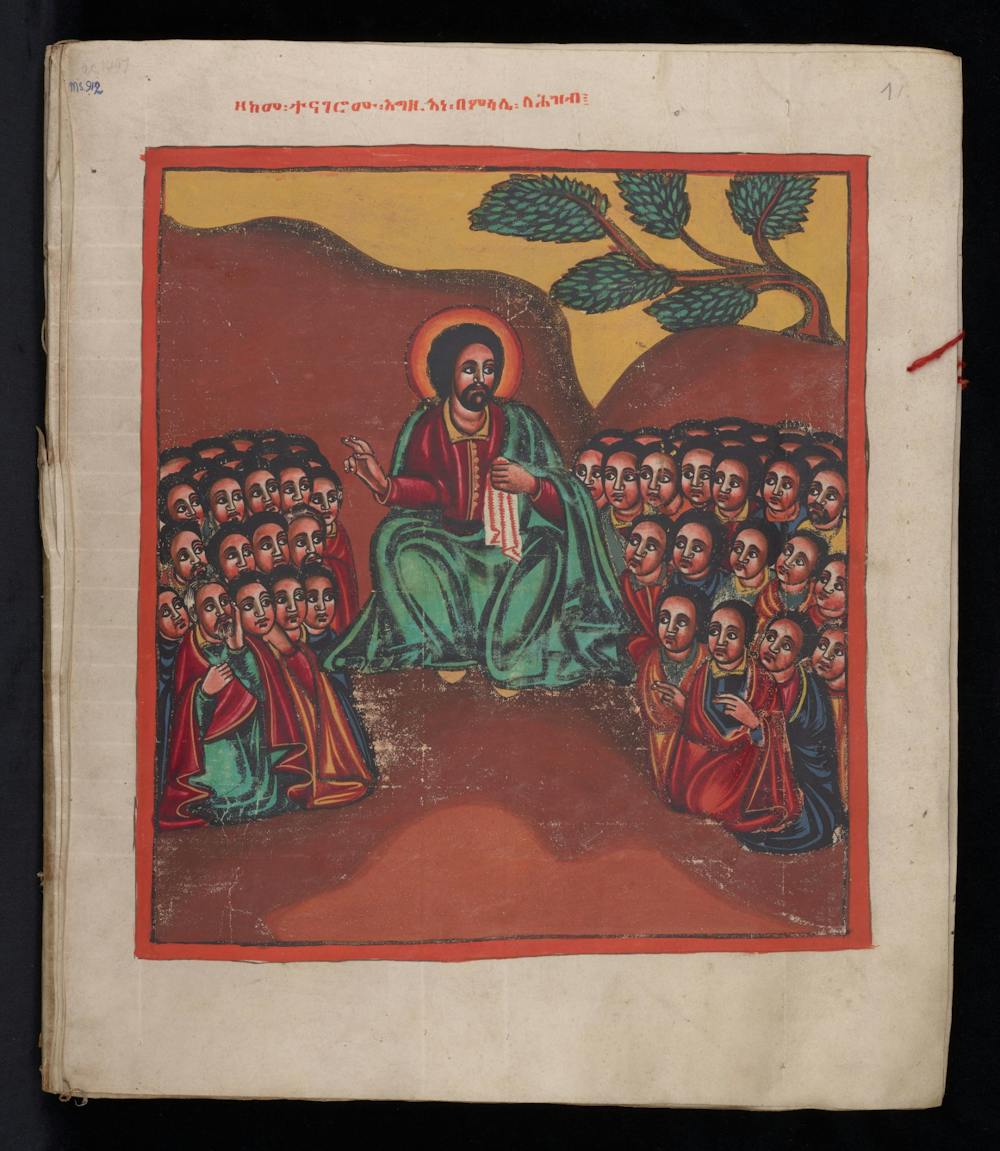 An 18th-century depiction from the gospels of Matthew and Mark.
Wikimedia Commons
An 18th-century depiction from the gospels of Matthew and Mark.
Wikimedia Commons
This view, while recognising the special status of the Bible for Christians, allowed for errors. For example, in 1860 the Anglican theologian Benjamin Jowett declared: “any true doctrine of inspiration must conform to all well-ascertained facts of history or of science”.
For Jowett, to hold to the truth of the Bible against the discoveries of science or history was to do a disservice to religion. At times, though, it’s difficult to tell the difference between a liberal view of inspiration and there being no meaning to “inspiration” at all.
In 1868, a conservative Catholic church pushed back against the more liberal view, declaring God’s direct authorship of the Bible. The Council of the Church known as Vatican 1 declared both the Old and New Testaments were: “written under the inspiration of the holy Spirit, they have God as their author.”
Read more: In spite of their differences, Jews, Christians and Muslims worship the same God
4. People wrote it, with no divine help
Within the most liberal Christian circles, by the end of the 19th century, the notion of the Bible as “divinely inspired” had lost any meaning.
Liberal Christians could join their secular colleagues in ignoring questions of the Bible’s historical or scientific accuracy or infallibility. The idea of the Bible as a human production was now accepted. And the question of who wrote it was now comparable to questions about the authorship of any other ancient text.
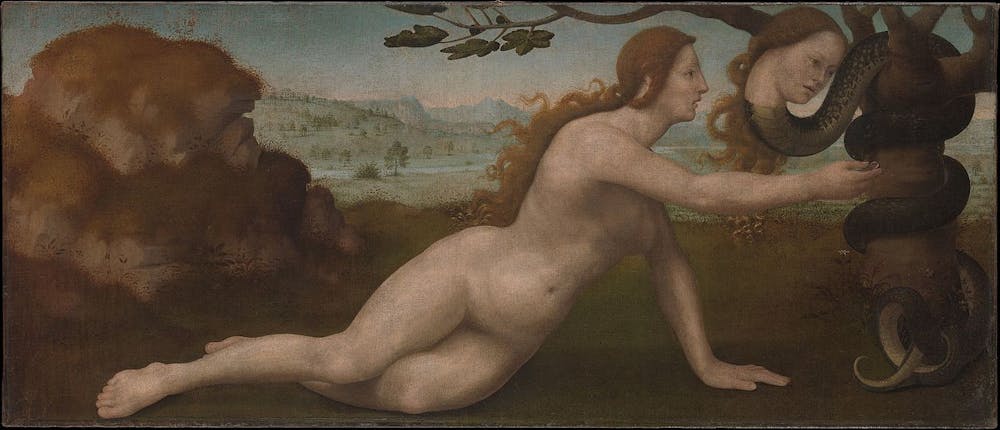 Eve in the Garden of Eden.
Giuliano di Piero di Simone Bugiardini/Wikimedia Commons
Eve in the Garden of Eden.
Giuliano di Piero di Simone Bugiardini/Wikimedia Commons
The simple answer to “who wrote the Bible?” became: the authors named in the Bible (for example, Matthew, Mark, Luke and John – the authors of the four Gospels). But the idea of the Bible’s authorship is complex and problematic. (So are historical studies of ancient texts more generally.)
This is partly because it’s hard to identify particular authors.
The content of the 39 books of the Old Testament is the same as the 24 books of the Jewish Hebrew Bible. Within modern Old Testament studies, it’s now generally accepted that the books were not the production of a single author, but the result of long and changing histories of the stories’ transmission.
The question of authorship, then, is not about an individual writer, but multiple authors, editors, scribes and redactors – along with multiple different versions of the texts.
It’s much the same with the New Testament. While 13 Letters are attributed to Saint Paul, there are doubts about his authorship of seven of them (Ephesians, Colossians, 2 Thessalonians, 1 Timothy, 2 Timothy, Titus, and Hebrews). There are also disputes over the traditional authorship of a number of the remaining Letters. The book of Revelation was traditionally ascribed to Jesus’s disciple John. But it is now generally agreed he was not its author.
Traditionally, the authors of the four Gospels were thought to be the apostles Matthew and John, Mark (the companion of Jesus’s disciple Peter), and Luke (the companion of Paul, who spread Christianity to the Greco-Roman world in the first century). But the anonymously written Gospels weren’t attributed to these figures until the second and third centuries.
The dates of the Gospels’ creation also suggests they were not written by eyewitnesses to Jesus’s life. The earliest Gospel, Mark (65-70 CE) was written some 30 years after the death of Jesus (from 29-34 CE). The last Gospel, John (90-100 CE) was written some 60-90 years after the death of Jesus.
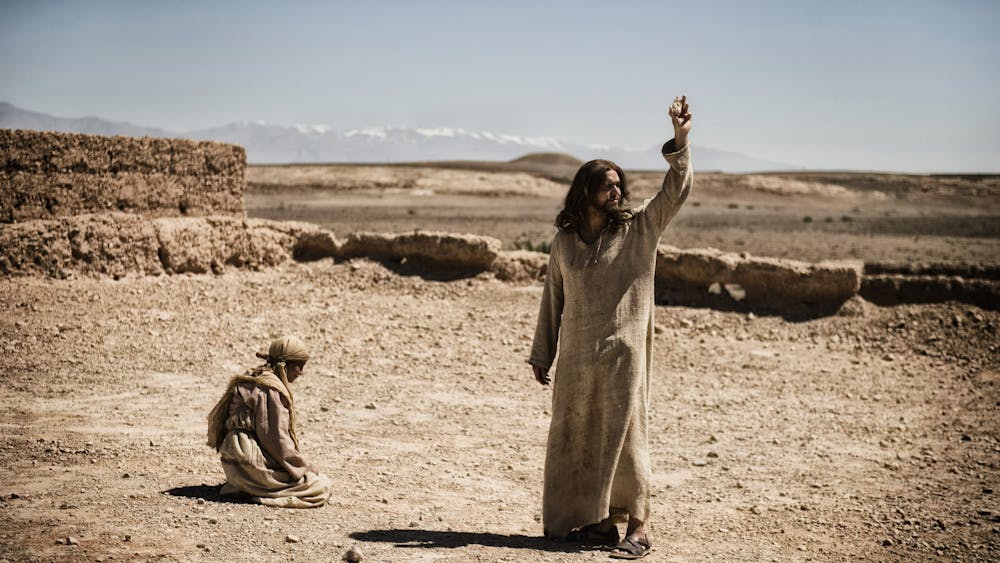 The dates of the Gospels’ creation suggests they weren’t written by eyewitnesses to Jesus’s life.
Joe Alblas/AAP
The dates of the Gospels’ creation suggests they weren’t written by eyewitnesses to Jesus’s life.
Joe Alblas/AAP
It’s clear the author of the Gospel of Mark drew on traditions circulating in the early church about the life and teaching of Jesus and brought them together in the form of ancient biography.
In turn, the Gospel of Mark served as the principal source for the authors of Matthew and Luke. Each of these authors had access to a common source (known as “Q”) of the sayings of Jesus, along with material unique to each of them.
In short, there were many (unknown) authors of the Gospels.
Interestingly, another group of texts, known as the Apocrypha, were written during the time between the Old and New Testaments (400 BCE to the first century CE). The Catholic Church and the Eastern Orthodox Christian traditions consider them part of the Bible, but Protestant churches don’t consider them authoritative.
Read more: 5 things to know about the traditional Christian doctrine of hell
Divine or human: why does it matter?
The question of who wrote the Bible matters because the Christian quarter of the world’s population believe the Bible is a not merely a human production.
Divinely inspired, it has a transcendent significance. As such, it provides for Christians an ultimate understanding of how the world is, what history means and how human life should be lived.
It matters because the Biblical worldview is the hidden (and often not-so-hidden) cause of economic, social and personal practices. It remains, as it has always been, a major source of both peace and conflict.
It matters, too, because the Bible remains the most important collection of books in Western civilisation. Regardless of our religious beliefs, it has formed, informed and shaped all of us – whether consciously or unconsciously, for good or ill.
Authors: Philip C. Almond, Emeritus Professor in the History of Religious Thought, The University of Queensland
Read more https://theconversation.com/who-wrote-the-bible-214849


















