

How to make gravy (using chemistry)
- Written by: Nathan Kilah, Senior Lecturer in Chemistry, University of Tasmania
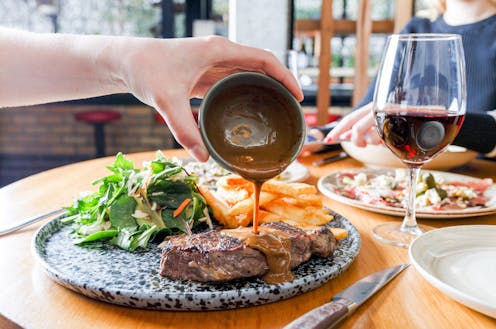
“Gravy Day” is a relatively new date in the Australian calendar. Paul Kelly’s song How to Make Gravy tells the story of a prisoner (Joe) writing to his brother on December 21. Joe laments missing the family Christmas celebrations and asks who will make gravy for the roast lunch in his absence.
While a roast may not be everyone’s idea of the perfect Christmas feast, “Gravy Day” does give the opportunity to discuss the chemistry involved in making gravy – a thickened sauce made from drippings collected from roasted meats.
Paul Kelly performs his song How To Make Gravy.Read more: How does ice cream work? A chemist explains why you can't just freeze cream and expect results
Give my love to Angus (beef?)
Roasting meat sets off a cascade of chemical reactions, producing myriad new flavour chemicals. More than 1,000 flavour compounds have been identified in roasted meats.
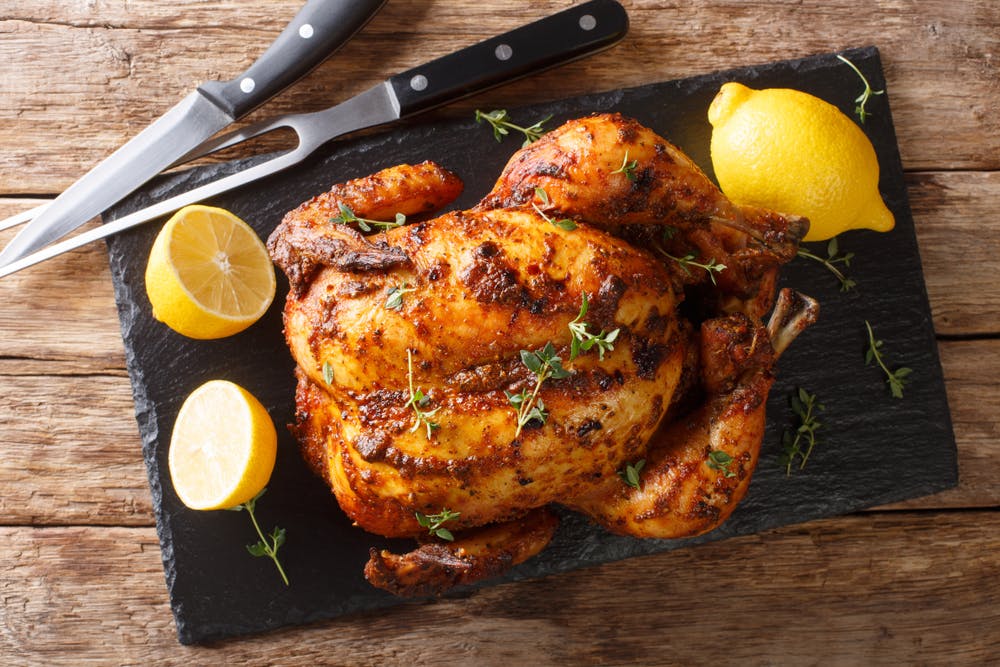
Each chemical gives its unique characteristics to the taste and smell of the finished roast. The chemical 12-methyltridecanal helps give roast beef its “beefy” flavour, while the sulfur-containing compound 2-methyl-3-furanthiol is more often found in roast chicken.
There are three main types of chemical reactions taking place when roasting meats that produce flavour chemicals.
The Maillard reaction is responsible for both colour and flavour. This broad reaction type takes place between amino acids from the protein and sugars and simple carbohydrates found in the meat.
The Maillard reaction is also the chemistry responsible for many favourite flavours, including roasted coffee, chocolate, steak, toast and more.
A hundred degrees, even more maybe
The other main type of reaction occurring in a hot oven is the breakdown of fats by “lipid degradation”. This can form hundreds of different chemical compounds. Many of these chemicals are described as “fatty”, “tallowy”, or smell like fried foods.
The unique fat profiles found in different animals translate to the profile of flavour chemicals that form from lipid degradation when roasted. Further flavour compounds can arise through the third type of reactions combining products of Maillard reactions and lipid degradation.
One specific flavour compound identified as having a “gravy aroma” is known as 3-mercapto-2-methylpentan-1-ol. This compound comes from roasted vegetables, so including some veggies in your roasting pan will give you more depth of gravy flavour. Also, “cutting onions” is a useful excuse if listening to How to Make Gravy gets you feeling emotional.
The treasure and the trash
Roasting meats causes the fats to “render” and separate from the meat as a liquid. The fat pools in the tray with flavour-rich meat juices.
While the fat and the water both carry flavour compounds, too much fat can give the finished gravy an unpleasant mouth feel, or can separate into layers when served.
It’s worth pouring off the pan juices into a jug to allow the fat to separate from the liquid so you can control how much fat you’re adding. Be sure to dispose of the excess fat responsibly – don’t pour it down the drain.
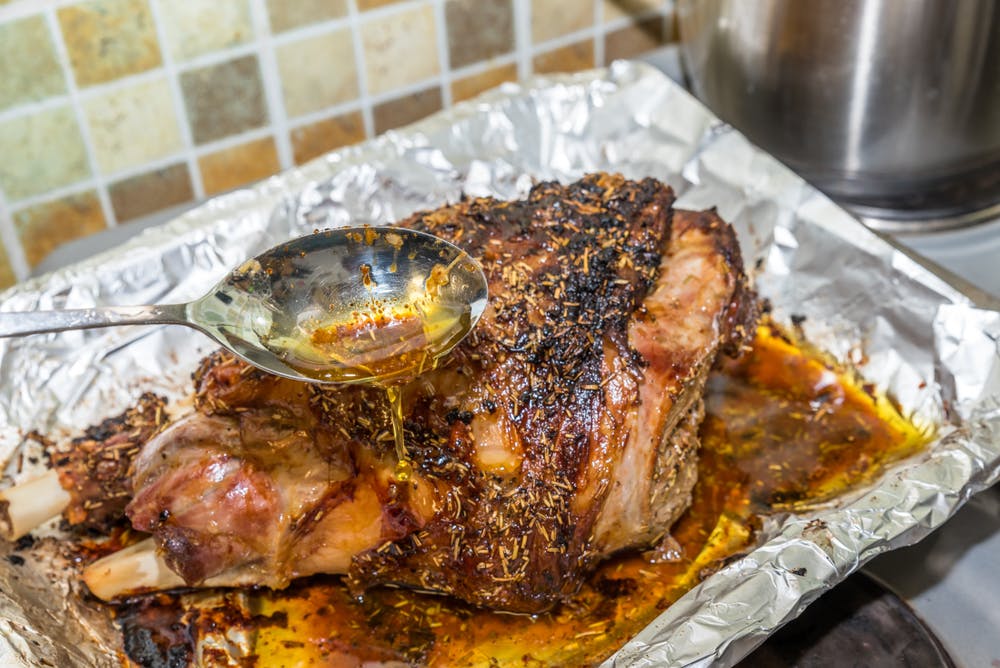 Roasting meats causes the fats to ‘render’ and separate from the meat as a liquid.
Jevanto Productions/Shutterstock
Roasting meats causes the fats to ‘render’ and separate from the meat as a liquid.
Jevanto Productions/Shutterstock
Just add flour…
Flour (or, more specifically, starch) is the secret ingredient of a good gravy. Starches are large complex chemicals that are made up of lots of sugars joined together.
Starch granules are tightly packed and swell greatly when they absorb water. The swollen starch molecules forms a gel-like network that traps water and oil to give a thickened gravy.
Wheat flour is most often used as the starch source. Corn and arrowroot starch can also be used. They have a higher percentage of starch than flour and a more neutral flavour.
Wheat starch typically requires a larger quantity to be added and longer cooking to form a paste. Whichever starch you use, don’t add it too quickly or without mixing as you’ll form lumps.
…salt, red wine, and a dollop of tomato sauce
Salt is a common ingredient when preparing roast meats, both on the surface of the meat to draw out moisture and as a flavouring agent. The pan juices are typically concentrated as part of the gravy making process.
Make sure you taste the gravy before seasoning, as salt will be concentrated by heating.
Additional flavour components can be introduced by adding red wine, sherry, stock, or tomato sauce. These ingredients will broaden the flavour profile through sweetness (sugar), acidity (vinegar, citric and malic acids), and umami in the case of tomato sauce (natural glutamates, such as those found in MSG). Some folk even add Vegemite to their gravy for an extra umami boost.
I bet it will taste the same
If you happen to have screwed up your gravy this time, or are after convenience, then you can turn to an instant gravy powder. The main ingredient is typically maltodextrin or another corn-derived (and possibly chemically modified) starch.
Shelf-stable powdered fats, salt, colours, and a range of flavour additives will be present in varying amounts depending on the style and price point of the product.
The advantages of the instant version are speed and uniformity due to the carefully controlled commercial production.
So unlike Joe’s concerns for his family’s gravy, an instant gravy will be more likely to taste the same, regardless of who ends up making it.
Read more: How to make the perfect pavlova, according to chemistry experts
Authors: Nathan Kilah, Senior Lecturer in Chemistry, University of Tasmania
Read more https://theconversation.com/how-to-make-gravy-using-chemistry-219589
&media=https://www.modernaustralian.com/https://images.theconversation.com/files/566166/original/file-20231217-26-g6qyx4.jpg?ixlib=rb-1.1.0&rect=0%2C8%2C5472%2C3628&q=45&auto=format&w=496&fit=clip&description=How%20to%20make%20gravy%20(using%20chemistry) "Pin It")

















