

Hate salad or veggies? Just keep eating them. Here’s how our tastebuds adapt to what we eat
- Written by: Emma Beckett, Senior Lecturer (Food Science and Human Nutrition), School of Environmental and Life Sciences, University of Newcastle
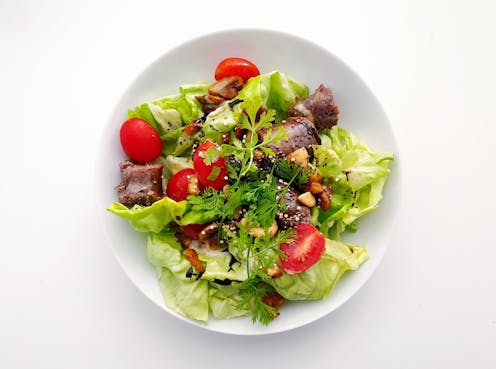
Do you hate salad? It’s OK if you do, there are plenty of foods in the world, and lots of different ways to prepare them.
But given almost all of us don’t eat enough vegetables, even though most of us (81%) know eating more vegetables is a simple way to improve our health, you might want to try.
If this idea makes you miserable, fear not, with time and a little effort you can make friends with salad.
Read more: Feeling bloated, hungry or bored after salad? These tips might help
Why don’t I like salads?
It’s an unfortunate quirk of evolution that vegetables are so good for us but they aren’t all immediately tasty to all of us. We have evolved to enjoy the sweet or umami (savoury) taste of higher energy foods, because starvation is a more immediate risk than long-term health.
Vegetables aren’t particularly high energy but they are jam-packed with dietary fibre, vitamins and minerals, and health-promoting compounds called bioactives.
Those bioactives are part of the reason vegetables taste bitter. Plant bioactives, also called phytonutrients, are made by plants to protect themselves against environmental stress and predators. The very things that make plant foods bitter, are the things that make them good for us.
Unfortunately, bitter taste evolved to protect us from poisons, and possibly from over-eating one single plant food. So in a way, plant foods can taste like poison.

For some of us, this bitter sensing is particularly acute, and for others it isn’t so bad. This is partly due to our genes. Humans have at least 25 different receptors that detect bitterness, and we each have our own genetic combinations. So some people really, really taste some bitter compounds while others can barely detect them.
This means we don’t all have the same starting point when it comes to interacting with salads and veggies. So be patient with yourself. But the steps toward learning to like salads and veggies are the same regardless of your starting point.
Read more: We're told to 'eat a rainbow' of fruit and vegetables. Here's what each colour does in our body
It takes time
We can train our tastes because our genes and our receptors aren’t the end of the story. Repeat exposures to bitter foods can help us adapt over time. Repeat exposures help our brain learn that bitter vegetables aren’t posions.
And as we change what we eat, the enzymes and other proteins in our saliva change too. This changes how different compounds in food are broken down and detected by our taste buds. How exactly this works isn’t clear, but it’s similar to other behavioural cognitive training.
Read more: Food as medicine: why do we need to eat so many vegetables and what does a serve actually look like?
Add masking ingredients
The good news is we can use lots of great strategies to mask the bitterness of vegetables, and this positively reinforces our taste training.
Salt and fat can reduce the perception of bitterness, so adding seasoning and dressing can help make salads taste better instantly. You are probably thinking, “but don’t we need to reduce our salt and fat intake?” – yes, but you will get more nutritional bang-for-buck by reducing those in discretionary foods like cakes, biscuits, chips and desserts, not by trying to avoid them with your vegetables.
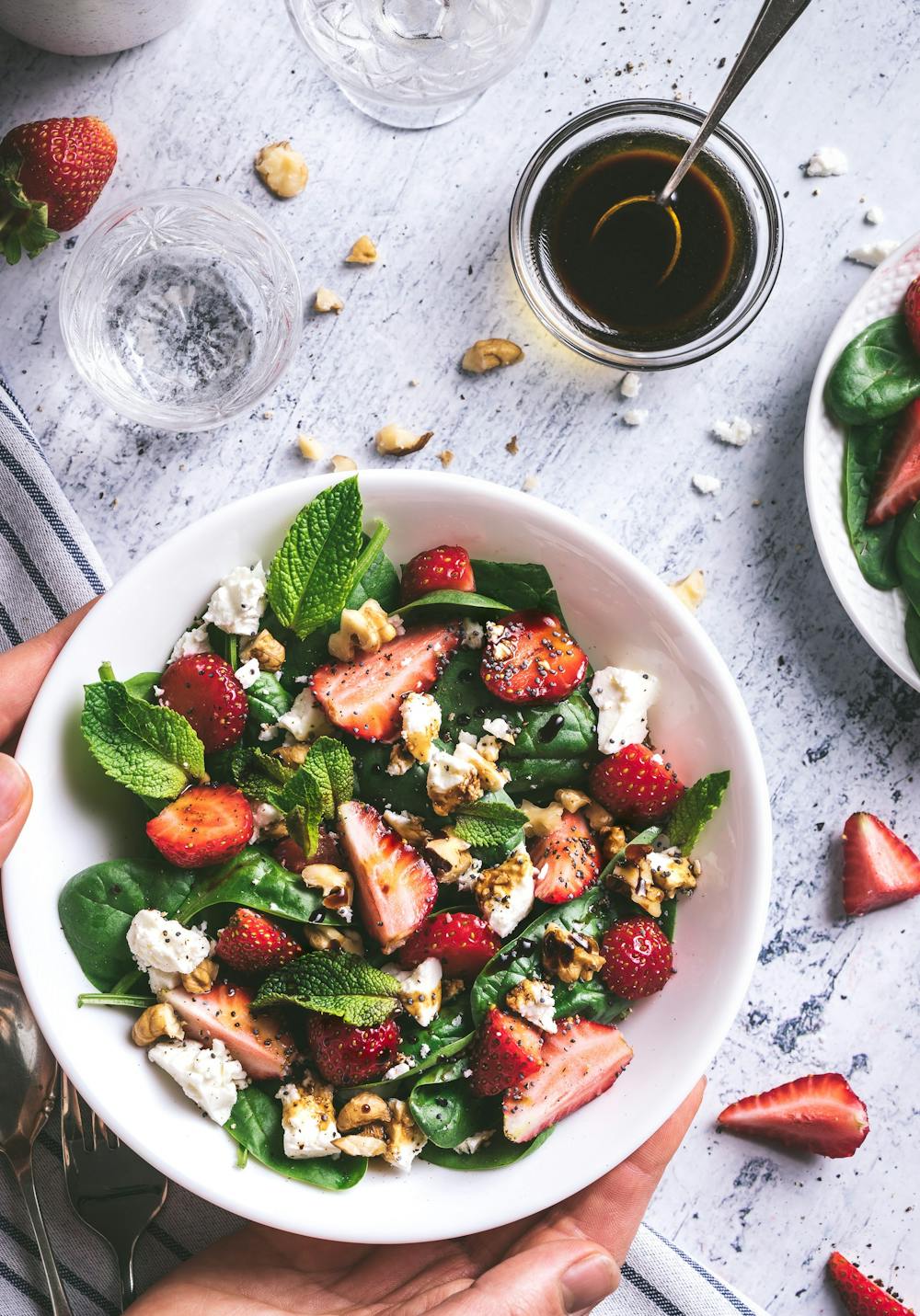 Fruits can add sweetness and juiciness to salads.
dovile ramoskaite/unsplash
Fruits can add sweetness and juiciness to salads.
dovile ramoskaite/unsplash
Adding heat with chillies or pepper can also help by acting as a decoy to the bitterness. Adding fruits to salads adds sweetness and juiciness, this can help improve the overall flavour and texture balance, increasing enjoyment.
Pairing foods you are learning to like with foods you already like can also help.
The options for salads are almost endless, if you don’t like the standard garden salad you were raised on, that’s OK, keep experimenting.
Experimenting with texture (for example chopping vegetables smaller or chunkier) can also help in finding your salad loves.
Challenge your biases
Challenging your biases can also help the salad situation. A phenomenon called the “unhealthy-tasty intuition” makes us assume tasty foods aren’t good for us, and that healthy foods will taste bad. Shaking that assumption off can help you enjoy your vegetables more.
When researchers labelled vegetables with taste-focused labels, priming subjects for an enjoyable taste, they were more likely to enjoy them compared to when they were told how healthy they were.
The bottom line
Vegetables are good for us, but we need to be patient and kind with ourselves when we start trying to eat more.
Try working with biology and brain, and not against them.
And hold back from judging yourself or other people if they don’t like the salads you do. We are all on a different point of our taste-training journey.
Authors: Emma Beckett, Senior Lecturer (Food Science and Human Nutrition), School of Environmental and Life Sciences, University of Newcastle


















