

What was the mantua? How a 17th-century gown transformed dressmaking and ushered in financial freedom for women
- Written by: Sarah Bendall, Research Fellow, Gender and Women's History Research Centre, Institute for Humanities and Social Sciences, Australian Catholic University
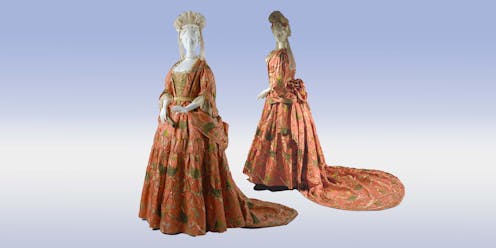
If you’ve watched many period dramas, you’ve probably seen a mantua before. Originating in France in the 1670s, this women’s garment consisted of lengths of t-shaped fabric that were pleated to create an unstiffened bodice with attached overskirts.
This gown was worn over a pair of stays (corset) and an often contrasting petticoat. The draping and folding of fabric created a front-opening gown.
What many people don’t realise, however, is how fundamentally this item of clothing altered women’s involvement in the fashion industry – and represented a ticket to financial freedom for an industry of female mantua makers.
What was the mantua?
After its invention in the 1670s, the new gown became immediately popular among fashionable Parisian women.
Although strict dress codes at the Versailles court of French King Louis XIV prohibited the wearing of mantuas, women at the English court helped popularise it in England.
By the 1680s, the mantua was widely worn in Western and Central Europe, as well as in European colonies around the world. It soon became the basis for all women’s gowns in the 18th century.
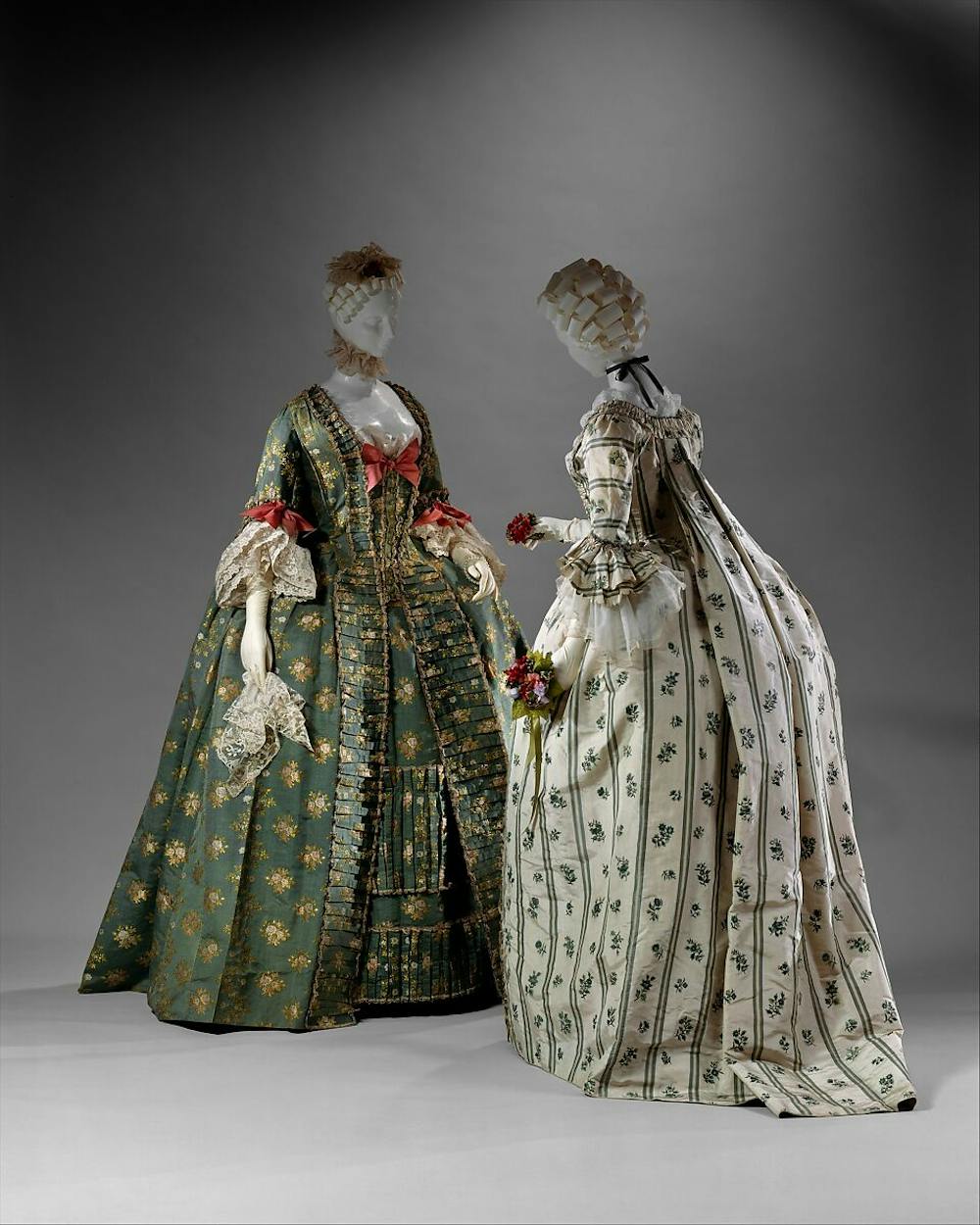
Popular versions of the mantua in 18th century included:
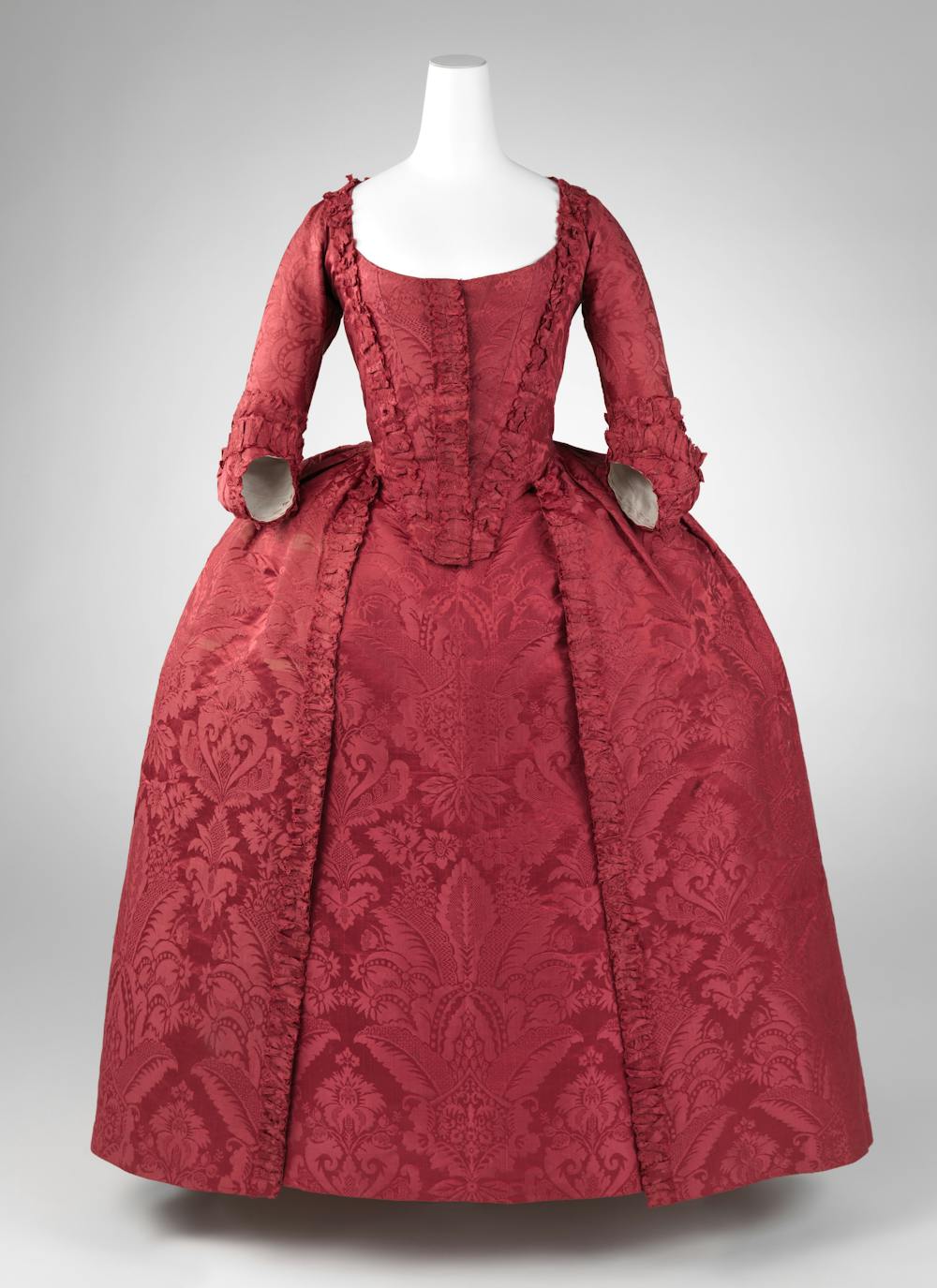 The robe à l’anglaise had fitted back pleats and was tighter compared to its French counterpart.
The Met/Purchase, Irene Lewisohn Bequest, 2018
The robe à l’anglaise had fitted back pleats and was tighter compared to its French counterpart.
The Met/Purchase, Irene Lewisohn Bequest, 2018
Tailors vs mantua makers
As well as changing the look of western fashions, the mantua radically changed women’s involvement in the fashion industry.
Before the 17th century, outer garments were usually made by male tailors. Apprenticeships and membership of guilds – the organisations that controlled most craft trades – were restricted to boys and men.
Women did participate informally in these professions. They sometimes worked alongside tailor family members (and some were fined for doing so) and widows were permitted to carry on the businesses of their deceased husbands.
Women had also historically worked as seamstresses or “silkwomen” making small linen or silk goods like underwear and accessories.
 This loose 1730s style was called a robe volante.
The Met/Purchase, Friends of The Costume Institute Gifts, 2010
This loose 1730s style was called a robe volante.
The Met/Purchase, Friends of The Costume Institute Gifts, 2010
However, this began to change in the late 17th century during what came to be known as the consumer revolution – a period, beginning in the 1600s, that saw a significant jump in the consumption of luxury goods.
Significantly, in 1675, women in Paris and Rouen acquired their own, independent couturière (dressmaking) guilds and began to take over making women’s clothing from male tailors.
In London, guilds with dwindling memberships also began to permit paying female members.
Due to the considerable influence of France on western fashions, women in London began to train under French dressmakers, giving rise to what were known in English as mantua makers.
Dressmaking and financial freedom
From the 18th to 20th centuries, dressmaking and other fashion or textile-related industries were the main source of formal employment for women in Britain, Australia and the United States (alongside teaching and domestic service).
New training opportunities in dressmaking – coupled with historical peculiarities such as London’s feme sole status, which allowed married women to run businesses and have finances independent of their husbands – meant many women began to open their own businesses.
Single women often lived in houses with other mantua makers and their apprentices, working as teams. Married women usually operated in workshops in the family home alongside their husbands, many of whom worked as tailors.
By the mid-18th century, manuals instructing parents on craft apprenticeships for their children noted mantua making was a large trade
reckoned a genteel, as well as profitable Employ [for women], many of them living well and saving Money.
But several male tailoring guilds in Europe attempted to stop women working as mantua makers, claiming they were taking away their business. Additionally, many women who worked in the garment-making industries were poorly paid and often worked in cramped conditions.
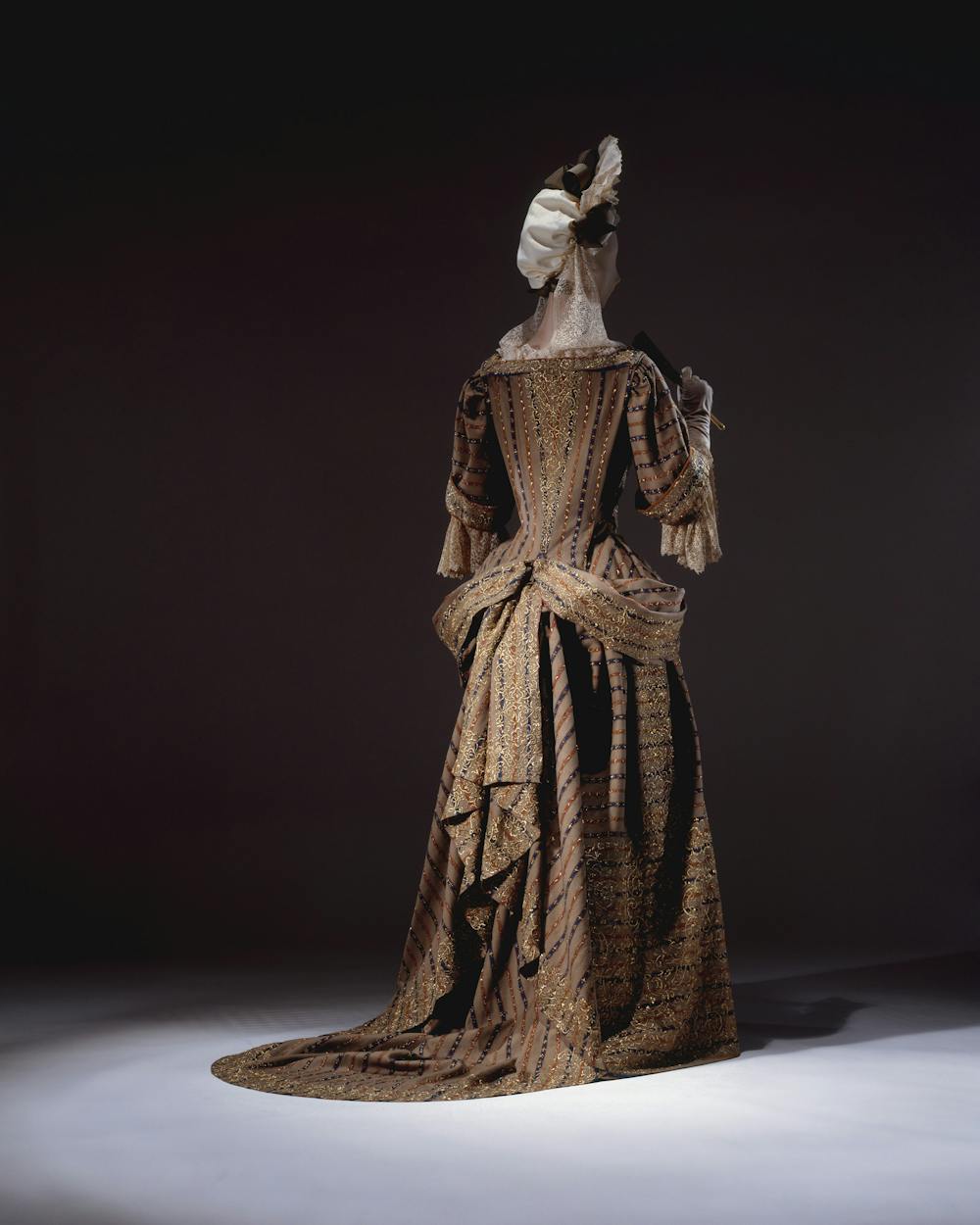 Mantuas were sometimes pinned up at the back like this 1690s example.
The Met/Rogers Fund, 1933
Mantuas were sometimes pinned up at the back like this 1690s example.
The Met/Rogers Fund, 1933
Yet, many did rise above. French mantua makers were particularly popular, with women in London paying substantially more for gowns made by French women with access to the latest fashion knowledge in Paris.
Some became confidants of queens. The famous fashion merchant Marie-Jeanne “Rose” Bertin designed many of French queen Marie Antoinette’s gowns (her detractors labelled her the queen’s “minister of fashion”).
These networks gave these women access to vast amounts of clients and social capital. By the 19th century, senior dressmakers and milliners called modistes often ran their own luxury fashion houses in the West End of London.
Mantua making was also a significant business opportunity for women in Australia.
“M. Hayes”, Catherine Mellon and Martha Matthews were all “mantua makers and milliners” who advertised their services in the early years of the Sydney colony.
Legacies of mantua makers
During the early years of the 19th century, mantuas fell out of use as new styles appeared. The term “dressmaker” also came to slowly replace the term “mantua maker”.
However, the gendered segregation of labour remained. During much of the 19th and 20th centuries, men were more likely to be tailors and have their clothing made by tailors. Women were more likely to be dressmakers and have their clothing made by dressmakers. The skills and techniques of each profession remained quite different.
With the advent of modern fast fashion, the skills of both tailors and dressmakers are fast being lost, and with it the knowledge of this revolutionary trade for women.
Authors: Sarah Bendall, Research Fellow, Gender and Women's History Research Centre, Institute for Humanities and Social Sciences, Australian Catholic University


















