

Dogs are incredible – if unlikely – allies in conservation
- Written by: Romane H Cristescu, Researcher in Koala, Detection Dogs, Conservation Genetics and Ecology, University of the Sunshine Coast
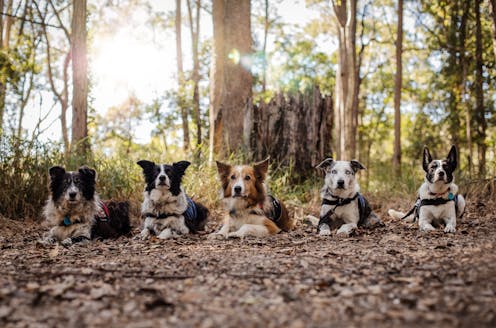
Dogs have been working with people for centuries. Think hunting dogs, herding dogs, police dogs or search and rescue dogs. But have you heard of conservation dogs?
Conservation dogs fall mainly into two categories: guardian dogs and sniffer dogs (also called scent, detection or detector dogs).
Guardian dogs protect vulnerable species from predators, while sniffer dogs locate targets of interest using their powerful sense of smell.
In the past 15 years, dogs have begun to play a crucial role in conservation around the world. So let’s take a closer look at them, with a focus on their work in Australia.
Read more: Koala-detecting dogs sniff out flaws in Australia's threatened species protection
The nose that knows
Guardian dogs were made famous by the 2015 movie Oddball. The film is based on the true story of Maremma dogs, trained to protect little penguins from foxes on Middle Island near Warrnambool in southwest Victoria. The penguin population had dwindled to fewer than ten before the Maremma dogs got involved. The breed was chosen for its long association with guarding sheep in Europe.
But most conservation dogs are sniffer dogs, because there are so many uses for them. They can be trained to find animals or plants, or “indirect” signs animals have left behind such as poo or feathers.
Dogs can detect anything with an odour – and everything has an odour. Sniffer dogs are trained to detect a target scent and point it out to their human coworker (sometimes referred to as handler or bounder).
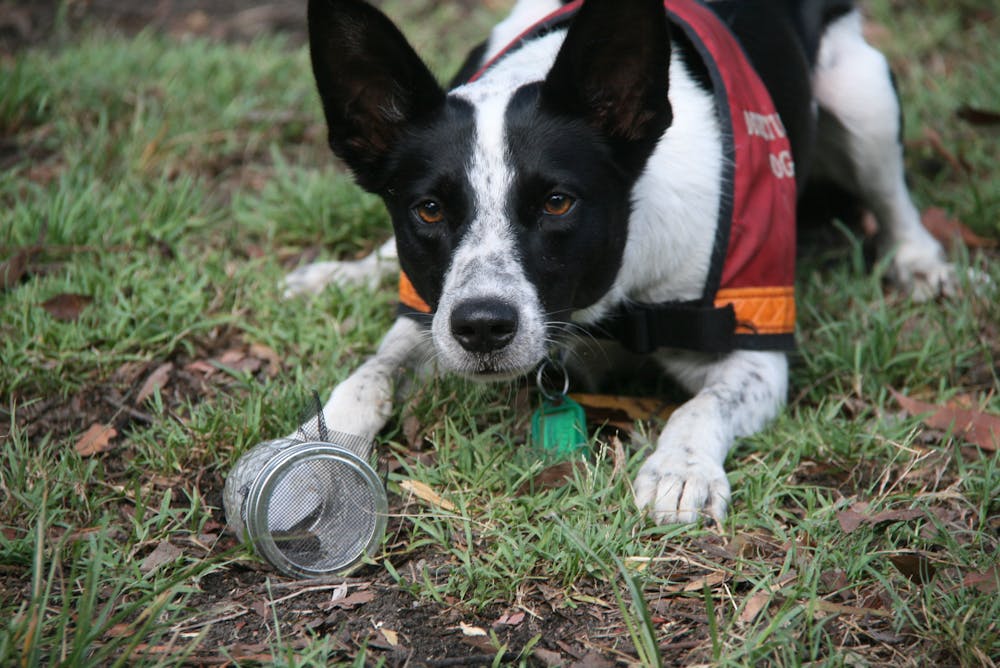
Sniffer dogs have been trained for various missions such as:
finding rare and endangered species
detecting invasive animals during eradication or containment such as fire ants or snakes
locating pest plants
supporting wildlife surveys by detecting scats (poo), urine, vomit, nests, carcasses and even diseases.
They have worked in extreme conditions on land (including on sub-Antarctic islands) and at sea, and can even detect scent located underground. Sniffer dogs have also trained to recognise individual animals such as tigers by scent.
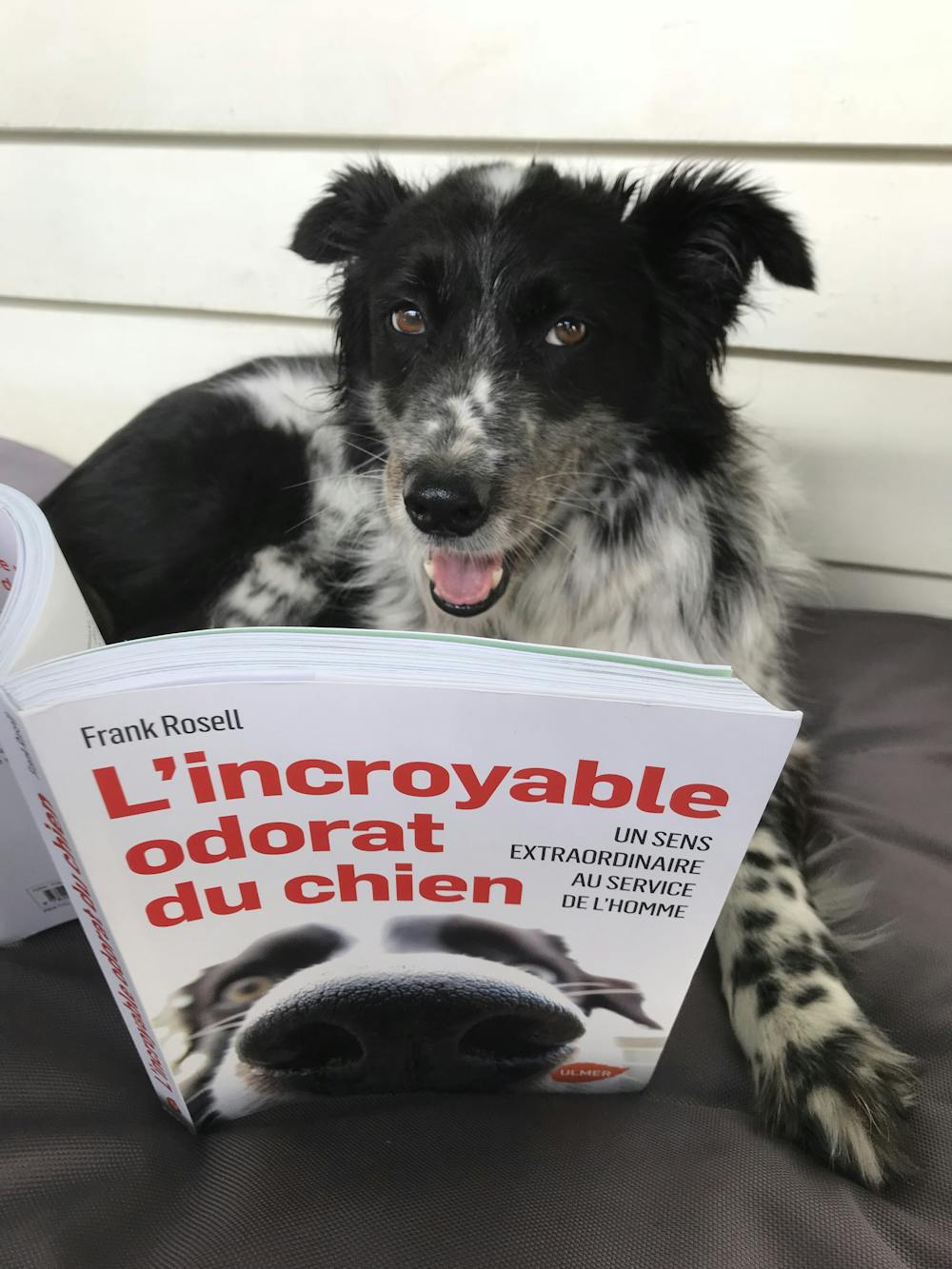 Sniffer dog Maya poses with a french copy of a book about the incredible nose of the dog by Frank Rosell.
Romane Cristescu, UniSC Detection Dogs for Conservation
Sniffer dog Maya poses with a french copy of a book about the incredible nose of the dog by Frank Rosell.
Romane Cristescu, UniSC Detection Dogs for Conservation
The ultimate scent detection machine
A dog’s nose is estimated to be 100,000 to 100 million times more sensitive than a human nose (depending on the dog breed). A much larger proportion (seven to 40 times larger) of the dog’s brain is dedicated to decoding scent.
That means dogs can detect very low scent concentrations – the equivalent of a teaspoon of sugar in five million litres of water (or two Olympic-sized swimming pools). They can also differentiate between very similar odours.
Dogs analyse the air from each of their nostrils independently, detecting tiny variations in scent concentration. This gives them a directional sense of smell that can guide them left or right until they’ve honed in on the origin of the scent.
Thanks to very sophisticated nostrils, dogs can avoid contaminating an odour with their own breath (exhaling air through the nostrils’ sides). They also can analyse odours continuously regardless of whether they are inhaling or exhaling.
Besides being the ultimate scent detection machine, dogs are great ambassadors for conservation – melting hearts all the way to Hollywood.
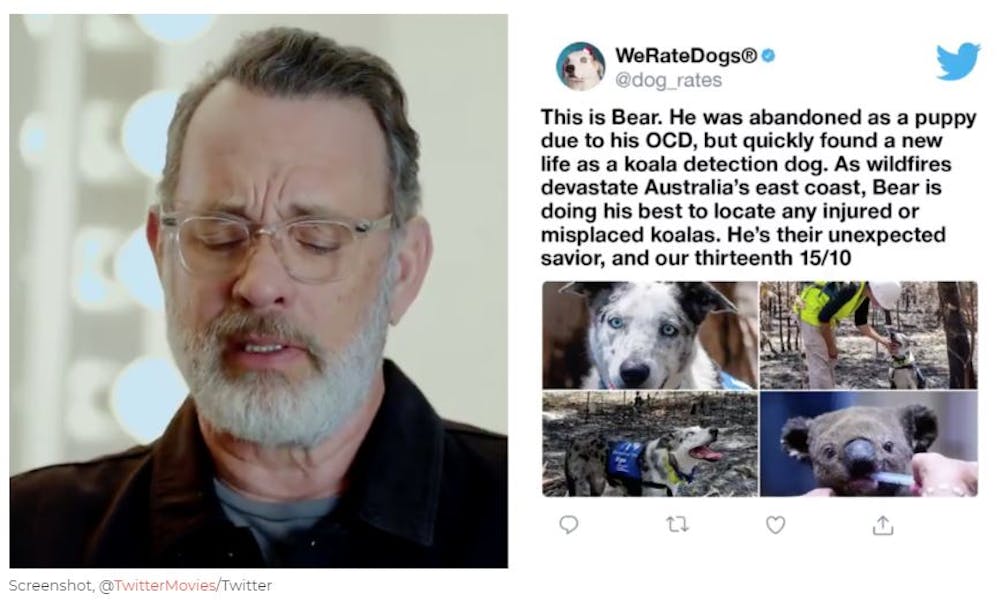 While reading a tweet about our IFAW / UniSC koala detection dog Bear, Hollywood actor Tom Hanks said: ‘This is a Disney movie that must be made’, before suggesting a title: ‘The story of Bear: The Koala Detection Dog’. ‘I like bear!’
X/Twitter
While reading a tweet about our IFAW / UniSC koala detection dog Bear, Hollywood actor Tom Hanks said: ‘This is a Disney movie that must be made’, before suggesting a title: ‘The story of Bear: The Koala Detection Dog’. ‘I like bear!’
X/Twitter
Finding the right candidate for the job
Some organisations rescue their dogs. They look for the toy-obsessed kind – those dogs that never stop playing.
In many cases these dogs were abandoned for that very reason. They require constant entertainment and become difficult to care for in a normal family setting, where people have to leave for work and devote time to activities other than entertaining their dog.
A sniffer dog gets to be with their handlers almost every day of the week. That work consists of long walks with lots of play.
Trainers use toys and play as a reward, so dogs learn to associate this reward with the target scent.
Learning through association – called classical or pavlovian conditioning – is very easy for dogs. It’s so easy that the scent-learning part of the job is usually the quickest. Training a dog to feel confident and be safe in the natural environment is more challenging. And if the dog had a troubled background before being rescued, rehabilitation is the most time-consuming and difficult component of the training.
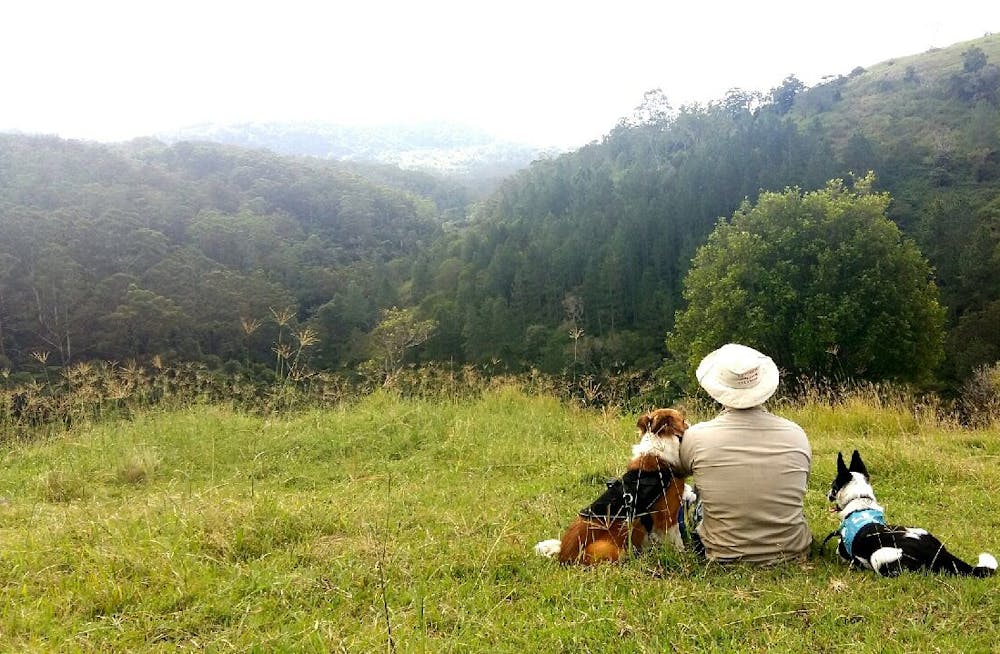 Sniffer dogs with their handler Russell Miller near Gympie region in Queensland, Australia.
Katrin Hohwieler, UniSC Detection Dogs for Conservation
Sniffer dogs with their handler Russell Miller near Gympie region in Queensland, Australia.
Katrin Hohwieler, UniSC Detection Dogs for Conservation
What type of dog can become a sniffer dog?
The most important aspect of the association learning process is having the right dog – one with obsessive behaviour. And any breed, sex and age of dog can present this personality type.
Some breeds might tend to have higher proportions of obsessed and toy-focused dogs, but all breeds, including crossbreeds, have been successfully deployed as sniffer dogs.
Some breeds do have better sniffers – the bloodhound is the champion of olfactory performance – but depending on the target scent, most dogs’ noses are still extremely efficient and more than capable of the task.
Robust, agile and high-energy breeds are better suited to working outdoors. Medium-sized breeds are usually better able to crawl under and jump over obstacles, while also light enough to be easily carried by their human coworker as needed.
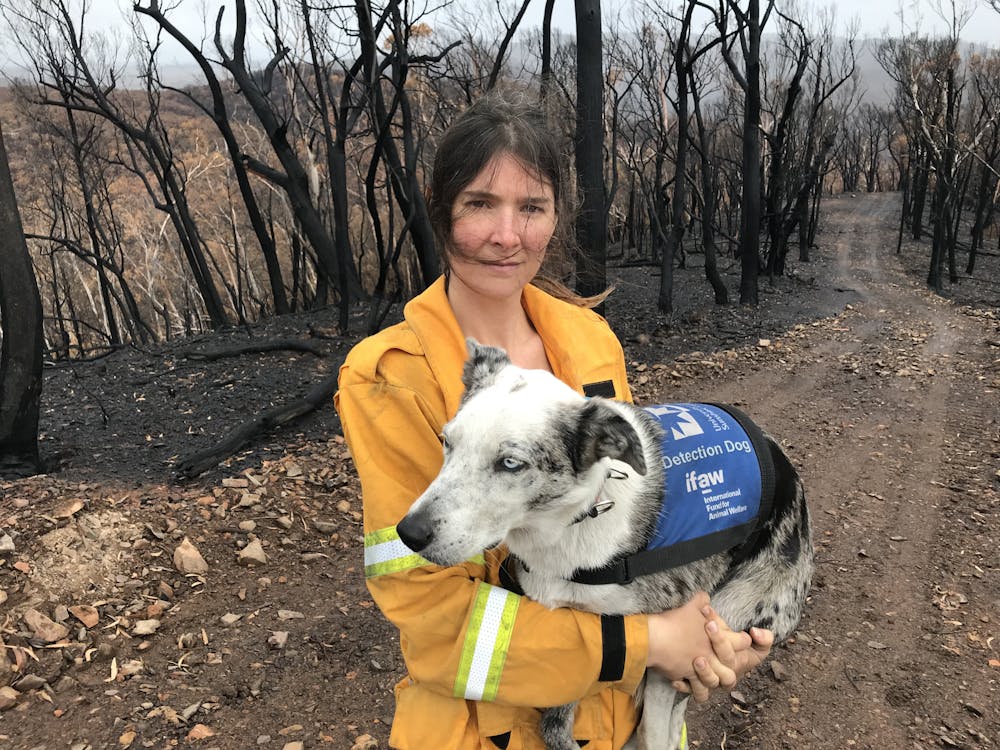 International Fund for Animal Welfare IFAW / UniSC koala detection dog ‘Bear’ was deployed during the Black Summer fires (2019-20) to find survivors. Pictured here with the author Romane Cristescu at Two Thumbs Wildlife Trust sanctuaries in Cooma, New South Wales.
Kye McDonald, UniSC Detection Dogs for Conservation
International Fund for Animal Welfare IFAW / UniSC koala detection dog ‘Bear’ was deployed during the Black Summer fires (2019-20) to find survivors. Pictured here with the author Romane Cristescu at Two Thumbs Wildlife Trust sanctuaries in Cooma, New South Wales.
Kye McDonald, UniSC Detection Dogs for Conservation
Read more: Scientists find burnt, starving koalas weeks after the bushfires
Top jobs for conservation dogs
Meet dogs working in conservation around the world:
These are just a few of the dogs making a difference in our fight to protect biodiversity. But we have barely scratched the surface of their potential!
Authors: Romane H Cristescu, Researcher in Koala, Detection Dogs, Conservation Genetics and Ecology, University of the Sunshine Coast
Read more https://theconversation.com/dogs-are-incredible-if-unlikely-allies-in-conservation-204813


















