

why 2024 is an inflection point for the climate crisis
- Written by: Wesley Morgan, Research Fellow, Griffith Asia Institute, Griffith University
In 2024, global climate trends are cause for both deep alarm and cautious optimism. Last year was the hottest on record by a huge margin and this year will likely be hotter still. The annual global average temperature may, for the first time, exceed 1.5°C above pre-industrial levels – a threshold crucial for stabilising the Earth’s climate.
Without immediate action, we are at grave risk of crossing irreversible tipping points in the Earth’s climate system. Yet there are reasons for hope.
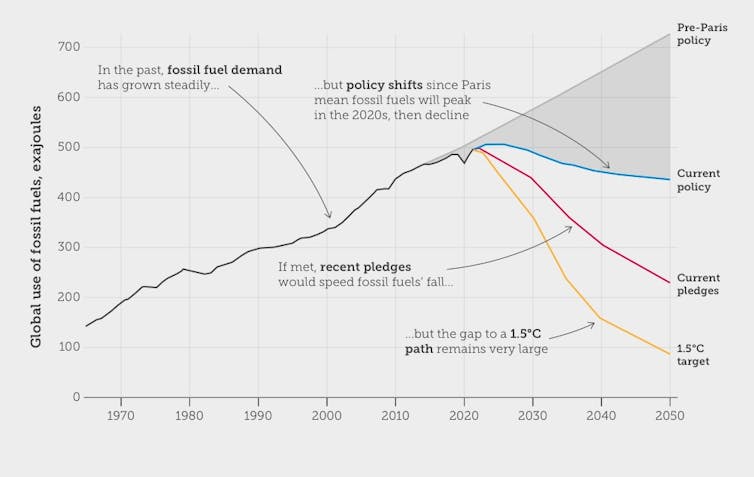
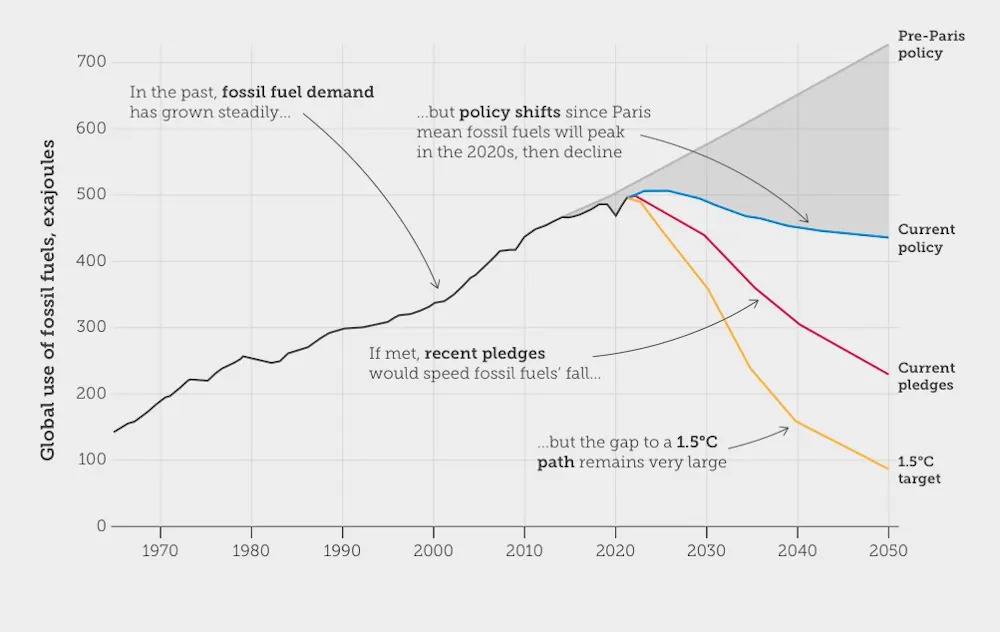
Global greenhouse gas emissions may peak this year and start falling. This would be an historic turning point, heralding the end of the fossil fuel era as coal, oil and gas are increasingly displaced by clean energy technologies.
But we must do more than take our foot off the warming accelerator – we must slam on the brakes. To avoid the worst of the climate crisis, global emissions must roughly halve by 2030. The task is monumental but possible, and could not be more urgent. It’s not game over – it’s game on.
Our planet in peril
Last year, Earth was the hottest it’s been since records began. The onset of El Niño conditions in the Pacific Ocean helped drive global temperatures to new heights. The European Union’s Copernicus Climate Change Service found 2023 was 1.48°C warmer than the pre-industrial average.
Warmer global temperatures in 2023 brought extreme events and disasters worldwide. They included deadly heatwaves in the northern hemisphere summer, devastating wildfires in Canada and Hawaii, and record-breaking rains in many places including Korea, South Africa and China.
Last year was also the warmest on record for the world’s oceans. More than 90% of heat from global warming is stored in the world’s oceans. Ocean temperatures are a clear indicator of our warming planet, revealing a year-on-year increase and an acceleration in the rate of warming.
The warming oceans meant for parts of 2023, the extent of sea ice in the Earth’s polar regions was the lowest on record. During the southern hemisphere winter, sea ice in Antarctica was more than one million square kilometres below the previous record low – an area of ice more than 15 times the size of Tasmania.
This year may be hotter still. There is a reasonable chance 2024 will end with an average global temperature more than 1.5°C above pre-industrial levels. Governments have agreed, through the Paris Agreement, to work together to limit global warming to 1.5°C, because warming beyond this threshold poses enormous dangers for humanity.
The agreement refers to long-term trends in temperature, not a single year. So breaching 1.5°C in 2024 would not mean the world has failed to meet the Paris target. However, on long-term trends we are on track to cross the 1.5°C limit in the early 2030s.
As the planet warms, we are now at grave risk of crossing irreversible “tipping points” in Earth’s climate system – including the loss of polar ice sheets and associated sea-level rise, and the collapse of major ocean currents. These tipping points represent thresholds which, when crossed, will trigger abrupt and self-perpetuating changes to the world’s climate and oceans. They are threats of a magnitude never before faced by humanity – one-way doors we do not want to go through.
Read more: It is time to draw down carbon dioxide but shut down moves to play God with the climate
The age of fossil fuels will end
In 2024 there are also many reasons for hope.
At the COP28 United Nations climate talks in December 2023, governments from nearly 200 countries agreed to accelerate the transition away from fossil fuels in this crucial decade. The burning of fossil fuels is the primary cause of the climate crisis.
We have the technology needed to replace fossil fuels across our economy: in electricity generation, transport, heating, cooking and industrial processes. In fact, surging market demand for clean energy technologies – wind, solar, batteries and electric cars – is now displacing polluting technologies, such as coal-fired power and combustion engine vehicles, on a global scale.
The world added 510 billion watts of renewable energy capacity in 2023, 50% more than in 2022 and equivalent to the entire power capacity of Germany, France and Spain combined. The next five years are expected to see even faster growth in renewables.
Sales of electric vehicles are also booming – growing by 31% in 2023 and representing around 18% of all new vehicles sold worldwide. In Australia, sales of electric vehicles doubled last year and are expected to continue to grow strongly.
Read more: COP28 deal confirms what Australia already knows: coal is out of vogue and out of time
Toward a peak in global emissions
The accelerating shift toward clean energy technologies means global greenhouse gas emissions may fall in 2024. Recent analysis from the International Energy Agency (IEA), based on the stated policies of governments, suggests emissions may in fact have peaked last year. The finding is supported by analysis from Climate Analytics, which found a 70% chance of emissions falling from 2024 if current growth in clean technologies continues.
A growing number of major economies have passed their emissions peaks, including the United States, the European Union, the United Kingdom and Japan.
China is currently the world’s biggest emitter, contributing 31% of the global total last year. But explosive growth in clean energy investments mean China’s emissions are set not only to fall in 2024, but to go into structural decline.
What’s more, China is currently undergoing a boom in clean energy manufacturing and a historic expansion of renewables – especially solar. Similarly explosive growth is expected for batteries and electric vehicles.
A peak in global emissions is cause for optimism – but it won’t be nearly enough. Greenhouse gas emissions will still accumulate in the atmosphere and drive catastrophic warming, until we bring them as close to zero as possible.
The Intergovernmental Panel on Climate Change warns global emissions must roughly halve by 2030 to keep the 1.5°C goal within reach. The task is monumental, but possible.
Next steps for Australia
Australia is making great strides in rolling out renewable energy. But state and federal governments are undermining this progress by approving new fossil fuel projects.
Every new coal, oil or gas development endangers us all. Australia must urgently reform its national environmental law – the Environmental Protection and Biodiversity Conservation Act – to end new fossil fuel developments.
Similarly, Australia’s gains in renewable energy have been offset by rising emissions in other sectors, notably transport. It’s time to implement long-promised fuel efficiency standards and get these emissions down.
Beyond these immediate next practical steps, Australia has much work ahead to shift from fossil fuel exports to clean alternatives.
The opportunity for Australia to play a major positive role in the world’s decarbonisation journey is undeniable, but that window of opportunity is narrowing fast.
Authors: Wesley Morgan, Research Fellow, Griffith Asia Institute, Griffith University


















