

Will the arrival of El Niño mean fewer mosquitoes this summer?
- Written by: Cameron Webb, Clinical Lecturer and Principal Hospital Scientist, University of Sydney
Once the warm weather arrives, you know mosquitoes won’t be far behind. Spring heatwaves associated with the impending arrival of El Niño to the east coast of Australia may mean we’ll get an early taste of summer, but what about mosquitoes? Does a long, hot summer mean fewer annoying buzzing and biting beasts bothering us whenever we spend time outdoors?
Where do mosquitoes come from?
Mosquitoes are complex animals. Like all insects, they thrive in warm weather, but they need more than just heat, they need water.
Mosquitoes lay their eggs on or around water. Without it, they cannot complete their life cycle. Mosquito “wrigglers” hatch out from eggs and spend a week or so swimming about before emerging and flying off in search of blood. Depending on where the water is, whether it is wetlands, puddles or water-filled containers, different kinds of mosquitoes will be present.
There are hundreds of different mosquitoes in Australia. Some like salty water, some like fresh. Some need pristine conditions while some will tolerate filthy water trapped at the bottom of a septic tank.
Because mosquitoes rely on water, rainfall plays a critical role in determining how many mosquitoes will be buzzing about this summer.
Read more: Health Check: why mosquitoes seem to bite some people more
A hot, dry summer must mean fewer mosquitoes?
The likelihood that an El Niño will bring drier and warmer conditions to eastern Australia this summer is increasing. The latest predictions from the Bureau of Meteorology are that there is a 70% chance an El Nino will occur this year, about three times more than usual.
At first, this may seem like good news for those averse to mosquito bites, but don’t pack away the repellent just yet.
While floods bring mosquitoes, and often outbreaks of mosquito-borne disease, drought will knock out almost all mosquitoes. It is true that the ongoing dry conditions across inland areas of Australia will ensure mosquito populations remain low, but that doesn’t mean mosquitoes will disappear completely.
Read more: The worst year for mosquitoes ever? Here's how we find out
Water doesn’t just come from rain
While a lack of rain will keep many wetlands dry, that isn’t the case for our coastal wetlands. Some of the worst pest mosquitoes in Australia are found in our mangroves, saltmarshes and sedgelands.
Mosquitoes, like the saltmarsh mosquito, Aedes vigilax, love wetlands regularly flooded by high tides. The eggs of this mosquito, laid in moist wetland mud, survive long periods of dry conditions. Once covered by tides, these hatch, complete development within a week, and emerge in extraordinary numbers to fly kilometres away into nearby communities to bite and spread disease-causing pathogens such as Ross River virus.
Not only have these mosquitoes found a way to survive without rain, they thrive in hot and dry conditions. Without substantial rainfall, the pools and ponds in the wetlands dry completely, killing off any fish or other aquatic predators, ensuring perfect conditions once the next series of tides comes flooding in. The arrival of El Niño may be bad news for lots of wetland wildlife, but it isn’t all bad news for mosquitoes.
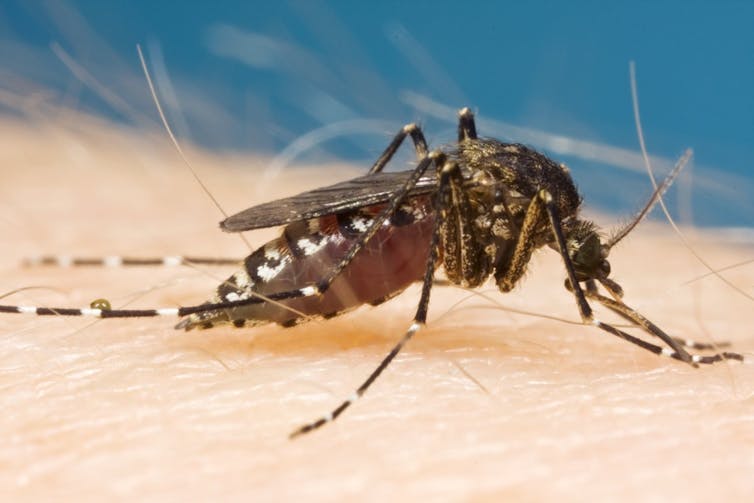 The saltmarsh mosquito, Aedes vigilax, is one of the most important pest mosquitoes in coastal regions of Australia and has adapted to thrive in hot and dry conditions.
Stephen Doggett (NSW Health Pathology)
The saltmarsh mosquito, Aedes vigilax, is one of the most important pest mosquitoes in coastal regions of Australia and has adapted to thrive in hot and dry conditions.
Stephen Doggett (NSW Health Pathology)
Bringing mosquitoes home
Much has been made of the impact of heatwaves on human health. It may also inadvertently increase health risks in metropolitan regions of Australia. A shortage of water increases the need to conserve and store water around the backyard. Unfortunately, that also means creating a home for mosquitoes.
One of the most widespread mosquitoes in the country, a mosquito that has probably bitten almost every Australian, is the backyard mosquito Aedes notoscriptus. This mosquito is found in water-filled containers around the backyard, from drains and roof gutters to rainwater tanks and bird baths. While you’d think hot and dry conditions will impact this mosquito, think about the extra effort we’re taking to store water around the home. If your rainwater tank isn’t properly screened or you’re keeping uncovered bins and buckets around the backyard filled with water, you’ll be providing a home for mosquitoes.
The debate about the impact of a changing climate on mosquitoes and mosquito-borne disease often focuses on the spread of tropical diseases into warming temperate regions. The truth is it may be the way humans respond to a changing climate through water-saving measures around the home that could increase mosquito impacts in urban areas. This also may bring a risk of exotic mosquitoes to our suburbs, which could transmit more serious mosquito-borne pathogens such as dengue, chikungunya and Zika viruses.
While some parts of Australia will have fewer annoying mozzies this summer, don’t be complacent about taking steps to avoid mosquito bites. Choose and use the right insect repellents and reduce opportunities for mosquitoes to move into your backyard by covering up water-holding containers.
Authors: Cameron Webb, Clinical Lecturer and Principal Hospital Scientist, University of Sydney
Read more http://theconversation.com/will-the-arrival-of-el-nino-mean-fewer-mosquitoes-this-summer-102496


















