

Flying foxes pollinate forests and spread seeds. Here’s how we can make peace with our noisy neighbours
- Written by: Noel D. Preece, Adjunct Asssociate Professor, James Cook University
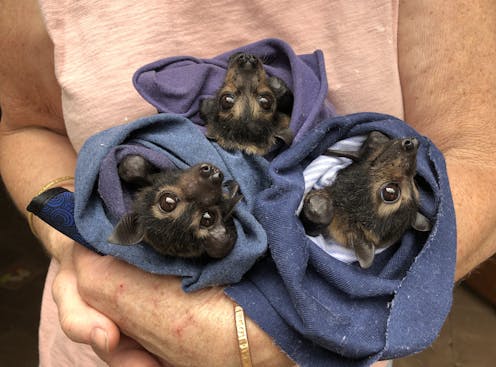
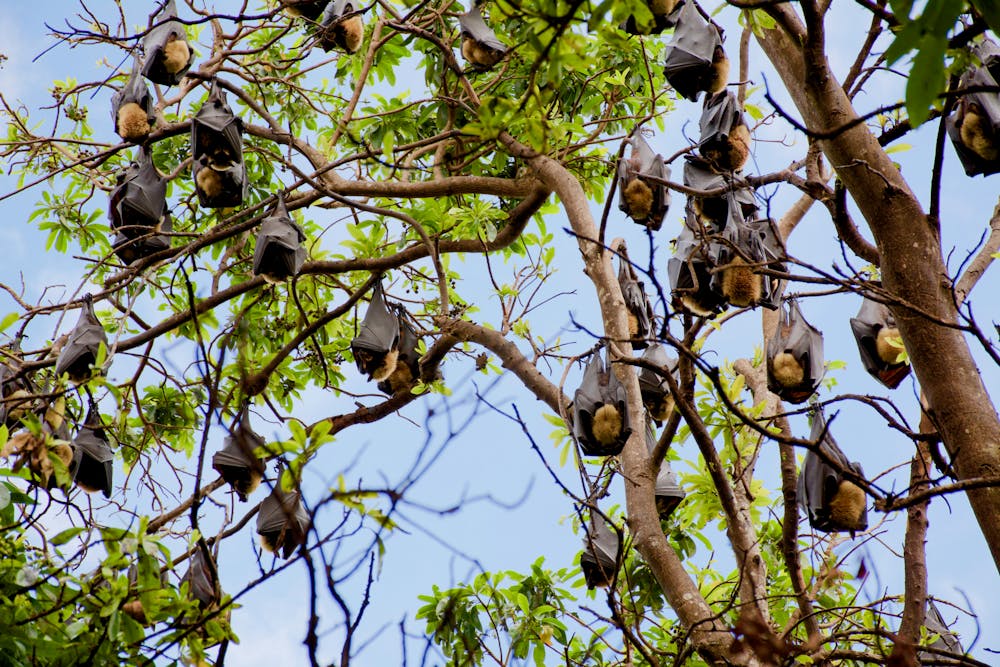
Flying foxes. Megabats. Fruit bats. Whatever name you choose, these fox-faced creatures are remarkable. Our four species help pollinate eucalyptus trees in eastern Australia, spread the seeds of rainforest trees, and make our summer skies spectacular. They’re some of the largest bats in the world.
The endangered spectacled flying fox (Pteropus conspicillatus), for instance, evolved alongside northern Queensland’s tropical rainforests in the Wet Tropics. They carry rainforest fruits further than any other species – even cassowaries – and fly up to 100 kilometres a night. Many trees produce fresh pollen and lots of nectar at night to attract our only nocturnal pollinators.
Sadly, flying foxes can evoke fear and loathing. Elsewhere in the Asia-Pacific, six species of flying fox link text have already gone extinct, due to hunting and other human pressure. If Australia’s species go extinct, some of our trees may well go with them.
But as my research shows, we can learn to live alongside these gentle creatures of the night. Here’s how.
Why are flying foxes feared?
Flying foxes are considered a “conflict species”, alongside crocodiles, dingoes, snakes and sharks. That is, our fear of these species can push us to take lethal action against them.
Bats can be an easy target. Consider this headline: “23 bat attacks as warning issued”, which ran in the Cairns Post in October. The story was exaggerated – bats weren’t deliberately attacking people. They were being handled and got spooked. But headlines like this are common.
Our perceptions shape reality. That means it takes some work to overcome ancient fear, even if irrational, such as blood-sucking vampire bats. But there are other concerns: fear of disease or annoyance at bat poo splattering clothes on the line or falling into swimming pools. Then there’s the noise of a thousand squabbling flying foxes in a roost.
In the 1930s, Sir Francis Ratcliffe was contracted by the Commonwealth government to sort out “the problem” of flying foxes – essentially, culling them. This response is, sadly, common. For the past century, we have seen these large bats as pests. We drive them off or kill them en masse.
Electric wires were used to kill many spectacled flying foxes to prevent them eating lychees in the 1990s, until it became illegal. In one infamous case, 18,000 were killed at an orchard south of Cairns. This killing led to a court victory, making it illegal to electrocute flying foxes.
Even now, killing of some species can be permitted under Queensland law, though all culls will become illegal from 2026.
Read more: Not in my backyard? How to live alongside flying-foxes in urban Australia
The spectacled flying fox is not doing well. The population fell sharply from around 320,000 in 2004 to only 78,000 in 2018. Another 23,000 animals died in Cairns in 2018 during an extreme heat event linked to global warming.
Scientists know how to help the species recover by protecting their camps and food resources, and improving the survival rates of babies.
Unfortunately, there is constant pressure from their human neighbours to “do something” about flying foxes in backyards and parks. This push-back makes it harder for us to help the species recover. Even now, some politicians want them eliminated.
So what can we do?
For many years, authorities attempted to move flying fox camps away from, say, a suburb out to other areas. But dispersal techniques rarely work, cost a lot of money, and usually just move the problem to other backyards.
We now know there are better ways of reducing conflicts between humans and these megabats. One way is to trim back trees near the camps, removing overhanging branches so the bats do not roost over backyards.
If these actions don’t solve the issue, planting shrubs or erecting barrier fences as buffers between flying fox roosts and residents can help.
Lastly, if buffers don’t work, councils or wildlife authorities may attempt to move the camps.
In some areas, state governments and councils provide subsidies to cover swimming pools, pressure-clean paths, and cover crops with nets – which are still cheaper than trying to move the bats away from camps. These types of actions can go a long way towards changing public attitudes.
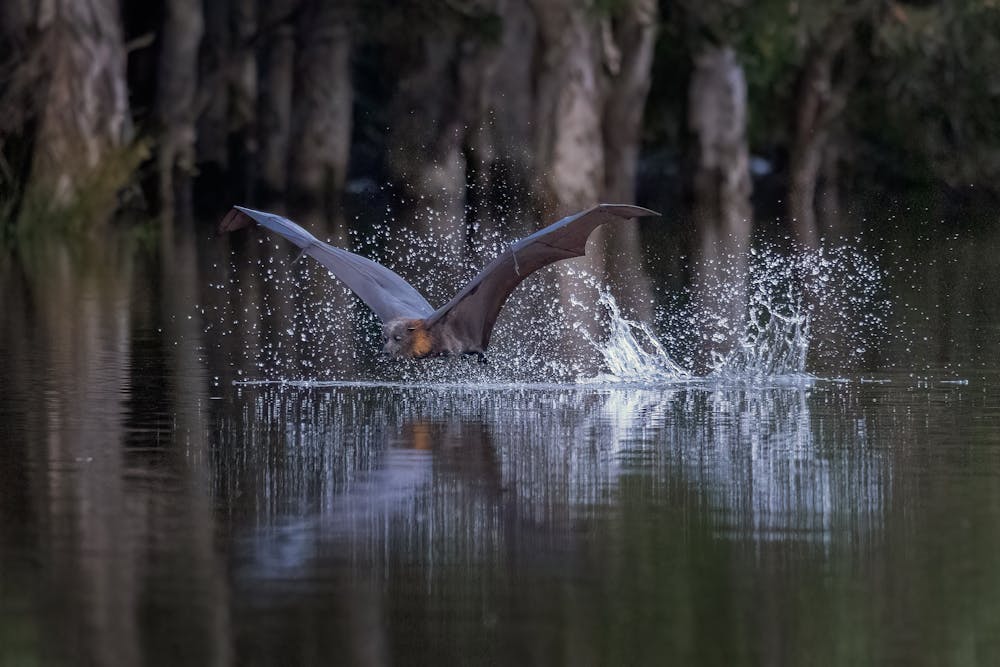 Showing people how remarkable these creatures are can help tackle scepticism.
Frank Martins/Shutterstock
Showing people how remarkable these creatures are can help tackle scepticism.
Frank Martins/Shutterstock
Of bats and disease
Stories about the value of flying foxes to all of us and our natural environment can help. American conservation scientist Anne Toomey has observed how important it is for scientists to use narratives to help protect species.
Let’s take disease. This crops up a lot. Flying foxes, like other bats, have remarkable immune systems. They can live perfectly happily with viruses which would lay us out for weeks – or worse.
This is a fact. But we often attach a narrative to it – namely, that bats are dangerous. We don’t attach the same narrative to cats, even though these beloved pets often carry toxoplasmosis, a protozoan parasite which can cause disease.
If you are not an experienced bat handler or carer, the story should be this: don’t touch bats you find. Instead, contact bat and wildlife carers such as the Wildlife Rescue Service or, if you’re in Far North Queensland, places like the Tolga Bat Hospital.
Fear of bats intensified 12 years ago, when the Hendra virus infected and killed several vets treating horses with the virus. While bats can carry the virus, they cannot transmit it directly to humans. And better still, we now have a vaccine preventing Hendra virus in horses.
Avoiding other pathogens such as Australian bat lyssavirus is easy – people who have to handle bats get vaccinated against lyssavirus. Wearing protective equipment such as gloves also prevents transmission of diseases.
If we know more about the importance of these majestic night-fliers – and if we find better ways of reducing human-wildlife conflicts – we can still save these creatures. After all, their biggest threat is us.
Authors: Noel D. Preece, Adjunct Asssociate Professor, James Cook University


















