

There is overwhelming gender bias in the NDIS – and the review doesn’t address it
- Written by: Diana Piantedosi, Honorary Research Fellow (Deakin University), PhD Candidate (La Trobe University), La Trobe University
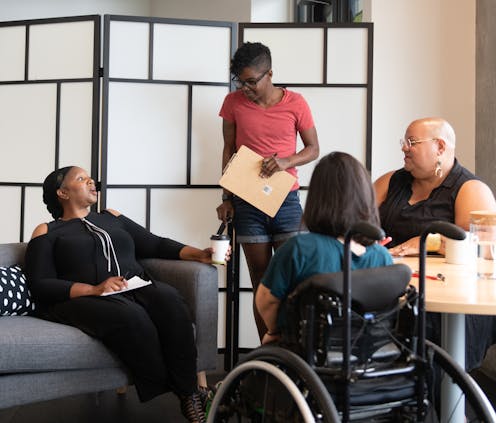
The review of the National Disability Insurance Scheme (NDIS) released last month included welcome recommendations to better support First Nations people, understand culturally diverse concepts of disability and care, and advocacy for LGBTIQ+ people. The review acknowledges women with disability face barriers to access support and efforts to understand their experiences need to be accelerated.
As part of review feedback, key disability organisations said a gender strategy was needed.
Yet the final recommendations remain largely silent on gender, despite overwhelming gender inequality in the NDIS. This was also largely true of the Disability Royal Commission recommendations.
Here’s why change is needed.
Read more: Recommendations to reboot the NDIS have finally been released. 5 experts react
To uphold women’s right to safety
More than one-third of women with disability are likely to experience intimate partner violence compared to 21% of women without disability, 15% of men with disability and 7% of men without disability.
The NDIS review places a strong emphasis on “safeguarding” participants and to this end, makes the controversial recommendation to use only registered providers (which some participants say will limit their choice and control). But when it comes to addressing violence and abuse disproportionately experienced by women with disability, the review doesn’t go much further than referencing the previously released disability royal commission recommendations.
Only three out of the 222 disability royal commission recommendations explicitly focus on women. These include the banning of non-therapeutic sterilisation (preventing some women with disability from getting pregnant), plans to develop action plans and adopting nationally consistent disability-inclusive definitions of family and domestic violence.
To support women as participants, as well as carers
Women with disability have significantly lower NDIS participation rates.
Women are also over-represented as carers for people with disability. Half of all NDIS participants are children and nearly 90% of primary carers for children are women.
Women are highly successful advocates for their children. Indeed, women’s advocacy for others has contributed to similar rates of access approval between male and female children up to the age of 14.
Older applicants are encouraged and more likely to advocate for themselves. From age 15, the likelihood of NDIS access is gendered. Male access requests are approved at far higher rates than females and applicants gendered “other”. This gap further widens with age.
To stop reproducing medical bias
NDIS assessments rely on evidence from health-care professionals, which means the NDIS likely reproduces the gender biases of the medical system.
On average, women wait two to five years longer than men to obtain a diagnosis and studies repeatedly find gendered differences in how symptoms are interpreted.
Read more: More than mental illness. How the NDIS review could help people with psychosocial disability
Many chronic conditions experienced predominantly by women can have fluctuating symptoms. The reviews’ attention to the episodic nature of psychosocial disability (when mental illness is severe and disabling) is welcome, but episodic disability needs to be addressed more broadly.
Women are more likely than men to have at least one chronic health condition and are significantly more likely to experience two or more chronic conditions at once.
Chronic health conditions with higher prevalence among women include long COVID, fibromyalgia, chronic fatigue syndrome, Ehlers-Danlos Syndrome, lymphoedema, endometriosis and many autoimmune conditions, (such as multiple sclerosis, lupus and rheumatoid arthritis). These conditions – and others that get worse over time – can significantly escalate without appropriate daily living supports.
The NDIS review recommends doing away with lists of conditions that make people likely to be eligible for support. Instead the focus will be on functional impact. It’s unclear how effective removing such lists will be towards addressing gender inequity.

To close access gaps
State health systems are currently responsible for early intervention and treatment of chronic conditions but the existing framework doesn’t provide daily living supports where a condition leads to disability.
The fresh NDIS review echoes previous reviews that found gaps and ambiguity between the NDIS and health systems. New agreements with states announced prior to the review similarly lack attention to gender, so there is no assurance women trying to access support outside the NDIS won’t continue to face the same barriers.
More detailed data would be a good start
The review reports some 36,500 participants have entered the scheme after initially being found ineligible. The cycle of applying and re-applying is a heavy administrative and emotional burden, disproportionately shouldered by women. Meanwhile, adults with chronic conditions make up over half those who didn’t meet NDIS access requirements. These decisions are likely to have disproportionately impacted women, but again, a gendered breakdown hasn’t been given.
Collecting more detailed data about participants “disaggregated by gender and sexuality” is listed in the review’s recommendations. Many people may be surprised to learn this is not happening already. If the government doesn’t urgently address the NDIS’ gender bias, women will continue to be left behind.
Authors: Diana Piantedosi, Honorary Research Fellow (Deakin University), PhD Candidate (La Trobe University), La Trobe University


















