

Why Heartstopper is Gen Z’s defining publishing phenomenon
- Written by: Penni Russon, Senior Lecturer, School of Communication, Monash University
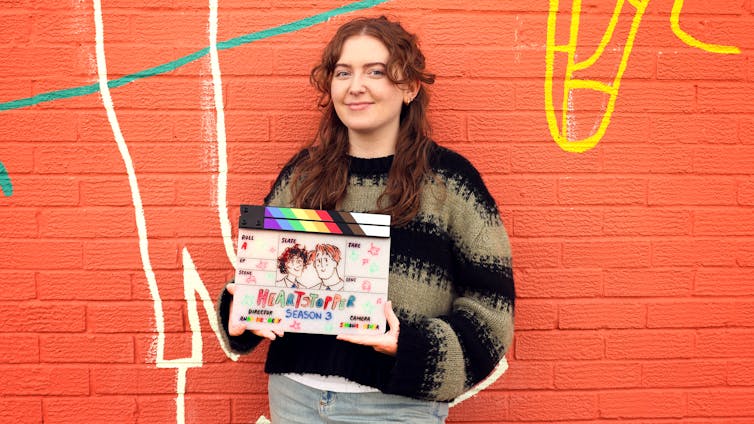
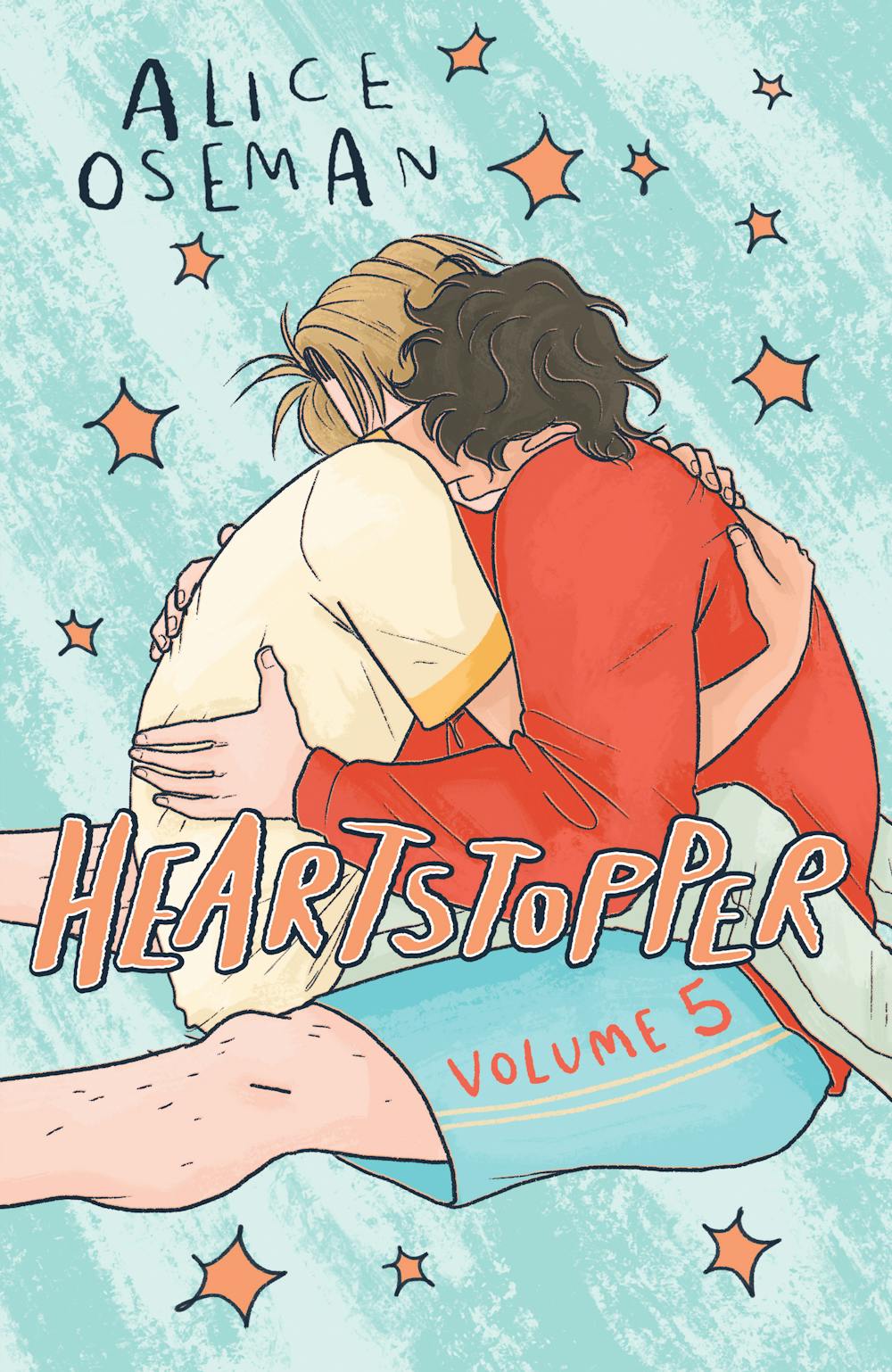
When Volume 5 of Heartstopper, Alice Oseman’s graphic novel series (turned Netflix adaptation, turned cultural juggernaut) was published in December last year, the book was declared an instant number-one bestseller. In Australia alone, it sold 12,300 copies in its first week.
To every generation a publishing phenomenon is born – and for Generation Z, it’s Heartstopper, which Oseman started writing aged 22 (she’s still just 29).
The rise of Heartstopper reads like a history of the last ten years in publishing tools and platforms. Oseman started self-publishing the comics on microblogging site Tumblr and webtoon platform Tapas in 2016, building up a loyal following and clocking millions of views.
Crowdfunding for the first print run met the funding goal within two hours. Hachette Children’s Group picked up world rights for the series, publishing Volume One in 2019.
To date, five graphic novels, two novellas, a yearbook and a colouring book have been published. The graphic novels have also been adapted into a successful Netflix series, with scripts written by Oseman herself.
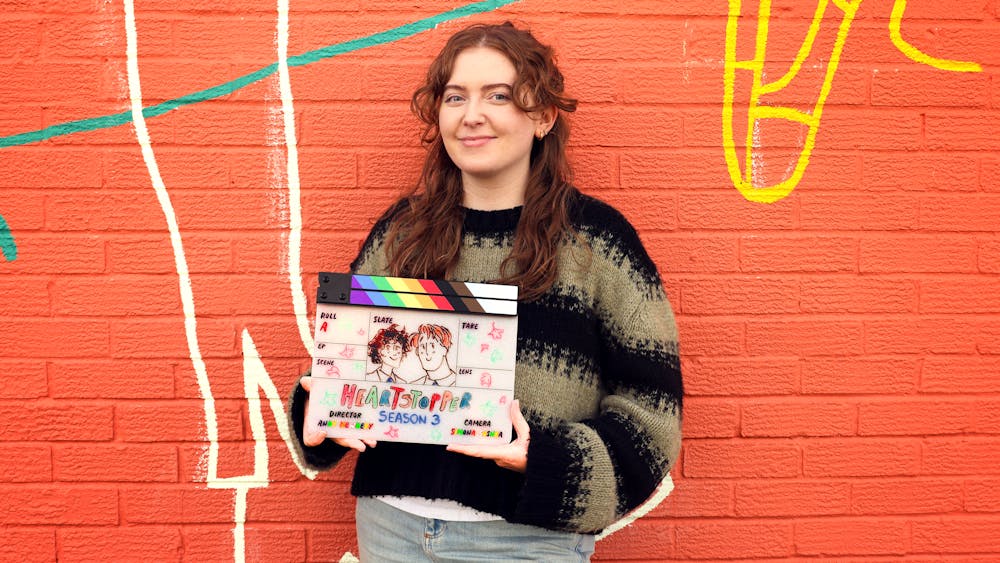
Heartstopper follows the sweet friends-to-lovers arc of Charlie and Nick, whom we first meet in Year 10 and Year 11. It depicts the giddying highs and dizzying lows of being young, queer and in love.
Through Charlie, Nick and other well-drawn characters, Alice Oseman beautifully portrays the inner workings of a healthy relationship, modelling open communication, help-seeking, allyship and active consent. The books also touch on rarely discussed topics like male eating disorders.
Read more: Big beautiful females and familiar dystopias: new graphic nonfiction interrogates 21st-century life
Queer joy
Queer joy is defined by Oxfam as a positive feeling we get from encountering signs of progress in gender equality and gender diversity. In the Heartstopper series, the narrative engine runs on themes of love, identity, first times, self-discovery, friendship and allyship.
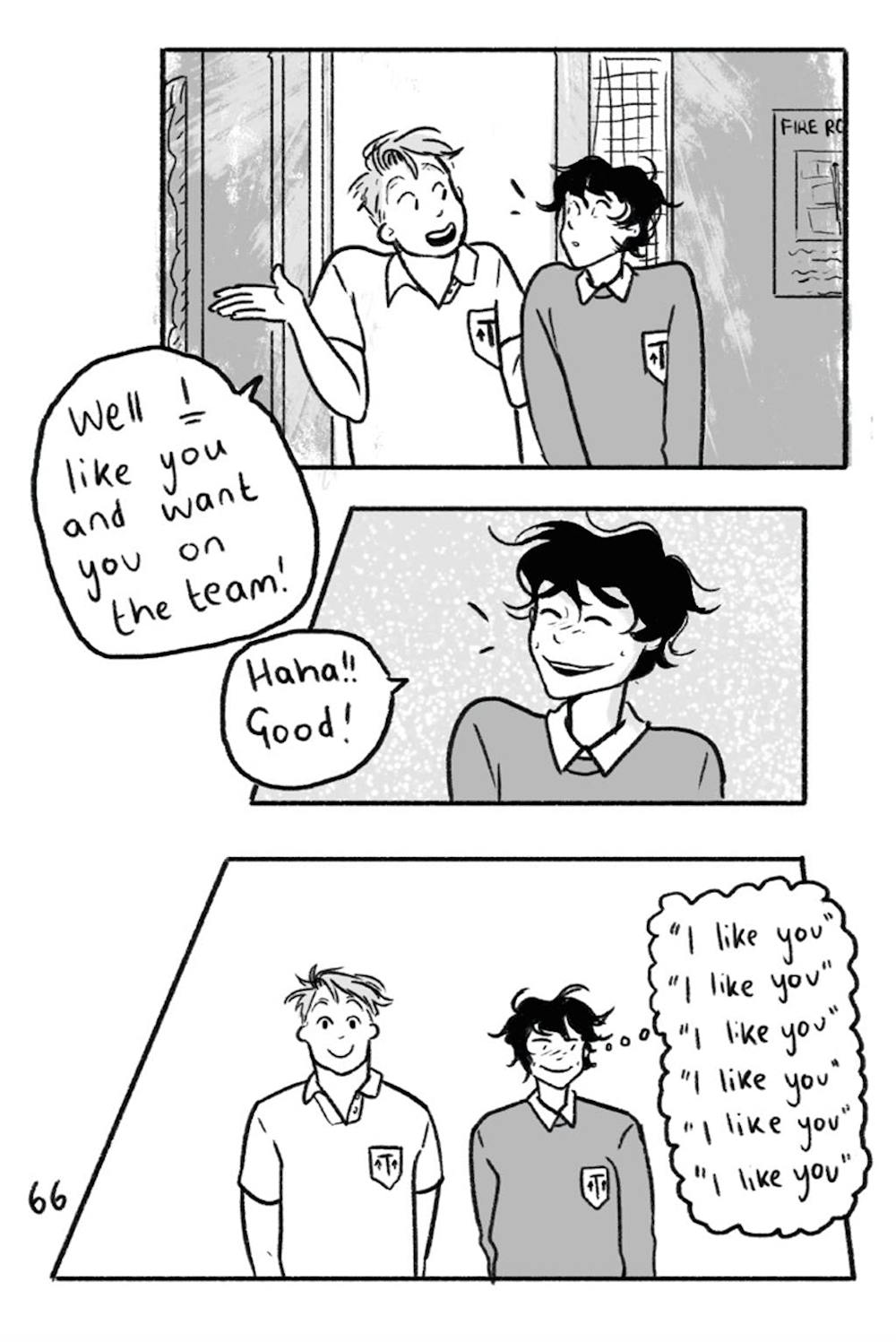 The space between panels in comics prompts the reader to harness their imagination and life experience.
Hachette Australia
Because comics can show and tell two things at once, they are particularly good at representing the way identities are formed in relation to society and culture. There’s a scene in Volume 1 where Nick turns to Google to ask, “Am I gay?” Google searches like these have become a rite of passage for young Gen Zs, who are much more likely than older generations to identify as queer.
An examination of Google trends from 2004 to 2023 highlights a steep rise in queries about sexuality, with such searches surging over 1,300%. Alice Oseman uses jagged panels and fragmentation to show Nick’s worldview exploding as he comes to terms with this new information about himself, in the fractured environment of a Google search response page.
Heartstopper Volume 5
By Heartstopper Volume 5, Nick is out to family and friends and Charlie is home and in therapy, but generally well. Charlie and Nick are in an established relationship, thinking about taking things to the next level.
The space between panels in comics prompts the reader to harness their imagination and life experience.
Hachette Australia
Because comics can show and tell two things at once, they are particularly good at representing the way identities are formed in relation to society and culture. There’s a scene in Volume 1 where Nick turns to Google to ask, “Am I gay?” Google searches like these have become a rite of passage for young Gen Zs, who are much more likely than older generations to identify as queer.
An examination of Google trends from 2004 to 2023 highlights a steep rise in queries about sexuality, with such searches surging over 1,300%. Alice Oseman uses jagged panels and fragmentation to show Nick’s worldview exploding as he comes to terms with this new information about himself, in the fractured environment of a Google search response page.
Heartstopper Volume 5
By Heartstopper Volume 5, Nick is out to family and friends and Charlie is home and in therapy, but generally well. Charlie and Nick are in an established relationship, thinking about taking things to the next level.
 They are surrounded by a supportive and diverse group of friends, including a trans girl, another gay boy who is not interested in coming out, Charlie’s asexual sister, and a lesbian couple, reflecting a spectrum of LGBTQ+ experiences many kids would encounter in their own social milieu.
There is a subplot of two male teachers falling in love. One of these teachers encourages Charlie to consider running for Head Boy. (We’ll have to read Volume 6 to find out if he’s successful!)
Heartstopper Volume 5 focuses a lot on Nick who, as a final-year student, needs to make a decision about university. Initially he assumes he’ll go to the closest one, to stay near Charlie. Two friends, also facing this decision, accompany Nick on a road trip to visit campuses elsewhere, and gently encourage him to explore other options.
Alice Oseman handles with delicacy the fact that as high-school sweethearts, their paths may take them in different directions – and that only through supporting each other to grow will they both thrive.
Another important plot point involves discussions about sexual readiness, with both boys talking to each other and their friends about recognising when you might be ready for sex. The conversations demonstrate nuances of active consent and communication, and stand in stark contrast to Ben’s entitlement and aggression in Volume 1. A conversation in class shows not all young people are ready for sex –and that’s normalised too.
Read more:
Big W has withdrawn Welcome to Sex from its stores to protect staff – but teen sex education can keep young people safe
Normalising queer love
In Heartstopper, the representations of mental illness, trans identities and queer love are destigmatising and normalising. Charlie’s queer and quirky friendship group reminds me of the young people who trail in and out of my house on a regular basis. (My oldest daughter ran the queer club at her school, my middle child is non-binary.)
The depiction of Charlie’s OCD and anorexia as a result of past trauma is carefully optimistic, showing a fairly linear pathway from help-seeking to effective treatment. Oseman acknowledges, through Nick, that isn’t always the case:
Staying in a hospital was a big risk. It probably isn’t helpful for everyone. But it was for him. He could actually focus on his mental health without worrying about school and what everyone thought.
Oseman uses the comic form to alleviate the intensity, avoiding details about self-harm and restrictive eating, and never showing anything graphic.
They are surrounded by a supportive and diverse group of friends, including a trans girl, another gay boy who is not interested in coming out, Charlie’s asexual sister, and a lesbian couple, reflecting a spectrum of LGBTQ+ experiences many kids would encounter in their own social milieu.
There is a subplot of two male teachers falling in love. One of these teachers encourages Charlie to consider running for Head Boy. (We’ll have to read Volume 6 to find out if he’s successful!)
Heartstopper Volume 5 focuses a lot on Nick who, as a final-year student, needs to make a decision about university. Initially he assumes he’ll go to the closest one, to stay near Charlie. Two friends, also facing this decision, accompany Nick on a road trip to visit campuses elsewhere, and gently encourage him to explore other options.
Alice Oseman handles with delicacy the fact that as high-school sweethearts, their paths may take them in different directions – and that only through supporting each other to grow will they both thrive.
Another important plot point involves discussions about sexual readiness, with both boys talking to each other and their friends about recognising when you might be ready for sex. The conversations demonstrate nuances of active consent and communication, and stand in stark contrast to Ben’s entitlement and aggression in Volume 1. A conversation in class shows not all young people are ready for sex –and that’s normalised too.
Read more:
Big W has withdrawn Welcome to Sex from its stores to protect staff – but teen sex education can keep young people safe
Normalising queer love
In Heartstopper, the representations of mental illness, trans identities and queer love are destigmatising and normalising. Charlie’s queer and quirky friendship group reminds me of the young people who trail in and out of my house on a regular basis. (My oldest daughter ran the queer club at her school, my middle child is non-binary.)
The depiction of Charlie’s OCD and anorexia as a result of past trauma is carefully optimistic, showing a fairly linear pathway from help-seeking to effective treatment. Oseman acknowledges, through Nick, that isn’t always the case:
Staying in a hospital was a big risk. It probably isn’t helpful for everyone. But it was for him. He could actually focus on his mental health without worrying about school and what everyone thought.
Oseman uses the comic form to alleviate the intensity, avoiding details about self-harm and restrictive eating, and never showing anything graphic.
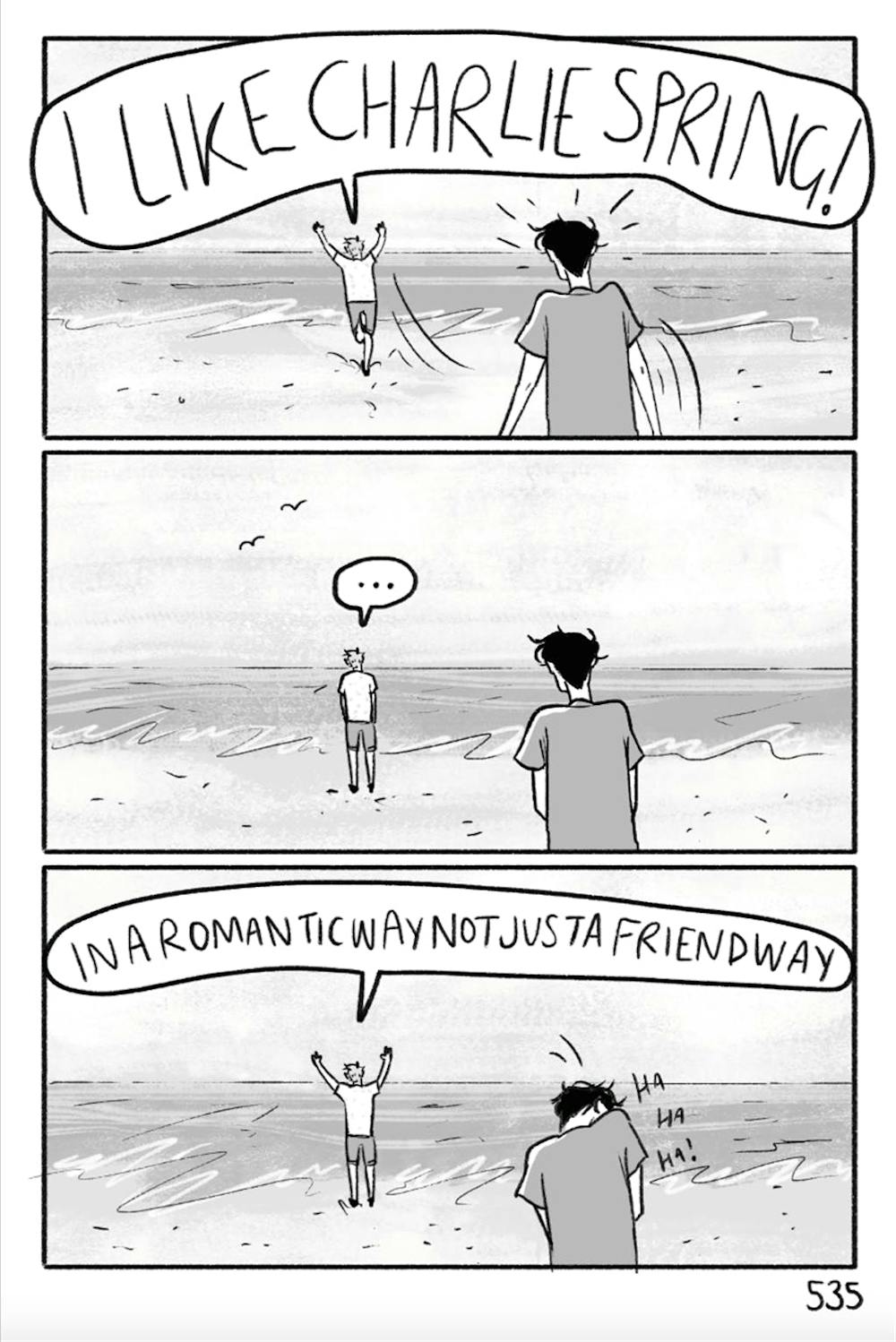 The representations of queer love in Heartstopper are destigmatising and normalising.
The message when it comes to mental health is that it takes a village to treat mental illness (siblings, parents, friends, clinicians, teachers).
Some readers, especially those of us who grew up in earlier decades, might feel sad or angry when they compare their school experiences to what’s shown in Heartstopper. Some who experienced the bullying but not the friendships in high school may struggle to believe kids can be this kind to each other.
For me, though, this is the queer joy of reading Heartstopper. In its focus on the love and community that surrounds Charlie and Nick, the Heartstopper graphic novels create a space for the reader, who becomes an intimate confidante – another member of Charlie and Nick’s tight-knit friendship group.
Authors: Penni Russon, Senior Lecturer, School of Communication, Monash University
The representations of queer love in Heartstopper are destigmatising and normalising.
The message when it comes to mental health is that it takes a village to treat mental illness (siblings, parents, friends, clinicians, teachers).
Some readers, especially those of us who grew up in earlier decades, might feel sad or angry when they compare their school experiences to what’s shown in Heartstopper. Some who experienced the bullying but not the friendships in high school may struggle to believe kids can be this kind to each other.
For me, though, this is the queer joy of reading Heartstopper. In its focus on the love and community that surrounds Charlie and Nick, the Heartstopper graphic novels create a space for the reader, who becomes an intimate confidante – another member of Charlie and Nick’s tight-knit friendship group.
Authors: Penni Russon, Senior Lecturer, School of Communication, Monash UniversityRead more https://theconversation.com/why-heartstopper-is-gen-zs-defining-publishing-phenomenon-221726


















