

Ice ages were not as dry as we thought, according to surprising new Australian cave study
- Written by: Rieneke Weij, Postdoctoral researcher in Geochemistry/Palaeoclimatology, University of Cape Town
During ice ages, dry, frozen terrain extended over much of northern Europe, Asia and North America. Many plants and animals retreated from these desolate, harsh landscapes and sought refuge in pockets of more hospitable territory.
But what was happening in the rest of the world? For a long time scientists have thought that dry conditions prevailed across the globe during ice ages, and that the warm periods between ice ages were much wetter.
This interpretation has shaped our understanding of where plants, animals, and even humans lived during Earth’s past. However, it may not be correct.
Our new research published in Nature shows ice ages were actually much wetter than previously thought – at least in the subtropical regions of the southern hemisphere (from 20° to 40° south).
Ice ages and hemispheres
Over the past million years or so, Earth’s climate has oscillated between cold ice ages (or “glacial” periods) and warmer “interglacial” periods. Currently we are living through an interglacial period known as the Holocene epoch. It began about 11,700 years ago, following the last glacial period which lasted around 110,000 years.
During glacial periods, temperatures were lower, there was less carbon dioxide in the atmosphere, and ice sheets covered more of the globe. During interglacials, temperatures were higher, there was more carbon dioxide in the air, and large ice sheets remained only in Greenland and Antarctica.
Evidence from the northern hemisphere shows huge ice sheets spread across the northern parts of Europe, northern Asia and North America during glacial periods, and large areas south of the ice were covered with tundra. The idea that glacial environments were extreme and harsh was then extended beyond these regions because of evidence that glacial periods were mostly treeless with dusty atmospheres pretty much everywhere, including Australia.
However, our new research reveals that parts of glacial periods were in fact wetter than today across much of the southern hemisphere.
Developing a 350,000 year climate record
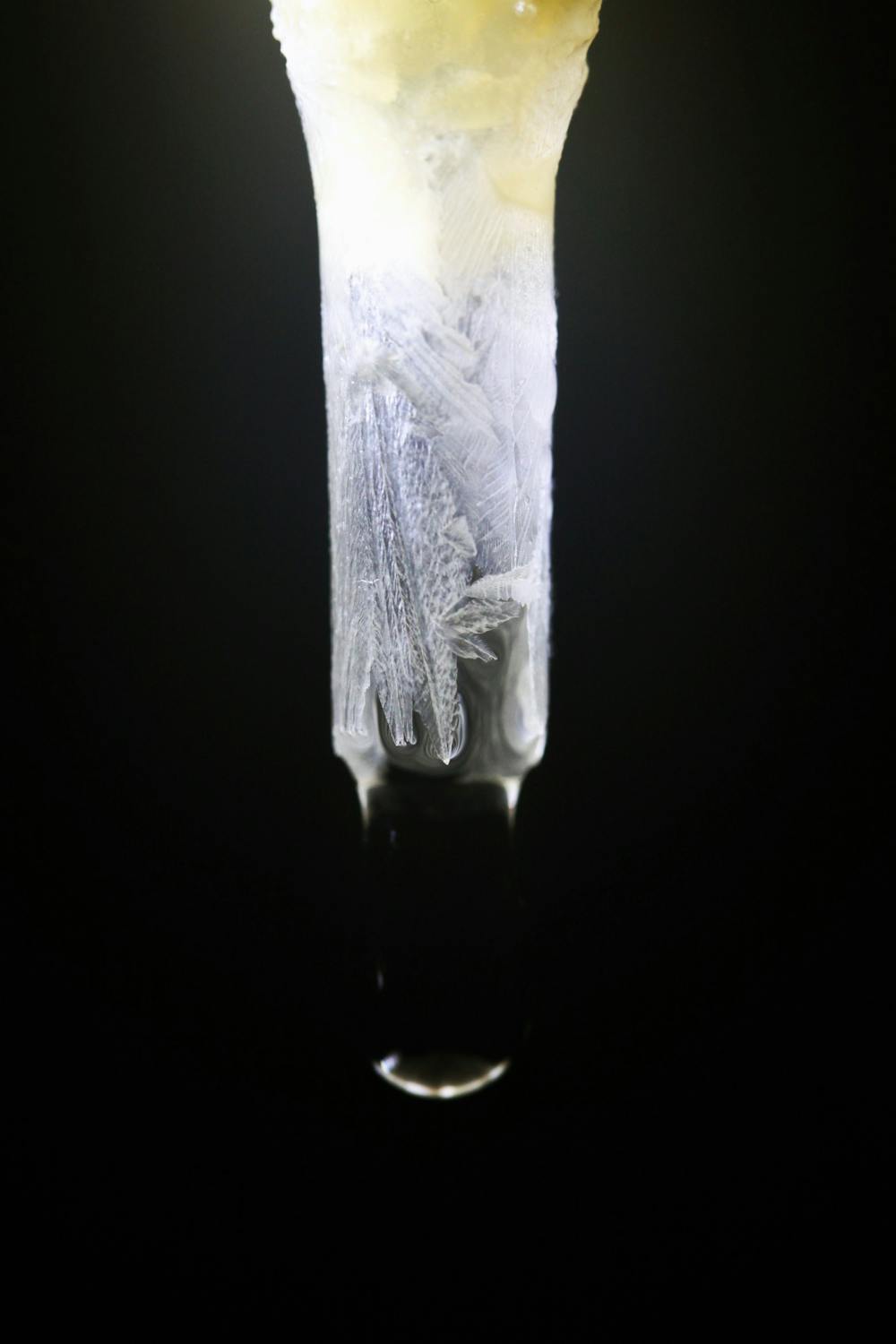
One way to understand how wet it was in the past is to look at mineral deposits called speleothems, found in underground caves. These deposits, which include stalagmites and stalactites, build up over time as rainwater filters down through soil and limestone into the cave.
We can use the extent of speleothem growth over time to understand changes in water availability. More speleothem growth broadly reflects wetter conditions, while less growth suggests a drier environment.
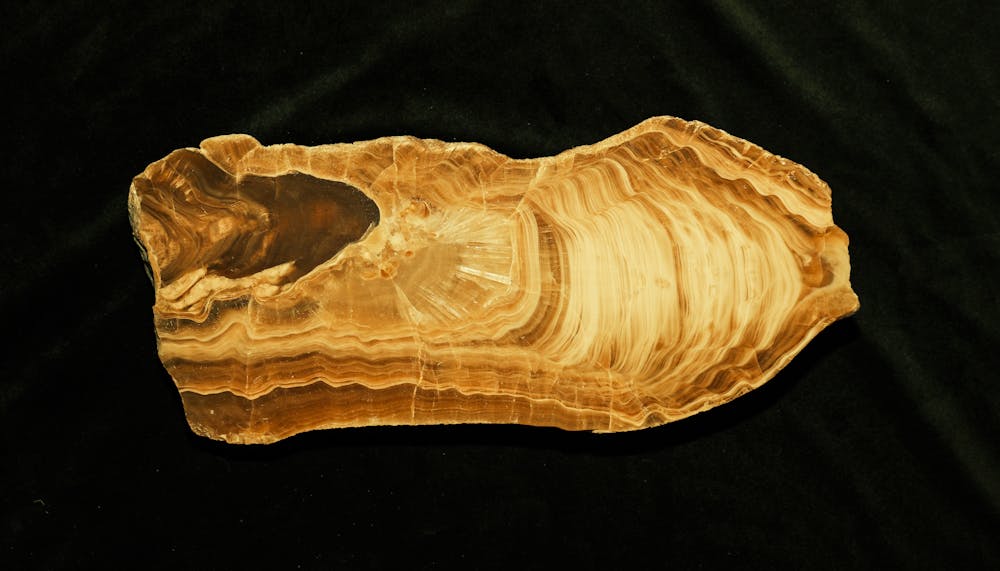 Cross section of a large stalagmite fragment from Victoria Fossil Cave, Naracoorte, showing beautiful, tree-ring-like growth layers.
Jon Woodhead, CC BY-SA
Cross section of a large stalagmite fragment from Victoria Fossil Cave, Naracoorte, showing beautiful, tree-ring-like growth layers.
Jon Woodhead, CC BY-SA
Our understanding of past changes in the climate and environment of the southern hemisphere has been limited by a lack of well-dated and long-term records.
To address this problem, we collected samples from speleothems in two cave regions in southern Australia, the Naracoorte caves in the southeast and the Leeuwin-Naturaliste caves in the southwest.
Using a dating technique based on the decay of naturally occuring uranium, we determined the age of more than 300 individual speleothem fragments from the caves. As a result, we produced a precipitation record spanning the last 350,000 years.
Wetter and colder, warmer and drier
Our study revealed surprising yet extremely consistent trends. Over the past 350,000 years, wetter times always occurred within the cooler, glacial periods, while interglacials were consistently dry.
We also studied fossil pollen trapped within the same speleothems. It is harder to be a tree under the low atmospheric carbon dioxide of glacial periods, but moisture-demanding herbs and shrubs thrived during the glacial periods but were suppressed during interglacials, confirming the dating evidence.
Next, we used our new records from southern Australia as benchmarks for the subtropics around the southern hemisphere, and compared them with other published records from southern Africa and South America. We found wet glacials and dry interglacials were not confined to southern Australia, but in fact, formed a hemisphere-wide pattern.
Climate model simulations also showed a similar pattern over the last glacial cycle.
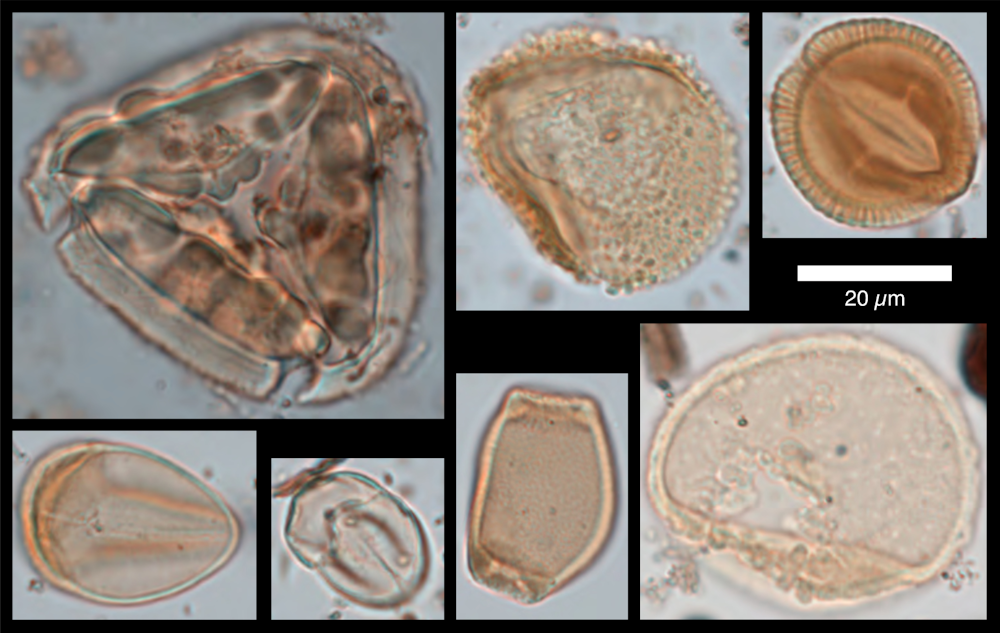 Selection of fossil pollen grains extracted from the Naracoorte speleothems. Top from left to right: Pteris, Nertera and Amperea. Bottom from left to right: Monotoca (2x), Banksia marginata and Restionaceae.
Kale Sniderman, CC BY-SA
Selection of fossil pollen grains extracted from the Naracoorte speleothems. Top from left to right: Pteris, Nertera and Amperea. Bottom from left to right: Monotoca (2x), Banksia marginata and Restionaceae.
Kale Sniderman, CC BY-SA
Stable environments with abundant water
This new understanding of what conditions were like in the southern hemisphere during glacial periods will change how we interpret the movement and expansion of plants, animals and even humans in the past.
It was previously assumed that, during glacial periods, reduced rainfall forced many plants and animals that needed higher levels of moisture into small liveable zones called “refugia”.
However, our research suggests that – at least in the subtropical southern hemisphere – glacial periods were often times of relatively stable environments with abundant water, even if low levels of carbon dioxide meant plants were slow-growing and relatively unproductive.
Our research calls for a big paradigm shift in how we view past ice-age environments across the Earth.
Authors: Rieneke Weij, Postdoctoral researcher in Geochemistry/Palaeoclimatology, University of Cape Town


















