

The world’s spectacular animal migrations are dwindling. Fishing, fences and development are fast-tracking extinctions
- Written by: Richard Fuller, Professor in Biodiversity and Conservation, The University of Queensland
In 1875, trillions of Rocky Mountain locusts gathered and began migrating across the western United States in search of food. The enormous swarm covered an area larger than California. Three decades later, these grasshoppers were extinct.
This fate is all too common for migratory species. Their journeys can make them especially vulnerable to hunting or fishing. They may move between countries, meaning protecting the species in one jurisdiction isn’t enough. And it’s hard for us to even know if they’re in trouble.
Today, we get a global glimpse of how migratory species are faring, in the first-ever stocktake produced by the United Nations Convention on the Conservation of Migratory Species. The report shows falling populations in close to half (44%) the 1,189 species tracked by the convention. The problem is much worse underwater – 90% of migratory fish species are threatened with extinction.
Their decline is not inevitable. After all, the migratory humpback whale was headed for rapid extinction – until we stopped whaling.
Why are migratory species at higher risk?
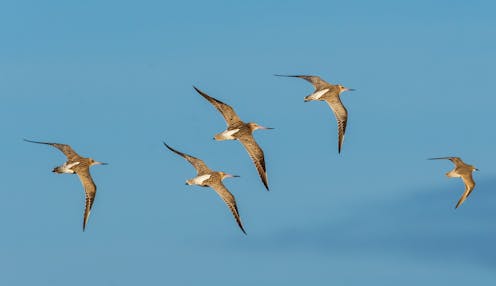
Every year, birds weighing about 300 grams leave Siberia and fly non-stop to Australia. Some bar-tailed godwits fly 13,000 km without stopping – one of the longest known continuous migrations.
Their journeys are critical for their life cycles – to find food, mates or a better climate. To undertake these journeys, animals must be in good condition with plenty of fat stores, and they must have safe flyways, swimways and pathways.
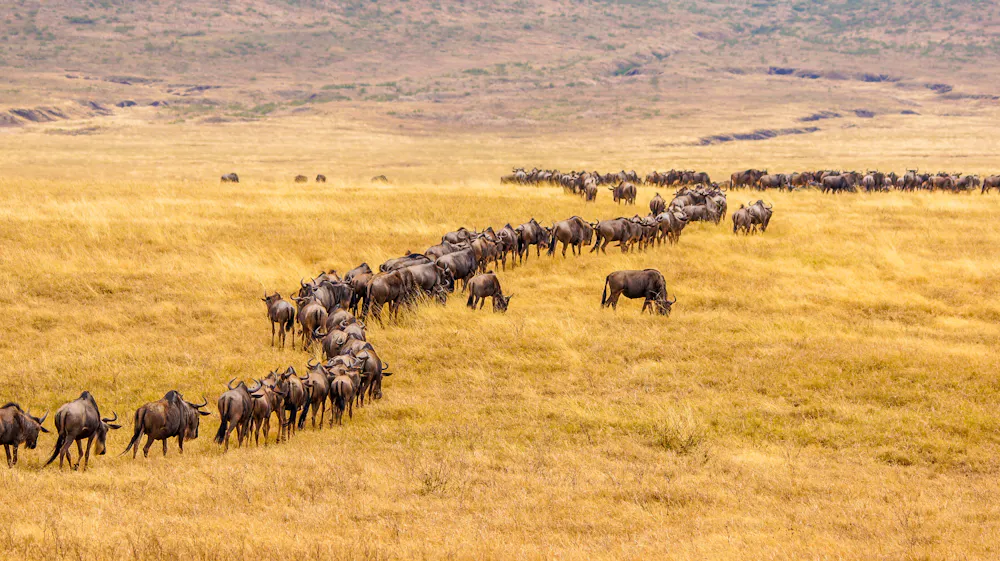
On land, roads and fences carve up migratory routes for animals like wildebeest. At sea, fishing trawlers chase migrating schools of fish and often accidentally collect sea turtles, albatrosses and whales. On seashores, development or land reclamation take away vital resting points for migrating shorebirds.
What the report shows us is that migration between countries is getting harder and harder. While a few species are benefiting greatly from farming and artificial wetlands, many more are being severely harmed.
Overexploitation is the top risk
Human exploitation of migratory species – taken as food, bycatch or exterminated as “pest” species – is the main reason why these species are in decline.
Animals often migrate in large groups, making them an appealing target for hunting or fishing. This is why we no longer have species such as the passenger pigeon, once numbering in their billions but hunted to extinction in 100 years.
Marine species are often out of sight, out of mind. But this report is a huge red flag for ocean ecosystems. Oceanic shark and ray populations have fallen 71% since 1970, which coincides with an 18 fold increase in fishing pressure. Bycatch in commercial fisheries is a huge problem for sharks, turtles, mammals and birds, but it can be massively reduced with existing technology, if deployed across all fleets
Overexploitation can be stopped. In 1981, Australia and Japan agreed to stop hunting Latham’s Snipe, a migratory shorebird that travels between the two countries. It’s the same story for humpback whales, which have returned in large numbers – and created a new industry, whale-watching.
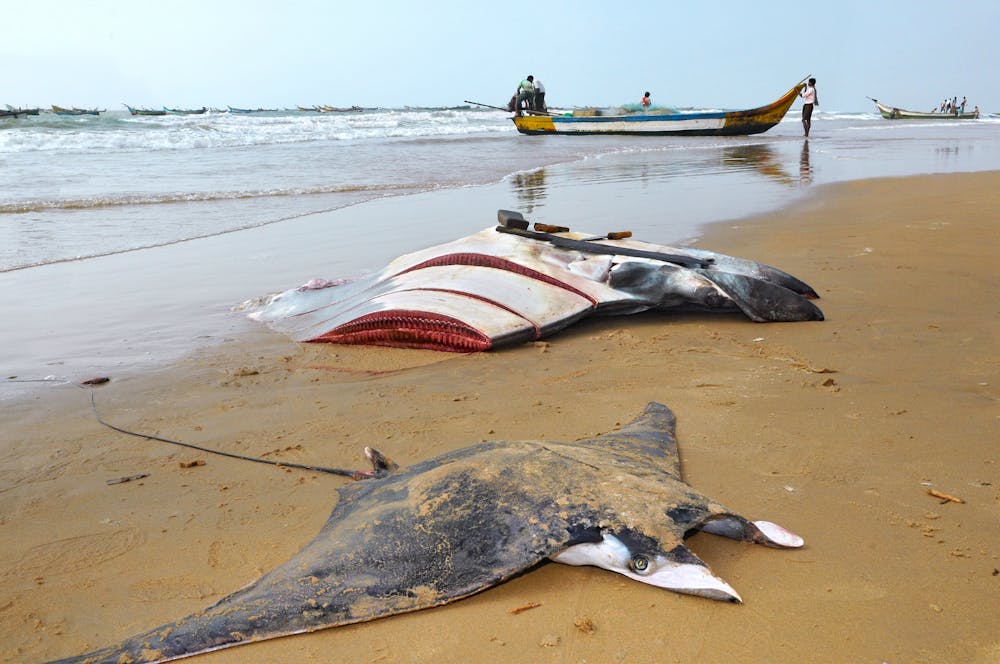 Populations of sharks and rays have plummeted since 1970 – and fishing pressure is to blame.
Orin/Shutterstock
Populations of sharks and rays have plummeted since 1970 – and fishing pressure is to blame.
Orin/Shutterstock
On fences and stepping stones
Direct killing of migratory animals isn’t the only threat. Clearing forests and grassland for farming destroys habitat. Light pollution can mess with navigation, climate change plays havoc with the timing of migration, and underwater noise pollution can confuse marine migrants. Even simple actions like building fences, roads and dams can disrupt migrations over land and through rivers.
Many migratory species need stepping stones: resting sites linking up their whole migratory route. If just one site is lost – or if animals are intensely hunted there – the whole chain can collapse.
Once identified, key areas have to be protected, which is where we often get stuck. But there are glimmers of hope. Last year conservation of these areas in the ocean got a boost when the world’s nations agreed to better protect the high seas beyond national jurisdictions, which fills a planet-sized gap in biodiversity governance.
Read more: We now have a treaty governing the high seas. Can it protect the Wild West of the oceans?
What the report didn’t cover
This is a groundbreaking report, but it has limitations. First, it only covers species listed under the UN convention, a tiny fraction of all migratory species. Listing unlocks stronger protections and urgently needs to be rolled out to more species.
For instance, around 60 migratory fish species are covered – but more than 1,700 others are not. Of these unprotected species, almost 25% are threatened, near threatened or there’s not enough data to know.
That’s to say nothing of insects. To date, only one insect is listed on the convention, the famous Monarch butterfly which migrates from the United States to Mexico. But millions of tonnes of insects migrate through the airspace each year, and we have largely no idea what they are, where they’re going or how they’re faring.
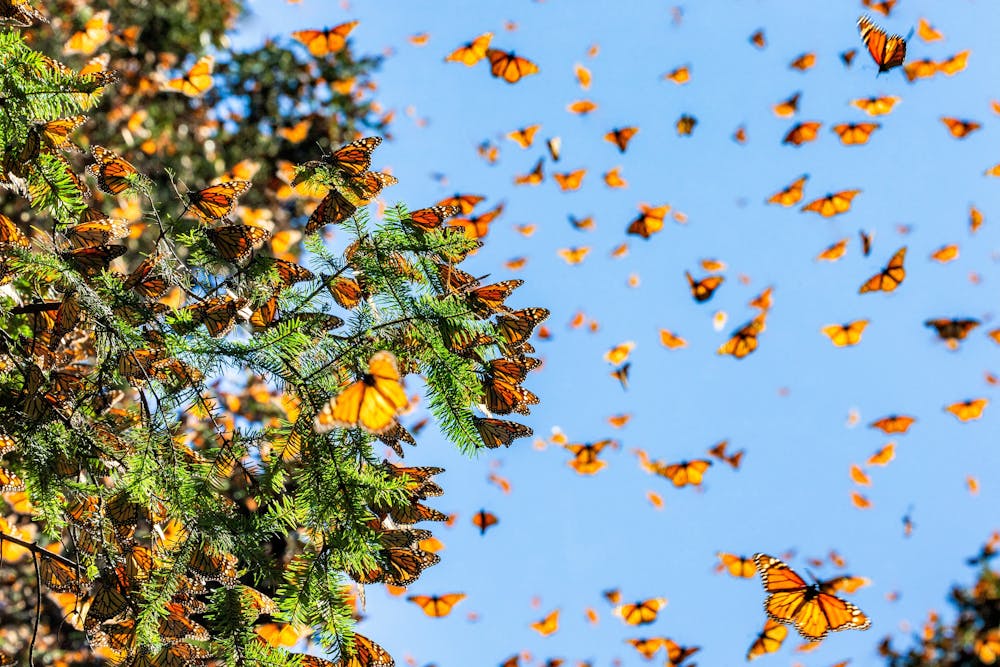 Monarch butterflies get the press – but many more insect species migrate.
Gudkov Andrey/Shutterstock
Monarch butterflies get the press – but many more insect species migrate.
Gudkov Andrey/Shutterstock
Can we save these species?
We now know much more about why migratory species are in decline. But we’re still not acting to protect them adequately.
More than 90% of the world’s migratory birds aren’t adequately protected by national parks and other protected areas. Only 8% of the world’s protected land is joined up, preventing migrating animals from moving safely across their routes. Because of this, animals have to make daring sorties across unprotected land or sea to complete their journeys.
So what can be done? Agreements between countries can create more action, but in practice, each country needs to actually do what it has already promised.
Policymakers can turn to a bevy of new tools, including Important Bird & Biodiversity Areas and the Migratory Connectivity in the Ocean system, to provide easy access to knowledge on how migratory species use and move through the world.
Animal migrations have collapsed on our watch. We need to do all we can to stem the losses and begin recovery if we want future generations to be able to experience nature in all its glory.
Read more: From Australia to Africa, fences are stopping Earth's great animal migrations
Authors: Richard Fuller, Professor in Biodiversity and Conservation, The University of Queensland


















