

we found spectacular Australian plant fossils from 30 million years ago
- Written by: Andrew Rozefelds, Adjunct Assoc Professor Central Queensland University and Principal Curator Geosciences Queensland Museum, CQUniversity Australia
The Australian continent is now geologically stable. But volcanic rocks, lava flows and a contemporary landscape dotted with extinct volcanoes show this wasn’t always the case.
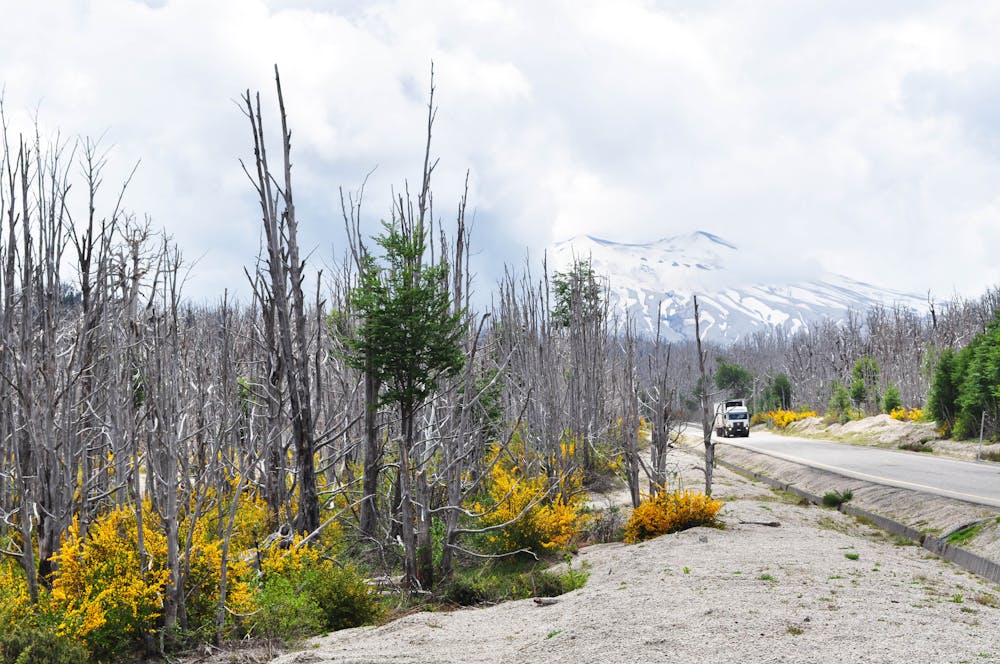
Between 40 and 20 million years ago – during the Eocene to Miocene epochs – there was widespread volcano activity across eastern Australia. In places such as western Victoria and the Atherton Tablelands in Queensland, it was even more recent.
Erupting volcanoes can have devastating consequences for human settlements, as we know from Pompeii in Italy, which was buried by ash when Mount Vesuvius erupted in 79 CE. But ash falls and lava flows can also entomb entire forests, or at least many of the plants within them.
Our studies of these rare and unique plant time capsules are revealing exquisitely preserved fossil floras and new insights into Australia’s botanical history. This new work is published in the journal Gondwana Research.
Remarkable preservation
The most common volcanic rocks are basalts. The rich red soils derived from them are among the most fertile in Australia.
But the rocks in which fossils occur are buried under basalts or other volcanic rock, and are called silcretes – the name indicates their origins are from silica-rich groundwaters. Silica is the major constituent of sand, and familiar to most of us as quartz.
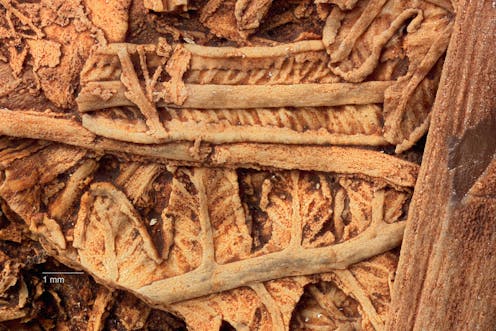
What makes the silcrete plant fossils so fascinating is the superfine preservation of plant material. This includes fine roots and root nodules, uncurling fern fronds and their underground stems, the soft outer bark of wood, feeding traces and frass (powdery droppings) of insects, and even the delicate tissues and anatomy of fruits and seeds.
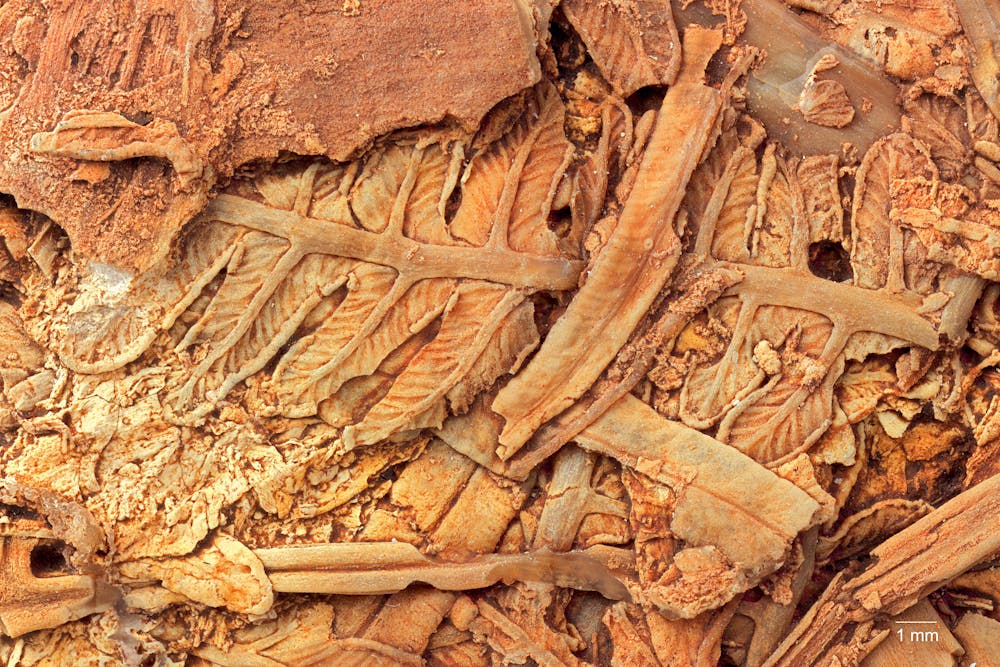 The foliage of a Pteridium fern, preserved in silcrete in exceptional detail.
Geoff Thompson/Queensland Museum
The foliage of a Pteridium fern, preserved in silcrete in exceptional detail.
Geoff Thompson/Queensland Museum
For this fine preservation to occur, first there needs to be a rapid burial, like that from a volcanic eruption. Then, there has to be an abundant source of silica — a condition met when the volcanic rocks began to weather.
The process where silica infills and preserves plant structures is referred to as “silicification” or “permineralisation”. When plant material is buried, it provides acidic conditions that are ideal for this to happen.
And the process need not take millions of years. Overseas studies of plants in hot springs or undertaken in the laboratory have shown that some types of silica will quickly infiltrate wood and plant tissues.
 This is a cross-section of the stem (rhizome) of a silicified fern, showing its characteristic anatomy.
Geoff Thompson/Queensland Museum
This is a cross-section of the stem (rhizome) of a silicified fern, showing its characteristic anatomy.
Geoff Thompson/Queensland Museum
Why are these plant fossils significant?
Because of their rapid entombment by the volcanoes, we can be sure the plants were in situ (that is, their original location) and were actively growing. This means we can gain detailed information about the make-up of these past plant communities.
In other areas where plant fossils might accumulate – such as river deltas – we can never be sure how far the bits of plants were carried, and whether they were from different types of vegetation.
Silicification not only preserves plants, but also leaf litter on the forest floor and even the underlying soil containing roots and root nodules. The fossil plants that are preserved at different sites varies, indicating the presence of distinct plant communities.
The abundance of seeds and fruits at one site near Capella, in central Queensland, even indicated to us that the local volcanic eruptions are likely to have occurred in summer or early autumn during the fruiting season.
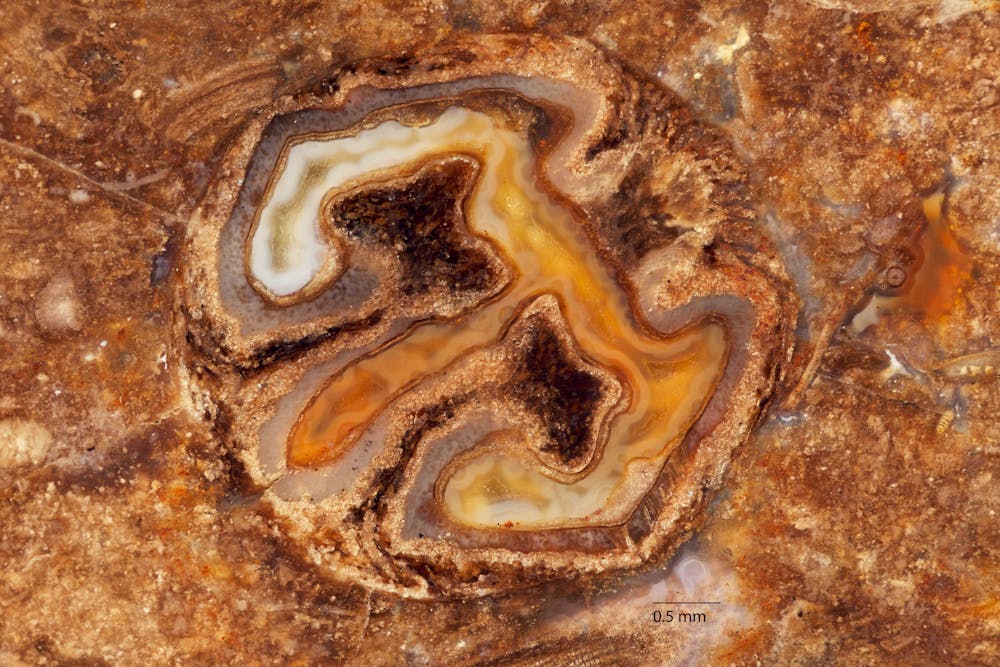 This cross-section of a silicified native grape seed shows its complex internal structure which is typical of the seeds of this family.
Geoff Thompson/Queensland Museum
This cross-section of a silicified native grape seed shows its complex internal structure which is typical of the seeds of this family.
Geoff Thompson/Queensland Museum
The extraordinary preservation of these fossils allows us to compare them with modern plants. In turn, this means we can accurately identify them.
The ferns include fronds and underground stems (rhizomes) of the familiar bracken fern (Pteridium). We have also found the distinctive seeds and lianas of the grape family (Vitaceae), along with evidence of insect damage in the wood. Two sites also had evidence of palms.
While there have been few previous studies on silcrete plants, we have revealed new insights into the history of the modern Australian flora.
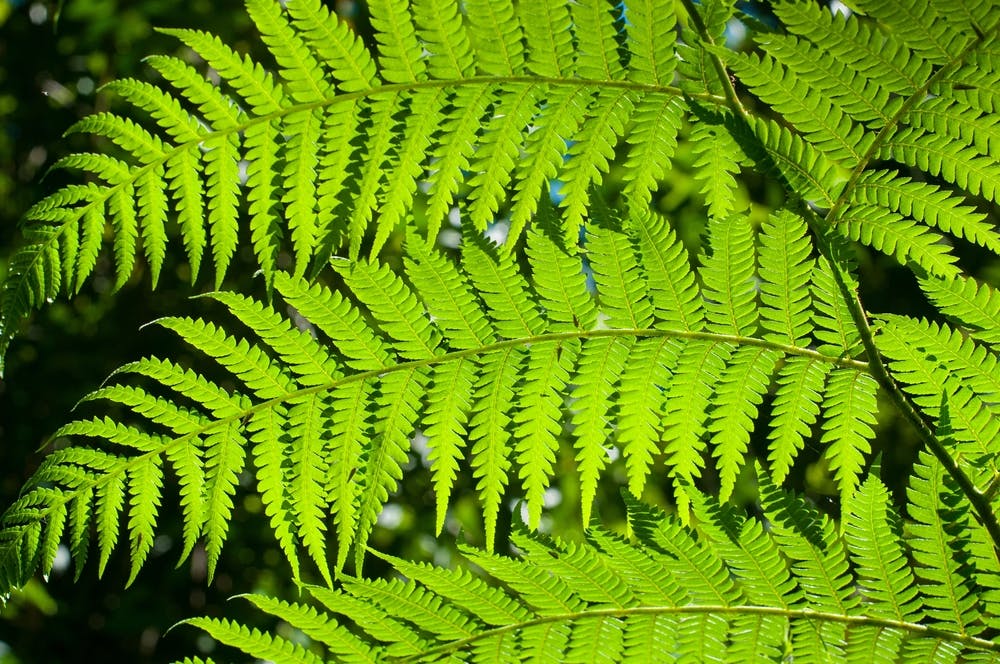 A modern bracken fern found in Queensland – the clear successor of the ferns found in the silcrete rocks.
AustralianCamera/Shutterstock
A modern bracken fern found in Queensland – the clear successor of the ferns found in the silcrete rocks.
AustralianCamera/Shutterstock
Volcanoes shaped plant communities
Volcanic activity both destroys and modifies existing plant communities. It also provides new substrates for plants to colonise.
Several sites contained ferns – this may be because they are among the first living plants to colonise new volcanic terrains via their tiny wind-borne spores. For instance, it has been documented that bracken ferns were pioneer plants of the barren cone of the famous Krakatoa volcano after its eruption in 1883.
But the diversity of seeds and fruits at another site suggests that an existing forest was buried by volcanic activity.
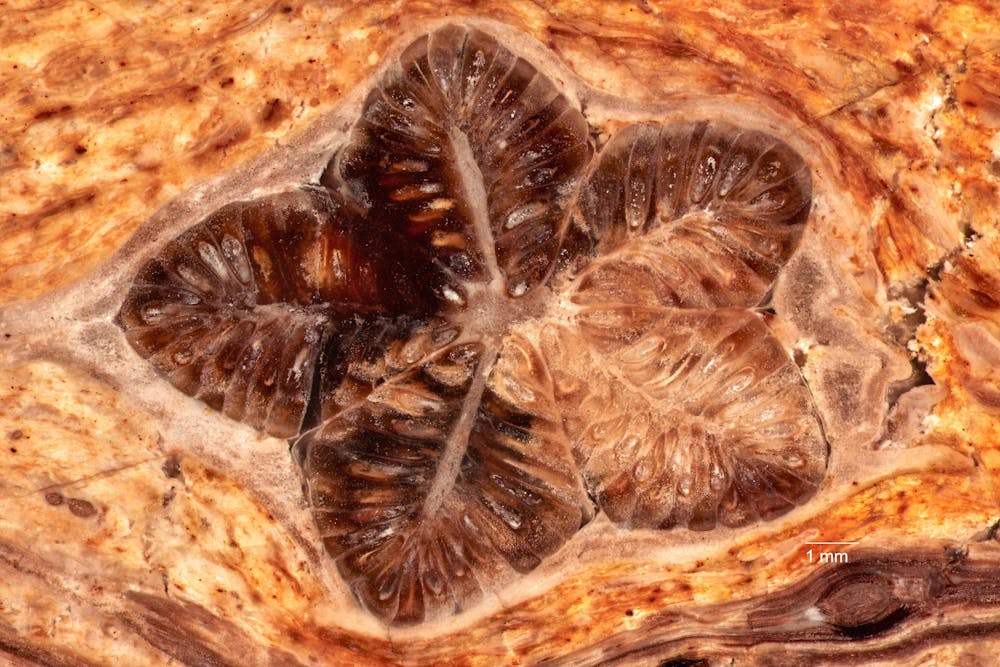 This star-shaped fruit, seen in cross section here, is currently being studied and is likely to be a species new to science.
Geoff Thompson/Queensland Museum
This star-shaped fruit, seen in cross section here, is currently being studied and is likely to be a species new to science.
Geoff Thompson/Queensland Museum
Researchers have suggested that the key factors responsible for the evolution of the Australian fauna and flora during the Cenozoic period (the last 66 million years) were predominantly climate and environmental change. It happened, in part, due to the movement of the Australian continental plate northwards.
But the broad-scale volcano activity that occurred in eastern Australia during the Cenozoic has rarely been invoked as a key driver of such changes.
So remarkably preserved, the silcrete plant fossils are now providing startling new insights into the history of some groups of Australian plants and the vegetation types in which they grew.
The author would like to acknowledge co-author Raymond Carpenter from the University of Adelaide who contributed to this article.
Authors: Andrew Rozefelds, Adjunct Assoc Professor Central Queensland University and Principal Curator Geosciences Queensland Museum, CQUniversity Australia


















