

As Varroa spreads, now is the time to fight for Australia’s honey bees – and you can help
- Written by: Alexander Mikheyev, Professor, ANU Bee lab, Australian National University
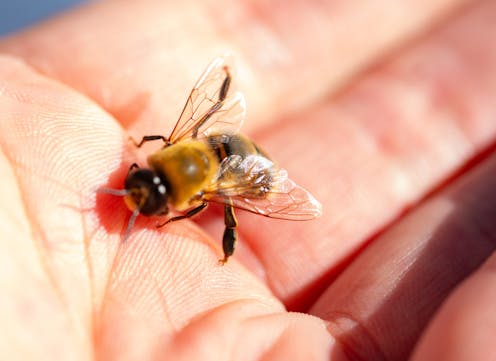
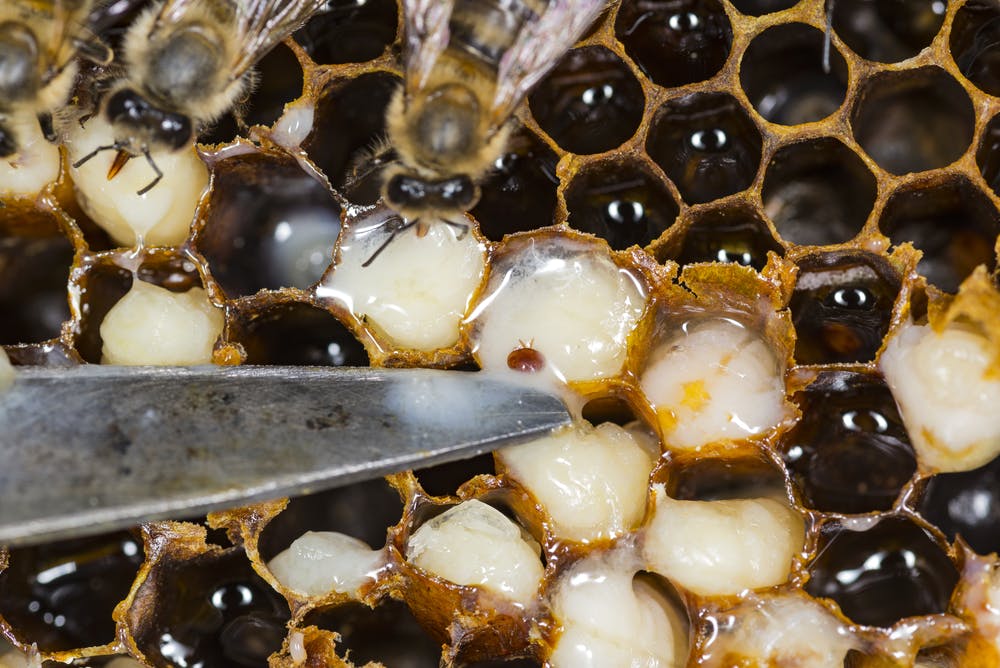
A tiny foe threatens Australian beekeepers’ livelihood, our food supply and the national economy. First detected in New South Wales in 2022, the Varroa mite is now established in Australia.
The parasitic mite, which feeds on honey bees and transmits bee viruses, has since spread across New South Wales.
It is expected to kill virtually all unmanaged honey bees living in the bush (also known as “feral” honey bees), which provide ecosystem-wide pollination. Honey bees managed by beekeepers will survive only with constant and costly use of pesticides.
As the last holdout against Varroa, Australia has a key advantage – we can still take action that was impossible elsewhere. We know Varroa-resistant bees would be the silver bullet. Despite decades of research, no fully resistant strains exist, largely because the genetics of Varroa resistance are complex and remain poorly understood.
A recently released national management plan places a heavy focus on beekeeper education, aiming to transition the industry to self-management in two years. This leaves research gaps that need to be urgently filled – and we can all work together to help tackle these.
Read more: Australia has officially given up on eradicating the Varroa mite. Now what?
Unlocking the genetic key to resistance
Without human intervention, Varroa kills around 95% of the honey bees it infects, but the survivors can evolve resistance. However, losing almost all bees would decimate Australia’s agriculture.
Our feral honey bees will have no choice but to evolve resistance, as they have in other countries. However, feral honey bees are not suited for beekeeping as they are too aggressive, don’t stay with the hive and don’t produce enough honey.
In principle, we could breed for a combination of feral resistance and domestic docility. But figuring out the genetics of how feral bees resist Varroa has been a challenge. As most bees exposed to the parasite will die, the survivors will be genetically different.
Some of these differences will be due to natural selection, but most will be due to chance. Identifying the genes responsible for resistance in this scenario is difficult. The best way to find them is to measure genetic changes before and after Varroa infestation. But to do that, we need bee populations largely unaffected by Varroa.
This is where our unique Australian opportunity comes in. We have a small and vanishing window to collect bees before the inevitable rapid spread of the mites, and the mass die-offs, occur.
We are collecting information… and bees
My lab at the Australian National University’s Research School of Biology has started collecting data on feral bee populations around New South Wales to identify pre-Varroa genetic diversity.
We will also monitor changes in bee population size and the spread of viruses and mites.
The most efficient way to collect bees is to go to a local clearing, such as a sports oval surrounded by forest. Unbeknownst to the cricket players, honey bee males (that is, drones) congregate at these sites by the thousands on sunny afternoons looking for mates.
You can lure them with some queen pheromone suspended from a balloon, and sweep them up with a butterfly net. Bee drones have no stinger and only come out for a couple of hours when the weather is fantastic, making collecting them literally a walk in the park, suitable for nature enthusiasts of all ages.
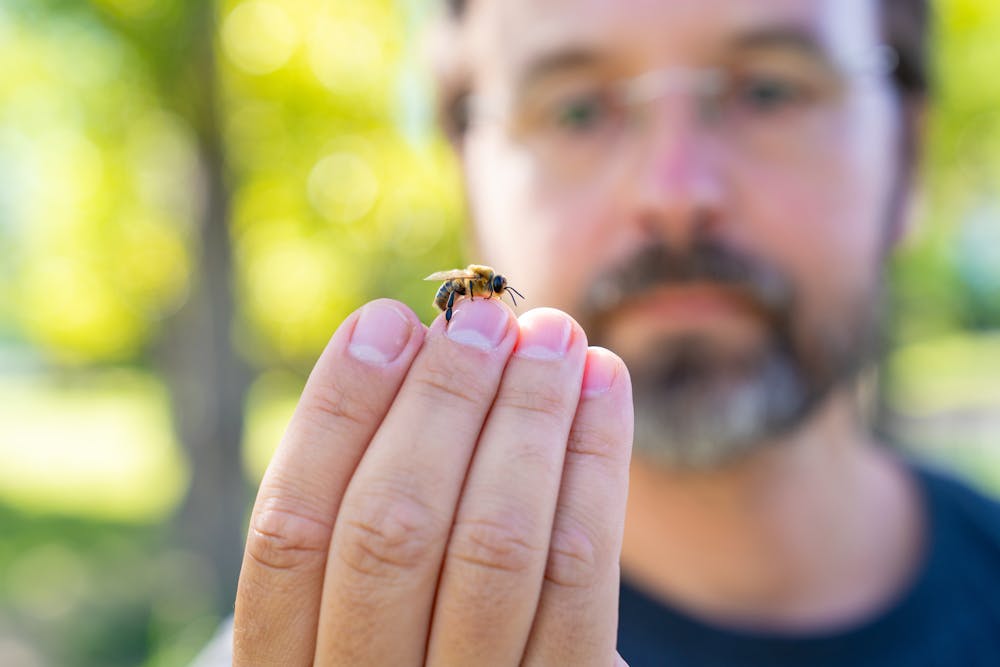 The author pictured with a stingless male honey bee (a drone) collected for genetic research into Varroa resistance.
Nic Vevers/ANU
The author pictured with a stingless male honey bee (a drone) collected for genetic research into Varroa resistance.
Nic Vevers/ANU
Anyone can help
You can help this effort by collecting some drones in your local area – this would save us time and carbon emissions from driving all over the country. We will provide pheromone lures, instructions, and materials for sending the bees back via mail. By sacrificing a few drones for the research now, we might save millions of bees in the future.
If you can spare just a couple of summer afternoons, this would give two timepoints at your location, and we can monitor any changes as the Varroa infestation progresses. More information can be found on our website.
Apart from our project, there are also other urgent research questions. For example, how will native forests respond to the loss of their dominant pollinators? Will honey bee viruses spread into other insects?
Work on these and other projects also requires pre-Varroa data. Unfortunately, Varroa falls through our research infrastructure net. Most of Australia’s agricultural funding is industry-led, however, the beekeeping industry is small and lacks the resources to tackle Varroa research while also reeling from its impacts.
Other industries that rely on honey bees for pollination, including most fruit, nut and berry growers, have diverse research needs and are one step removed from the actual problem.
Together, we can take action to save Australia’s honey bees and assure security for our key pollinators.
Authors: Alexander Mikheyev, Professor, ANU Bee lab, Australian National University


















