

what is irritable bowel syndrome and what can I do about it?
- Written by: Suzanne Mahady, Gastroenterologist & Clinical Epidemiologist, Senior Lecturer, Monash University
Irritable bowel syndrome (IBS) is a common disorder that affects one in ten Australians, and twice as many women as men. Its symptoms include chronic abdominal pain, constipation or diarrhoea, and bloating. These have a significant impact on a person’s quality of life.
Many people use the term irritable bowel syndrome to describe general symptoms of gut and bowel dysfunction. But diagnosis requires meeting strict, diagnostic criteria. Known as the ROME criteria, these require a person to be experiencing abdominal pain, on average, at least one day per week. The pain must be associated with two or more of the following:
- defecation
- a change in the frequency of stool
- a change in the form (appearance) of stool
- having occurred over the last three months with symptom onset at least six months before diagnosis.
Tests aren’t always needed for a diagnosis if these symptoms are present. But an accurate diagnosis of IBS is important as some symptoms, such as pelvic pain, may overlap with other diseases such as endometriosis or inflammatory bowel disease. If other symptoms are present, a doctor may need to perform blood tests, pelvic ultrasound, endoscopy or stool tests to rule out similar disorders.
Read more: I have painful periods, could it be endometriosis?
Some symptoms are considered “red flag” symptoms and should prompt further testing and specialist referral. For example, if you have rectal bleeding, weight loss and are aged over 50 when symptoms start, it is not IBS.
What causes it?
A single cause for IBS has not been identified. IBS may run in families, but we still don’t know if this is due to shared genetics or environmental factors. An episode of gastroenteritis, an infection caused by viruses or bacteria, increases the risk of developing IBS. But this is usually temporary and symptoms gradually improve.
People with IBS often also have anxiety and depression. Research suggests early childhood trauma can predispose some people to IBS in later life. This is because the gut and brain talk to each other through nerve signals, the release of gut or stress hormones, and other pathways.
We have long known that emotions can directly alter gut function. But studies now show that gut function also affects emotions. One Australian study indicated that for some people gut symptoms occur first and the psychological symptoms occur as a result. But this is not true for all people with IBS.
Read more: Stomach and mood disorders: how your gut may be playing with your mind
What do I do?
Non-drug treatments should be considered initially, and more than one treatment strategy may be needed to help improve symptoms.
Good-quality evidence shows a low-FODMAP diet reduces IBS symptoms. FODMAPs are carbohydrates that produce excess gas when digested. They can be found in roots such as onions and garlic, and fruits (or seeds) like legumes, apples, pears and mangoes. For the best result, a person should start a low-FODMAP diet under the guidance of an experienced dietitian.
It’s a common misconception that people should keep to a low-FODMAP diet for life. Foods like onions, which are high in FODMAPs, are also good prebiotics and promote the growth of friendly gut bacteria. Restricting these can result in low gut bacterial diversity, which is linked to autoimmune diseases and obesity. That’s another reason a dietician should guide people through the diet over a few weeks and avoid unnecessary dietary restriction.
 FODMAP foods include onions, but these also promote the growth of friendly gut bacteria.
from shutterstock.com
FODMAP foods include onions, but these also promote the growth of friendly gut bacteria.
from shutterstock.com
Simple dietary measures include adding more soluble fibre to the diet. This can include psyllium, which can be bought as a powder from chemists and health food shops. Insoluble fibres like bran are generally unhelpful.
A trial of probiotics might help. These could be trialled for one month and then re-evaluated by the GP, but are unlikely to be useful if used indefinitely. Exercise has been shown in randomised trials to improve gut symptoms in people with IBS.
Managing stress and anxiety are key to improving symptoms for many people. Psychological therapies have been shown in trials to help symptoms more than placebo or other interventions. This is particularly so when the psychologist is interested in IBS.
Clinical trials have also shown that, for some people, hypnotherapy that is directed at the gut is just as effective as a low-FODMAP diet. The benefits are still seen at six months. Hypnotherapy is not for everyone, however, and multiple sessions are needed for symptoms to improve.
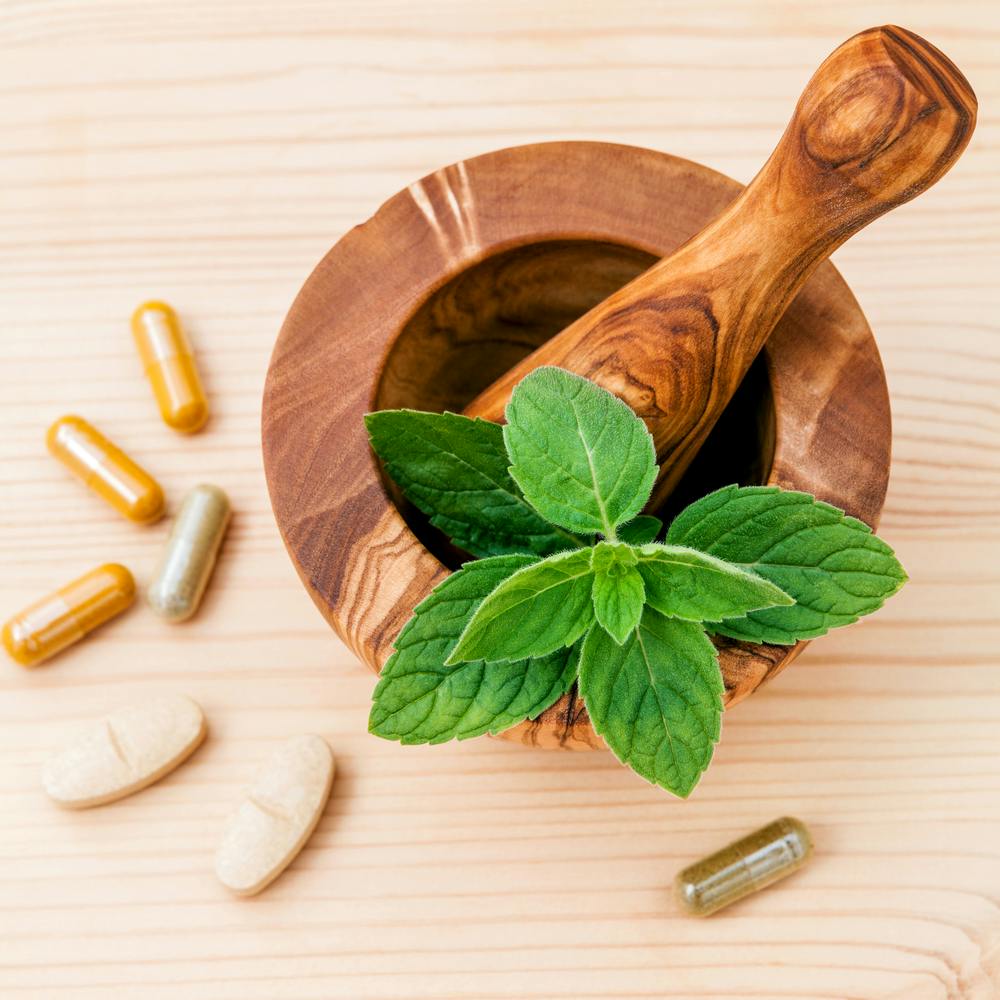 Peppermint oil can help reduce stomach cramps related to IBS.
from shutterstock.com
Peppermint oil can help reduce stomach cramps related to IBS.
from shutterstock.com
What about medications?
IBS affects quality of life but it doesn’t change a person’s risk of early death or cancer. So, treatments should have few side effects to be acceptable. Clinical trials have shown that medications such as peppermint oil (usually given in capsules) can reduce troublesome abdominal cramps with minimal side effects.
Melatonin can improve symptoms through better sleep quality where sleep is disturbed.
The choice of drug should be tailored to each person’s symptoms. For instance, low-dose antidepressants can be helpful for some people, especially where significant depression or anxiety symptoms exist together with IBS. Medications that reduce inflammation are generally unhelpful, as consistent and clinically apparent inflammation is not part of the syndrome.
Read more: So you think you have IBS, coeliac disease or Crohn’s? Here’s what it might mean for you
A few new approaches are being trialled for IBS, including faecal transplants and new medications. But all of these need better long-term data before they appear on the market.
Authors: Suzanne Mahady, Gastroenterologist & Clinical Epidemiologist, Senior Lecturer, Monash University


















