

As they meet in Poland for the next steps, nations are struggling to agree on how the ambitions of the Paris Agreement can be realised
- Written by: Edward Morgan, Research Fellow in Environmental Policy and Planning, Griffith University
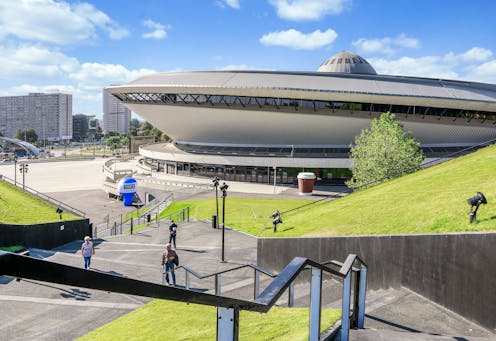
International leaders and policymakers gathering in Katowice, Poland, for the 24th annual round of UN climate talks know that they have plenty of work to do.
They are hoping to make progress on the Paris Agreement Work Programme, otherwise known as the Paris Rulebook – the guidelines needed to guide implementation of the Paris Agreement. That agreement was struck three years ago, but it is still not clear how the treaty’s goals to curb global warming will actually be achieved.
The Paris Agreement was a diplomatic landmark, under which nations pledged to hold global temperature rises to “well below 2℃”, and ideally to no more than 1.5℃.
This requires all countries not only to slash global greenhouse emissions, but also to help the world adapt to the impacts of climate change. The agreement requires countries to develop national climate plans, to report back on their progress, and to ramp up their efforts in the coming years.
The ‘what’ and the ‘how’
Whereas the Paris Agreement talks about what needs to be done, the Paris Rulebook to be agreed at Katowice is about how nations can set about achieving it. Unlike the previous, more prescriptive Kyoto Protocol, the Paris Agreement allows countries to choose their own approach to climate change. But it is important that actions taken by countries are done within an agreed, transparent framework of rules.
Rules need to be agreed about nations’ emissions targets, climate finance (including climate aid for developing countries), transparency, capacity building and carbon trading. Bringing all of this together is a huge challenge for negotiators. They need to establish a common set of rules applicable to all countries, while also maintaining the crucial principle of “common but differentiated responsibilities and respective capabilities” that underpins the UN climate process.
Already lagging behind
As well as being difficult, the task is also urgent. There is already evidence that countries are struggling to live up to their Paris commitments.
Analysis of the current emissions targets (known as Nationally Determined Contributions) shows that countries need to do more to reach the 2℃ goal. Meeting the 1.5℃ goal will be harder still and will need ambitious and swift action, as recently highlighted by a special report from the Intergovernmental Panel on Climate Change.
Although much of the focus has been on the challenge of bringing emissions targets into line with the Paris goals, our research suggests that climate adaptation efforts are also lagging behind.
Climate adaptation involves managing climate-related risks and deciding on how to manage and prepare for unavoidable impacts, such as increases in intensity and frequency of extreme weather events such as heatwaves and extreme storms, along with slow-onset impacts from sea level rise.
Many countries have developed climate adaptation policies as part of their climate change response. Our recent research analysed 54 of these national adaptation plans to understand how they match up to the intent of the Paris Agreement (as outlined in Article 7 of the Agreement).
We found that most adaptation plans only partially align with the Paris Agreement. Plans were largely focused on the social and economic aspects of adaptation, and were broadly aligned to countries’ existing policy priorities, especially around disaster management and economic development. For developing countries, there was a strong focus on linking adaptation and development.
However, countries are struggling to include environmental considerations into their planning. While the Paris Agreement clearly emphasises the important role that ecosystems play for climate adaptation, most plans are silent on this point.
What’s more, developed countries tended to take a less participatory approach to adaptation planning. Planning in developing countries was hampered by limited access to scientific knowledge but they made more use of local and traditional knowledge. The issue of resourcing and support for developing countries remains a challenge for climate change adaptation.
More work needed
Our results suggest that countries need to build on their existing adaptation plans to meet the ambitions in the Paris Agreement. There are good opportunities to better balance social and economic aspects with environmental and ecological considerations to improve planning.
Many countries, including Australia, have ratified the Paris Agreement, but few are delivering the ambitious action it requires. Besides pursuing deeper cuts to greenhouse emissions, countries need to revisit and update their adaptation strategies. Australia is well positioned to do so, given its economic wealth, its technical abilities, and the extensive climate adaptation research it has already undertaken.
Increasingly, we know what needs to be done to combat climate change. The Katowice summit will hopefully advance an agreement on how countries can do it. But actually doing it on a globally coordinated scale will be the biggest challenge, and there is some way to go to catch up.
Authors: Edward Morgan, Research Fellow in Environmental Policy and Planning, Griffith University


















