

E for equity? E-scooter and e-bike schemes can help people on low incomes and with disabilities
- Written by: Alexa Delbosc, Associate Professor in Transport, Monash University
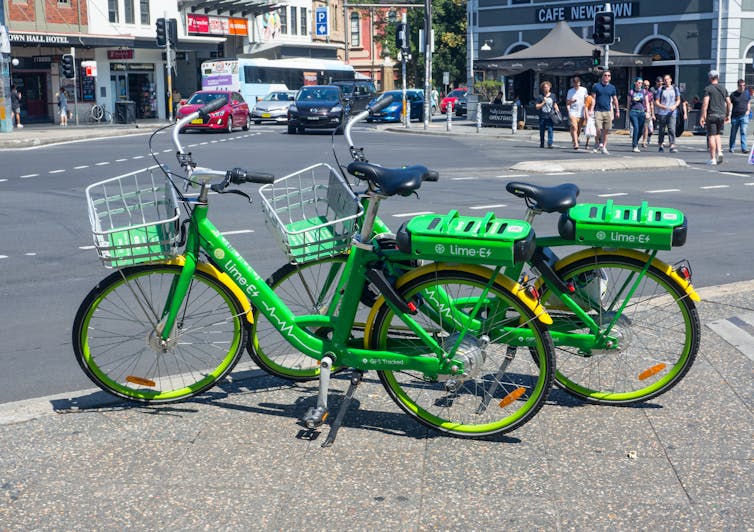
Interest in shared e-bikes and e-scooters, or “micromobility” devices, has skyrocketed in Australia. Every capital city and over 25 local councils have trialled shared e-scooter systems through private operators including Lime, Beam and Neuron.
Public perceptions of these programs are extremely mixed. Some people still think of these small electric personal vehicles as a passing fad. Or, worse, they see them as a source of transport system disruption, public space anarchy and traffic injury.
The truth is more nuanced. Shared scooters and bicycles are gradually being integrated into the transport system of our cities. Brisbane has led the way, followed by Melbourne.
Yet some are still wondering whether shared micromobility systems are simply a fun form of transport for young, mostly male and high-income tourists, or do they benefit a broader set of users?
Our new research across cities in three different countries paints a very different picture. Our findings suggest subsidised micromobility programs can provide significant benefits to vulnerable user groups.
Most shared operators provide discounted rides to low-income customers. In partnership with Lime, we were able to find out how “Lime Access” customers use shared e-scooters and e-bikes and how this compares to non-subsidised customers.
These schemes can help ease disadvantage
We surveyed more than 1,000 respondents in Australia, New Zealand and the United States. We found Lime Access customers were five times as likely as non-subsidised riders (35% versus 7%) to use shared scooters and bicycles for daily travel. They were twice as likely to use them for essential trips (such as shopping or commuting) and to connect with public transport (44% versus 23%).
Half of Lime Access customers said one benefit of micromobility was that it allowed them to “get somewhere without a car”. This finding suggests these programs can help support a car-free or car-light lifestyle. This, in turn, makes transport systems more sustainable.
These benefits were highlighted by open-ended survey responses, such as:
As someone on a low income who does not own a car, it feels very liberating to be able to take a scooter to an area that is not serviced by public transport whenever I like. (Melbourne, Australia)
Read more: Thinking of swerving high fuel prices with an e-scooter or e-bike? 5 crucial questions answered
People with disabilities also benefit
In our study, we did not directly ask about disability. However, a number of Lime Access customers wrote about how the program allows them mobility despite medical conditions or physical disability.
Many of those disabilities are “invisible” – the casual observer is unlikely to notice them. Yet for the riders, the electric motor of the e-scooter or e-bike reduced the fatigue and strain they would experience walking or riding a standard bike.
I have kidney problems so the scooter saves me from fatigue of long walks. (Christchurch, New Zealand)
For some respondents, their physical disability prevented them from driving a car. Shared micromobility filled the gap, helping them get to essential destinations.
I’m ADA, which basically is handicapped, and I cannot walk all over like I used to be able to. Lime provides me independence I wouldn’t have without it! With the low-income program you offer, it literally saves me! I wouldn’t be able to get groceries or run errands or do most anything I do because of Lime. (San Francisco, California)
Read more: The old road rules no longer apply: how e-scooters challenge outdated assumptions
What can governments do to maximise the benefits?
Our study found shared e-scooters and bikes aren’t just for tourists to go joyriding. With the right frameworks and incentives in place, they can benefit vulnerable groups in society. In this way, they help create more equitable transport systems.
Yet these subsidised programs are relatively unknown and little-advertised. Only 24% of our respondents had ever heard of them.
The challenge remains: how to reach more travellers who could benefit from reduced-fare programs, without undermining the financial viability of operators? Unlike public transport services and even taxi services, there is no government support to encourage shared micromobility operators to expand their programs.
In the United States, city governments have been proactive in embedding equity requirements into service contracts with micromobility providers. For example, Washington DC reduces the fees it charges micromobility operators, with the reduction based on the proportion of travel by low-income customers.
In Australia, local and state governments should be moving beyond how to regulate these programs to also focus on how to better integrate them into our transport system. With the right incentives in place, we can maximise the benefits of micromobility for people who are most in need of affordable and accessible transport solutions.
Authors: Alexa Delbosc, Associate Professor in Transport, Monash University


















