

Tasmania’s tall eucalypt forests will be wiped out by heatwaves unless we step in to help them
- Written by: Tim Wardlaw, Research Associate, University of Tasmania
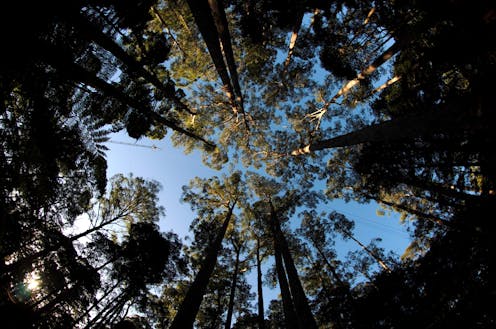
Tasmania’s tall eucalypt forests are globally significant. They accumulate carbon faster than any other natural forest ecosystem in the world.
But climate change is making it harder for these forests to remove carbon from the atmosphere and store it in wood. During heatwaves, they stop removing carbon altogether and release it instead.
What will happen as heatwaves occur more frequently? Tasmania’s tall eucalypt forests will become carbon sources more and more of the time. As temperatures continue to rise, the forests will reach a “tipping point”. When this happens the forests will no longer be able to store carbon and mass tree deaths will occur.
My new report released today makes recommendations about preparing for this. There are serious implications for greenhouse gas emissions, conservation and wood production. We cannot ignore the risks of a warming climate. There is a lot we can do now to prepare and make future forests more resilient.
Read more: In heatwave conditions, Tasmania’s tall eucalypt forests no longer absorb carbon
Forests of immense value
The Tasmania Wilderness World Heritage Area is ranked number one of all UNESCO sites globally for taking carbon out of the atmosphere and storing it. That’s because western Tasmania’s high rainfall and cool temperatures are ideal for forest growth.
These tall eucalypt forests contribute greatly to Tasmania’s claim to net-zero emissions in its greenhouse gas accounts.
The forests have produced most of the high-quality sawlogs supplying Tasmania’s sawmilling industry for more than a century.
They also provide unique and long-lasting habitat for wildlife. Large logs support diverse communities of insects and fungi.
The forest supports unique tourism experiences and an emerging opportunity for “big tree tourism”.
Tall eucalypt forests are dominated by one or two or three species of Eucalyptus:
- E. obliqua (messmate or stringy bark)
- E. regnans (swamp gum or mountain ash)
- E. delegatensis (alpine ash or gum-top stringybark).
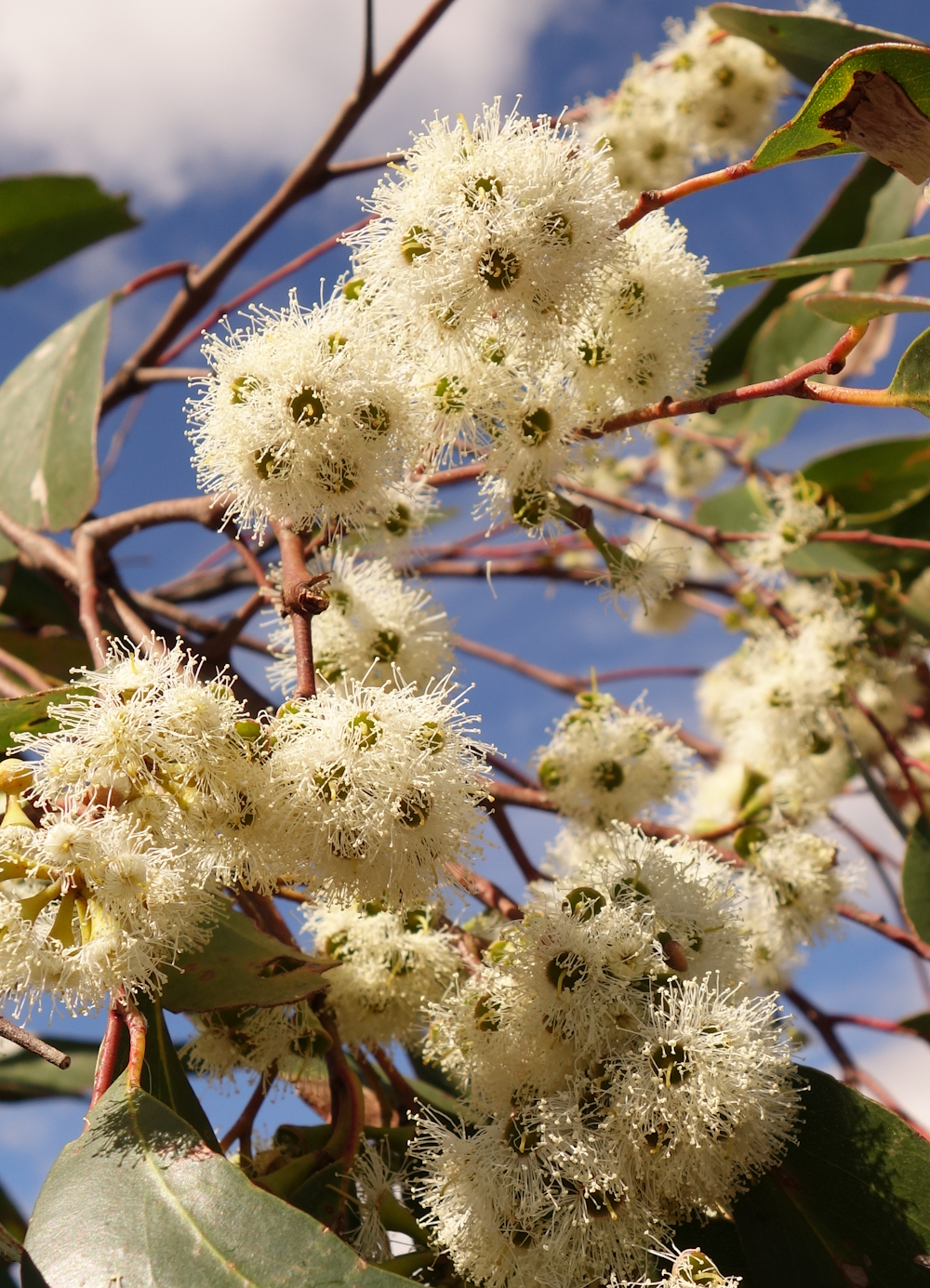
Preparing for tipping points
As temperatures continue to rise, many ecosystems are predicted to reach a tipping point. This is the point at which the ecosystem can no longer function and is eventually replaced by a different ecosystem.
Many plant-based ecosystems, mostly in the tropics, are expected to reach a tipping point within three decades. Tasmania’s tall eucalypt forests may be among them because they share similarities with tropical rainforest.
World Heritage values would be jeopardised, huge amounts of stored carbon would be released, and biodiversity dependent on the tall trees would be threatened. So there is an urgent need to begin preparing now for a future tipping point in these forests.
The main ambition of the measures outlined in my report released today is to restore forested areas after the original forest is lost – or damaged irreversibly. The new forests would be grown from the same species of eucalypts but the seed sown would regenerate forests better suited to the new climate than the original forest.
To achieve this ambition, we need to decide what features of tall eucalypt forests we want to retain in future forests. Capacity for rapid growth after disturbance would be high on the list of those features.
We also need to know what features need to change to make the forests better suited to a new climate. Increasing the optimum temperature for carbon uptake is the top priority.
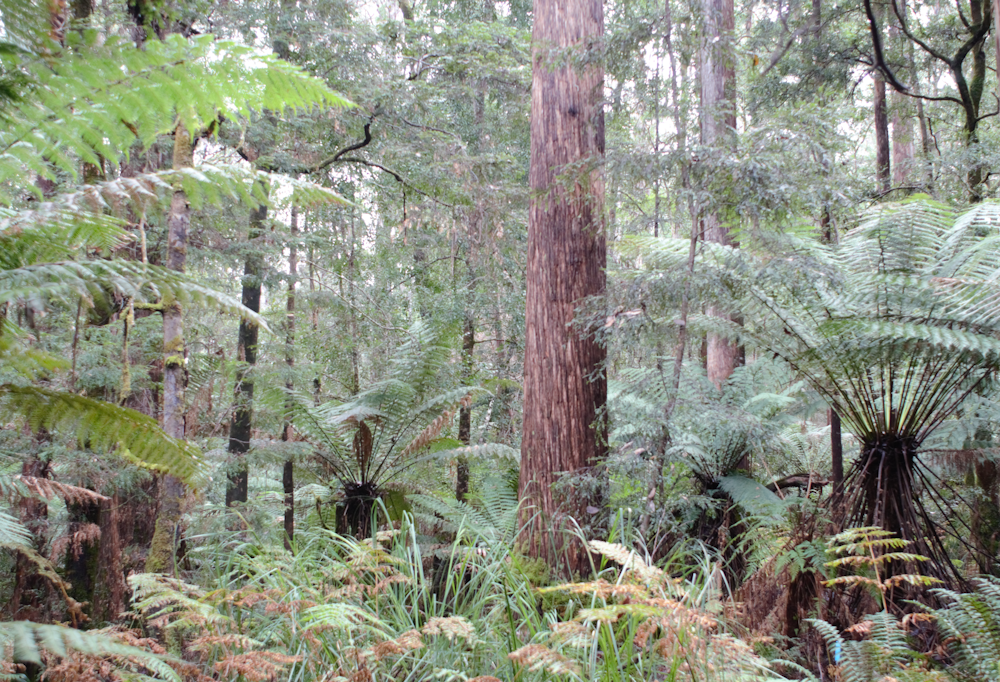 Beneath the canopy of the tallest trees there is a mid-layer of trees and a lower layer of ferns and sedges.
Tim Wardlaw
Beneath the canopy of the tallest trees there is a mid-layer of trees and a lower layer of ferns and sedges.
Tim Wardlaw
Producing climate-ready seed for sowing
In new research, soon to be published, I reviewed several studies that compared the features of Tasmanian tall eucalypt forests with other forests on the Australian mainland.
I wanted to understand why Tasmania’s forests were so sensitive to heatwaves and what, if anything, could be done to lessen their impact. I found the poor response to heatwaves had more to do with the local conditions than anything else. The forests are accustomed to high rainfall and a narrow temperature range.
Could we speed up natural selection to help Tasmania’s tall eucalypt forests adapt to a new, warmer climate?
Previous research has shown forests can be managed to speed up natural selection and produce seed better suited to new climates. But this is only feasible in forests managed for wood production.
We need to find out whether natural selection can increase the optimum temperature for carbon uptake by the forest, and if so, by how much.
We need to ensure the right policy settings are in place. A policy to end logging of native forests, for example, would rule out speeding up natural selection.
And we need to think and plan what to do if tall eucalypt forests in reserves are lost or irreparably damaged. Should we try to restore new generations of tall eucalypt forests, and if so, how?
Finally, community support is required. People need to understand what we are trying to achieve. They can also bring new ideas about how to make tall eucalypt forests more resilient.
Timely, accurate, trusted, and accessible information will be crucial. Ongoing monitoring of the tall eucalypt forest in the upper reaches of Tasmania’s Huon Valley can provide much of this information.
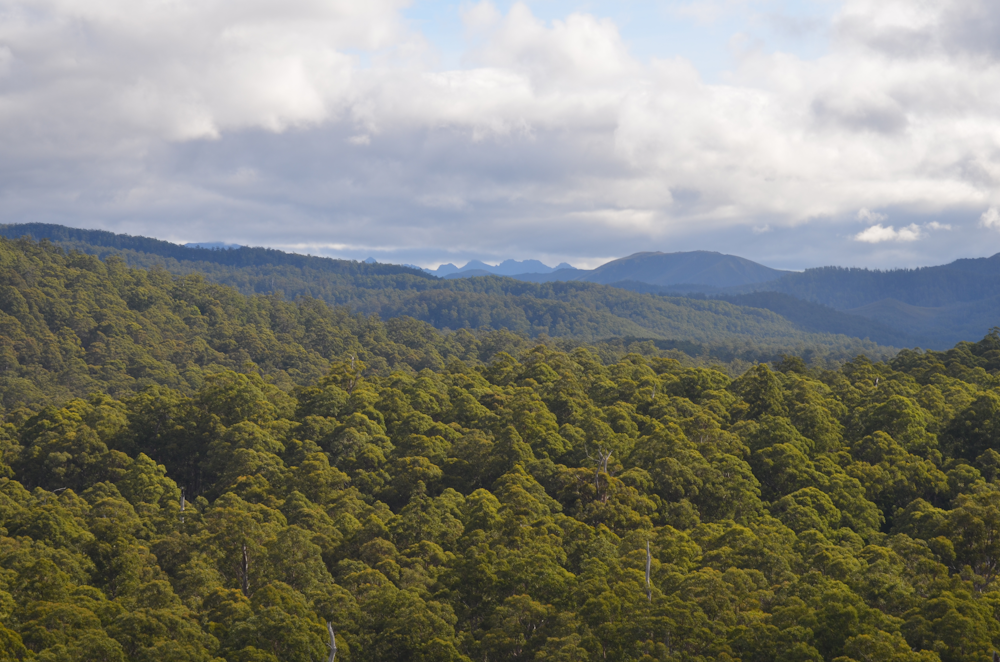 The Warra Supersite in the upper reaches of the Huon Valley is one of 16 intensive ecosystem monitoring field stations in Australia’s Terrestrial Ecosystem Research Network.
Michael Brown, ComStar Systems
The Warra Supersite in the upper reaches of the Huon Valley is one of 16 intensive ecosystem monitoring field stations in Australia’s Terrestrial Ecosystem Research Network.
Michael Brown, ComStar Systems
Future forests
Clearly, humanity must cut greenhouse gas emissions and limit global warming. But some climate impacts are now unavoidable and we need to be prepared.
As heatwaves intensify, Tasmania’s tall eucalypt forests will reach a tipping point. Trees will die. The forest we know today will be lost forever.
But if we are prepared, we can ensure another forest takes its place. With our help, future generations of tall eucalypt forests can still exist – forests better suited to Tasmania’s new climate.
Read more: Hard to kill: here's why eucalypts are survival experts
Authors: Tim Wardlaw, Research Associate, University of Tasmania


















