

why Australians love going to the cinema
- Written by: Ruari Elkington, Senior Lecturer in Creative Industries & Chief Investigator at QUT Digital Media Research Centre (DMRC), Queensland University of Technology
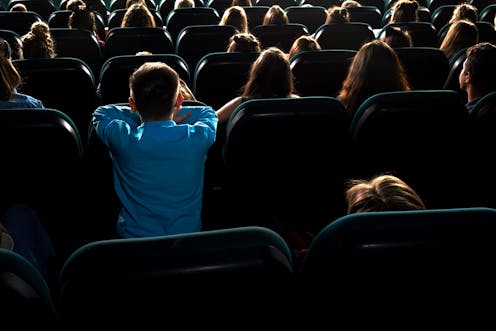
Australians have had plenty of time in the last 100 years to work out what they value about cinema-going and why it matters. Head to any cinema and catch the Val Morgan advertising in the pre-show. Take a closer look at the date the company was founded. Not 1984, but 1894. That’s more than 125 years of “Making Messages Memorable” on Australian screens.
We have a deep and abiding love for cinema in this country. Over the last century, the experience of going to the movies has both shifted significantly (we invented Gold Class, you know) and somehow remained resolutely enduring in terms of appeal.
My colleague Tess Van Hemert and I have spent the last two years researching the cultures and practices of cinema-going and how cinema sites shape that experience.
A typical response in our research was:
I love the cinema experience. It’s a bonding experience, if it’s good it’s a emotional and cathartic experience.
Read more: The promised big hits, sure disappointments, and hidden indie gems we'll get from Hollywood in 2024
‘A reprieve and a reward’
Cinemas are a catalyst for social, cultural and economic activity wherever they operate, from single-screen regional sites to major multiplexes in suburban shopping malls. Cinema, our participants said, is the “ideal” way to watch a movie:
I like to sit as close as I can to the screen so that the ‘real’ world is completely blocked out. I am immersed in & in awe of the film only. To truly forget life for a while – a reprieve & a reward.
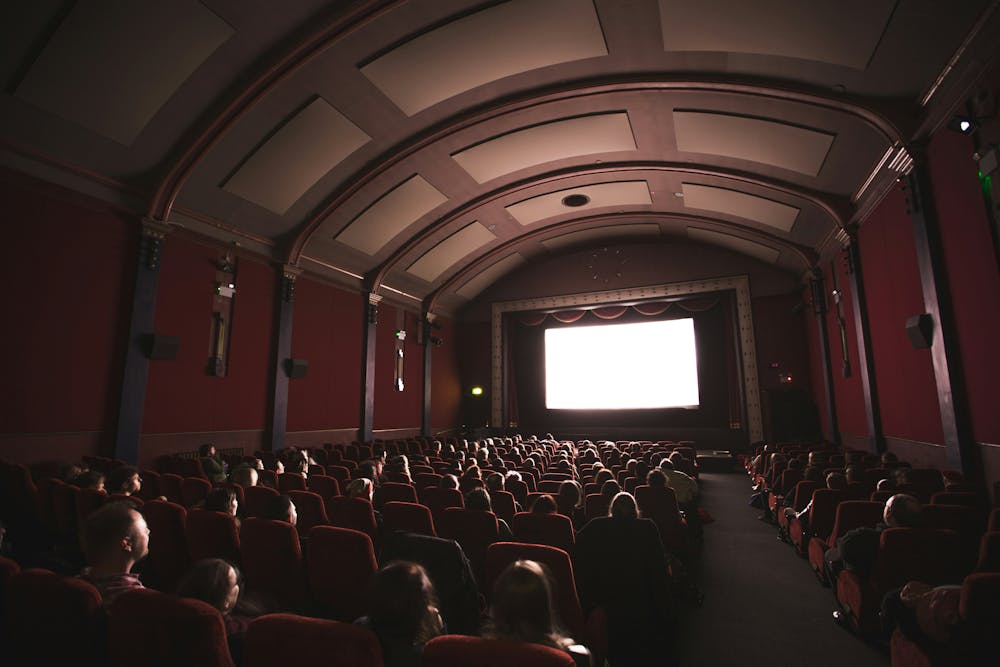
Cinemas also mirror communities back to themselves. We may go in alone, as a couple or with family and friends, but in the cinema we form a community. When reflecting on returning to the cinema between COVID lockdowns, one person spoke of seeing American Utopia:
There were only about 10 people in the cinema. We didn’t know each other but we all started spontaneously dancing, first in our seats, and then everyone ran down to the floor in front of the screen to dance together. It was like a mini music festival when live music was banned.
Despite the cost, despite the hassle, despite the need to leave the couch, Australians turn up time and time again to cinemas. In 2023, the Australian box office generated nearly A$1 billion (although this is down on pre-COVID figures). Four of the top ten highest grossing films of all time in Australia have been released since the pandemic began. Australian census data tells us cinema-going remains Australia’s most popular cultural activity.
‘Being able to switch off’
When cinemas face closure – or shut temporarily, as they did during the pandemic – the outpouring of community support can galvanise a community and remind them of all the times and ways in which they valued that access to that experience.
One participant spoke of seeing their first film in the cinema after the pandemic:
It made me appreciate the whole cinema experience more. Getting out and being able to switch off was a welcome change.
In our research, we observed how cinemas began to articulate their value to community through the pandemic period of forced closures.
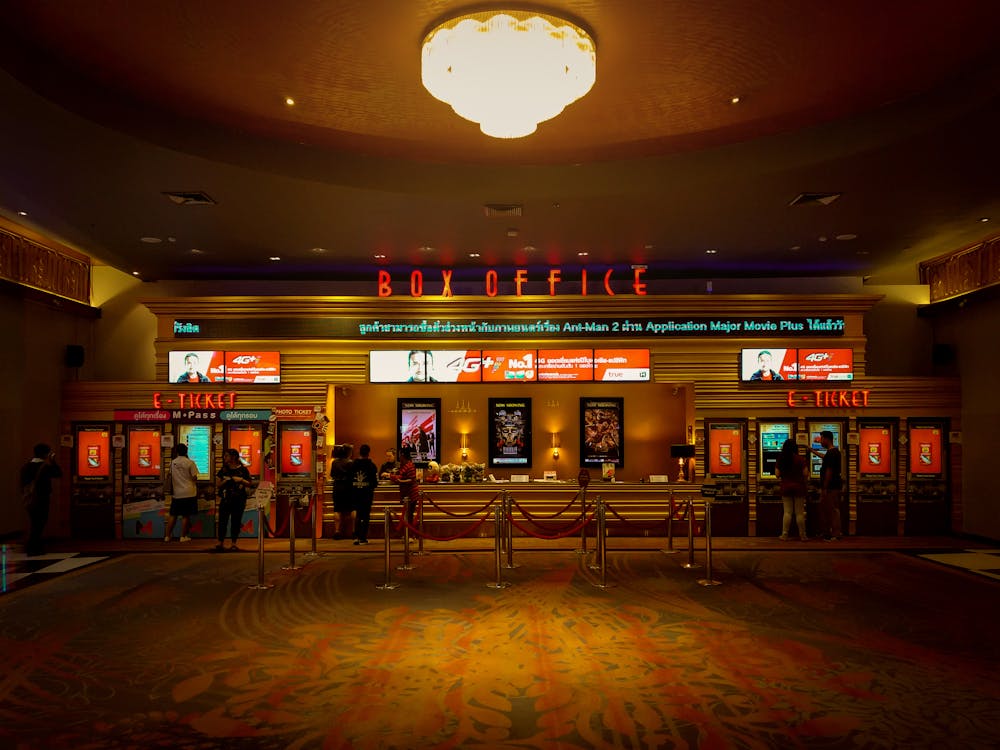 In 2023, the Australian box office generated nearly A$1 billion.
Shutterstock
In 2023, the Australian box office generated nearly A$1 billion.
Shutterstock
In the large-scale national audience research we conducted in partnership with Palace Cinemas the value audiences derive from cinema-going was as diverse as the programming.
They remembered specific films, such as watching the opening credits of Force Awakens with a crowd of avid fans, or feeling like they were “experiencing summer in Italy” while watching Call Me By Your Name.
They focused on memories of the people they were with, such as feeling “all grown up” while seeing arthouse films with their dad when they were a kid.
Read more: Beyond Barbie and Oppenheimer, how do cinemas make money? And do we pay too much for movie tickets?
‘Float in the memory’
They spoke about the feelings they had before during and after the screening and the experience overall. One respondent wrote of loving the end of a film:
the quiet few minutes as the credits roll and you float in the memory of the film. This only happens for me when I see it in the cinema.
Another participant spoke about leaving the cinema and:
doing a walk around the block thinking about the movie, still thinking about the movie driving home.
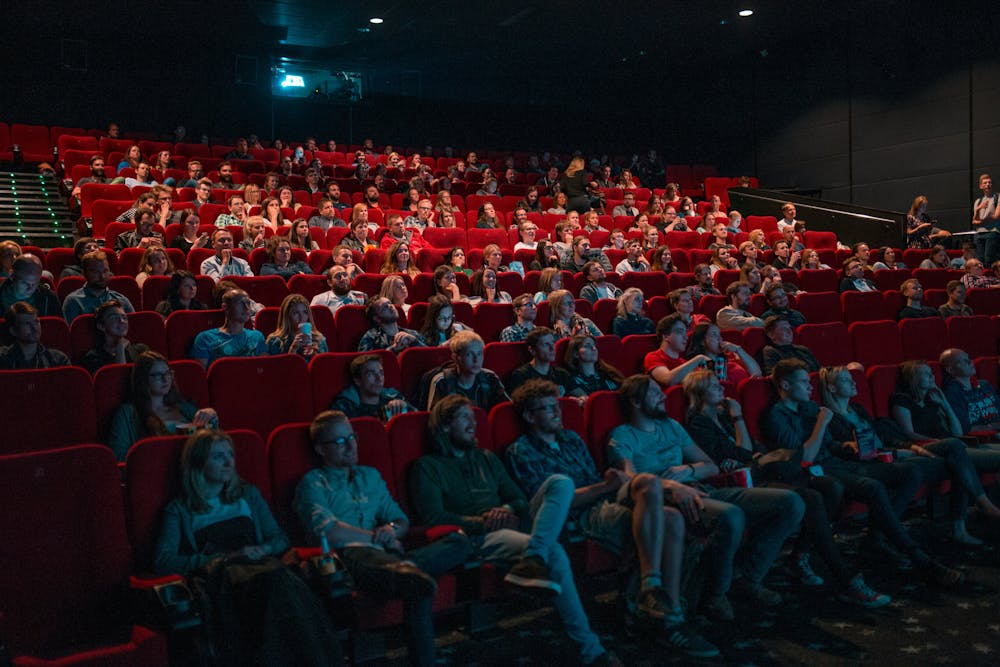 The quiet few minutes as the credits roll.
Krists Luhaers/Unsplash
The quiet few minutes as the credits roll.
Krists Luhaers/Unsplash
One participant said they love “being able to have respectful (unbothered) alone time publicly”.
Clear in this data is that memorability – and the experience of cinema – is far more nuanced than the simple appeal of watching a big film in a big room on a big screen. Cinemas continue to serve Australian communities in far more complex way than simply movies and popcorn.
Cinema has always battled headwinds. Since radio, cinema has constantly faced in-home entertainment technology that was supposed to knock it over completely – TV, colour TV, cable, satellite, VHS, DVDs and now streaming. Each time, the desire for people to come together in a space and watch something unique in a way they can’t find anywhere else, with a level of engagement they can’t find anywhere else, has prevailed. We all have a kitchen at home, but we still love going out to restaurants.
Disney, Warner Bros and Australia’s own Birch Carrol and Coyle all celebrated 100 years of operation in 2023. To sustain another century, more research is needed to better understand how cinema-going must continue to evolve to meet shifting audience expectations.
Read more: Interactive cinema: how films could alter plotlines in real time by responding to viewers' emotions
Authors: Ruari Elkington, Senior Lecturer in Creative Industries & Chief Investigator at QUT Digital Media Research Centre (DMRC), Queensland University of Technology


















