

After 10 years of work, landmark study reveals new ‘tree of life’ for all birds living today
- Written by Jacqueline Nguyen, Scientific Officer in Ornithology, Australian Museum, and ARC DECRA Fellow, Flinders University
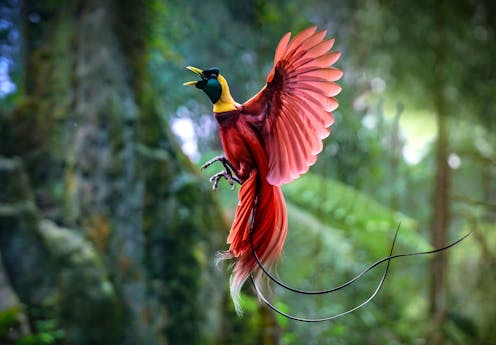
The largest-ever study of bird genomes has produced a remarkably clear picture of the bird family tree. Published in the journal Nature today, our study shows that most of the modern groups of birds first appeared within 5 million years after the extinction of the dinosaurs.
Birds are a large part of our lives, a sign of nature even in cities. They are popular among the general public and well studied by scientists. But placing all of these birds into a family tree has been frustratingly difficult.
By analysing the genomes of more than 360 bird species, our study has identified the fundamental relationships among the major groups of living birds.
The new family tree overturns some previous ideas about bird relationships, while also revealing some new groupings.
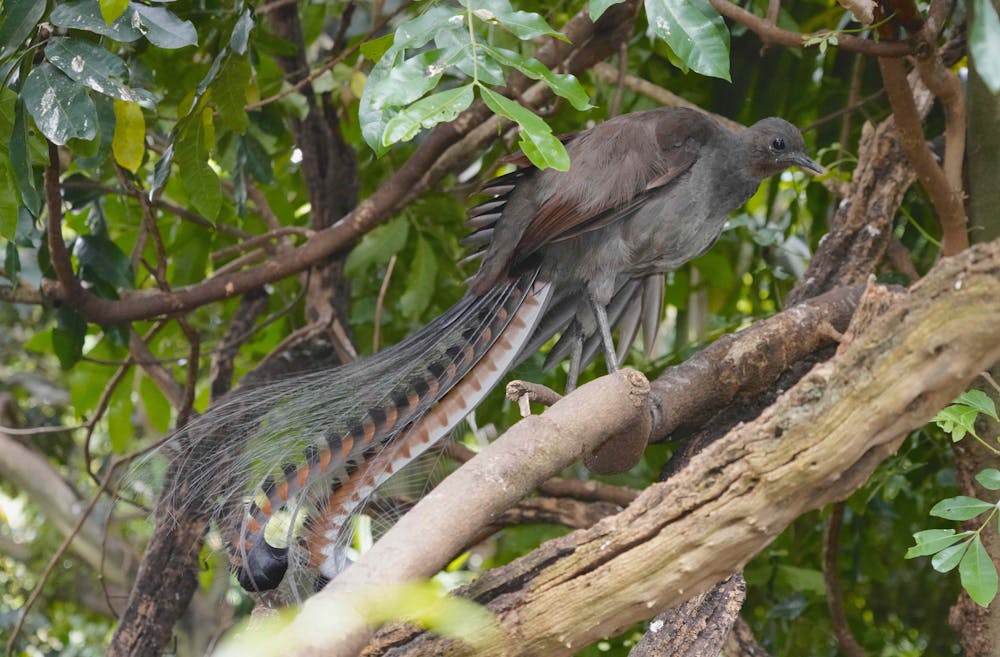
Resolving a messy relationship
Previous studies showed the bird family tree has three major branches. The first branch contains the tinamous and ratites, which include flightless birds such as the emu, kiwi and ostrich.
The second branch holds the landfowl and waterfowl – chickens, ducks and so on. All other birds sit on the third branch, known as the Neoaves, which include 95% of bird species.
The Neoaves branch includes ten groups of birds. Most of these are what biologists have named the “Magnificent Seven”: landbirds, waterbirds, tropicbirds, cuckoos, nightjars, doves and flamingos. The other three groups are known as the “orphans” and include the shorebirds, cranes and hoatzin, a species from South America.
The relationships among these ten groups, especially the orphans, have been incredibly difficult to resolve. Our genome study shows a resolution is within reach.
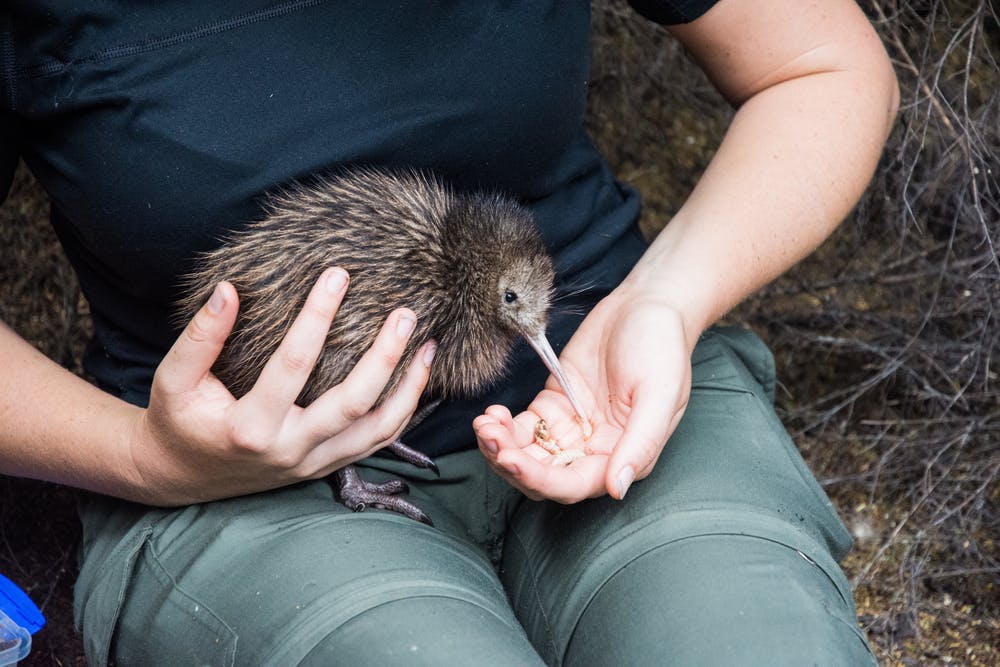 New Zealand’s iconic kiwis are one of the flightless bird species in the ratite group.
K Ireland/Shutterstock
New Zealand’s iconic kiwis are one of the flightless bird species in the ratite group.
K Ireland/Shutterstock
Meet the ‘Elementaves’
Our genome study revealed a new grouping of birds we have named “Elementaves”. With a name inspired by the four ancient elements of earth, air, water and fire, this group includes birds well adapted for success on land, in the sky and in the water. Some of the birds have names relating to the sun, representing the element of fire. The Elementaves group includes hummingbirds, shorebirds, cranes, penguins and pelicans.
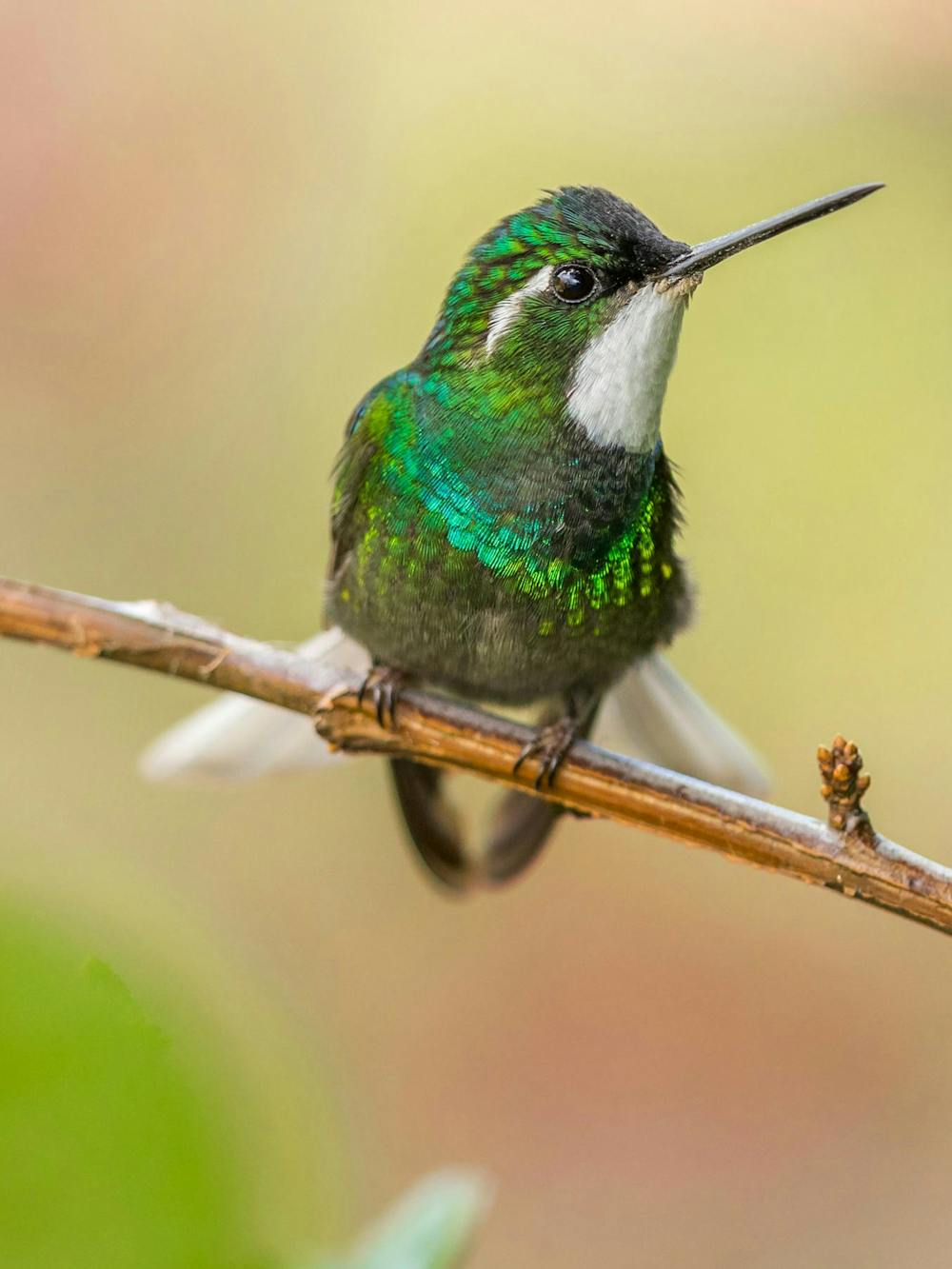 Hummingbirds, the smallest of all birds, belong to the new Elementaves group.
Zdeněk Macháček/Unsplash
Hummingbirds, the smallest of all birds, belong to the new Elementaves group.
Zdeněk Macháček/Unsplash
Our study also confirms a close relationship between two of the most familiar groups of birds in Australia, the passerines (songbirds and relatives) and parrots. These popular birds dominate the Australian Bird of the Year polls.
Songbirds make up nearly 50% of all bird species and include birds like magpies, finches, honeyeaters and fairywrens. They had their humble beginnings in Australia about 50 million years ago, then spread across the globe to become the most successful group of birds.
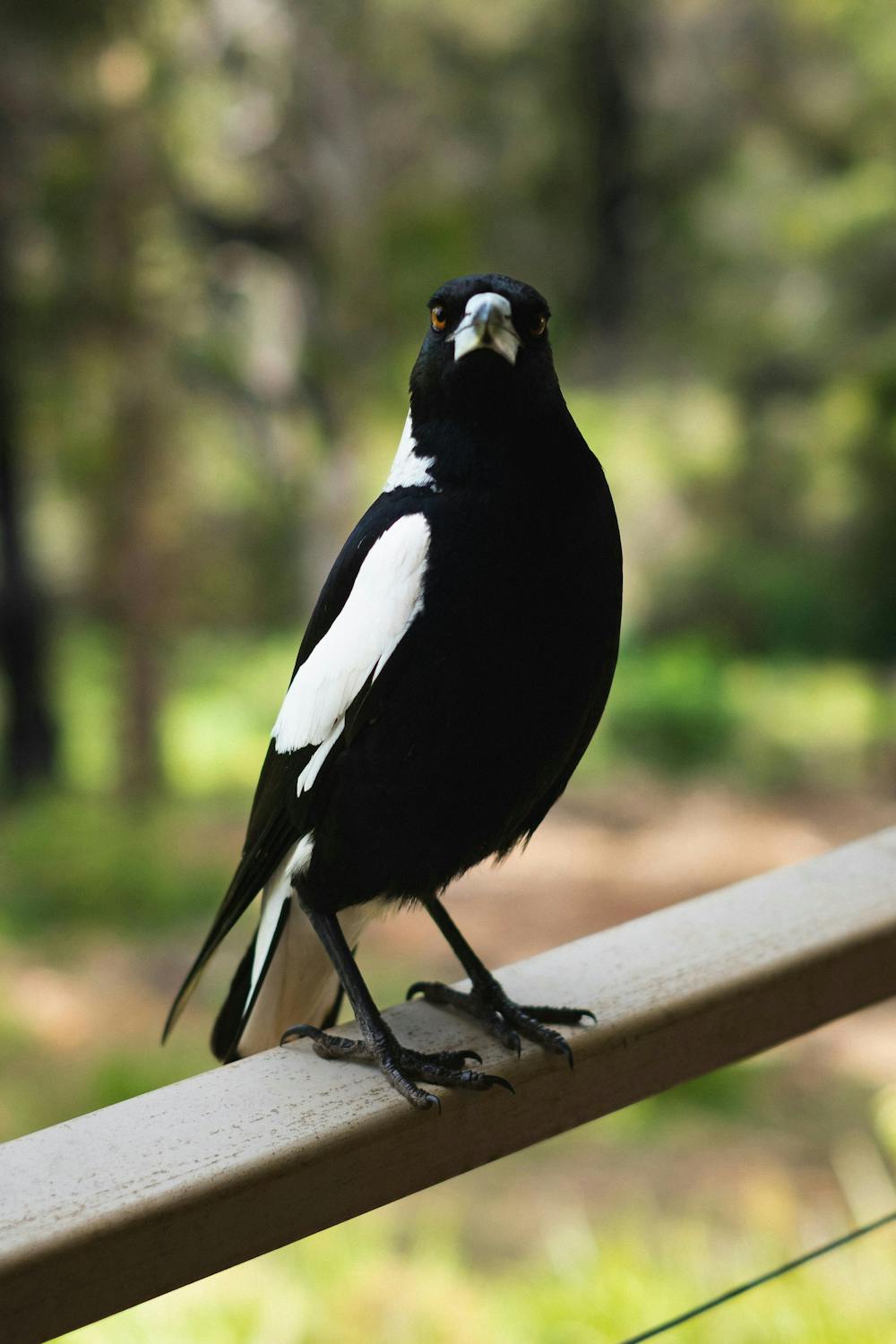 The iconic Australian magpies are songbirds.
Chris Gresham-Britt/Unsplash
The iconic Australian magpies are songbirds.
Chris Gresham-Britt/Unsplash
When did birds really emerge?
A further goal of our study was to place a timescale on the bird family tree. We did this by modelling the evolution of genomes using a tool known as the “molecular clock”. By drawing on information from nearly 200 fossils, we were able to constrain the ages of some of the branches in the bird family tree.
Our study shows all living birds share an ancestor that lived just over 90 million years ago. But most groups of modern birds emerged about 25 million years later, within a small window of just a few million years after the end of the Cretaceous period around 66 million years ago.
This coincides with the mass extinction of dinosaurs and other organisms caused by an asteroid striking Earth. So it seems birds made the most of the opportunities that became available after these other dominant life forms were wiped out.
One mystery remains
The genome study is the product of nearly a decade of research, conducted as part of the Bird 10,000 Genomes Project. The ultimate goal of this project is to sequence the genomes of all 10,000 living bird species.
The current phase of the project focused on including species from every major group, or family, of birds. The study of these 363 genomes was a truly international effort led by researchers at the University of Copenhagen, University of California San Diego and Zhejiang University in China.
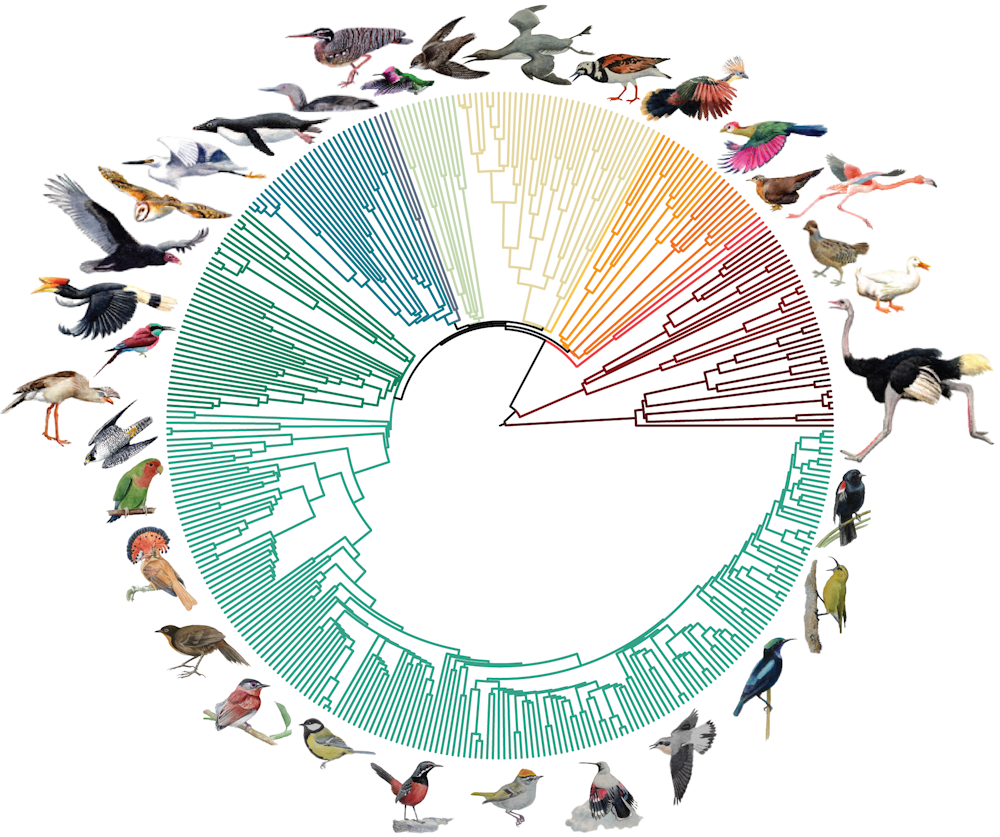 The bird tree of life, based on the genomes of 363 bird species. The major bird groups are colour-coded in the tree.
Paintings by Jon Fjeldså, Natural History Museum Denmark, University of Copenhagen.
The bird tree of life, based on the genomes of 363 bird species. The major bird groups are colour-coded in the tree.
Paintings by Jon Fjeldså, Natural History Museum Denmark, University of Copenhagen.
Even with such a huge amount of genome data, one branch of the bird family tree remains a mystery. Our analysis could not confidently determine the relationships of one of the orphans, the hoatzin. Found in South America, the hoatzin is a highly distinctive bird and the sole survivor of its lineage.
Our study shows that some relationships in the tree of life can only be determined using huge amounts of genome data. But our study also demonstrates the power of studying genomes and fossils together to understand the evolutionary history of life on Earth.
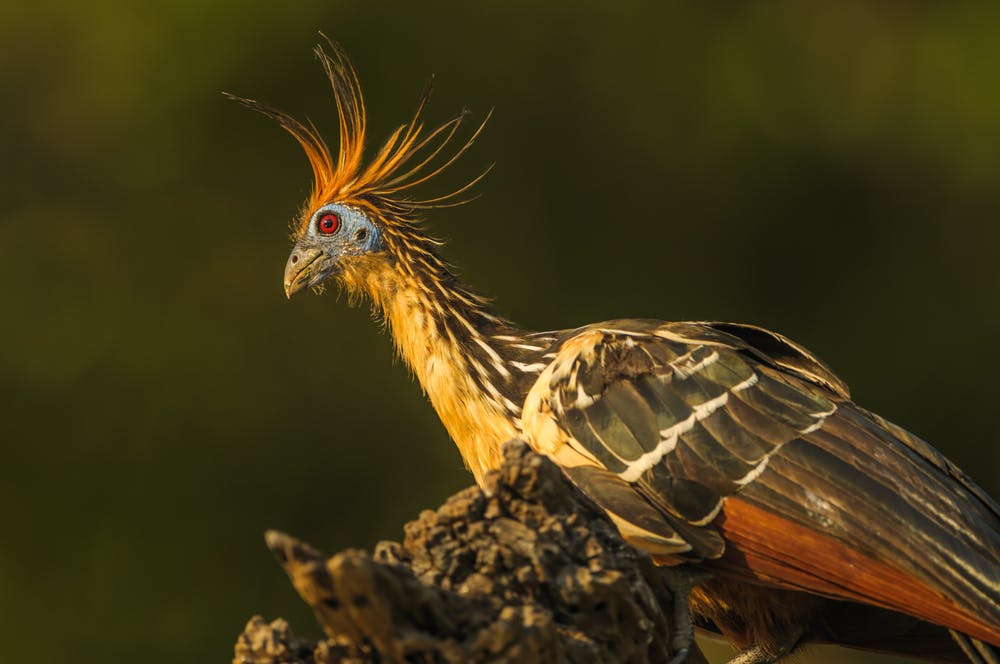 The hoatzin, one of the ‘orphan’ branches of the bird family tree, remains a mystery.
Marcos Amend/Shutterstock
The hoatzin, one of the ‘orphan’ branches of the bird family tree, remains a mystery.
Marcos Amend/Shutterstock
Read more: We need a single list of all life on Earth – and most taxonomists now agree on how to start
Authors: Jacqueline Nguyen, Scientific Officer in Ornithology, Australian Museum, and ARC DECRA Fellow, Flinders University

















