

Hundreds of animals were rescued after the Black Summer bushfires – but how many actually survived?
- Written by Catherine Herbert, Associate professor, University of Sydney
The horrific Black Summer bushfires of 2019–20 burned more than 8 million hectares of vegetation across southeastern Australia. An estimated 3 billion animals were caught in the fire zone.
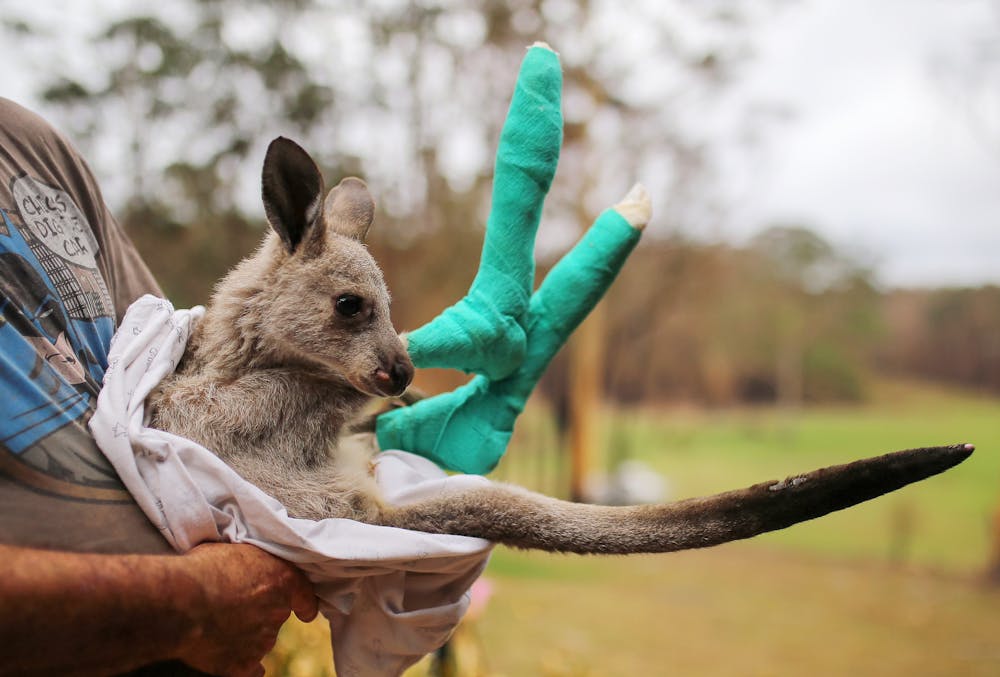
Intense media coverage often included graphic images of koalas and other marsupials fighting for survival. People everywhere became emotionally invested in wildlife rescue and rehabilitation.
Yet despite the courageous efforts of volunteers, our new research has found wildlife rescue and rehabilitation rates were much lower than expected.
We can use this information to improve our response to future disasters. Knowledge of the likely chance of recovery from different injuries can be used to refine treatment for each species. This will allow volunteers and veterinarians to prioritise rehabilitation efforts and minimise animal suffering.
Read more: 200 experts dissected the Black Summer bushfires in unprecedented detail. Here are 6 lessons to heed
Grim statistics on rescue and rehab
Our research analysed marsupial rescue, rehabilitation and release statistics from two of the worst-affected regions: New South Wales and Kangaroo Island.
We compared these statistics to the estimated population size for each species and to typical marsupial rescue and rehabilitation records in NSW. Typical rescue data were not readily available for Kangaroo island.
Despite an estimated 46.8 million marsupials in the NSW fire zones, only 889 marsupial rescues were reported in NSW. Just 618 marsupial rescues were reported on Kangaroo Island.
Why were rescue rates so low? Our research provides some clues.
The peak rescue period was 6–8 weeks after fire ignition, and rescues were mostly clustered around the edge of the fire zone. This suggests that timely access to firegrounds was difficult or unsafe. The scale and intensity of the fires almost certainly limited the capacity of many individual animals to flee. Many likely perished in the fire, or before rescuers could arrive.
Most rescues in NSW were of common species such as kangaroos and wallabies (458) or possums (162). But koalas (204), a threatened species in NSW, were rescued more often than expected relative to their population size.
So what was the fate of animals that were rescued? Sadly, we found more than half the marsupials rescued in both regions did not survive.
Kangaroos and possums were more likely to be euthanised on the fireground or soon after being found. Koalas, on the other hand, were more likely to enter rehabilitation facilities, but many still died.
We found kangaroos had a lower chance of successful rehabilitation (15%) than koalas (47%) and possums (55%). This highlights the need for more research on ways to improve rehabilitation success.
What can we learn?
Our analysis provides valuable insights that could be used to improve outcomes in the future.
The type of injury can be used to predict survival. Animals that had traumatic injuries, such as burns, were less likely to survive. If they were malnourished or immobilised they were in serious trouble. On the other hand, orphaned or heat-stressed and dehydrated animals had a better chance of survival and release back to the wild.
Our detailed analysis of the factors influencing survival for each species can be used to refine decision-making, improve animal welfare and identify areas where more research is needed to improve treatment regimes in the future. If an animal has a poor chance of survival, euthanasia should be considered at the initial assessment.
The way forward
During the 2019–20 fires, the community expected that wild animals would be rescued and rehabilitated where possible. But most people involved in rehabilitation are volunteers who invest an enormous amount of time, money and energy into caring for wildlife. These personal costs are much higher during disasters, and raise questions about whether wildlife volunteers should be compensated for their efforts.
As Australia and the world grapples with the increasing frequency and severity of extreme weather events, we need better ways to support wildlife and volunteers. Improving partnerships between government agencies and skilled volunteers may form part of the solution.
In response to the 2020 NSW Bushfire Inquiry, new initiatives in wildlife emergency response have recognised the need for timely responses in the aftermath of disasters.
In NSW, firefighters have now received basic wildlife rescue training. Veterinarians and wildlife volunteers have access to fireground training and protective equipment.
These initiatives aim to improve opportunities for wildlife rescue and animal welfare in the aftermath of future disasters. They also make it safer for workers and volunteers.
Our research supports the need for timely intervention if we want to rescue more animals and minimise suffering.
More consistent data collection is needed on a national scale to fully appreciate the true costs of disasters on wildlife. This should include user-friendly technology to accurately log all wildlife rescues (and euthanasia) in the field and track individual animals throughout rehabilitation. This will help to understand species differences in rates of rescue and rehabilitation, and hopefully improve rescue and rehabilitation outcomes for all species.
Authors: Catherine Herbert, Associate professor, University of Sydney

















