

Gender is not scary, argues Judith Butler. But right now, it represents the threat of social change
- Written by Louise Richardson-Self, Senior Lecturer in Philosophy & Gender Studies, University of Tasmania
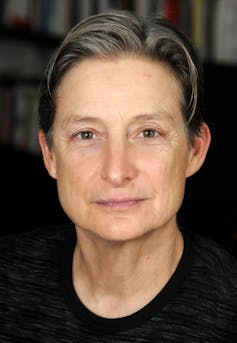
Gender has assumed terrifying, phantasmagorical proportions for a diverse range of groups today. It has become an “overdetermined” concept, “absorbing wildly different ideas of what threatens the world”, writes American feminist philospher Judith Butler.
Gender-critical feminists are concerned that male predators will be allowed into women-only spaces. For the Vatican, the traditional family will be ruined and children are now vulnerable to “ideological colonization”.
And for right-wing politicians and heads of state, (from Liberal senator Alex Antic, who believes gender dysphoria is a “trend”, to Marjorie Taylor Greene and Vladimir Putin), gender is a weapon of social destruction.
In short, gender is now “firmly established as an existential threat”.
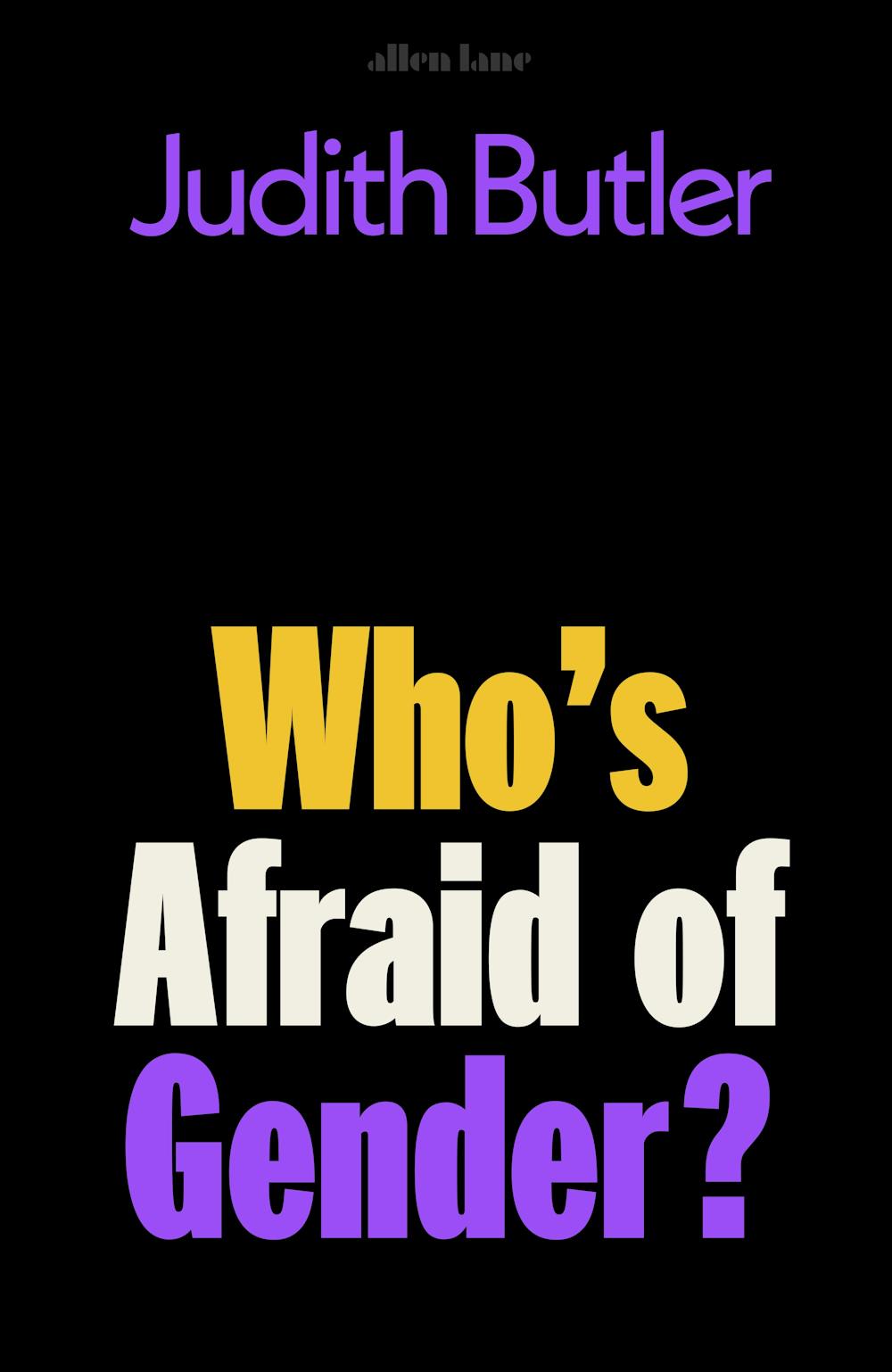
Review: Who’s Afraid of Gender? – Judith Butler (Allen Lane)
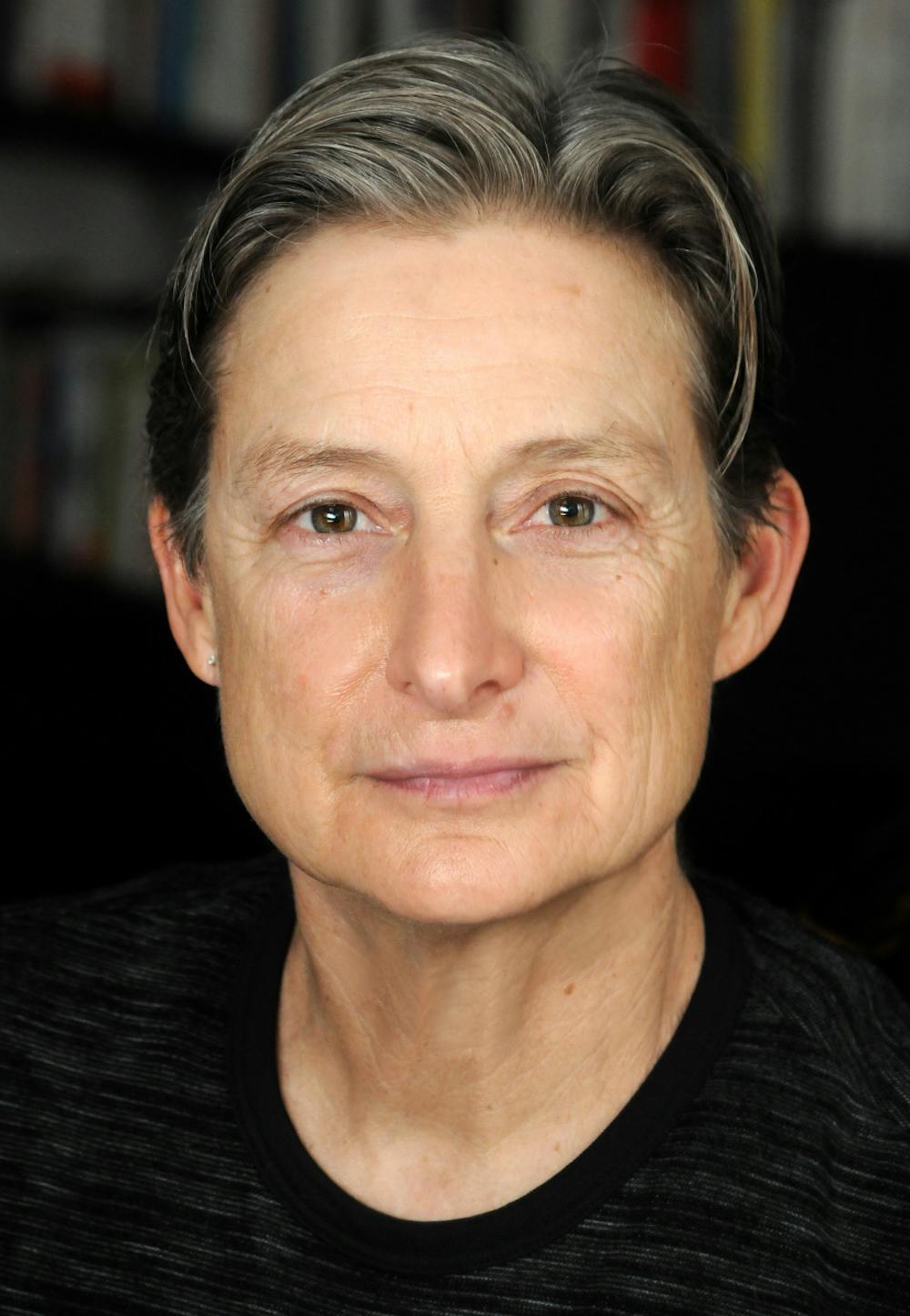
Butler, author of the iconic Gender Trouble (1990), pioneered the view that sex (which is based in the body) and gender (which is cultural) are social constructs, building on an old feminist view that society crafts the world into “masculine” and “feminine” categories, assigning appropriate behaviour to each.
Butler’s overarching argument is that “gender” – the overdetermined concept to which “anti-gender ideologists” object – is really a nightmarish bogeyman, a “phantasm with destructive powers, one way of collecting and escalating multitudes of modern panics”.
Read more: Judith Butler: their philosophy of gender explained
Misplaced fears and misunderstandings
Yet, as the title suggests, Butler thinks the threat is overblown. They make their case by by employing two interrelated tactics.
The first, to which much of the book is dedicated, is to expose the absurdity of arguments against gender ideology. Butler demonstrates the ways “gender ideology” critics invert, externalise and project the very harms they claim “gender ideologists” pose.
Butler claims, for instance, that the Vatican has compared gender-affirming care for trans kids to child abuse. As Butler points out, this is an ironic projection of “the specter of [the Vatican’s] own abusive history onto sexual and gender minorities as a way of making others responsible for its own crimes”.
Then there’s the supposed threat of sexual violence to cisgender women if transgender women are allowed into single-sex spaces like prisons. Butler exposes the position as disingenuous: if the presence of a penis brings the risk of rape, why is there no lobby against male prison guards?
As they point out, it inverts the real potential for harm. “A trans woman is more fully exposed to violence in a space full of men than she is a threat to other women who share her need for protection”.
While sexual violence is predominantly a (cis)gendered crime, merely possessing a penis does not make a person more likely to be a rapist. Toxic ideals of masculine social power, from which trans women are already dissociated, are a key component.
Read more: 'Toxic masculinity': what does it mean, where did it come from – and is the term useful or harmful?
More than two sexes
Perhaps Gender Trouble’s most controversial claim, which Butler stands by in their new book, Who’s Afraid of Gender?, is that gender precedes sex, and not vice versa. In other words, far from being immutable, “‘sex’ is as culturally constructed as gender”.
How, ask critics, can anyone possibly deny the material reality of sex? Without context to understand the nuances of such an argument, it is no wonder “gender theory” sounds, to many, like a misguided, even dangerous ideology.
In their new book, Butler corrects the narrative. Feminists like Butler reject “sexual dimorphism”: the belief there are two, and only two, sexes. What, they ask, about the natural diversity of intersex conditions? Surely this proves sex is not binary.
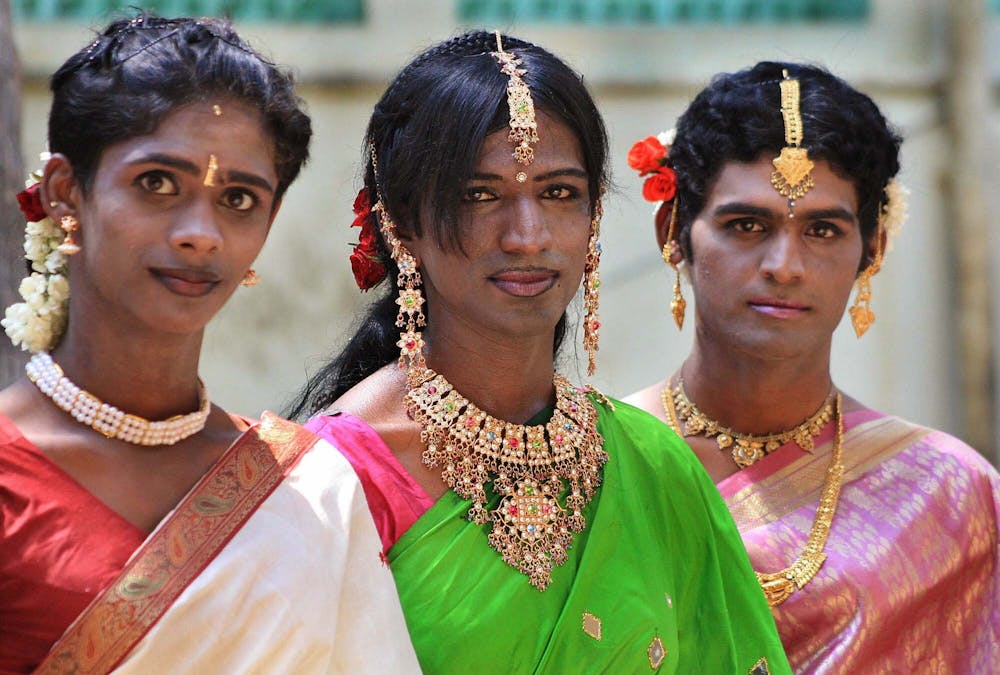 Participants in Miss Koovagam, a beauty contests among the Eunuchs at Vilupuram, in India.
M Klakshman/AAP
Participants in Miss Koovagam, a beauty contests among the Eunuchs at Vilupuram, in India.
M Klakshman/AAP
Some might argue being intersex is a medical condition, to be medically treated or “fixed”, rather than proof the binary is false. Accidents of nature, they’d suggest, have simply left us with “pseudo” males and females. Such a mindset was famously behind past practices of “corrective surgery” for intersex infants, now widely rejected on the grounds they are both cruel and unnecessary.
But we expect to find two sexes because that is how many sexes we have learned to see. And we look for two sexes because we only recognise two genders. Sexual dimorphism is a cultural frame through which sexed bodies are interpreted.
This is Butler’s argument that “gender” precedes “sex”. And because we expect to find two sexes in humanity, we automatically start to explain away any evidence (like intersex diversity) that would contradict this received truth.
“This does not mean that facts don’t exist,” Butler says, “it just means that they are invariably presented within a certain frame.” These frames can be questioned, critiqued, analysed and evaluated.
Read more: Explainer: what is genderqueer?
Fighting back
Butler exposes how the phantasm of gender actually acts as a substitute for a complex set of anxieties, themselves wound up in broader desires and taboos, governed by conscious and subliminal organisational rules. These rules, we think, apply both to ourselves and others.
To critics, “gender ideologues” are breaking all the organisational rules of gender, inverting all sense and order. This can result in a state of meaning vertigo, a term I’ve borrowed from philosopher Filipa Melo Lopes, which describes “a vertiginous and unsettling emptiness at the level of social meaning”.
After all, gender is at the centre of many forms of human life: our own embodiment, our sense of self, our intimacies, our sexual desires. When we question gender as an organising principle, it introduces further questions about the right way to live.
But the “anti-gender ideology” movement, ironically, though campaigning against an ideology, is “its own ideological formation”.
 Butler argues the only way to fight back against this ideology is to forge alliances – between those collectively wronged by patriarchy, colonialism and its legacies, white supremacy, capitalism, neoliberalism and climate destruction. In Butler’s eyes, these systems of oppression are all linked.
Ultimately, Butler’s point is that while gender seems scary to many, the reality is: it’s not. After all, gender (and sex) diversity already exist, whether we recognise it or not. Take a pause and ask, they suggest: what are the agendas of those who may try to convince you otherwise?
What we should really be afraid of, Butler suggests, is a conservative social order that severely restricts the freedoms of those who are already its most vulnerable. In their words:
To deny the existence of intersex [and transgender] people to make a polemical point about “facts” is, indeed, to deny the facts in the service of a political agenda to conserve the binary.
There is still a promise of freedom and autonomy, though. What will it take? A reflexive openness to the other, a readiness to have our own views challenged and a commitment to forging alliances.
Doing so asks a lot of us in the current climate – and success won’t come easily. But in imagining a shared future together, we can “emerge into a world committed to cohabitation and equality across difference”.
Authors: Louise Richardson-Self, Senior Lecturer in Philosophy & Gender Studies, University of Tasmania
Butler argues the only way to fight back against this ideology is to forge alliances – between those collectively wronged by patriarchy, colonialism and its legacies, white supremacy, capitalism, neoliberalism and climate destruction. In Butler’s eyes, these systems of oppression are all linked.
Ultimately, Butler’s point is that while gender seems scary to many, the reality is: it’s not. After all, gender (and sex) diversity already exist, whether we recognise it or not. Take a pause and ask, they suggest: what are the agendas of those who may try to convince you otherwise?
What we should really be afraid of, Butler suggests, is a conservative social order that severely restricts the freedoms of those who are already its most vulnerable. In their words:
To deny the existence of intersex [and transgender] people to make a polemical point about “facts” is, indeed, to deny the facts in the service of a political agenda to conserve the binary.
There is still a promise of freedom and autonomy, though. What will it take? A reflexive openness to the other, a readiness to have our own views challenged and a commitment to forging alliances.
Doing so asks a lot of us in the current climate – and success won’t come easily. But in imagining a shared future together, we can “emerge into a world committed to cohabitation and equality across difference”.
Authors: Louise Richardson-Self, Senior Lecturer in Philosophy & Gender Studies, University of Tasmania 
















