

why ethical eating often stops at the restaurant door
- Written by: Rachel A. Ankeny, Professor of History and Associate Dean Research (Faculty of Arts), University of Adelaide
This article is part of a series focusing on the politics of food – what we eat, how our views of food are changing and why it matters from a cultural and political standpoint.
Nowadays, ethical eating is often presented as a truism: we are told we should all be making ethical food choices, not only at home but also when we dine out.
However, it’s become something of a marketing ploy in the food world. Restaurants increasingly are presenting their menus and practices as ethical, throwing around buzzwords like “sustainability” and “seasonality”, particularly those establishments with high-profile or celebrity chefs.
But what do these words really mean to the people dining there? Do chefs – particularly those trend-setting ones – have greater responsibilities these days to promote more ethical forms of eating? And are they doing enough to change the ways in which we think about dining and food in general?
The quick answer is: it depends. What makes food (or the menus at restaurants) “ethical” is not typically assessed by most of us using one standardised definition, except perhaps strict vegans who eschew all animal products. Our food values differ based on our outlooks, past experiences and, perhaps most importantly, how we balance various trade-offs inherent in food choices under different circumstances.
For instance, although many people in Australia and elsewhere are starting to reduce or eliminate meat consumption for environmental reasons or due to animal welfare concerns, others are turning to wild or game meats as a more ethical way of continuing to eat meat.
Read more: Do vegetarians live longer? Probably, but not because they're vegetarian
Most interesting, perhaps, are “kangatarians”, or those who believe hunting wild game is the most ethical choice for meat eaters as they are taking responsibility for the killing, keeping feral populations in control and hence benefiting the environment.
The Noma 2.0 ethical dilemmas
 Rene Redzepi is a fan of plant-based eating, but his latest menu is heavily meat focused.
Noma handout
Rene Redzepi is a fan of plant-based eating, but his latest menu is heavily meat focused.
Noma handout
When it comes to restaurants, these dilemmas can feel more pronounced. Can a chef, for instance, promote foraging, seasonality and plant-based eating, yet also serve meat and other animal-derived protein products on the same menu?
An example that immediately comes to mind is Danish chef Rene Redzepi, co-owner of the two-Michelin-star restaurant Noma in Copenhagen, who recently had an extended stay in Australia.
After launching Noma 2.0 with an all-seafood menu and then a purely vegetarian menu featuring foraged native ingredients early in 2018, Redzepi shifted focus back to meat with a “Game and Forest” concept in October. Among the more meat-heavy items on the menu: teal, moose leg, reindeer tongue and wild duck brain.
Redzepi is still foraging from the forest, but he’s also made clear that the sole option for ethical eating is not just a plant-based diet – he wants to utilise all available and neglected resources in novel ways. Still, he acknowledges being conflicted himself:
The trade-offs in eating out
Although many chefs and diners agree eating “local” is highly desirable, they almost certainly are doing so for different reasons. For chefs, this desire might derive from reducing food miles from the farm to the table and supporting local communities, while diners might be more drawn to local produce because it is fresher and more interesting. Many consumers buying food for their homes may prefer local produce because it is (often) cheaper.
Such “ethical” food categories – including organic, free of genetic modification, free range, humanely produced, fair trade, sustainable and so on — often serve as proxies for deeper values in society. But these values are not necessarily the same for all of us.
Free range eggs, for instance, are often considered more ethical due to animal welfare concerns, but they are also favoured by consumers because they are seen as more nutritious and flavourful, despite limited scientific evidence to support these claims.
Read more: How to know what you're getting when you buy free-range eggs
Our research has shown, for many people, eating out is a chance to not have to think about ethical issues. Sometimes you just want a dessert with mango in Adelaide or maybe some French wine with your meal (if you can look past all of those perfectly wonderful Australian wines on the menu, of course).
It’s easy to see why these issues may become less important the instant someone walks through a restaurant’s doors. Restaurant dining presents even more complex issues than daily decisions at the supermarket or at home.
How can you possibly know, for instance, how the food you are eating has been sourced or processed, let alone the labour conditions at the farm or restaurant itself, how waste is managed and controlled, and so on? If diners contemplated these issues every time they wanted to eat out, they might never leave home!
A way forward in Australia
One of Australia’s top chefs at the moment, Jock Zonfrillo of Orana restaurant in Adelaide, provides an example of a different type of ethical focus for diners to consider when eating out.
Orana emphasises respect for the land and Australia’s diverse cultures, with a menu focused on native ingredients, such as Indigenous herbs and plants, crocodile, kangaroo, marron and Murray River cod. Zonfrillo’s goal, in part, is to celebrate the nutritional properties of Indigenous ingredients and build a more sustainable commercial market for these foods.
Read more: Should we eat red meat? The nutrition and the ethics
Related initiatives such as the National Indigenous Culinary Institute and social enterprise restaurants like Melbourne’s Charcoal Lane, meanwhile, aim to train more Indigenous chefs. This provides another model for restaurants to consider when thinking about key aspects of “ethical” eating – a way to create demonstrable benefits for society and give diners a reason to feel good about themselves.
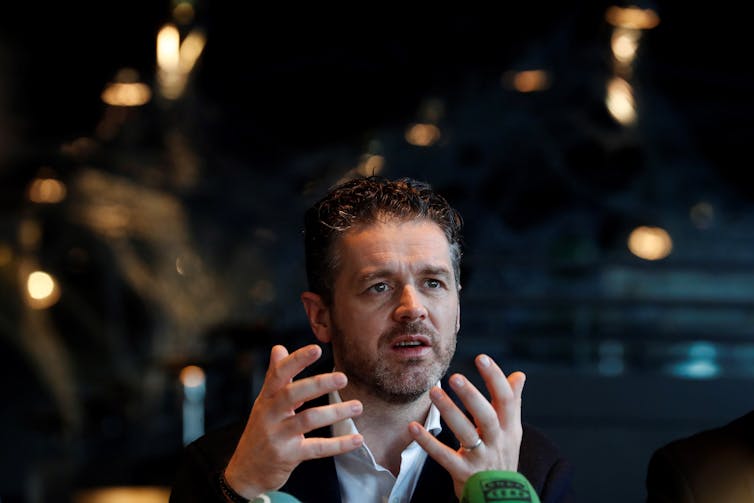 Jock Zonfrillo is trying to change the way diners think about native ingredients.
Javier Etxezarreta/EPA
Jock Zonfrillo is trying to change the way diners think about native ingredients.
Javier Etxezarreta/EPA
A New Zealand-based publishing company, Blackwell & Ruth, also launched guides to sustainable and ethical restaurants in Australia, the UK, US and elsewhere around the world in November that highlight other ways chefs are making a difference, from the minimisation of food waste to support for sustainable farmers, producers and winemakers.
But, again, the guidebooks have generated much debate about just what qualifies as “ethical” eating. Criticisms have been raised about the inclusion criteria for the restaurants and what the editors really considered exceptional.
What can all restaurants be doing better?
So, what should the bulk of restaurants out there be doing to help educate diners and help them to care more about their choices?
For starters, restaurateurs have clear responsibilities to provide accurate information about what they are serving and the practices associated with their establishments. This should go well beyond the typical descriptions about the food, its provenance and whether it is vegetarian friendly.
Read more: It's complicated: Australia's relationship with eating meat
Many diners are concerned about the same ethico-political concerns that have arisen in recent labelling debates, such as fair labour conditions, nutrition, environmental degradation, fair trade and animal cruelty, as well as what restaurants give back to their local communities.
The more this information is evidence-based and transparent rather than marketing oriented, the more likely diners will start to pay attention and demand more from the places where they eat.
Being responsive and reflective is essential in this rapidly changing space, as consumers are spoiled for choice and are only likely to become more demanding. Restaurants can help diners to not only shape their eating habits, but also inform them in a way that helps them ask the right questions, rather than seeking set answers from celebrity chefs.
Read more: Why we need to take food education in Australian schools more seriously
Authors: Rachel A. Ankeny, Professor of History and Associate Dean Research (Faculty of Arts), University of Adelaide


















