

Australia's spike in summer drownings: what the media misses
- Written by: Medhavi Gupta, PhD Candidate, George Institute for Global Health
You’d be hard pressed to have missed the news that there’s been a big spike in the number of drowning deaths this summer – up about 50% since last year. The media’s been full of stories of migrants and tourists losing their lives on our beaches.
But our unpublished analysis of the coverage of drowning deaths this summer reveals many news outlets don’t present the true picture of what’s happening in our waterways. And that’s putting people most at risk of drowning in even greater danger.
Read more: Monday's medical myth: wait 30 minutes after eating before you swim
What the media is not quite getting right
Are foreigners and migrants more at risk than Australian-born swimmers?
We found that almost half of all stories reported on drownings of migrants and people from overseas. For example, the deaths of three migrants at Moonee Beach in NSW was the most covered incident across stories analysed. Many of these articles suggested solutions such as ensuring tourists are informed of water risks and providing new migrants swimming classes.
Again, these suggestions are useful, but the idea that more drowning victims are foreign-born is misleading. Only two articles we read pointed out the truth – that only a third of deaths this summer involved people born overseas. This is about the same proportion of the Australian population born overseas at 28.2%. Although overseas tourists are more at risk of drowning, migrants are not.
All swimmers need to be made aware they are at risk, foreign-born or not. In fact, Australians raised on home soil may actually be overconfident of their water safety knowledge and swimming ability, and the media needs to be more explicit about this.
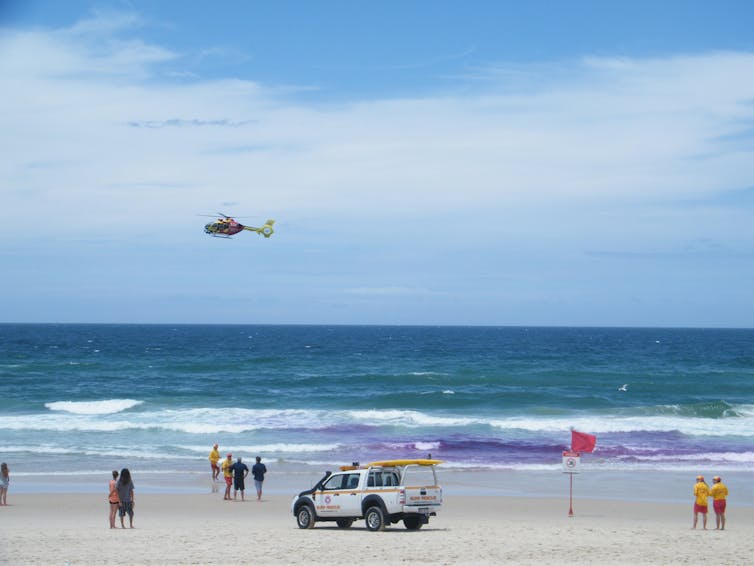 Australian and foreign-born swimmers are both at risk of drowning.
Photo by zayzayem on Foter.com / CC BY-SA
Australian and foreign-born swimmers are both at risk of drowning.
Photo by zayzayem on Foter.com / CC BY-SA
Are beaches really more dangerous than rivers?
Our analysis showed a clear preference for reporting beach-related drowning deaths over deaths occurring inland, such as in rivers and lakes. This bias perpetuates the idea that beaches are more risky than inland water.
However, this summer, almost as many deaths occurred in inland waterways than beaches (43% v 47% at the time this was written), and in 2017/18 more drowning deaths occurred in natural inland waterways.
So most stories emphasise providing beach-related safety tips, emphasising the importance of visiting patrolled beaches and learning how to spot rips. Although this is important advice, it doesn’t apply to inland bodies of water. Where advice is provided, there are statements such as “respect the river”, which provides little practical guidance.
By focusing on beaches, the media may also be missing an opportunity to warn Australians of the dangers of rivers and lakes, which are being greatly underestimated.
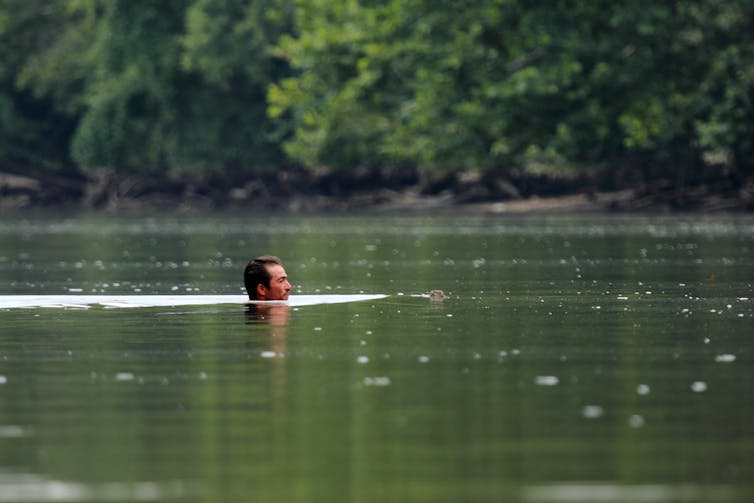 Rivers may seem safe, but deep water and fast flowing currents can be dangerous.
Mr.TinDC on Foter.com / CC BY-ND
Rivers may seem safe, but deep water and fast flowing currents can be dangerous.
Mr.TinDC on Foter.com / CC BY-ND
Vague advice
In many stories, safety spokespeople talk about the “think and plan” approach to water safety. This guidance encourages swimmers to choose swimming areas that suit their abilities, assess the risks and consider possible rescue methods. However, little guidance is given on how to assess environments for dangers. And few Australians know what to do when someone is drowning.
How can we reduce drownings?
What should governments do?
Governments need to provide education that reflects real risks. This includes identifying dangerous river and lake conditions, and learning what to do if you get stuck in a current. Communication around water safety after storms and heavy rains can also help, such as during news weather reports.
Although many water bodies have safety warning signs, there is limited evidence they work to prevent unsafe behaviours.
What is well documented is that people follow what other people are doing, especially when they are young, so may ignore signs if others are acting dangerously. As well as signs, more strict enforcement at particularly dangerous spots may be needed, such as random patrolling of rangers and building fences.
A last important action is providing rescue equipment at beaches and popular inland swimming spots, including emergency phones, floatation devices and rope.
What should I do?
Check out these tips on how to stay safe around rivers. Tips include checking the depth of the water before swimming, something many Australians don’t do.
You can do this by looking for reeds breaking the surface or using a stick. You can also test current speed by throwing a leaf in the water and seeing how fast it flows. If you get stuck in a current, lie on your back, feet forward, until you reach a shallower area.
It’s also important to be aware of when you need to wear life jackets. Most Australians would be aware that we should wear them on smaller motor boats, but what if you are rock fishing? Or being towed in a tube? Different states have slightly different guidelines.
Don’t swim if you’ve been drinking. Even a small amount of alcohol can impair your ability to swim and respond to hazards.
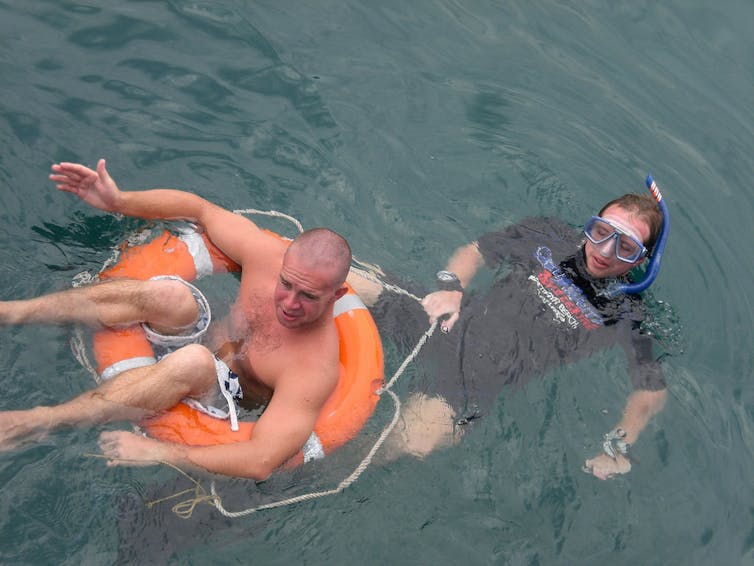 Use a floating object to rescue.
christophercjensen on Foter.com / CC BY-ND
Use a floating object to rescue.
christophercjensen on Foter.com / CC BY-ND
If someone is drowning, the safest way to save them is to throw a floating object, such as a life ring or life jacket, or the end of a rope or stick. If the person is too far or you have nothing available, don’t try to saving the victim if you have not received proper training or you are not a confident swimmer. Call emergency services and ask others for help.
Lastly, look out for friends and children. Active supervision isn’t about sitting nearby on your phone – it can take as little as 20 seconds for a child to go under. Signs of a person drowning include their head tilted back and mouth at water level, hair over the forehead or eyes, their body in a vertical position, and gasping.
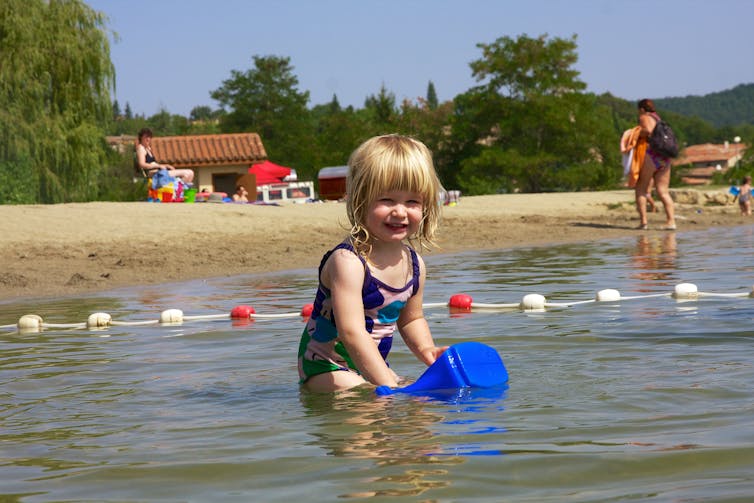 Actively supervise children at all times.
dickdotcom on Foter.com / CC BY-SA
Actively supervise children at all times.
dickdotcom on Foter.com / CC BY-SA
With the right action from governments and individuals, we can save tens of lives from drowning in our waterways. This action can’t just wait until next summer – staying safe is an all-year round endeavour. So, campaign for better safety measures at your local waterways, get yourself educated and trained, and help make sure that Australia’s favourite summer pastime only leaves happy memories.
Authors: Medhavi Gupta, PhD Candidate, George Institute for Global Health
Read more http://theconversation.com/australias-spike-in-summer-drownings-what-the-media-misses-109948


















