

After the floods come the mosquitoes – but the disease risk is more difficult to predict
- Written by: Cameron Webb, Clinical Lecturer and Principal Hospital Scientist, University of Sydney
We’re often warned to avoid mosquito bites after major flooding events. With more water around, there are likely to be more mosquitoes.
As flood waters recede around Townsville and clean-up efforts continue, the local population will be faced with this prospect over the coming weeks.
But whether a greater number of mosquitoes is likely to lead to an outbreak of mosquito-borne disease is tricky to predict. It depends on a number of factors, including the fate of other wildlife following a disaster of this kind.
Mozzies need water
Mosquitoes lay their eggs in and around water bodies. In the initial stages, baby mosquitoes (or “wrigglers”) need the water to complete their development. During the warmer months, it doesn’t take much longer than a week before they are grown and fly off looking for blood.
So the more water, the more mosquito eggs are laid, and the more mosquitoes end up buzzing about.
But outbreaks of disease carried by mosquitoes are dependent on more than just their presence. Mosquitoes rarely emerge from wetlands infected with pathogens. They typically need to pick them up from biting local wildlife, such as birds or mammals, before they can spread disease to people.
Read more: The worst year for mosquitoes ever? Here's how we find out
Mosquitoes and extreme weather events
Historically, major inland flooding events have triggered significant outbreaks of mosquito-borne disease in Australia. These outbreaks have included epidemics of the potentially fatal Murray Valley encephalitis virus. In recent decades, Ross River virus has more commonly been the culprit.
A focal point of the current floods is the Ross River, which runs through Townsville. The Ross River virus was first identified from mosquitoes collected along this waterway. The disease it causes, known as Ross River fever, is diagnosed in around 5,000 Australians every year. The disease isn’t fatal but it can be seriously debilitating.
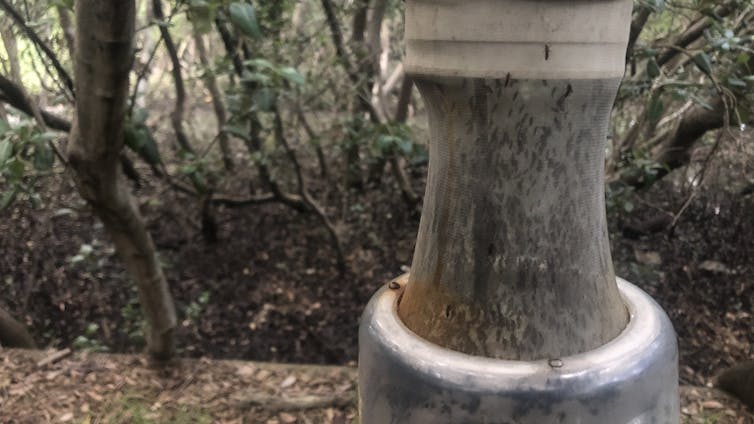 Following substantial rainfall, mosquito populations can dramatically increase. Carbon dioxide baited light traps are used by local authorities to monitor changes in mosquito populations.
Cameron Webb (NSW Health Pathology)
Following substantial rainfall, mosquito populations can dramatically increase. Carbon dioxide baited light traps are used by local authorities to monitor changes in mosquito populations.
Cameron Webb (NSW Health Pathology)
In recent years, major outbreaks of Ross River virus have occurred throughout the country. Above average rainfall is likely a driving factor as it boosts both the abundance and diversity of local mosquitoes.
Flooding across Victoria over the 2016-2017 summer produced exceptional increases in mosquitoes and resulted in the state’s largest outbreak of Ross River virus. There were almost 1,700 cases of Ross River virus disease reported there in 2017 compared to an average of around 300 cases annually over the previous 20 years.
Read more: Explainer: what is Ross River virus?
Despite plagues of mosquitoes taking advantage of flood waters, outbreaks of disease don’t always follow.
Flooding resulting from hurricanes in North America has been associated with increased mosquito populations. After Hurricane Katrina hit Louisiana and Mississippi in 2005, there was no evidence of increased mosquito-borne disease. The impact of wind and rain is likely to have adversely impacted local mosquitoes and wildlife, subsequently reducing disease outbreak risk.
 Applying insect repellent is worthwhile even if the risk of mosquito-borne disease isn’t known.
From shutterstock.com
Applying insect repellent is worthwhile even if the risk of mosquito-borne disease isn’t known.
From shutterstock.com
Australian studies suggest there’s not always an association between flooding and Ross River virus outbreaks. Outbreaks can be triggered by flooding, but this is not always the case. Where and when the flooding occurs probably plays a major role in determining the likelihood of an outbreak.
The difficulty in predicting outbreaks of Ross River virus disease is that there can be complex biological, environmental and climatic drivers at work. Conditions may be conducive for large mosquito populations, but if the extreme weather events have displaced (or decimated) local wildlife populations, there may be a decreased chance of outbreak.
This may be why historically significant outbreaks of mosquito-borne disease have occurred in inland regions. Water can persist in these regions for longer than coastal areas. This provides opportunities not only for multiple mosquito generations, but also for increasing populations of water birds. These birds can be important carriers of pathogens such as the Murray Valley encephalitis virus.
Read more: Giant mosquitoes flourish in floodwaters that hurricanes leave behind
In coastal regions like Townsville, where the main concern would be Ross River virus, flood waters may displace the wildlife that carry the virus, such as kangaroos and wallabies. For that reason, the flood waters may actually reduce the initial risk of outbreak.
Protect yourself
There is still much to learn about the ecology of wildlife and their role in driving outbreaks of disease. And with a fear of more frequent and severe extreme weather events in the future, it’s an important area of research.
Although it remains difficult to predict the likelihood of a disease outbreak, there are steps that can be taken to avoid mosquito bites. This will be useful even if just to reduce the nuisance of sustaining bites.
Cover up with long-sleeved shirts and long pants for a physical barrier against mosquito bites and use topical insect repellents containing DEET, picaridin, or oil of lemon eucalyptus. Be sure to apply an even coat on all exposed areas of skin for the longest lasting protection.
Authors: Cameron Webb, Clinical Lecturer and Principal Hospital Scientist, University of Sydney


















