

It's fish on ice, as frozen zoos make a last-ditch attempt to prevent extinction
- Written by: Nicola Marie Rivers, PhD Candidate, Monash University
Twenty-six of the forty-six fish species known to live in the Murray-Darling basin are listed as rare or threatened. Recent fish kills in the iconic river system are a grim reminder of how quickly things can take a turn for the worst.
A sudden drop in population size can push a species towards extinction, but there may be hope for resurrection. Frozen zoos store genetic material from endangered species and are preparing to make new individuals if an extinction occurs.
Read more: Cryopreservation: the field of possibilities
Unfortunately, poor response to freezing has hindered the introduction of fish into frozen zoos in the past. Now new techniques may provide them safe passage.
Ice ice baby
A frozen zoo, also known as a biobank or cryobank, stores cryopreserved or “frozen” cells from endangered species. The primary purpose of a frozen zoo is to provide a backup of endangered life on Earth allowing us to restore extinct species.
Reproductive cells, such as sperm, oocytes (eggs) and embryos, are cooled to -196ºC, at which point all cellular function is paused. When a sample is needed, the cells are warmed and used in breeding programs to produce new individuals, or to study their DNA to determine genetic relationships with other species.
There are several cryobanking facilities in Australia, including the Australian Frozen Zoo (where I work), the CryoDiversity Bank and the Ian Potter Australian Wildlife Biobank, as well as private collections. These cryobanks safeguard some of Australia’s most unique wildlife including the greater bilby, the golden bandicoot, and the yellow-footed rock wallaby as well as other exotic species such as the black rhino and orangutans.
Internationally, frozen zoos are working together to build a “Noah’s Ark” of frozen tissue. The Frozen Ark project, established in 2004 at the University of Nottingham, now consists of over 5,000 species housed in 22 facilities across the globe.
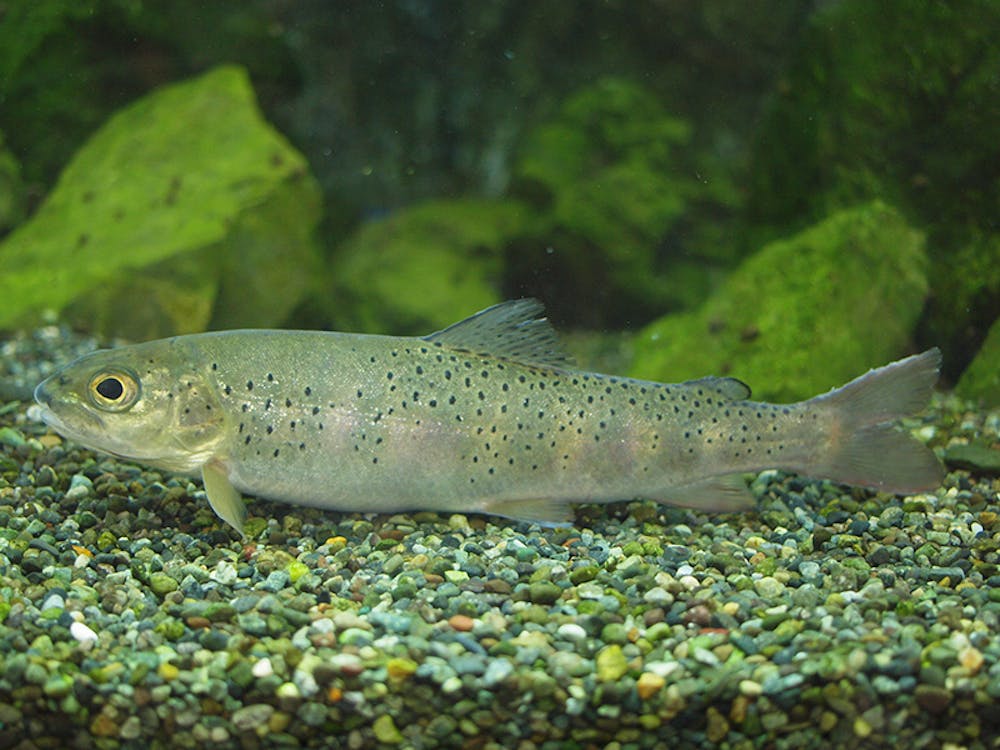 The Manchurian trout, or lenok, is the only fish successfully reproduced through cryopreservation and surrogacy.
National Institute of Ecology via Wikimedia, CC BY
The Manchurian trout, or lenok, is the only fish successfully reproduced through cryopreservation and surrogacy.
National Institute of Ecology via Wikimedia, CC BY
Less love for fish
As more and more species move into frozen zoos, fish are at risk of being left out. Despite years of research, no long-term survival has been reported in fish eggs or embryos after cryopreservation. However, precursors of sperm and eggs known as gonial cells found in the developing embryo or the ovary or testis of adult fish have been preserved successfully in several species including brown trout, rainbow trout, tench and goby.
By freezing these precursory cells, we now have a viable method of storing fish genetics but, unlike eggs and sperm, the cells are not mature and cannot be used to produce offspring in this form.
To transform the cells into sperm and eggs, they are transplanted into a surrogate fish. Donor cells are injected into the surrogate where they follow instructions from surrounding cells which tell them where to go and when and how to make sperm or eggs.
Once the surrogate is sexually mature they can mate and produce offspring that are direct decedents of the endangered species the donor cells were originally collected from. In a way, we are hijacking the reproductive biology of the surrogate species. By selecting surrogates that are prolific breeders we can essentially “mass produce” sperm and eggs from an endangered species, potentially producing more offspring than it would have been able to within its own lifetime.
Cell surrogacy has been successful in sturgeon, rainbow trout and zebrafish.
The combination of cryopreservation and surrogacy in conservation is promising but has only successfully been used in one endangered species so far, the Manchurian trout.
Not a get-out-of-conservation card
The “store now, save later” strategy of frozen zoos sounds simple but alas it is not. The methods needed to reproduce many species from frozen tissue are still being developed and may take years to perfect. The cost of maintaining frozen collections and developing methods of resurrection could divert funding from preventative conservation efforts.
Even if de-extinction is possible, there could be problems. The Australian landscape is evolving – temperatures fluctuate, habitats change, new predators and diseases are being introduced. Extinction is a consequence of failing to adapt to these changes. Reintroducing a species into the same hostile environment that lead to its demise may be a fool’s errand. How can we ensure reintroduced animals will thrive in an environment they may no longer be suited for?
Reducing human impact on the natural environment and actively protecting threatened species will be far easier than trying to resurrect them once they are gone. In the case of the Murray Darling Basin, reversing the damage done and developing policies that ensure its long-term protection will take time that endangered species may not have.
Read more: I've always wondered: does anyone my age have any chance of living for centuries?
Frozen zoos are an insurance policy, and we don’t want to have to use them. But if we fail in our fight against extinction, we will be glad we made the investment in frozen zoos when we had the chance.
Authors: Nicola Marie Rivers, PhD Candidate, Monash University


















